


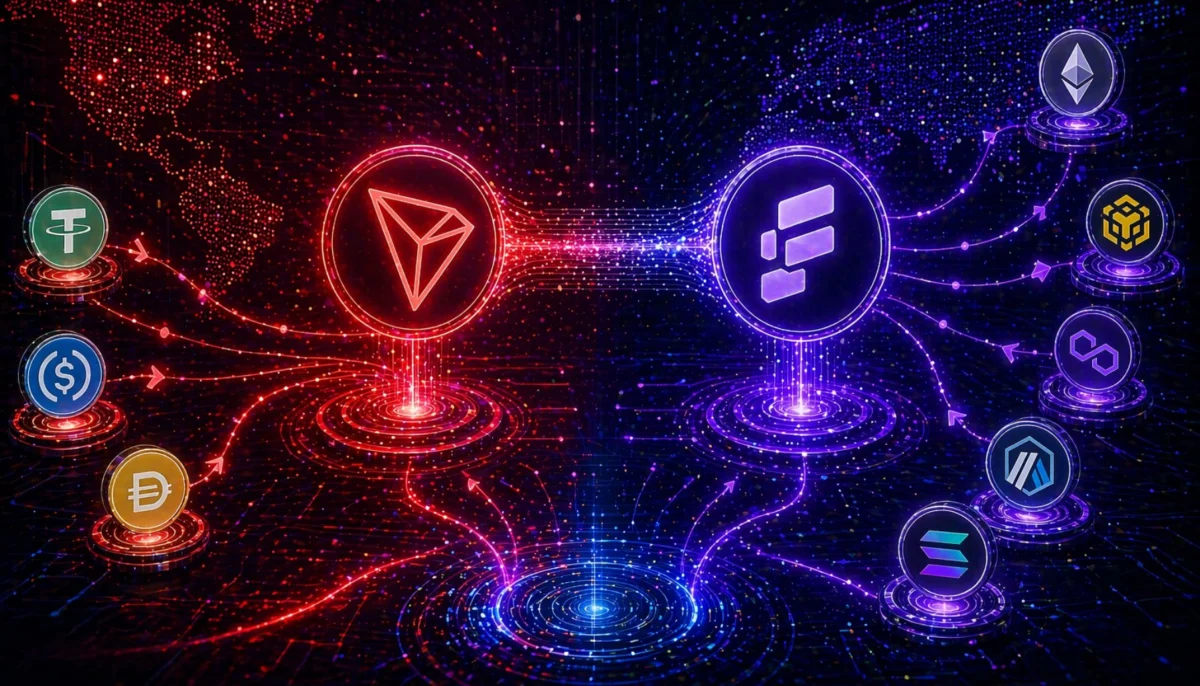
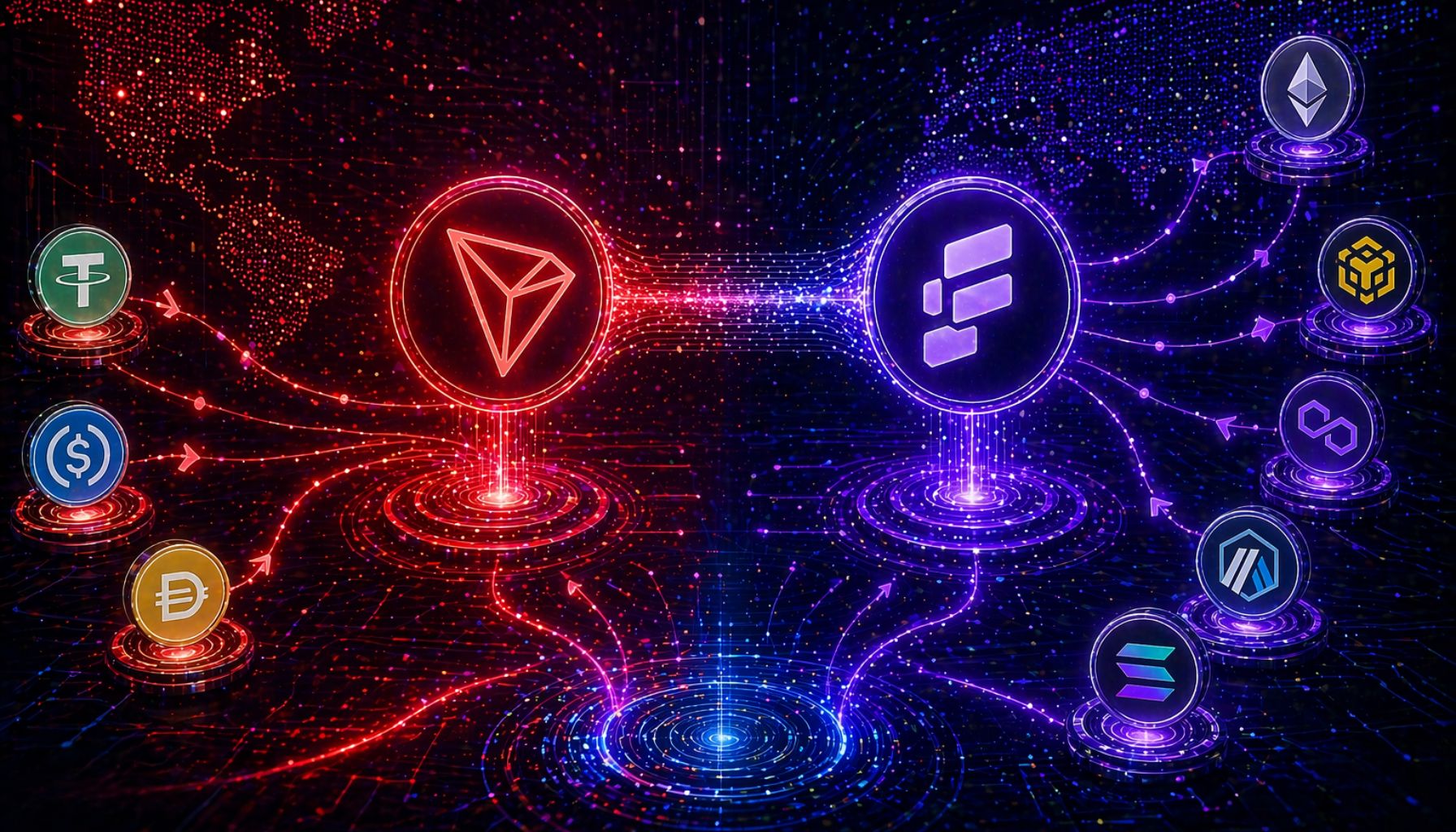
The integration of TRON into the LI.FI orchestration layer marks a pivotal shift in the architecture of cross-chain finance, effectively connecting one of the industry’s most liquid stablecoin settlement layers with the decentralized finance (DeFi) mainstream. For years, TRON has operated as a titan of stablecoin volume, boasting over $85 billion in circulating Tether (USDT) and a consistent daily transfer volume exceeding $21 billion. Despite these staggering figures, the network has historically functioned in a state of semi-isolation from the Ethereum-centric DeFi world. The partnership with LI.FI, a leading multichain liquidity aggregator, serves as the definitive bridge that eliminates this technical and liquidity-based silo, allowing developers and users to interact with TRON’s massive capital reserves with unprecedented ease.
The Mechanics of the LI.FI Integration
LI.FI functions as a sophisticated "aggregator of aggregators," providing a middle-ware layer that handles the complexities of cross-chain bridging and decentralized exchange (DEX) swapping. By integrating TRON into its orchestration layer, LI.FI allows any application built on its API to tap into TRON’s liquidity pools without the need for bespoke, manual bridge integrations.
Historically, developers looking to utilize TRON’s low-fee environment or its deep USDT liquidity had to build separate infrastructure to handle TRON’s Virtual Machine (TVM) and its specific bridging protocols. This technical overhead often discouraged developers who preferred the streamlined tooling available for Ethereum Virtual Machine (EVM) compatible chains like Arbitrum, Optimism, or Base. With the LI.FI integration, TRON is now presented as just another destination or source in a unified routing system. This means that a user on an Ethereum-based wallet can swap assets for USDT on TRON in a single transaction, with the underlying routing, bridging, and gas management handled entirely by the LI.FI protocol.
TRON’s Dominance in the Stablecoin Sector
To understand the weight of this integration, one must look at the sheer scale of TRON’s stablecoin infrastructure. While Ethereum is often viewed as the "home" of DeFi innovation, TRON has quietly secured its position as the "home" of stablecoin utility.
As of early 2025, TRON hosts approximately 50% of the total circulating supply of USDT. This dominance is driven by two primary factors: speed and cost. While Ethereum Layer 1 transactions can fluctuate wildly in price, and even Layer 2 solutions require a multi-step onboarding process, TRON has offered a consistent, high-throughput environment for years. This has made it the preferred network for high-frequency stablecoin movements, including:
- Global Remittances: Users in emerging markets, particularly in Southeast Asia, Latin America, and parts of Africa, utilize USDT on TRON as a cheaper alternative to traditional money transfer services like Western Union.
- Institutional OTC Settlements: Over-the-counter desks frequently use TRON for large-scale settlements due to the network’s reliability and deep liquidity.
- Payment Processing: Merchants accepting crypto payments often default to TRON to avoid the high gas fees associated with the Ethereum mainnet.
Despite this "real-world" utility, TRON’s liquidity was largely invisible to the retail DeFi user who spends their time on aggregators like 1inch or Uniswap. The LI.FI integration changes this by making TRON’s $85 billion USDT pool a "first-class citizen" in the broader DeFi routing landscape.
Chronology of TRON’s Evolution and Integration
The path toward this integration has been years in the making, reflecting TRON’s transition from a controversial "Ethereum killer" to a specialized settlement layer.
- 2017–2018: TRON launches as an ERC-20 token before migrating to its own mainnet. Its early focus was on decentralized entertainment and content sharing.
- 2019: Tether (USDT) officially launches on the TRON network. This marks the beginning of TRON’s pivot toward becoming a stablecoin powerhouse.
- 2021–2022: During the height of the bull market, TRON’s USDT supply surpasses Ethereum’s, driven by the demand for low-cost transactions.
- 2023: TRON introduces several network upgrades to enhance TVM compatibility and security, signaling a desire to better integrate with the wider crypto ecosystem.
- 2024: The rise of intent-centric protocols and liquidity aggregators like LI.FI highlights the need for "omnichain" connectivity. TRON begins engaging with cross-chain messaging protocols to break its isolation.
- Early 2025: LI.FI officially announces the integration of TRON into its orchestration layer, providing a direct pipeline between TRON and over 20 other major blockchains.
Strategic Impact for Developers and Ecosystem Growth
For the developer community, the primary benefit of this integration is the reduction of "integration fatigue." In the current multichain environment, developers must choose where to allocate their limited engineering resources. Previously, TRON was often excluded from cross-chain dApps because it required a unique set of tools.
By becoming part of LI.FI’s stack, TRON is now automatically included in any dApp that uses LI.FI for its bridging and swapping needs. This includes mobile wallets, portfolio trackers, and yield optimizers. This "plug-and-play" access is expected to drive a surge in TRON’s TVL (Total Value Locked) within DeFi protocols, as it becomes easier for yield seekers to move capital from Ethereum or Solana into TRON-based lending markets or liquidity pools.
Furthermore, the integration provides a boost to TRON’s "Real World Asset" (RWA) ambitions. As more traditional financial assets are tokenized, they require a settlement layer that is both liquid and accessible. TRON’s partnership with LI.FI ensures that any RWA issued on TRON can be easily traded or utilized as collateral across the entire DeFi spectrum.
Market Analysis: TRX Price Action and Resistance Levels
The technical integration comes at a time of significant price action for TRX, the native utility token of the TRON network. Throughout the latter half of 2024 and the beginning of 2025, TRX has maintained one of the most resilient uptrend structures in the cryptocurrency market. While other major altcoins have experienced volatile swings, TRX has benefited from the consistent burning of tokens—a result of the high transaction volume on the network—which creates deflationary pressure.
Currently, TRX is testing a critical multi-month resistance zone between $0.33 and $0.34. This level is historically significant; it represents a supply zone where previous rallies in late 2024 met significant selling pressure. However, the current technical setup appears more constructive than previous attempts.
The weekly chart shows TRX trading comfortably above its 50-week and 100-week moving averages, both of which are trending upward. The recent consolidation between $0.27 and $0.29 allowed the market to absorb overhead supply without breaking the higher-low sequence. Analysts note that while the current move toward $0.34 lacks a massive surge in volume, the steady "grind higher" suggests a lack of aggressive sellers rather than a lack of buyers.

If TRX can secure a weekly close above $0.34, the path toward the $0.38 to $0.40 range becomes clear. Conversely, a rejection at this level would likely see TRX return to its support base near $0.30, continuing a period of healthy consolidation. The LI.FI integration serves as a fundamental catalyst that could provide the necessary momentum to break this long-standing resistance.
Broader Implications for the Cross-Chain Future
The integration of TRON into LI.FI is a microcosm of a larger trend in the blockchain industry: the move away from "fragmented liquidity" toward "unified liquidity." In the early days of crypto, chains competed to be the "everything hub." Today, the industry is moving toward a modular and interconnected reality where different chains specialize in different functions.
TRON has clearly specialized in stablecoin settlement. By accepting its role as a high-volume, low-cost utility layer and opening the doors to cross-chain aggregators, TRON is ensuring its long-term relevance. For the broader industry, this integration reduces the friction of the "on-chain economy." It moves the industry one step closer to a world where a user doesn’t need to know which blockchain they are using; they only need to know that their transaction is fast, cheap, and secure.
As the DeFi ecosystem continues to mature, the distinction between "TRON users" and "Ethereum users" will likely fade. Instead, users will simply interact with applications that route their value through the most efficient path available. With LI.FI now orchestrating liquidity across TRON’s $85 billion stablecoin pool, that path is more efficient than it has ever been.
Conclusion
The LI.FI and TRON integration is more than just a technical update; it is a strategic alignment that addresses one of the most significant inefficiencies in the digital asset market. By bringing TRON’s massive stablecoin reserves into the cross-chain fold, the partnership enhances the utility of the entire DeFi ecosystem. Developers gain access to a powerhouse of liquidity without added complexity, while users benefit from better pricing and more seamless asset movements. As TRX continues to test key market levels, the fundamental strength provided by such integrations may well define the next phase of the network’s growth and its role in the global financial landscape.














