Tron has officially cemented its position as the leading blockchain network in terms of daily active users, surpassing the 4 million mark and overtaking Solana. This remarkable surge in user engagement is not fueled by the speculative frenzy often associated with Decentralized Finance (DeFi) protocols or the volatile Non-Fungible Token (NFT) markets. Instead, the driving force behind Tron’s ascendance is the immense volume of stablecoin transactions, particularly those involving Tether (USDT).
The Stablecoin Engine Fuels Tron’s Dominance
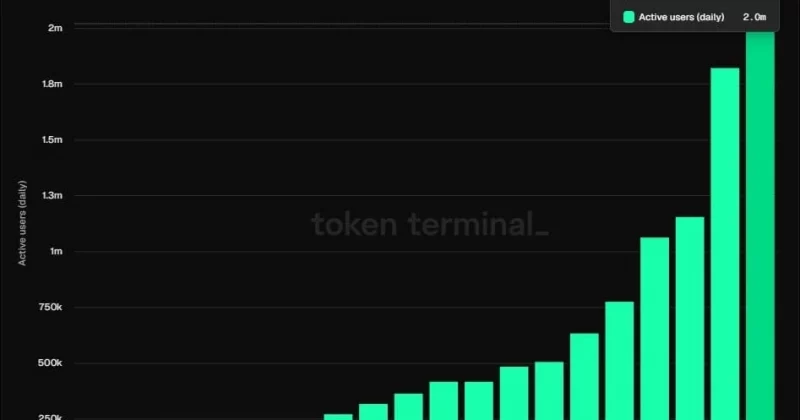
The network’s growth trajectory has been nothing short of meteoric. In the fourth quarter of 2025, Tron’s daily active users (DAU) averaged approximately 2.8 million, placing it just behind Solana, which recorded an average of 2.9 million DAU during the same period. This close competition set the stage for a significant shift. By February 2026, Tron had already demonstrated robust growth, reaching approximately 3.2 million DAU. The latest figures reveal a dramatic acceleration, with the network now comfortably exceeding 4 million daily active users, a new benchmark for major blockchain ecosystems.
This surge in user activity is intrinsically linked to the staggering volume of USDT transfers occurring on the Tron network. Data indicates that USDT transfer volumes on Tron frequently surpass $20 billion on a daily basis. This colossal activity is further underscored by the circulating supply of USDT on the network. As of May 2025, the USDT supply on Tron had already exceeded $75 billion, representing more than half of Tether’s total circulating supply across all blockchains. This concentration highlights Tron’s pivotal role in the global stablecoin economy.
Beyond stablecoin activity, Tron’s overall transaction volume paints a picture of a highly active and functional blockchain. The network is consistently processing over 8 million daily transactions. This high throughput has contributed to the accumulation of an impressive user base, with more than 306 million total user accounts registered on the platform since its inception.
Stablecoins as the Catalyst for User Growth
The conventional narrative in the blockchain space often emphasizes speculative trading, DeFi yield farming, and NFT collecting as primary drivers of user adoption. However, Tron’s recent success story offers a compelling counterpoint. The network’s foundational design, coupled with strategic prioritization, has enabled it to capture a different, yet equally significant, segment of the market.
Founded in 2017 by Justin Sun, Tron launched its mainnet in 2018 with a clear vision: to build a blockchain infrastructure capable of supporting a global digital entertainment and content-sharing ecosystem. From its earliest stages, the network’s core tenets have been high transaction throughput and exceptionally low fees. This technical architecture has proven to be ideally suited for high-volume, low-value transactions, which are characteristic of stablecoin usage for remittances and everyday commerce.
The emphasis on speed and cost-efficiency has made Tron an attractive platform for stablecoin issuers and users alike. For individuals and businesses looking to move funds quickly and cheaply across borders, or to engage in frequent digital asset transfers, Tron offers a compelling solution. The network’s ability to handle a massive influx of transactions without incurring prohibitive gas fees has made it a preferred choice for stablecoin-denominated economic activity.
Implications for Investors and the Broader Ecosystem
Tron’s current dominance has significant implications for investors and the broader cryptocurrency market. The network’s transaction volume is not merely a speculative bubble; it is structurally anchored to real-world economic flows, including global remittance services and cross-border commerce. This means that the utility of the Tron network is tied to tangible economic needs.
The native token of the Tron network, TRX, plays a crucial role in this ecosystem. TRX is required to pay transaction fees on the network, incentivizing holding and usage. Furthermore, TRX holders often have the ability to participate in the network’s governance, granting them a stake in its future development and direction. As transaction volumes continue to rise, the demand for TRX, driven by these functional requirements, could see a corresponding increase.
However, this concentration of activity presents a notable risk. When a blockchain network’s performance and user numbers become overwhelmingly dependent on a single asset, such as USDT on Tron, it creates a single point of failure. Any significant disruption to the stability or dominance of USDT could pose an existential threat to Tron’s current user base. For instance, severe regulatory scrutiny targeting Tether, or a substantial shift in market preference towards alternative stablecoins like USDC on the Tron network, could lead to a rapid reversal of the user growth observed.
Supporting Data and Chronology
To contextualize Tron’s recent achievements, it is important to examine the historical data and the timeline of its growth:
- 2017: Tron is founded by Justin Sun with the ambition to decentralize the internet and build a global digital entertainment ecosystem.
- 2018: Tron’s mainnet is launched, prioritizing high throughput and low transaction fees.
- Q4 2025: Tron averages approximately 2.8 million daily active users, trailing Solana’s 2.9 million DAU.
- February 2026: Tron’s DAU climbs to approximately 3.2 million, indicating significant growth momentum.
- Early 2026 (ongoing): USDT transfer volumes on Tron consistently exceed $20 billion daily.
- May 2025: The circulating supply of USDT on Tron surpasses $75 billion, representing over 50% of Tether’s total supply.
- Present: Tron’s daily active users breach the 4 million threshold, securing the top position among major blockchain networks. The network processes over 8 million daily transactions and has accumulated more than 306 million total user accounts.
This timeline illustrates a sustained period of rapid expansion, culminating in Tron’s current leading position. The data on USDT supply and daily transfer volumes further validates the hypothesis that stablecoin activity is the primary engine of this growth.
Expert Analysis and Market Reactions
While official statements from Tron or Tether regarding this specific milestone have not yet been widely disseminated, industry analysts have begun to weigh in on the significance of Tron’s achievement.
"Tron’s ascent is a testament to the power of utility in the blockchain space," commented Sarah Chen, a senior blockchain analyst at Crypto Insights Group. "While the allure of speculative gains in DeFi and NFTs is undeniable, the fundamental need for efficient and low-cost value transfer is a more sustainable driver of long-term user adoption. Tron has effectively tapped into this need by becoming the de facto backbone for a significant portion of the global stablecoin economy."
However, the concentration risk remains a recurring theme in these analyses. "The heavy reliance on USDT is a double-edged sword," noted David Lee, a risk assessment specialist at Digital Asset Advisors. "If Tether’s regulatory standing were to falter, or if market sentiment dramatically shifted towards other stablecoins, the ramifications for Tron could be severe. Diversification of stablecoin usage or broader ecosystem development would be crucial for long-term resilience."
Broader Impact and Future Outlook
Tron’s current standing as the leader in daily active users, driven by stablecoin activity, has several broader implications:
- Shift in Blockchain Use Cases: It highlights a maturation of the blockchain industry, moving beyond niche speculative applications to serve more fundamental economic functions like remittances and payments.
- Stablecoin Infrastructure: Tron’s success underscores the critical importance of robust and scalable blockchain infrastructure for the growth of the stablecoin market.
- Competitive Landscape: This development intensifies the competition among Layer-1 blockchain networks, forcing others to re-evaluate their strategies for attracting and retaining users.
- Regulatory Considerations: The sheer volume of stablecoin activity on Tron will likely attract increased attention from regulatory bodies, potentially influencing future policy decisions regarding stablecoins and the blockchains that host them.
Looking ahead, Tron’s ability to maintain its lead will likely depend on several factors. Continued innovation in its core technology, further diversification of its ecosystem beyond stablecoins, and proactive engagement with regulatory frameworks will be crucial. The network’s foundational strengths in throughput and low fees provide a solid base, but sustained growth will require adaptability and a response to the evolving demands of the global digital economy. The ongoing dominance of USDT on Tron presents both a powerful engine for growth and a significant area of potential vulnerability that investors and stakeholders will be closely monitoring.