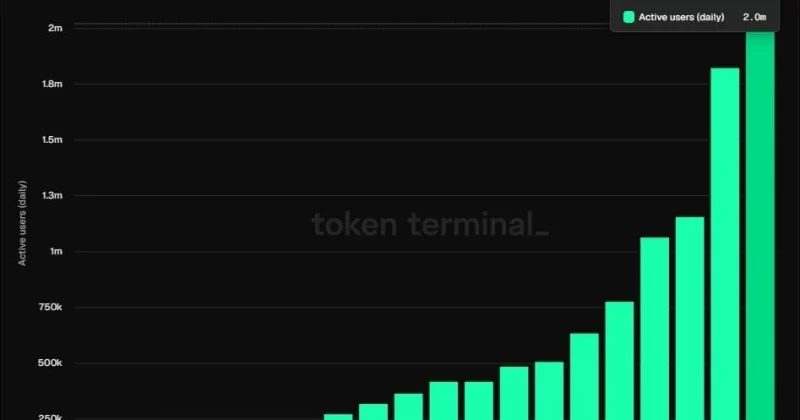
Tron has achieved a significant milestone, crossing the 4 million daily active user (DAU) threshold and outperforming major blockchain networks, including Solana. This remarkable surge in user engagement is not fueled by the speculative frenzy of Decentralized Finance (DeFi) or the hype surrounding Non-Fungible Tokens (NFTs). Instead, the primary catalyst behind Tron’s growth has been its robust stablecoin ecosystem, with Tether (USDT) playing a pivotal role.
The Stablecoin Engine: Fueling Tron’s Ascent
The trajectory of Tron’s daily active users has been steadily upward, demonstrating a consistent expansion in its network activity. In the fourth quarter of 2025, the network was averaging approximately 2.8 million DAUs, placing it just behind Solana’s 2.9 million. By February 2026, this figure had climbed to an impressive 3.2 million. The latest data now indicates that Tron has cleared the 4 million DAU mark, solidifying its position as a leading blockchain network in terms of user engagement.
The engine powering this growth is undeniably the stablecoin market on Tron, particularly USDT. Transaction volumes for USDT on the Tron network frequently surpass an astounding $20 billion per day. This colossal volume underscores the deep integration of stablecoins into the daily operations and economic activity occurring on Tron. As of May 2025, the circulating supply of USDT on the Tron network had already exceeded $75 billion, representing a substantial portion – more than half – of Tether’s total global supply. This concentration highlights Tron’s significance as a primary hub for USDT circulation and utility.
Beyond user numbers, Tron’s infrastructure is demonstrably capable of handling immense transaction volumes. The network consistently processes over 8 million daily transactions, a testament to its high throughput capabilities. Furthermore, Tron has cultivated a vast user base, amassing more than 306 million total user accounts since its inception. This substantial account growth indicates a broad adoption and consistent engagement with the network’s offerings.
Why Stablecoins Trump Speculation for User Growth
The foundational architecture of Tron, established by its founder Justin Sun in 2017 with its mainnet launching in 2018, was designed with specific objectives in mind: high throughput and low transaction fees. This emphasis on efficiency and affordability has proven to be a critical factor in its ability to attract and retain a large user base, particularly for activities that require frequent and cost-effective transactions.
While many blockchain networks have historically seen their user growth driven by the speculative allure of volatile cryptocurrencies or the burgeoning NFT market, Tron’s success story presents a different paradigm. The widespread adoption of stablecoins, especially USDT, on Tron suggests a demand for a reliable and efficient digital asset for practical financial applications. These applications can range from cross-border remittances and international trade settlements to everyday payments and store-of-value transfers, all of which benefit immensely from the stability and low costs offered by the Tron network.
The appeal of stablecoins lies in their ability to mitigate the volatility inherent in traditional cryptocurrencies. For individuals and businesses engaged in global commerce or requiring a stable digital medium of exchange, stablecoins offer the best of both worlds: the decentralization and efficiency of blockchain technology combined with the predictable value of fiat currencies. Tron’s infrastructure, with its capacity for high transaction volumes and minimal fees, is exceptionally well-suited to support these use cases at scale. This makes it an attractive platform for users seeking to conduct regular financial operations without the risk of significant price fluctuations.
Implications for Investors and the Market Landscape
The robust and sustained user growth on Tron, driven by stablecoin activity, carries significant implications for investors and the broader blockchain market. The network’s transaction volume exhibits a baseline that is structurally tied to global remittance flows and cross-border commerce. This suggests a fundamental utility beyond speculative trading, embedding Tron into the fabric of international financial exchange.
The native cryptocurrency of the Tron network, TRX, plays a crucial role in this ecosystem. TRX is required to pay transaction fees, ensuring the network’s operational integrity and incentivizing validators. Furthermore, TRX holders participate in the network’s governance, allowing them to influence its future development and direction. This dual utility of TRX as both a transactional medium and a governance token enhances its value proposition within the Tron ecosystem.
However, the significant reliance on a single asset, USDT, for such a large portion of its user activity also presents a notable risk. This concentration poses an existential threat: any disruption to USDT’s dominance or stability could have a profound impact on Tron’s user numbers and overall network health. For instance, if Tether were to face significant regulatory scrutiny, operational challenges, or if a competing stablecoin like USDC were to gain substantial traction on the Tron network, it could lead to a reversal of the impressive user growth observed. Investors holding TRX or participating in the Tron ecosystem should be cognizant of this concentration risk and monitor developments related to stablecoin regulation and market share shifts.
A Deeper Dive into Tron’s Growth Metrics and History
To fully appreciate Tron’s achievement, a closer examination of its historical performance and technical capabilities is warranted. Launched in 2017 by Justin Sun, Tron quickly established itself with an ambitious vision to decentralize the internet and its underlying infrastructure. The mainnet’s launch in 2018 marked the beginning of its journey to build a scalable and efficient blockchain platform.
The network’s architecture, which leverages a Delegated Proof-of-Stake (DPoS) consensus mechanism, allows for rapid transaction finality and significantly lower fees compared to earlier blockchain generations. This design choice has been instrumental in attracting developers and users looking for a more practical and cost-effective blockchain solution.
The consistent increase in daily active users can be traced through a series of developmental milestones and strategic partnerships that Tron has undertaken. While the article focuses on recent data, it’s important to acknowledge the sustained effort in building out the network’s ecosystem. This includes fostering the development of decentralized applications (dApps), attracting liquidity to its DeFi protocols, and forging alliances with various industry players.
The substantial USDT supply on Tron is not merely a reflection of speculative capital but also of its utility in facilitating a wide array of financial activities. These include:
- Cross-Border Remittances: Individuals and businesses can send funds across international borders more quickly and cheaply than traditional methods, leveraging USDT on Tron.
- Digital Asset Trading: USDT serves as a stable trading pair on numerous decentralized exchanges (DEXs) operating on Tron, allowing traders to enter and exit volatile positions without converting to fiat currency.
- DeFi Participation: While not the primary driver of user growth, stablecoins are integral to many DeFi strategies, such as lending, borrowing, and yield farming, where stable returns are sought.
- E-commerce and Payments: As digital payments gain traction globally, stablecoins on efficient networks like Tron offer a viable alternative for online merchants and consumers.
Broader Market Context and Future Outlook
Tron’s ascent in the blockchain landscape, particularly its surpassing of Solana in DAUs, highlights a maturing market where utility and efficiency are increasingly valued. While Solana has also experienced significant growth, its user base may have been more driven by the explosive DeFi and NFT trends of previous cycles. Tron’s current success suggests a shift towards more fundamental use cases powered by stablecoins.
The dominance of USDT on Tron also raises broader questions about the concentration of stablecoin issuance and the platforms that facilitate their circulation. Tether’s status as the largest stablecoin by market capitalization makes it a critical component of the digital asset economy. Its integration with efficient blockchains like Tron amplifies its reach and utility, but also underscores the systemic importance of maintaining its stability and regulatory compliance.
Looking ahead, Tron’s ability to sustain its growth will likely depend on several factors:
- Continued Innovation: The Tron Foundation and its community will need to continue developing new features and attracting innovative dApps that leverage its stablecoin infrastructure.
- Regulatory Landscape: Navigating the evolving regulatory environment for stablecoins will be crucial for both Tether and the Tron network.
- Competition: Other blockchain networks will undoubtedly seek to replicate Tron’s success by enhancing their stablecoin offerings and improving their transaction efficiency.
- Diversification: While stablecoins are a strong driver, a more diversified ecosystem of applications and use cases could further bolster Tron’s long-term resilience.
The current data points to a powerful synergy between stablecoins and a highly efficient blockchain network. Tron has successfully capitalized on this, demonstrating that for sustained user growth, practical utility and low costs can often outweigh the allure of speculative assets. The "stablecoin machine" on Tron is indeed humming, and its output is reshaping the competitive landscape of major blockchain networks.