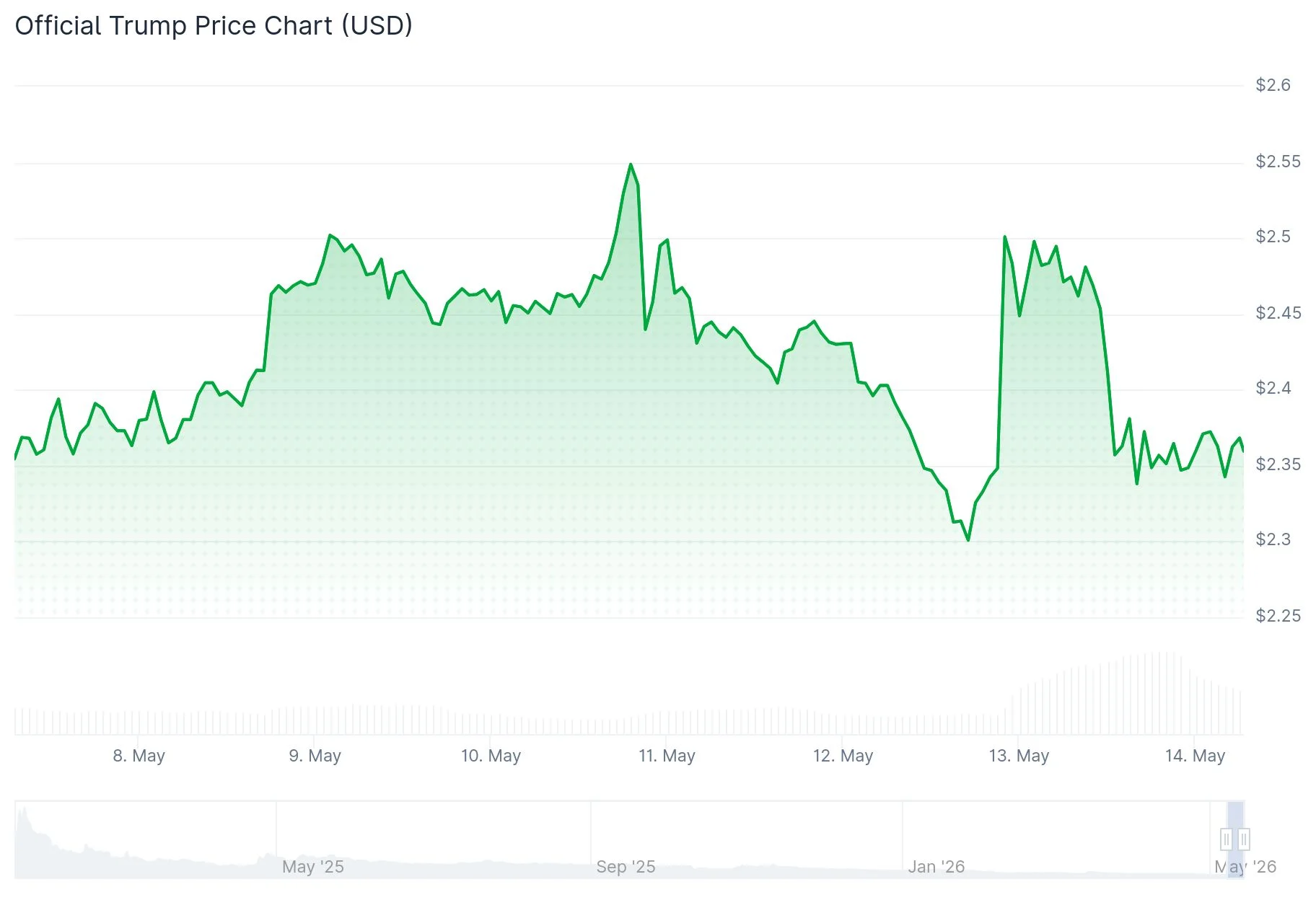
The TRUMP memecoin experienced a 5% decline in its valuation immediately following Trump Mobile’s confirmation that its repeatedly postponed T1 smartphone would begin shipping to customers next week. This latest setback added to significant prior losses for the digital asset, which leverages claimed official connections to former President Donald Trump and had already seen a massive erosion of nearly 90% from its previous all-time highs. The announcement, made via a tweet from the company, sought to reassure a customer base increasingly frustrated by prolonged delays and what many perceived as inadequate communication regarding the device’s availability.
The shipping update from Trump Mobile, issued earlier this week, aimed to draw a line under months of uncertainty that had plagued the T1 device. Initially met with anticipation by its pre-order customers, the smartphone had faced numerous postponements, pushing back its delivery schedule repeatedly before the company finally committed to a concrete delivery timeline. This pattern of delays is not uncommon in the tech industry, particularly for new entrants or those introducing products with ambitious timelines, but it can severely impact consumer confidence and brand reputation. For the TRUMP token, which often tracks sentiment around Trump-aligned ventures and political developments, this operational hiccup in a related product appears to have had a tangible, albeit modest, negative impact on its market performance.
Chronology of the T1 Smartphone Development and Delays
The journey of the T1 smartphone has been marked by a series of announcements, expectations, and subsequent deferrals, creating a protracted pre-order phase that tested the patience of early adopters. Trump Mobile first announced its intention to enter the mobile phone market with the T1, positioning it as a device tailored for a specific demographic, often associated with its namesake’s political base. Initial marketing emphasized features and connectivity, appealing to those seeking an alternative in the crowded smartphone landscape.
Following its initial unveiling, pre-orders for the T1 were opened, with optimistic early shipping estimates provided to customers. These initial timelines, however, proved to be untenable. The company subsequently issued several updates, each pushing back the projected delivery dates. These postponements were often accompanied by vague explanations, leading to a growing chorus of dissatisfaction among customers who had committed funds to the device. Social media channels and customer service forums reportedly saw an increase in complaints regarding the lack of transparency and firm commitments from Trump Mobile.
The most recent announcement, dated May 13, 2026, on Trump Mobile’s official Twitter account, provided the definitive news that phones would "start shipping this week," with pre-order customers receiving an update email. This marked a significant turning point, transitioning the T1 from a conceptual or perpetually delayed product to one finally on the verge of physical delivery. However, the timing coincided with the memecoin’s latest dip, suggesting that market participants had already factored in or even discounted the potential positive impact of the product’s release, or perhaps viewed the prolonged difficulties as a net negative.
Unpacking the T1 Handset: Specifications, Origins, and Manufacturing Claims
Beyond the shipping saga, the T1 smartphone itself has been a subject of considerable scrutiny and skepticism within the technology community. Trump Mobile operates as a Mobile Virtual Network Operator (MVNO), a business model where a company offers mobile phone services by utilizing the network infrastructure of a larger telecommunications provider. Crucially, MVNOs typically do not design or manufacture their own hardware. This holds true for Trump Mobile, which, rather than developing a device from scratch, collaborated with an external partner to customize an existing smartphone model. The customization primarily involves Trump-branded aesthetics and potentially pre-loaded applications or features intended to resonate with its target audience.
Reporters from reputable technology publications, including The Verge, managed to acquire a T1 device in the weeks leading up to the shipping announcement. Their independent assessment concluded that the T1 bears a striking resemblance to the HTC U24, a smartphone model that had reportedly debuted in 2024. This finding aligns with the common practice of rebadging or white-labeling in the electronics industry, where a manufacturer produces a device that is then rebranded and sold by another company. When contacted for comment regarding this apparent connection, both HTC and Trump Mobile declined to officially verify the relationship between the two devices, maintaining a level of ambiguity typical in such arrangements.
Regarding manufacturing, Trump Mobile has asserted that the T1 phone undergoes its final assembly on American soil. However, the company has also acknowledged that the individual components comprising the device are sourced internationally. This distinction is important, as "final assembly" can range from minor packaging and software loading to more substantial integration, and it does not necessarily imply that the majority of the device’s value chain or intellectual property originates within the United States. The company has, to date, declined to provide comprehensive transparency regarding its complete supply chain, a common practice for many electronics firms but one that can invite questions from consumers and critics interested in the provenance and ethical sourcing of components.
This business model, while raising questions for some, is fairly standard within the telecommunications and consumer electronics industries. For instance, Solana, a prominent blockchain platform, employed a comparable strategy for its initial Saga smartphone release. The Saga was essentially a rebadged version of the Osom OV-1, an Android smartphone developed by a team of former Essential Products employees. Solana’s decision to use a pre-existing hardware design allowed it to focus on integrating its blockchain-specific features and software ecosystem, rather than incurring the immense costs and complexities associated with developing smartphone hardware from the ground up. This parallel highlights that while rebadging can invite criticism, it is a pragmatic approach for companies looking to enter the hardware market without deep manufacturing expertise or capital.
Market Dynamics of Political Memecoins and the TRUMP Token’s Journey
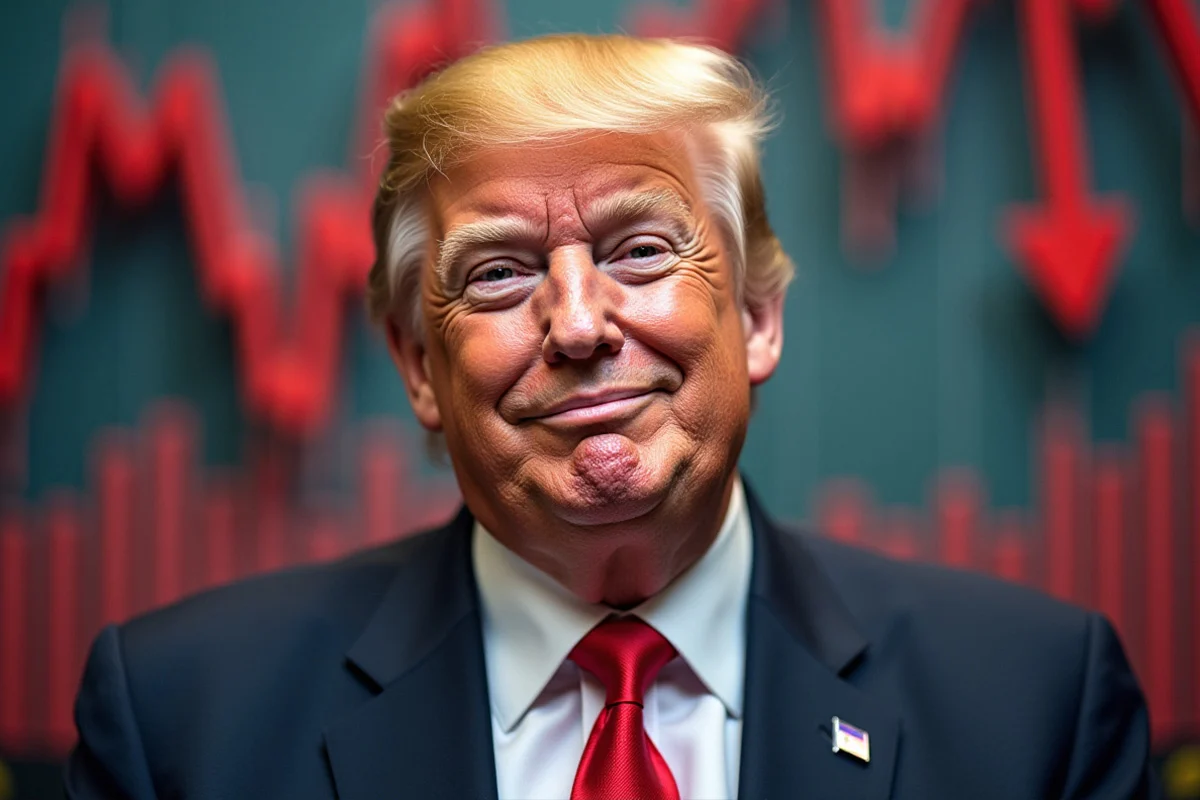
The TRUMP token’s market performance is intrinsically linked to the volatile and often speculative world of memecoins, further complicated by its direct association with a prominent political figure. Political memecoins, a niche but growing segment of the cryptocurrency market, derive their value largely from public sentiment, political events, and the perceived endorsement or opposition of the figures they represent. Unlike traditional cryptocurrencies that might be backed by technological innovation or utility, the value of political memecoins is often driven by community hype, social media trends, and the ebb and flow of political discourse.
The TRUMP token debuted amid significant fanfare, capitalizing on the widespread recognition and passionate support base of Donald Trump. Its initial run saw a dramatic surge in value, propelled by speculative trading and the enthusiasm of a community that saw the token as a way to engage with or express support for the political figure. At its peak, the token achieved valuations that reflected this intense, albeit speculative, interest. However, the nature of memecoins is often characterized by extreme volatility, with sharp pumps followed by equally dramatic dumps.
The article highlights that the TRUMP token had already suffered a massive decline of nearly 90% from its previous highs before this latest setback related to the T1 phone. This sustained erosion of market confidence can be attributed to several factors: the general lifecycle of many memecoins, which often experience an initial parabolic rise followed by a prolonged correction; broader shifts in the cryptocurrency market; and potentially, a disillusionment among early investors who bought at the peak. The "official connections" claimed by the token have always been a point of discussion; while some proponents believe in a direct or indirect endorsement, skeptics often view such claims as marketing tactics designed to attract investors.
Binance News documented the most recent 5% valuation decrease, referencing market information from CoinDesk, immediately following the shipping confirmation. This market response is particularly telling. In many instances, the successful delivery of a product associated with a brand might be expected to generate positive sentiment, or at least stabilize a related digital asset. However, the immediate price decline suggests that investors and traders either do not consider the handset release to be a net positive for the token’s performance, or they engaged in a classic "buy the rumor, sell the news" strategy. The prolonged delays and the skepticism surrounding the T1’s origins (as a rebadged device) may have contributed to a perception that the product’s launch, while technically a milestone, does not fundamentally alter the investment thesis for the TRUMP token in a positive way.
Customer Sentiment and Communication Challenges
Customer sentiment around Trump Mobile and the T1 smartphone has been a critical factor throughout its development. Initial excitement for a Trump-branded device was evident, attracting a segment of consumers keen on supporting products aligned with their political identity. However, this enthusiasm was progressively challenged by the repeated delays and what many pre-order customers described as inadequate and infrequent communication from the company.
In the fast-paced world of consumer electronics, timely and transparent communication is paramount, especially when products face unforeseen setbacks. Delays, while sometimes unavoidable, can erode trust if not managed effectively. Reports from various online forums and social media platforms indicated a growing level of frustration among T1 pre-order holders, with many expressing concerns about their investments and the company’s ability to deliver on its promises. The absence of regular, detailed updates contributed to a perception of opacity, further fueling skepticism about the project’s viability.
The tweet confirming shipments, while a positive step in finally delivering the product, came after a period where customer goodwill had likely been significantly strained. For those who pre-ordered the device, next week’s scheduled shipments will represent a tangible transition from a reservation-only product to actual hardware delivery, potentially alleviating some of the long-standing frustration. However, the ultimate impact on customer loyalty and brand perception will depend on the device’s performance, post-purchase support, and how Trump Mobile handles any lingering issues or future communications.
Expert Analysis and Broader Implications
The scenario surrounding the TRUMP memecoin and the T1 smartphone offers several insights into the intersection of technology, finance, and political branding. From a cryptocurrency perspective, the event underscores the inherent volatility and speculative nature of political memecoins. Their valuations are often decoupled from traditional fundamentals, making them highly susceptible to news cycles, social media narratives, and perceived successes or failures of associated real-world ventures. Crypto analysts frequently caution against the high risks associated with such tokens, emphasizing that their value can fluctuate wildly based on sentiment rather than intrinsic utility or technological advancement.
For Trump Mobile, the launch of the T1 represents a crucial test of its operational capabilities and its long-term viability in the highly competitive smartphone market. The MVNO model, combined with the rebadging strategy, allows for quicker market entry and lower initial capital expenditure compared to designing and manufacturing a device from scratch. However, it also means that the company’s brand is closely tied to the quality and reputation of its hardware partner (in this case, presumably HTC) and its ability to differentiate through software, services, or unique branding. The "final assembly on American soil" claim, while appealing to a specific patriotic consumer base, does not negate the international sourcing of components, a reality for virtually all electronics manufacturers globally. The broader economic impact of such assembly operations is often limited compared to full-scale research, development, and manufacturing.
The comparison to the Solana Saga smartphone is apt but also highlights key differences. While both utilized rebadged hardware, Solana’s primary objective was to create a device optimized for its blockchain ecosystem, offering tangible utility for decentralized applications and cryptocurrency transactions. The Saga aimed to solve a specific problem in the crypto space – bridging the gap between mobile hardware and Web3. Trump Mobile’s T1, in contrast, appears to lean more heavily on brand affinity and political identity as its core differentiators, with less emphasis on groundbreaking technological innovation. The market reception for the Saga was mixed initially, though it later found a niche due to specific airdrop incentives. Trump Mobile will need to articulate a compelling value proposition beyond branding to sustain interest in its hardware.
Looking ahead, Trump Mobile has not yet shared revised sales data or revealed the expected volume of units in the initial shipping batch. Such details would provide clearer indicators of market demand and operational scale. The performance of the T1 in the hands of consumers, along with Trump Mobile’s ability to provide effective customer support and potentially introduce new products or services, will be critical for its future. For the TRUMP token, its future trajectory will likely continue to be influenced by political developments, broader cryptocurrency market trends, and the ongoing perception of its association with various Trump-aligned initiatives, including the T1 smartphone. The recent price dip serves as a reminder that even positive operational milestones can be met with skepticism in a market driven by complex and often unpredictable factors.