


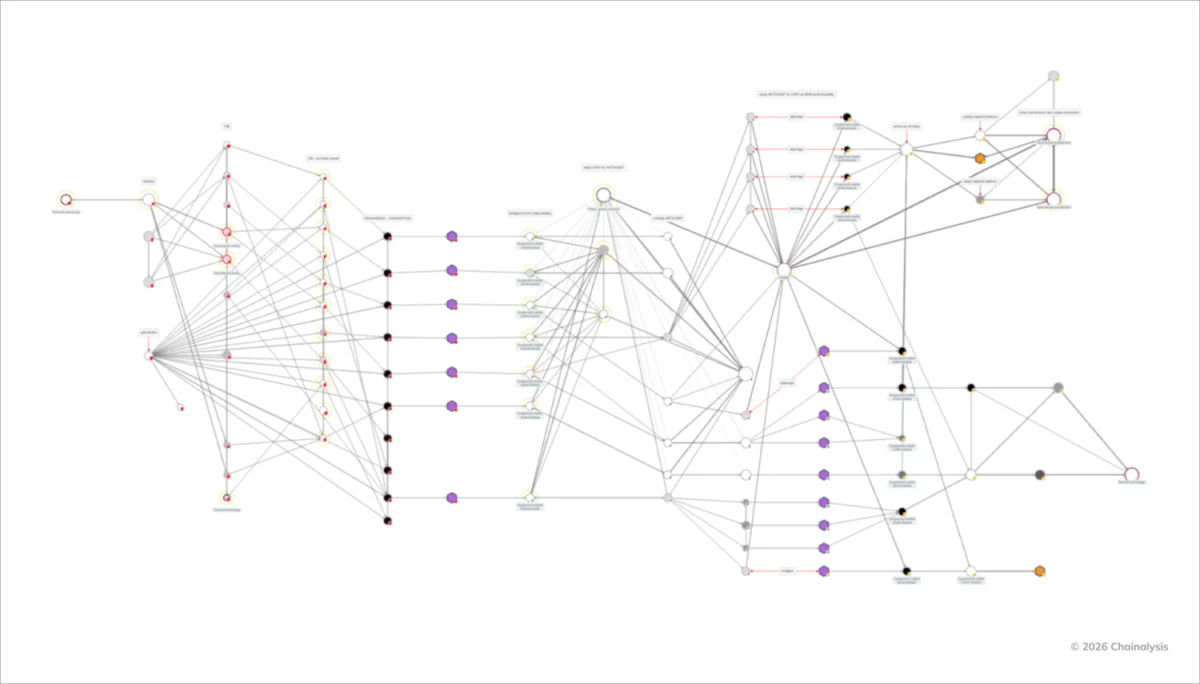
In a significant escalation of financial warfare against the Iranian regime, the U.S. Department of the Treasury’s Office of Foreign Assets Control (OFAC) announced on April 24, 2026, a comprehensive update to its sanctions targeting the Central Bank of Iran (CBI). This latest action involves the addition of several new cryptocurrency addresses to the Specially Designated Nationals (SDN) list, effectively severing another artery of the regime’s illicit financial infrastructure. This move coincides with an unprecedented enforcement operation led by Tether, the issuer of the world’s most widely used stablecoin, which resulted in the freezing of more than $344 million in USDT linked to the newly blacklisted Iranian wallets.
The federal action underscores the growing intersection between traditional geopolitical conflicts and the digital asset ecosystem. According to U.S. officials, the funds were tied to a sophisticated network designed to bypass international sanctions, facilitate the sale of illicit petroleum, and provide critical funding for the Islamic Revolutionary Guard Corps (IRGC) and its regional proxies, including Hezbollah. The timing of this enforcement is particularly critical, as it arrives during a period of heightened volatility in the Strait of Hormuz, where Iran has recently attempted to impose unilateral maritime tolls on international shipping.
The Convergence of Sanctions and Digital Asset Enforcement
The April 24 update is not an isolated event but rather an extension of a long-standing U.S. policy to isolate the Iranian financial sector. The Central Bank of Iran was originally designated as a sanctioned entity in 2019 under counter-terrorism authorities. At that time, the U.S. government presented evidence that the CBI had facilitated the transfer of billions of dollars to the IRGC-Qods Force and Hezbollah, enabling regional destabilization and terrorist activities.
However, as traditional banking channels became increasingly restricted due to the SWIFT network ban and aggressive secondary sanctions, the Iranian regime pivoted toward the cryptocurrency market. By utilizing stablecoins like USDT, which are pegged to the U.S. dollar but operate on decentralized or semi-centralized blockchain networks, the CBI sought to maintain liquidity and move capital across borders with greater anonymity.
The recent seizure of $344 million represents one of the largest single actions against Iranian-linked digital assets to date. Tether’s proactive involvement signals a shift in how stablecoin issuers interact with global regulators. In a statement following the freeze, Tether CEO Paolo Ardoino emphasized that the company is committed to ensuring that USDT is not a safe haven for sanctioned entities. By combining blockchain transparency with real-time monitoring, Tether and U.S. law enforcement were able to identify and halt the movement of funds before they could be integrated into the broader Iranian economy.
Geopolitical Turmoil in the Strait of Hormuz
The financial crackdown comes against a backdrop of "maritime extortion" in the Strait of Hormuz, a narrow waterway through which approximately 20% of the world’s petroleum consumption passes. On April 23, 2026, the Iranian government made the provocative claim that it had successfully collected its first "toll revenue" from commercial vessels transiting the strait. This move has been widely condemned by the international community as a violation of the United Nations Convention on the Law of the Sea (UNCLOS), which guarantees the right of transit passage through international straits.
The imposition of these tolls created an environment of chaos that was quickly exploited by opportunistic criminals. Maritime intelligence reports indicate that several international shipping firms, desperate to avoid confrontation with IRGC naval vessels, fell victim to offshore scammers. These bad actors posed as Iranian maritime authorities, providing cryptocurrency wallet addresses for "toll payments."
The consequences for these shipping companies were twofold: they lost significant capital to scammers, and because the Iranian government did not receive the funds, the ships were subsequently harassed, boarded, or delayed by IRGC naval units. This cycle of extortion and fraud highlights the dangers of the regime’s attempts to normalize cryptocurrency for state-level maritime transactions. Analysts suggest that the CBI’s move into the crypto-toll space is a direct response to the regime’s inability to access traditional dollar-clearing systems.
Chronology of Key Events: April 2026
To understand the scope of this enforcement action, it is necessary to examine the timeline of events leading up to the April 24 announcement:

- April 20, 2026: Tether and U.S. law enforcement initiate a joint investigation into a series of high-value USDT transfers originating from intermediary addresses interacting with known Iranian exchanges.
- April 21, 2026: Maritime security firms issue a global warning regarding fraudulent messages targeting ships in the Strait of Hormuz, offering "safe transit" in exchange for stablecoin payments.
- April 23, 2026: The Iranian government announces the collection of its first maritime tolls via the CBI. Simultaneously, blockchain trackers observe the freezing of two major TRON-based addresses: TTiDLWE6fZK8okMJv6ijg42yrH6W2pjSr9 and TNiq9AXBp9EjUqhDhrwrfvAA8U3GUQZH81.
- April 24, 2026: OFAC officially updates the SDN list to include the CBI’s new cryptocurrency identifiers. In a concurrent action, OFAC also designates several Chinese "teapot" refineries and a "shadow fleet" of nearly 40 tankers involved in transporting Iranian oil.
Technical Analysis: The Iranian "Shadow Banking" Network
Blockchain analysis provides a transparent window into how the Iranian regime launders money. Investigations by firms like Chainalysis have revealed that the CBI relies on a network of third-party brokers to convert fiat currency into stablecoins. One notable figure in this network is Alireza Derakhshan, a previously sanctioned individual who coordinated the purchase of over $100 million in cryptocurrency linked to Iranian oil sales between 2023 and 2025.
The laundering process typically involves several layers:
- Placement: Illicit oil revenue is moved through Chinese refineries (such as Hengli Petrochemical) and paid for via intermediary shell companies.
- Layering: These funds are converted into USDT and moved through various "bridges"—technical protocols that allow assets to move between different blockchains (e.g., from Ethereum to TRON).
- Integration: The funds are eventually sent to decentralized finance (DeFi) protocols to further obscure their origin before being deposited into Iranian-affiliated exchanges or used to purchase military hardware.
The addresses added to the SDN list on April 24 were found to be at the heart of this "shadow banking" system. By blacklisting these specific on-chain identifiers, the U.S. Treasury makes it nearly impossible for legitimate exchanges or financial service providers to interact with these funds without risking severe secondary sanctions.
Official Responses and Industry Impact
The reaction from Washington and the private sector has been one of unified resolve. A U.S. Treasury official, speaking to media outlets, stated that the seizure of $344 million is a "warning shot" to any entity attempting to help Iran evade sanctions. "The Iranian regime continues to prioritize funding for its military and terrorist proxies over the welfare of its people," the official said. "We will use every tool at our disposal, including emerging technologies, to disrupt these financial networks."
Tether’s decision to cooperate so closely with U.S. authorities marks a pivotal moment for the stablecoin industry. Historically, some critics have viewed stablecoins as a tool for evasion, but the April 2026 action demonstrates that the transparency of the blockchain can actually make it easier for law enforcement to track and seize illicit funds compared to the opaque world of offshore shell companies and bulk cash smuggling.
For the global shipping industry, the implications are profound. Compliance teams must now screen not only for traditional sanctioned entities but also for the specific cryptocurrency wallets used in maritime extortion schemes. The risk of "double payment"—paying a scammer and then being forced to pay the regime—has made the Strait of Hormuz one of the most complex compliance environments in the world.
Broader Implications and Future Outlook
The events of April 2026 signal a new era of "on-chain diplomacy" and financial enforcement. As Iran continues to test the boundaries of international law in the Strait of Hormuz, the U.S. and its allies are responding with high-tech financial tools. The successful freezing of $344 million proves that while the Iranian regime may be able to physically harass ships in the Gulf, its ability to utilize the proceeds of that harassment is increasingly limited by the global reach of the U.S. financial system and its digital extensions.
Looking ahead, several key trends are likely to emerge:
- Increased Regulation of DeFi: As Iranian actors move toward decentralized protocols to hide their tracks, regulators will likely increase pressure on DeFi developers to implement "know your customer" (KYC) and anti-money laundering (AML) features.
- Expansion of the Shadow Fleet Sanctions: The designation of Chinese refineries and dozens of tankers suggests that the U.S. is moving toward a "maximum pressure" campaign on the physical infrastructure of Iranian oil exports.
- Standardization of Maritime Crypto-Compliance: Shipping companies may soon require specialized blockchain analytics tools to verify the legitimacy of any requested payments in the Middle East.
The April 24 OFAC update serves as a stark reminder that the digital frontier is no longer a lawless space. For the Central Bank of Iran, the loss of $344 million is a significant blow to its operational capacity. For the rest of the world, it is a case study in how public-private partnerships can effectively defend the integrity of the global financial system against state-sponsored illicit activity. As the situation in the Strait of Hormuz remains fluid, the international community will be watching closely to see if these financial measures can translate into a de-escalation of maritime tensions or if the regime will seek even more desperate methods to secure the hard currency it needs to survive.














