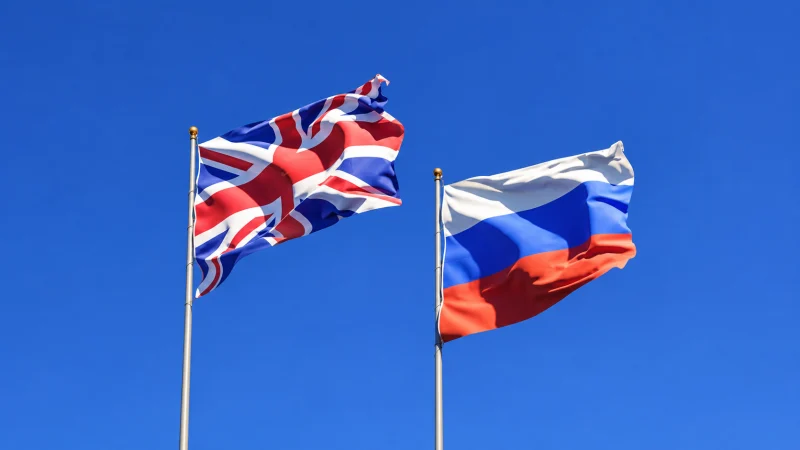
The United Kingdom government has significantly escalated its economic campaign against the Russian Federation’s ability to finance its ongoing military operations in Ukraine by announcing a comprehensive new sanctions package. On October 8, 2024, the British Foreign, Commonwealth & Development Office (FCDO) unveiled a series of 38 new designations aimed at dismantling the sophisticated financial and logistical networks that Moscow uses to bypass international restrictions. Central to this latest enforcement action is the targeting of cryptocurrency exchanges and payment platforms that have allegedly functioned as digital conduits for illicit Russian capital. According to a detailed analysis by blockchain intelligence firm TRM Labs, these sanctions represent a strategic move to sever the "financial plumbing" that allows Russia to maintain its war economy despite years of mounting global isolation.
The October 8 Sanctions Package: A Multi-Pronged Approach
The latest measures are not limited to the digital asset space; they form part of a broader offensive against the pillars of the Russian economy. Of the 38 new designations, many target the "shadow fleet"—a collection of aging oil tankers used by Russia to transport petroleum products above the G7-imposed price cap. Additionally, the sanctions hit military suppliers and critical financial infrastructure. However, it is the focus on cryptocurrency-related entities that has drawn the most attention from global financial regulators and blockchain analysts.
By targeting these platforms, the UK government is acknowledging the evolving nature of sanctions evasion. As traditional banking routes are closed off, the Kremlin and its proxies have increasingly turned to decentralized or loosely regulated virtual asset service providers (VASPs). The October package specifically names several entities that TRM Labs had previously flagged as being operationally linked to sanctioned Russian financial actors.
Targeting the "Parallel Brands": The Case of Cryptomus and Heleket
One of the most significant aspects of the UK’s action is the designation of Xeltox Enterprises Ltd. Registered in British Columbia, Canada, Xeltox is the corporate owner of the payment platform Cryptomus. The UK authorities, supported by findings from TRM Labs, allege that Xeltox and its subsidiaries have provided critical support to Russia’s financial services sector, effectively allowing Russian users and entities to move funds across borders without the oversight required by international anti-money laundering (AML) standards.
The TRM Labs report highlights a sophisticated tactic known as "parallel branding" or "infrastructure sharing." According to the analysis, Cryptomus was operationally linked to another platform called Heleket. TRM Labs assessed with high confidence as early as April 2024 that these two entities shared more than just a corporate parent; they utilized the same underlying technical infrastructure, personnel, branding elements, and liquidity sources.
The chronology of these platforms suggests a deliberate attempt to evade regulatory scrutiny. Heleket was launched in January 2024, just one month before Cryptomus introduced mandatory Know Your Customer (KYC) identity checks. Blockchain data analyzed by TRM Labs showed a telling trend: as Cryptomus implemented stricter compliance measures, its monthly transaction volume fell, while the volume on the newer, less regulated Heleket platform rose. This suggests a migration of users seeking to avoid identity verification, a hallmark of sanctions-evasion activity.
The Scale of Illicit Flows: Links to Garantex
The financial data underlying these designations is staggering. Cryptomus, according to TRM’s April analysis, had deep ties with Garantex, a notorious Russian cryptocurrency exchange that was sanctioned by the United States and the UK in 2022 for its role in facilitating money laundering and ransomware payments.
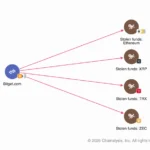
Data shows that Cryptomus received more than $204 million from Garantex and sent approximately $101 million back to the sanctioned exchange. These high-volume transfers between a supposedly "clean" Canadian-registered entity and a globally blacklisted Russian exchange provided the necessary evidence for the UK to move against Xeltox Enterprises. The use of Cryptomus as a bridge allowed Russian capital to interact with the global financial system while maintaining a veneer of legitimacy.
TokenSpot and the Kyrgyzstan Connection
The UK’s sanctions also extended deep into Central Asia, targeting TokenSpot, a cryptocurrency exchange based in Kyrgyzstan. TokenSpot was designated for its role in supporting the Russian financial services sector. TRM Labs’ investigation concluded with high confidence that TokenSpot was essentially a front company for Grinex, an entity considered by many experts to be the likely successor to Garantex’s operations.
The technical links between TokenSpot and Grinex were extensive. Analysts identified six TRON (TRX) network addresses that were shared by both exchanges. Furthermore, the two platforms utilized identical infrastructure for collecting user deposits and managing transaction fee balances. Perhaps most incriminating was the timing of their operations; both platforms announced service interruptions at nearly the exact same time in April 2024, suggesting a unified management structure.
The volume of capital moving through TokenSpot further underscores the gravity of the situation. TRM Labs reported that TokenSpot facilitated transfers totaling more than $950 million to a combination of Grinex, Garantex, and the "A7 network." The A7 network alone, which has been linked to Russian state-sponsored financial maneuvering, received $679.5 million from TokenSpot.
Expanding the Net: Tsunami Payments and Local Facilitators
The UK’s reach in this package also included other Kyrgyzstan-registered entities, such as Tsunami Payments and Processing KG. These firms are alleged to have provided the technical and financial scaffolding necessary for Russian entities to process international payments. Along with these companies, the UK designated Ulan Bukabaev, the director of Processing KG, for his personal role in facilitating these operations.
Back in Russia, the sanctions hit the Moscow-based bank Stolichny Kredit and the company Planeta. By targeting both the foreign intermediaries and the domestic Russian recipients, the UK aims to create a "chokepoint" that makes it increasingly difficult and expensive for Moscow to move money.
Analysis of Implications: A New Era of Enforcement
The October 8 package signals a shift in how Western powers approach sanctions. It is no longer enough to sanction a single entity; regulators are now targeting the entire ecosystem of "successor services" and "parallel brands."
1. The End of "Whack-a-Mole" Sanctions
For years, Russian financial actors have stayed one step ahead of regulators by simply re-registering companies under new names or moving operations to different jurisdictions. The UK’s decision to sanction Xeltox and TokenSpot based on shared infrastructure and technical data suggests that intelligence agencies are getting better at identifying the underlying "digital DNA" of these organizations. This move forces compliance teams at legitimate global exchanges to look beyond simple "blacklists" and perform deeper forensic analysis of their counterparties.
2. Heightened Pressure on Central Asian Regulators
Kyrgyzstan has emerged as a significant hub for Russian sanctions evasion due to its proximity to Russia and its relatively nascent regulatory framework for digital assets. By sanctioning Kyrgyz entities, the UK is sending a clear message to the government in Bishkek: allowing these platforms to operate with impunity will carry diplomatic and economic costs.
3. The Role of Stablecoins and the TRON Network
The TRM Labs report specifically mentioned TRON addresses, highlighting a growing trend in illicit finance. While Bitcoin remains the most famous cryptocurrency, stablecoins (like USDT) on the TRON network have become the preferred medium for sanctions evasion due to their low transaction fees and high liquidity. This focus may lead to increased pressure on stablecoin issuers to freeze assets associated with these newly designated addresses.
Timeline of Escalation
To understand the significance of the October 8 package, one must view it through the lens of the UK’s broader strategy since the 2022 invasion:
- February 2022: The UK imposes the first wave of major sanctions on Russian banks and oligarchs.
- April 2022: The US and UK sanction Garantex, the primary hub for Russian crypto-to-fiat transfers.
- 2023: Russia begins exploring "Cross-Border Payments in Digital Currencies" legislation to formalize the use of crypto for international trade.
- April 2024: TRM Labs identifies the link between Cryptomus and Heleket, noting the shift in volume following KYC implementation.
- October 6, 2024: TRM Labs confirms TokenSpot’s role as a front for Grinex.
- October 8, 2024: The UK officially designates 38 entities, including Xeltox, TokenSpot, and the associated Kyrgyz payment processors.
Official Responses and Global Impact
While the Russian government has historically dismissed Western sanctions as "illegal" and "ineffective," the targeting of payment channels is known to cause significant friction in the Russian economy. Domestic businesses in Russia have reported increasing difficulties in paying foreign suppliers, even in "friendly" nations like China and Turkey, as banks fear secondary sanctions from the UK and US.
The UK’s Foreign Office stated that these measures are designed to "undermine Putin’s war machine" by making it harder for Russia to profit from its oil exports and by closing the loopholes in the financial system.
Blockchain intelligence firms, including TRM Labs, have urged global compliance teams to take immediate action. The advice to the private sector is clear: monitor for "successor services" that share liquidity or infrastructure with the designated firms. The interconnectedness of the crypto world means that a sanction on a Kyrgyzstan-based exchange can have ripple effects for liquidity providers in London, New York, and Singapore.
Conclusion
The UK’s October 8 sanctions package represents a sophisticated evolution in economic warfare. By moving beyond traditional banks and targeting the technical infrastructure of the cryptocurrency world, the British government is attempting to close the final exits for Russian capital. The identification of $950 million in illicit flows through a single Central Asian exchange demonstrates the scale of the challenge. However, as blockchain transparency continues to improve, the ability of "shadow" financial networks to operate in the dark is rapidly diminishing. For the global cryptocurrency industry, this is a stark reminder that regulatory compliance is no longer optional, and the "infrastructure-sharing" tactics of the past are now firmly in the sights of international law enforcement.