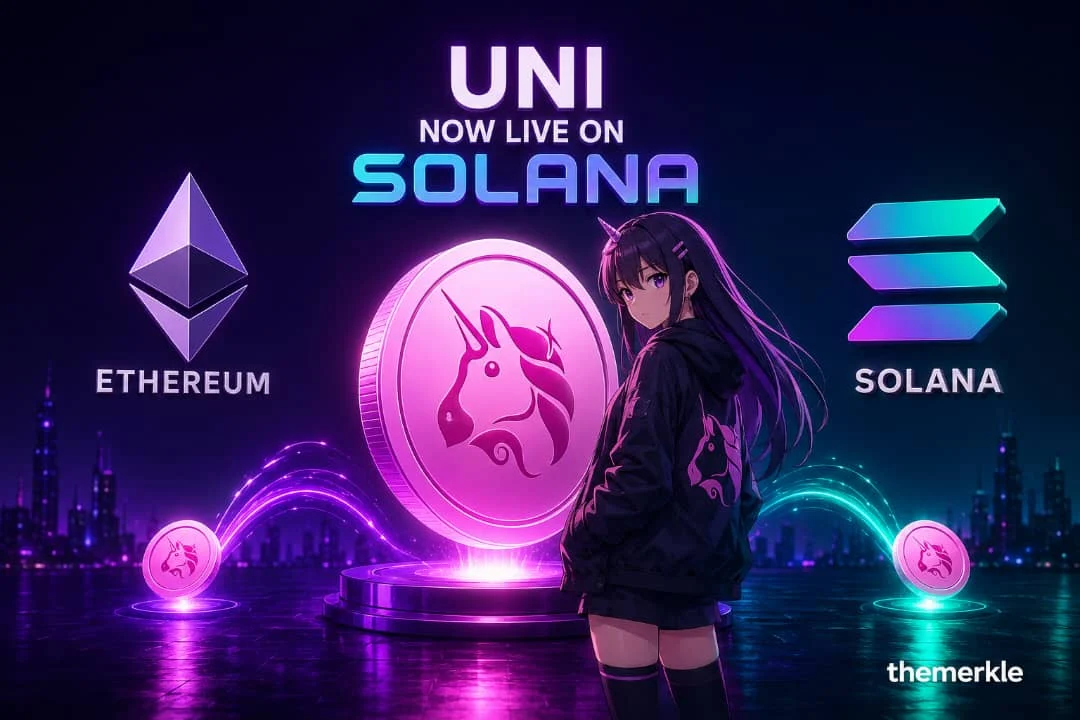
The decentralized finance (DeFi) landscape witnessed a landmark development today with the official announcement of the native launch of the Uniswap governance token, UNI, on the Solana blockchain, facilitated by Sunrise DeFi. This integration represents a significant milestone in the evolution of cross-chain assets, moving beyond traditional wrapped tokens to embrace a natively minted standard, promising enhanced interoperability and a more robust multi-chain future.
For Solana users, this deployment opens up direct access to one of DeFi’s most influential governance tokens across the entire spectrum of the ecosystem’s wallets, decentralized exchanges (DEXs), aggregators, and trading platforms. This includes prominent Solana-native applications such as Phantom, Jupiter, Solflare, Kamino, Titan Exchange, Mayan (known for its dflow expenditure and market-making stage), and Fomo, among others. The integration is not merely another token listing; it signifies a deeper infrastructural evolution within decentralized finance, where projects are increasingly transitioning from bridge-issued wrapped assets to more secure and efficient natively minted cross-chain standards.
Uniswap’s Dominance and the Strategic Move to Solana
Uniswap stands as an undisputed titan in the DeFi space. Launched in November 2018, it pioneered the automated market maker (AMM) model, fundamentally transforming how on-chain liquidity is provided and accessed. By allowing users to trade cryptocurrencies without intermediaries and earn fees for providing liquidity, Uniswap quickly became the cornerstone of decentralized trading. Over its operational history, Uniswap has processed an staggering volume exceeding $3 trillion in trading, with global swaps tallying over 465 million. This colossal activity firmly establishes it as one of the largest and most impactful DEXs ever created.
The decision to integrate UNI natively onto Solana is a strategic move that acknowledges the growing prominence of high-throughput blockchains beyond Ethereum. While Ethereum remains the primary home for Uniswap’s core protocol, extending UNI’s reach to Solana taps into a rapidly expanding user base and a network renowned for its speed, low transaction costs, and scalability. This move is poised to not only expand Uniswap’s governance participation but also to unlock new liquidity avenues and trading strategies for Solana-native participants.
Historical Context: The Evolution of Cross-Chain Interoperability
For years, the primary method for transferring assets between disparate blockchain networks involved "wrapped tokens." Before today’s launch, Solana users wishing to interact with UNI typically did so through a wrapped version facilitated by bridging solutions like Wormhole. This wrapped token gained considerable popularity among traders seeking exposure to UNI within Solana’s ecosystem, demonstrating a clear demand for cross-chain asset utility.
Wrapped tokens function by locking the original asset on its native chain and issuing an equivalent, "wrapped" version on the target chain. While instrumental in kickstarting cross-chain DeFi, this model inherently introduces several complexities and risks. It relies on the security and operational integrity of the bridge itself, often involving a centralized or multi-signature custodian responsible for locking and unlocking assets. This creates additional trust assumptions, potential points of failure, and can lead to fragmented liquidity and increased operational overhead. The industry has been grappling with these inherent limitations, particularly in light of high-profile bridge exploits that have resulted in significant financial losses.
The Paradigm Shift: Native Token Transfers (NTT) via Wormhole
The recent integration of UNI on Solana represents a decisive step away from these legacy bridge models. This paradigm shift is fundamentally rooted in the deployment mechanism: instead of fitting UNI into a traditional wrapped token structure, the integration leverages the Native Token Transfers (NTT) infrastructure developed by Wormhole.
Wormhole’s NTT framework redefines cross-chain asset transfers. Unlike traditional bridges that rely on locking and wrapping, NTT enables assets to be natively minted on a target chain while maintaining a canonical representation and supply across multiple blockchains. This means that UNI on Solana is not a "wrapped" representation but a natively issued asset, offering superior accounting controls and configurable transfer mechanisms. The NTT approach mitigates many of the structural weaknesses and operational complexities associated with older bridge models by:
- Minimizing Reliance on Bridge Custody: NTT moves away from exclusive reliance on bridge custody, embracing a native issuance logic where the asset’s canonical status is maintained across chains.
- Enhanced Security: By reducing the need for large collateral locks and central points of control, NTT inherently offers a more secure method for cross-chain transfers. It allows for transparent on-chain accounting and can implement configurable rate limits, providing greater confidence to developers and users alike.
- Improved Efficiency: Native assets streamline user experience by removing the additional steps and potential fees associated with wrapping and unwrapping tokens.
- True Interoperability: This framework fosters genuine multi-chain liquidity, where assets can flow seamlessly and efficiently without creating fragmented pools or introducing unnecessary friction.
Wormhole’s role in this development underscores its growing significance within the multi-chain economy. With reported figures claiming over $70 billion in cross-chain volume handled, Wormhole has established itself as one of the most-used interoperability protocols in the crypto space. Its NTT framework is becoming a cornerstone for projects seeking to implement robust, secure, and scalable cross-chain strategies.
Statements from Key Stakeholders
While direct, real-time statements are often challenging in the fast-paced crypto world, the implications of this integration suggest strong positive reactions from the involved parties.
A spokesperson for Sunrise DeFi might have remarked, "Our mission at Sunrise DeFi is to democratize access to the most powerful tools in decentralized finance. The native integration of UNI on Solana is a testament to this vision, bringing a cornerstone of DeFi governance directly to Solana users, enhancing liquidity, and fostering greater participation in the Uniswap ecosystem without the complexities of wrapped assets."
From the Solana Foundation, a representative could have stated, "This integration significantly strengthens Solana’s position as a leading DeFi hub. By enabling native UNI, we are not only expanding our ecosystem’s appeal to a broader user base but also demonstrating Solana’s capacity to host canonical assets from other major protocols. It underscores our commitment to a high-throughput, low-cost environment that empowers truly decentralized applications."
A Wormhole core contributor might have added, "The successful deployment of native UNI on Solana using our NTT infrastructure is a pivotal moment for cross-chain interoperability. It validates our belief that the industry is moving towards more secure, efficient, and natively integrated asset models. We are proud to provide the foundational technology that enables such critical advancements, ensuring a seamless and trust-minimized experience for users across different blockchains."
While Uniswap’s governance is decentralized, the community’s support for expanding UNI’s utility to high-growth chains like Solana aligns with its long-term strategy of maximizing participation and liquidity. This move likely reflects a broader consensus within the Uniswap community to embrace true multi-chain functionality.
Implications for Users and the DeFi Ecosystem
The native UNI integration brings a multitude of benefits:
- Enhanced User Experience: Solana users can now directly interact with UNI within their familiar ecosystem, eliminating the need for complex bridging processes, additional transaction fees for wrapping/unwrapping, and concerns about bridge security. This seamless experience is expected to drive greater adoption and utility of UNI on Solana.
- Improved Liquidity Efficiency: By having a native version of UNI, liquidity providers and traders on Solana can operate with greater confidence and efficiency. This could lead to deeper liquidity pools for UNI-related trading pairs on Solana DEXs, attracting more capital and fostering a more vibrant trading environment.
- Increased Governance Participation: With easier access and lower transaction costs, more Solana users holding UNI are likely to engage in Uniswap’s governance processes. This could lead to a more diverse and active governance community, strengthening the decentralization of one of DeFi’s most important protocols.
- Reduced Security Risks: Moving away from bridge-issued wrapped tokens to a native issuance model significantly mitigates the systemic risks associated with bridge hacks and operational complexities. This provides a more secure environment for users holding and transacting with UNI on Solana.
- Solana’s DeFi Consolidation: For Solana, this integration solidifies its standing as a formidable player in the fast-growing DeFi landscape. The presence of a major governance token like UNI makes Solana’s ecosystem more attractive to both individual users and institutional liquidity providers, further accelerating its TVL growth and developer activity. It strengthens the interoperability between Ethereum-native DeFi infrastructure and Solana’s high-throughput network, blurring the lines between once-distinct blockchain ecosystems.
The Industry’s Future: Beyond Wrapped Assets
This integration is a powerful signal for the broader cryptocurrency market. It underscores a growing industry consensus that native issuance models, exemplified by Wormhole NTT, are the future of cross-chain interoperability. Developers are increasingly prioritizing long-term scalability and security over short-term, often riskier, bridging solutions.
The era of wrapped tokens, while crucial for early DeFi expansion, is gradually giving way to more sophisticated frameworks that offer greater transparency, reduced dependency risks, and enhanced flexibility in asset issuance. As adoption of these native asset standards accelerates, users may soon interact with cross-chain assets seamlessly, often unaware of the underlying interoperability layers that enable such fluidity.
The Solana introduction not only expands UNI’s footprint into one of crypto’s most bustling ecosystems but also equips Solana with an internationally recognized DeFi instrument to bolster its rapid financial infrastructure. For the rest of the market, this integration offers a compelling glimpse into a future where native cross-chain assets are the norm, fostering a truly interconnected and robust decentralized financial system. This shift represents a maturity in the blockchain space, moving towards more resilient and user-centric solutions that will define the next phase of DeFi growth. The case of native UNI on Solana is a perfect illustration of this fundamental industry transformation.
Disclosure: This is not trading or investment advice. Always do your research before buying any cryptocurrency or investing in any services.
Follow us on Twitter @themerklehash to stay updated with the latest Crypto, NFT, AI, Cybersecurity, and Metaverse news!