


In a decisive and unprecedented expansion of its efforts to dismantle the global shadow economy, the United States government on April 23, 2026, announced a coordinated multi-agency offensive against the sprawling network of Southeast Asian scam centers. This high-stakes operation, led by the Department of Justice’s (DOJ) Scam Center Strike Force in tandem with the Office of Foreign Assets Control (OFAC) and the Department of State, represents one of the most comprehensive crackdowns on cyber-enabled fraud in history. The actions target the entire operational lifecycle of transnational criminal syndicates: from the physical compounds in Myanmar and Cambodia where human trafficking victims are held in forced servitude, to the sophisticated digital infrastructure used to deceive global investors, and finally to the complex financial webs used to launder billions in stolen cryptocurrency.
The magnitude of the problem is underscored by the staggering financial toll recorded over the previous year. According to data from the FBI’s Internet Crime Complaint Center (IC3), reported losses from cryptocurrency investment fraud—commonly referred to as "pig butchering"—surpassed $7.2 billion in 2025. These schemes, which involve long-term psychological manipulation of victims followed by theft via fraudulent investment platforms, have evolved from localized scams into a massive industrial-scale threat. The U.S. government’s latest intervention signals a shift in strategy, moving beyond individual arrests to a systemic dismantling of the political and economic pillars that sustain these criminal enterprises.
The Evolution of the Scam Center Strike Force and Operation Level Up
The Scam Center Strike Force was officially inaugurated in November 2025 as a direct response to the escalating national security threat posed by Southeast Asian organized crime. While initial efforts focused on public awareness and localized interdiction, the April 2026 announcement marks a transition toward aggressive extraterritorial enforcement. Central to this strategy is "Operation Level Up," a joint initiative between the FBI and the U.S. Secret Service aimed at neutralizing the digital tools of the trade.
As part of this operation, federal authorities successfully seized 503 web domains. These domains were meticulously engineered to impersonate legitimate cryptocurrency exchanges and investment firms, providing a veneer of credibility that allowed scammers to siphon funds from unsuspecting users. Furthermore, in a landmark move for digital enforcement, the Strike Force unsealed the seizure of a Telegram channel with more than 6,000 followers. This channel served as a primary recruitment hub, luring English-speaking professionals to Cambodia with the promise of high-paying tech jobs, only to trap them in a cycle of forced labor and physical abuse once they arrived at the compounds.
Dismantling the Shunda Compound: Arrests and Human Trafficking
The human cost of these operations was brought to the forefront with the unsealing of criminal complaints against Huang Xingshan and Jiang Wen Jie. The two Chinese nationals are alleged to have served as high-level managers at the Shunda compound located in Min Let Pan, Burma. Before the compound was raided and seized by local regional forces in late 2025, it functioned as a fortress of cybercrime.
Investigations revealed that Huang and Jiang oversaw hundreds of trafficked workers who were subjected to severe physical punishment, including beatings and starvation, if they failed to meet daily "scam quotas." These workers were forced to manage fake social media personas to build rapport with American victims before directing them toward fraudulent cryptocurrency platforms. Huang and Jiang were eventually apprehended in Thailand earlier this year. Their capture occurred while they were attempting to transit between operational hubs in Cambodia and Burma, illustrating the high mobility of the syndicates’ middle management.
Financial Interdiction: $700 Million Restrained
Perhaps the most significant blow to the syndicates’ bottom line is the successful restraint of over $701.9 million in cryptocurrency. This massive recovery was made possible through a combination of sophisticated blockchain forensics and the voluntary cooperation of major cryptocurrency service providers. By mapping the flow of victim funds from fraudulent wallets to centralized exchanges, the Strike Force was able to "freeze" assets before they could be off-ramped into fiat currency.
This financial intervention highlights the dual nature of blockchain technology. While its pseudonymity initially facilitated the rise of pig butchering scams, its inherent transparency now provides law enforcement with an immutable ledger to track and recover stolen wealth. The DOJ emphasized that this $700 million figure represents only a portion of the total illicit flow, but the seizure serves as a proof of concept for future large-scale asset recoveries.
Sanctions Against the Cambodian Political-Criminal Nexus
While the DOJ focused on the operators and the digital footprint, the Department of the Treasury’s OFAC targeted the enablers. On April 23, 2026, OFAC designated 29 targets in Cambodia, effectively severing their access to the U.S. financial system. At the heart of these sanctions is Kok An, a prominent Cambodian senator and business tycoon.

Kok An’s business empire, which includes Crown Resorts and Anco Brothers Co Ltd, is alleged to have provided the essential physical infrastructure for scam centers. According to the Treasury, Kok An’s properties in Poipet and Sihanoukville were specifically retrofitted to serve as high-security compounds for criminal syndicates. These facilities provided the necessary electricity, high-speed internet, and physical security required to run 24-hour fraud operations. In exchange, Kok An allegedly collected significant rental income and utilized his casino operations to launder the proceeds of these crimes.
The sanctions also extended to Kok An’s close associate, Rithy Raksmei, and a network of entities including:
- Heng Feng Cambodia Bank Plc: Alleged to have provided banking services to scam operators, bypassing standard Anti-Money Laundering (AML) protocols.
- K99 Group and Bolai: Two major conglomerates linked to the operationalization of scam compounds and the deployment of malicious software.
- Crown Resorts Co., Ltd.: The primary vehicle for property management and casino-based money laundering.
Technical Shifts: From Social Engineering to Malware Deployment
A critical component of the enriched analysis provided by recent cybersecurity research, including findings from Infoblox, indicates a tactical evolution among Southeast Asian scam centers. Historically, pig butchering relied almost exclusively on social engineering—winning a victim’s trust over weeks or months. However, the K99 Group and similar entities have begun integrating malware-as-a-service into their operations.
Recent data shows a spike in DNS activity linked to scam compounds, suggesting the deployment of Trojans and biometrics-stealing malware. This shift allows scammers to bypass two-factor authentication and gain direct access to victims’ financial accounts, significantly increasing the efficiency and lethality of their attacks. By diversifying their toolkit, these syndicates are moving toward a hybrid model of "cyber-social" fraud that is harder to detect and even harder to recover from.
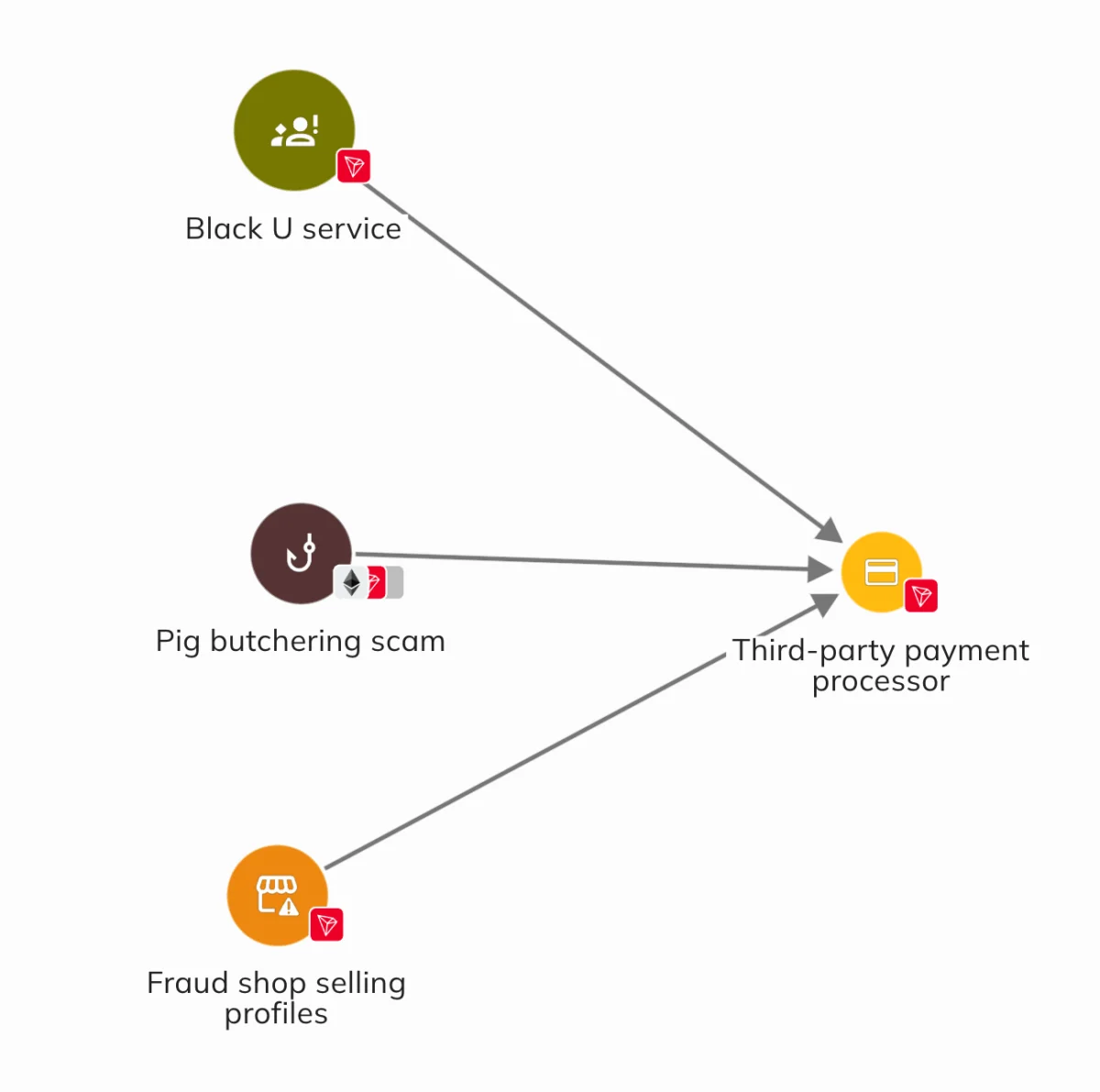
Furthermore, the Bolai network has been identified as a pioneer in using third-party payment processors to bypass traditional banking oversight. Blockchain analysis reveals that these processors have significant exposure to "Black U" services—illicit tether (USDT) laundering platforms—and fraud shops selling stolen social media profiles. This interconnectedness demonstrates that the scam centers are not isolated incidents but are part of a highly integrated global illicit ecosystem.
Broader Implications for Global Compliance and Geopolitics
The U.S. government’s aggressive stance carries profound implications for the global financial sector. For cryptocurrency exchanges and regional banks, the designation of entities like Heng Feng Cambodia Bank creates an immediate and high-stakes compliance environment. Financial institutions must now implement more rigorous screening processes for any transactions originating from or directed toward Southeast Asian casino hubs.
The transparency of the blockchain remains the primary weapon for compliance teams. By utilizing advanced monitoring solutions, organizations can proactively identify exposure to the sanctioned entities and prevent the movement of victim funds. The U.S. government’s actions also put diplomatic pressure on the governments of Cambodia and Myanmar to address the "state-within-a-state" status of these criminal compounds. The involvement of a sitting senator in Cambodia, in particular, highlights the deep-seated corruption that federal authorities are now willing to challenge directly through economic statecraft.
Victim Recourse and Future Outlook
As the Strike Force continues its work, officials are urging victims to come forward. The recovery of $700 million provides a glimmer of hope for some, though the process of restitution is often long and complex. Victims are encouraged to report incidents to the FBI’s ic3.gov portal immediately, as timely reporting is the most critical factor in the successful freezing of funds.
The April 23 actions represent a milestone, but the battle against the shadow economy is far from over. As the U.S. tightens the noose around traditional scam hubs, there are already signs that these syndicates are looking toward new jurisdictions in Africa and Latin America. The Strike Force has signaled that its mission is permanent, and the multi-agency coordination seen this week will likely become the new standard for combating the evolving threat of transnational cybercrime.
The message from Washington is clear: the era of impunity for the architects of pig butchering and the "scam-slave" trade is coming to an end. By targeting the money, the infrastructure, and the political protection that these syndicates enjoy, the United States is attempting to dismantle the very foundations of modern cyber-fraud.














