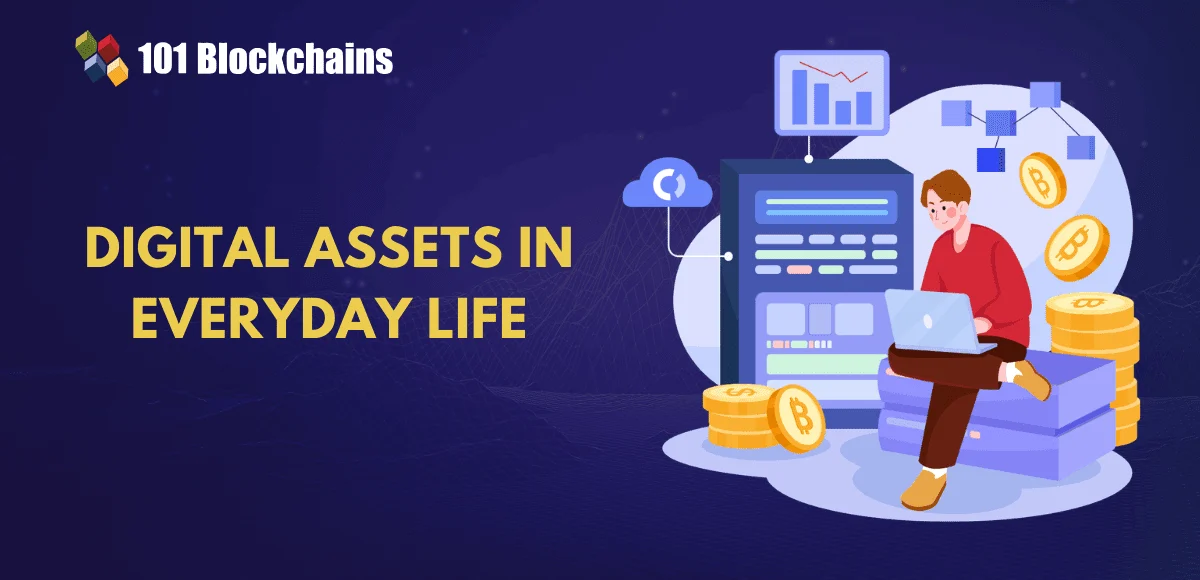
The contemporary global landscape is unequivocally a digital-first environment, where an ever-expanding array of services, information, and value resides within the digital realm. This pervasive digitalization has profoundly reshaped traditional perspectives on investment, financial transactions, and property ownership, driven largely by the emergence and proliferation of digital assets. These innovative instruments are not merely abstract concepts but tangible representations of value or ownership rights, meticulously recorded and secured on blockchain technology. Understanding the diverse facets and real-world applications of digital assets is paramount for anyone navigating this evolving economic paradigm, from individual investors to multinational corporations. The increasing demand for expertise in this domain underscores the importance of specialized certifications, such as those offered by 101 Blockchains, which are designed to cultivate certified blockchain experts and enhance career prospects in this burgeoning field.
Defining Digital Assets: A Modern Perspective
Historically, the term "digital assets" often referred to an organization’s digital files, encompassing images, videos, and various documents. However, this definition has undergone a profound transformation. Today, digital assets are understood as intangible assets that exist purely in digital form, yet possess inherent value and can be owned, transferred, and traded much like their physical counterparts. Unlike traditional assets that might be represented by physical deeds or certificates, digital assets leverage cryptographic principles and distributed ledger technology, primarily blockchain, to establish immutable records of ownership and transactions. This fundamental shift from centralized record-keeping to decentralized, transparent ledgers is a cornerstone of their revolutionary potential. The inability to physically touch or hold these assets does not diminish their economic significance; rather, it highlights the evolving nature of value in the 21st century. Prominent examples include cryptocurrencies like Bitcoin and Ethereum, non-fungible tokens (NFTs), stablecoins, and utility tokens, each demonstrating distinct applications and functionalities across various platforms. The positive market sentiment for digital assets is evident in the burgeoning number of cryptocurrency owners worldwide and the escalating interest in the tokenization of traditional assets, signaling a broader acceptance and integration into mainstream finance.
The Rise of Digital Assets: A Chronology
The journey of digital assets from nascent technological experiments to significant economic forces has been marked by several pivotal milestones. The genesis can be traced back to 2008, with the publication of Satoshi Nakamoto’s whitepaper detailing Bitcoin, which officially launched in January 2009. Bitcoin introduced the world to decentralized digital currency, operating independently of central banks and traditional financial institutions. This marked the birth of cryptocurrencies and the foundational application of blockchain technology.
The next significant leap occurred in 2015 with the launch of Ethereum. Beyond a simple cryptocurrency, Ethereum introduced the concept of smart contracts—self-executing contracts with the terms of the agreement directly written into code. This innovation paved the way for decentralized applications (dApps), decentralized finance (DeFi), and subsequently, non-fungible tokens (NFTs), which gained widespread prominence around 2021. NFTs allowed for the tokenization of unique digital items, proving verifiable digital ownership of art, collectibles, and even virtual real estate.
Concurrently, the need for price stability within the volatile crypto market led to the development of stablecoins, with Tether (USDT) emerging as an early and dominant player around 2014. These assets, pegged to fiat currencies or other stable assets, aimed to bridge the gap between traditional finance and the crypto ecosystem. More recently, the focus has expanded to Central Bank Digital Currencies (CBDCs), with countries like China launching the e-CNY pilot in 2020 and Nigeria introducing the eNaira in 2021, indicating a global trend among central banks to explore sovereign digital currencies. The concept of Real-World Asset (RWA) tokenization has also gained considerable traction in recent years, particularly since 2022, as financial institutions and businesses increasingly recognize its potential to unlock liquidity and democratize access to traditional assets. This chronological progression underscores a continuous evolution, moving from purely digital currencies to tokenized representations of physical assets and even state-backed digital money.
Key Categories of Digital Assets and Their Real-World Impact
The diverse landscape of digital assets can be broadly categorized, each with unique characteristics and profound implications for various sectors.
Real-World Asset (RWA) Tokens: Bridging Physical and Digital
Real-World Asset (RWA) tokens represent a cutting-edge category of digital assets that bridge the tangible and intangible worlds. These tokens digitally represent ownership of physical or traditional financial assets on a blockchain network. By leveraging tokenization, RWAs enable the fractional ownership of assets such as real estate, commodities (e.g., gold, oil), revenue streams from businesses, private equity, and even traditional stocks and bonds. The distinctive trait of RWAs is their backing by verifiable, physical, or tangible assets, which inherently offers a degree of stability and regulatory certainty often absent in other purely digital assets.
RWA tokenization has emerged as a promising next-generation solution for capital raising and investment. Unlike traditional securities offerings that involve physical certificates or complex legal documentation, RWA tokens represent an investor’s share of investment in specific assets through immutable blockchain records. This mechanism extends global investor reach, enables access to enhanced liquidity options by opening markets to a broader pool of investors, and significantly reduces intermediaries and operational costs associated with traditional asset management. For investors, RWAs offer the benefits of fractional ownership in high-value assets that were previously inaccessible, such as luxury real estate or fine art, thereby facilitating diversified investment portfolios. Projects like Centrifuge and MakerDAO are actively exploring and implementing RWA solutions, bringing billions of dollars of real-world collateral onto blockchain platforms. While they are not cryptocurrencies in the traditional sense, RWA tokens can be issued and traded on authorized platforms under specific regulatory frameworks, reflecting a growing acceptance of tokenized securities. The global market for tokenized assets is projected to reach trillions of dollars in the coming decade, indicating a seismic shift in how value is represented and exchanged.
Cryptocurrencies: The Pioneers of Decentralized Finance
No discussion of digital assets is complete without a deep dive into cryptocurrencies. At their core, cryptocurrencies are digital or virtual currencies designed to work as a medium of exchange, utilizing cryptography to secure and verify transactions as well as to control the creation of new units. Unlike fiat currencies issued by governments, cryptocurrencies typically operate on decentralized networks based on blockchain technology, meaning they are not subject to government or financial institution interference.
The intrinsic value of a cryptocurrency is not tied to a physical commodity like gold or silver; rather, its value is determined by market demand and supply, reflecting what participants are willing to pay for it. The decentralized network of nodes hosting a cryptocurrency meticulously verifies and securely registers all transactions on its underlying blockchain, ensuring transparency and immutability. Governance often rests with network participants or is embedded within the protocol’s code, dictating aspects like supply limits and monetary policy. Over the years, the use cases for cryptocurrencies have expanded exponentially. Beyond simple payments, they are now integral to cross-border remittances, decentralized lending and borrowing platforms (DeFi), staking, and even as a store of value akin to digital gold. Bitcoin, with its current market capitalization often exceeding a trillion dollars, remains the most prominent example, alongside Ethereum, which powers a vast ecosystem of dApps.
Central Bank Digital Currencies (CBDCs) and Stablecoins: Stability in a Volatile Market
The quest for stability within the digital asset ecosystem has given rise to Central Bank Digital Currencies (CBDCs) and stablecoins, representing distinct approaches to integrating digital value with traditional financial stability.
Central Bank Digital Currencies (CBDCs) are digital forms of a country’s fiat currency, issued and regulated by its central monetary authority. Unlike decentralized cryptocurrencies, CBDCs are fundamentally centralized, operating under the direct control of the issuing central bank. This centralized nature imbues them with the full faith and credit of the government, offering a high degree of regulatory certainty and stability. Countries globally are actively experimenting with CBDCs to enhance payment systems, foster financial inclusion, and maintain monetary policy control in an increasingly digital world. As mentioned, Nigeria launched the eNaira in 2021, and China has been extensively piloting its e-CNY since 2020. India, Russia, and the European Union are also exploring their own digital currency initiatives, signaling a global shift towards potentially sovereign digital money. The implications are vast, impacting everything from cross-border payments to the structure of commercial banking.
Stablecoins, on the other hand, are cryptocurrencies designed to minimize price volatility by being pegged to a "stable" asset, typically a fiat currency like the US dollar, or sometimes to commodities like gold. Their price stability is achieved through various mechanisms:
- Collateralized stablecoins: Backed by reserves of fiat currency (e.g., USDT, USDC) or other cryptocurrencies (e.g., DAI).
- Algorithmic stablecoins: Maintain their peg through automated algorithms that adjust supply and demand.
Stablecoins serve as a critical bridge between the traditional financial system and the crypto economy, facilitating fast, low-cost transactions without the volatility of unpegged cryptocurrencies. They are widely used for trading, remittances, and as a safe haven during market downturns. The combined market capitalization of stablecoins often reaches hundreds of billions of dollars, highlighting their integral role in the digital finance ecosystem.
Supporting Data and Market Trends
The growth trajectory of digital assets is compelling, supported by robust market data and evolving trends. Global cryptocurrency adoption has surged, with estimates suggesting over 420 million crypto owners worldwide as of early 2023, a significant increase from just a few years prior. The total market capitalization of cryptocurrencies frequently fluctuates but has often exceeded $2 trillion, underscoring the substantial value now held in these digital forms.
Beyond individual investors, institutional interest in digital assets is rapidly accelerating. Major financial institutions, hedge funds, and corporate treasuries are increasingly allocating capital to cryptocurrencies, stablecoins, and tokenized assets, recognizing their potential for diversification and return. This institutionalization is driving the development of sophisticated custody solutions, trading platforms, and regulatory frameworks. The tokenization market, particularly for RWAs, is poised for explosive growth. Industry reports project the market for tokenized real-world assets to reach between $4 trillion and $16 trillion by 2030, driven by the efficiency, liquidity, and fractional ownership benefits they offer. However, challenges persist, including market volatility, cybersecurity risks, and the complex, fragmented nature of global digital asset regulation, all of which continue to shape investment trends and market evolution.
Regulatory Landscape and Official Responses
The rapid evolution of digital assets has presented a significant challenge and opportunity for global regulators. Governments and financial authorities worldwide are grappling with how to effectively oversee these novel instruments, balancing innovation with consumer protection, financial stability, and anti-money laundering (AML) and combating the financing of terrorism (CFT) concerns. The regulatory landscape remains highly fragmented, with approaches varying significantly across jurisdictions. Some countries have adopted a cautious "wait-and-see" approach, while others have moved to implement comprehensive frameworks or, in some cases, outright bans on certain digital asset activities.
Central banks’ exploration of CBDCs is a direct response to the rise of private digital currencies, aiming to modernize payment systems while retaining sovereign control over monetary policy. Statements from central bank governors often emphasize the potential for greater efficiency and financial inclusion, alongside concerns about privacy and cybersecurity. Similarly, financial regulators are actively drafting rules for stablecoins, recognizing their potential systemic importance. The European Union’s Markets in Crypto-Assets (MiCA) regulation, for example, represents a landmark effort to provide a unified regulatory framework for crypto-assets across member states. For RWAs, regulators are often seeking to adapt existing securities laws to digital tokens, acknowledging their hybrid nature as both technological innovations and representations of traditional assets. The overarching goal is to foster responsible innovation while mitigating risks, a complex task that requires continuous dialogue between policymakers, industry participants, and legal experts. This evolving environment highlights the critical need for professionals who are not only technically proficient but also deeply knowledgeable about digital asset compliance, auditing, and governance.
Broader Impact and Implications for the Future
The transformative potential of digital assets extends far beyond financial markets, promising to reshape various facets of global commerce, ownership, and societal interaction. They represent a fundamental shift in how value is created, stored, and transferred, challenging long-held paradigms of centralized control and intermediation.
One of the most profound implications is the potential for greater financial inclusion. Digital assets can provide access to financial services for the unbanked and underbanked populations globally, offering pathways to remittances, savings, and investment without requiring traditional banking infrastructure. Furthermore, the tokenization of assets is democratizing access to high-value investments, allowing individuals to own fractional shares of real estate, art, or private equity, which were historically exclusive to wealthy investors. This could lead to a more equitable distribution of wealth and investment opportunities. Economically, the efficiencies offered by blockchain-based transactions—lower costs, faster settlement times, and increased transparency—could drive significant productivity gains across industries. The rise of digital assets is also fostering a new wave of innovation, spurring the development of new business models, decentralized autonomous organizations (DAOs), and Web3 technologies that promise a more user-centric and programmable internet. This, in turn, creates new career opportunities in areas such as blockchain development, cybersecurity, compliance, and digital asset management, necessitating a skilled workforce capable of navigating this complex and rapidly evolving landscape. The ongoing digital revolution, powered by these assets, is not merely a technological upgrade but a foundational shift with far-reaching economic and social consequences.
Preparing for the Digital Future: Education and Expertise
As digital assets continue their inexorable march into mainstream finance and beyond, the demand for specialized knowledge and certified expertise has never been more critical. The complexity of blockchain technology, the nuances of digital asset classes, and the intricacies of the evolving regulatory landscape necessitate a highly skilled workforce. Individuals and organizations seeking to thrive in this new digital economy must invest in comprehensive education and professional development.
Platforms like 101 Blockchains play a pivotal role in this educational imperative, offering specialized certifications designed to equip professionals with the necessary skills. For instance, becoming a Certified Blockchain Expert provides foundational knowledge, while the Certified Digital Asset Compliance Expert (CDACE) program specifically addresses the critical need for expertise in crypto compliance, auditing, and governance—an area of paramount importance given the increasing scrutiny from regulators. Furthermore, courses such as the Tokenization Fundamentals Course and the Stablecoins Mastery Course offer deep dives into specific, high-growth areas of the digital asset ecosystem, providing practical fluency in integrating these assets with DeFi platforms, smart contracts, crypto wallets, and cross-border payments. These certifications are not merely academic exercises; they are strategic investments in building a professional identity and enhancing career prospects in a field that is redefining global finance and ownership. By acquiring such specialized knowledge, professionals can confidently lead and innovate, ensuring they are at the forefront of the digital asset revolution.
In conclusion, the world has unequivocally embraced digital assets, moving beyond initial skepticism to acknowledge their profound and multifaceted impact. From the foundational innovation of cryptocurrencies to the stabilizing influence of stablecoins and CBDCs, and the transformative potential of RWA tokens, these digital instruments are fundamentally altering how we perceive and interact with value. Understanding their mechanisms, implications, and the regulatory environment is no longer optional but essential for individuals, businesses, and governments alike. As the digital economy continues to expand, investing in the knowledge and expertise required to navigate this new frontier will be the key to unlocking its full potential and securing a prominent position in the future of finance.