


In a multi-agency operation representing one of the most significant strikes against the global shadow economy to date, United States authorities announced on April 23, 2026, a comprehensive crackdown on the transnational criminal syndicates operating scam centers across Southeast Asia. Led by the Department of Justice’s (DOJ) Scam Center Strike Force, in coordination with the Office of Foreign Assets Control (OFAC) and the Department of State, the federal action targeted every level of the "pig butchering" lifecycle. The operation addressed the physical compounds where human trafficking victims are held in forced labor, the digital infrastructure used to deceive global investors, and the sophisticated financial networks utilized to launder billions of dollars in stolen cryptocurrency.
This coordinated offensive marks a pivotal moment in the fight against cyber-enabled fraud, which has evolved from isolated phishing attempts into an industrial-scale criminal enterprise. By leveraging criminal indictments, digital seizures, and economic sanctions, the U.S. government aims to dismantle the infrastructure that allowed Southeast Asian criminal organizations to operate with perceived impunity.
The Rise of the Industrialized Scam Economy
At the heart of this crackdown is the phenomenon known as "pig butchering" (Sha Zhu Pan), a form of cryptocurrency investment fraud that has become one of the most financially devastating categories of cybercrime. The term refers to the practice of "fattening up" a victim through a long-term psychological relationship before "slaughtering" them by stealing their life savings. According to data released by the FBI’s Internet Crime Complaint Center (IC3), reported losses from such schemes reached an unprecedented $7.2 billion in 2025, a figure that many experts believe represents only a fraction of the actual total due to underreporting by victims.
These operations are predominantly based in Southeast Asia, particularly in regions of Burma (Myanmar) and Cambodia where governance is weak or complicit. Criminal syndicates have established massive, high-security industrial parks that function as modern-day slave colonies. Victims of human trafficking, often lured by promises of high-paying tech jobs, are instead held captive within these compounds, subjected to physical violence and torture, and forced to spend 12 to 14 hours a day engaging in social engineering scams targeting Western citizens.
Criminal Charges and the Fall of the Shunda Compound
The DOJ unsealed criminal complaints against two high-ranking managers of the notorious Shunda compound located in Min Let Pan, Burma. The defendants, Chinese nationals Huang Xingshan and Jiang Wen Jie, are alleged to have overseen the daily operations of a facility that specialized in crypto-investment fraud. The Shunda compound gained international notoriety for its brutal treatment of workers, many of whom were trafficked from across Asia and Africa.
Before the compound was seized by local forces late in 2025, Huang and Jiang allegedly managed teams of forced laborers who utilized fake cryptocurrency investment platforms to defraud American victims. These platforms were designed to mimic legitimate trading apps, showing fabricated gains to encourage victims to deposit more funds. The two managers were apprehended earlier this year in Thailand while attempting to relocate their operations between Cambodia and Burma, signaling a breakthrough in regional law enforcement cooperation.
Operation Level Up: Disrupting the Digital Pipeline
Parallel to the arrests, the Strike Force executed "Operation Level Up," a digital intervention strategy aimed at severing the recruitment and execution arms of these syndicates. In a first-of-its-kind move, federal authorities seized a Telegram channel with over 6,000 followers. This channel served as a primary recruitment tool, targeting English-speaking individuals with deceptive job advertisements. Once recruited and transported to Cambodia, these individuals were often stripped of their passports and forced into operating law enforcement and bank impersonation schemes.
Furthermore, the FBI and the U.S. Secret Service successfully seized 503 web domains. These domains were the "front ends" of the scam, meticulously crafted to appear as legitimate, high-yield cryptocurrency investment platforms. By seizing these assets, authorities have not only disrupted active scams but have also gathered critical metadata that could lead to the identification of further money laundering nodes.
Financial Warfare: Restraining $700 Million and Sanctioning the Elite
Perhaps the most significant blow to the criminal syndicates was the announcement that the Strike Force has successfully restrained over $701.9 million in cryptocurrency. This massive recovery was made possible through a combination of U.S. legal processes and the voluntary cooperation of cryptocurrency service providers and exchanges. This action demonstrates the dual nature of blockchain technology: while it allows for the rapid movement of funds, its inherent transparency provides law enforcement with a permanent ledger to track and freeze illicit proceeds.
While the DOJ focused on the operators, OFAC targeted the enablers. The Treasury Department designated 29 individuals and entities in Cambodia, effectively severing their access to the U.S. financial system. At the center of these sanctions is Kok An, a prominent Cambodian senator and businessman.

According to OFAC, Kok An’s sprawling business empire—including Crown Resorts and Anco Brothers Co Ltd—has provided the physical and legal infrastructure for scam compounds. Properties owned by Kok An in Sihanoukville and Poipet were reportedly retrofitted with high-security fencing and surveillance to house scam operations. The sanctions allege that Kok An provided security and infrastructure to criminal syndicates while collecting substantial rental income and utilizing his casino operations to launder the proceeds of fraud.
Other notable designations include:
- Rithy Raksmei: A business associate of Kok An allegedly involved in the management of properties used for illicit activities.
- Heng Feng Cambodia Bank plc: Identified as a regional financial institution used to move and layer the proceeds of cybercrime.
- K99 Group and Bolai: Entities that illustrate the operational shift of these networks.
Technological Evolution: From Social Engineering to Malware
The crackdown has also shed light on the evolving Tactics, Techniques, and Procedures (TTPs) of these criminal groups. Research from cybersecurity firm Infoblox recently connected malware deployment directly to scam compounds like those managed by the K99 Group. This indicates a strategic shift; rather than relying solely on social engineering and building trust, scam operators are increasingly using Trojanized apps and biometrics-stealing malware to gain direct access to victims’ financial accounts.
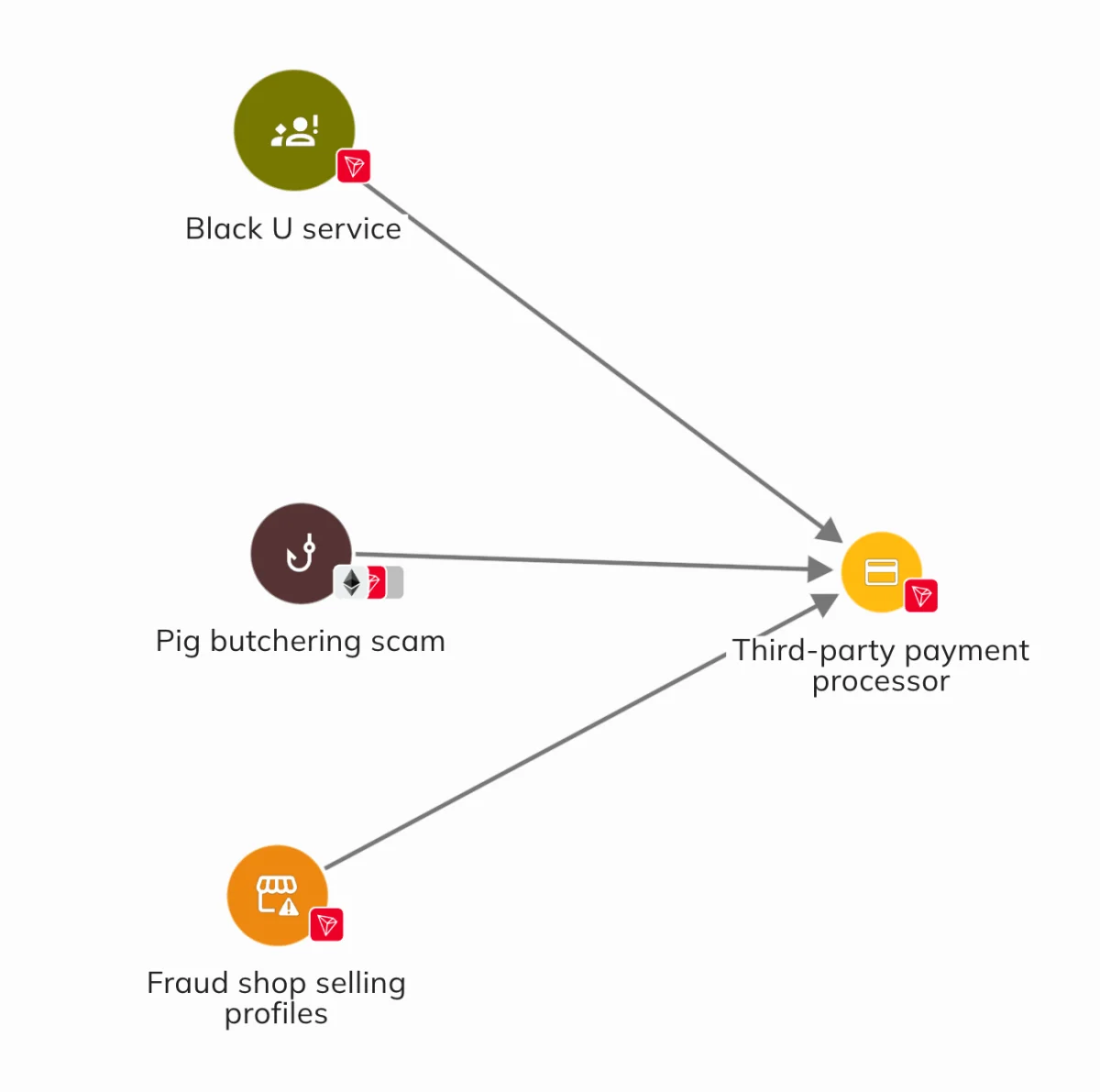
The Bolai group, another sanctioned entity, represents the financial sophistication of the network. Investigations revealed that Bolai utilized third-party payment processors to create an unregulated financial pathway. These processors were found to have "receiving exposure" to a variety of illicit actors, including "Black U" services (illicit Tether laundering), fraud shops selling stolen social media profiles, and other pig butchering operations. This interconnectedness suggests a highly organized ecosystem where different criminal groups share resources and laundering infrastructure.
A Chronology of the Strike Force Initiative
The success of the April 23 actions is the result of a multi-year strategy:
- November 2025: The DOJ officially launches the Scam Center Strike Force to address the surge in Southeast Asian transnational crime.
- December 2025: Local forces in Burma, acting on international intelligence, raid and seize the Shunda compound, leading to the flight of its managers.
- February 2026: Thai authorities, working with U.S. attaches, arrest Huang Xingshan and Jiang Wen Jie during a transit operation.
- March 2026: "Operation Level Up" begins the systematic seizure of domains and communication channels.
- April 23, 2026: The U.S. government unseals indictments, announces the $700 million restraint, and issues the 29 OFAC designations.
Implications for Global Compliance and the Crypto Industry
The U.S. government’s actions have immediate and far-reaching implications for the global financial and cryptocurrency sectors. For Virtual Asset Service Providers (VASPs), the designation of Cambodian casinos and regional banks introduces a high-risk environment for compliance. Financial institutions must now implement enhanced due diligence (EDD) for any transactions originating from or directed toward the identified regional entities.
The transparency of the blockchain remains the most potent tool for compliance professionals. By labeling the cryptocurrency addresses associated with the Kok An network and the Shunda compound, analytics firms and exchanges can proactively block the flow of victim funds. This crackdown reinforces the reality that while the "shadow economy" is vast, it is not invisible.
Official Responses and the Road Ahead
In a statement following the announcement, U.S. officials emphasized that this is not the end of the campaign. "The era of Southeast Asian scam compounds operating as untouchable fortresses is over," said a senior DOJ official. "We are following the money, we are seizing the infrastructure, and we are holding the powerful enablers accountable, regardless of their political standing."
The Cambodian government has yet to issue a formal response to the sanctions against Senator Kok An, but the move is expected to create significant diplomatic tension. Human rights organizations, however, have praised the action, noting that the "human cost" of these scams—referring to the thousands of trafficked workers—is finally being addressed alongside the financial cost.
The FBI continues to urge victims of such schemes to report incidents via ic3.gov. Timely reporting is cited as the single most important factor in the successful recovery of funds. As the Scam Center Strike Force continues its work, the focus is expected to shift toward other emerging hubs of cyber-enabled fraud in Eastern Europe and West Africa, applying the same "lifecycle" disruption model used in the Southeast Asian crackdown.
This operation serves as a stark warning to transnational criminal organizations: the digital and physical borders they once used for protection are increasingly porous to the reach of international law enforcement. The recovery of $700 million and the dismantling of a political-financial web in Cambodia represents a landmark victory in the ongoing war against the global cyber-fraud industry.














