


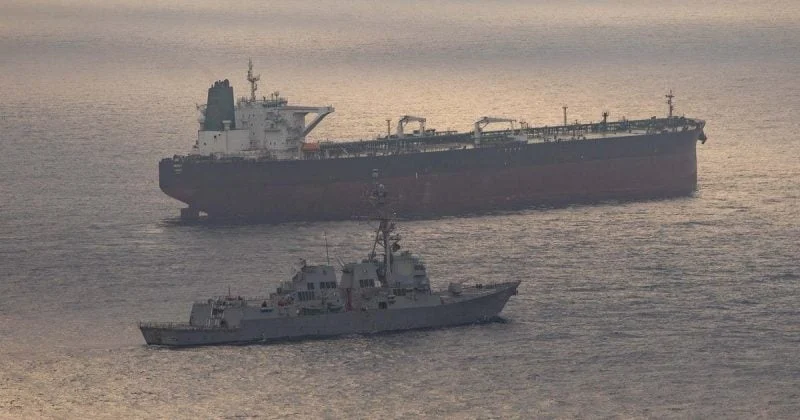
In a significant escalation of maritime enforcement operations, the United States Central Command (CENTCOM) confirmed the disabling of the Lian Star, a Gambian-flagged bulk carrier, on May 30. The vessel was targeted after it attempted to breach an active naval blockade to enter an Iranian port, marking a critical moment in the ongoing regional security operation. According to official statements from CENTCOM, the ship failed to comply with multiple direct orders to halt its course, leading to a kinetic response from U.S. forces. This incident represents at least the sixth vessel to be forcibly prevented from breaching the maritime cordon since the blockade was officially established on April 13.
The maritime operation, which has now been active for approximately seven weeks, is part of a broader, multi-faceted strategy designed to isolate the Iranian regime from international commerce and financial networks. While the naval blockade physically restricts the flow of goods across the Arabian Sea, a parallel campaign led by the U.S. Department of the Treasury has targeted the digital underpinnings of the Iranian economy. This financial offensive has successfully frozen nearly $344 million in digital assets linked to state-sponsored entities and sanctioned individuals within the regime.
The Interdiction of the Lian Star
The encounter with the Lian Star on May 30 highlights the strict rules of engagement currently governing the maritime exclusion zone. U.S. aircraft were deployed to intercept the bulk carrier as it moved toward the Iranian coastline. Rather than conducting a high-risk boarding operation, which could lead to physical confrontations or hostage situations, U.S. forces utilized precision strikes to disable the vessel’s propulsion and steering capabilities.
According to military analysts, the method used—striking rudders and smokestacks with localized fire—is a tactical choice designed to render a ship "dead in the water" without causing it to sink or resulting in significant loss of life among the crew. This "disable-not-destroy" approach allows the U.S. to enforce the blockade while minimizing environmental hazards and diplomatic fallout. The Lian Star was left adrift following the engagement, serving as a visible deterrent to other merchant vessels considering similar breaches.
The Lian Star’s attempt to enter Iranian waters follows a pattern of non-compliance observed throughout the month of May. As the blockade tightens, merchant vessels—often operating under "flags of convenience" like that of the Gambia—have increasingly tested the resolve of the coalition forces patrolling the region.
A Growing Chronology of Maritime Interdictions
The disabling of the Lian Star is the latest in a series of high-stakes encounters at sea. The blockade, which went into effect at 10:00 a.m. ET on April 13, has created a formidable barrier for Iranian trade. The frequency of interdictions has accelerated as the U.S. demonstrates its willingness to use force to maintain the cordon.
On May 6, the tanker M/T Hasna was disabled under nearly identical circumstances after ignoring warnings to steer clear of the exclusion zone. This was followed by a double interdiction on May 8, when both the M/T Sea Star III and the M/T Sevda were stopped. These vessels, primarily involved in the transport of petroleum products and bulk commodities, represent the lifeblood of the Iranian export economy.
To date, the blockade has forced the redirection of over 100 vessels. These ships have been compelled to seek alternative ports or return to their points of origin, disrupting supply chains and causing significant financial losses for the charterers and owners involved. Estimates suggest that the daily trade volumes disrupted by these naval actions are worth hundreds of millions of dollars, placing an immense strain on the Iranian domestic economy.
The Digital Front: Freezing $344 Million in Crypto Assets
While the naval blockade addresses the physical movement of goods, the U.S. Treasury Department is aggressively pursuing the "shadow banking" networks that Iran uses to bypass traditional sanctions. Since the start of the campaign on April 13, federal authorities have successfully frozen approximately $344 million in digital assets.
These assets, which include Bitcoin, Ethereum, and various stablecoins, are believed to be part of a sophisticated financial network used by the Iranian regime to fund regional proxies, procure sensitive technology, and stabilize its currency. The freezing of these assets is a coordinated effort involving the Office of Foreign Assets Control (OFAC) and international law enforcement agencies.
The use of cryptocurrency has long been a tool for sanctioned nations to move capital across borders without the oversight of the SWIFT banking system. However, the transparency of blockchain ledgers has allowed U.S. analysts to track the flow of funds from Iranian-linked wallets to international exchanges. The $344 million figure represents a significant portion of the regime’s liquid digital reserves, and its loss is expected to hamper the state’s ability to conduct covert financial operations.
Market Implications and Investor Sentiment
The intersection of kinetic military action and financial sanctions has sent ripples through the global markets, particularly within the cryptocurrency sector. Bitcoin and other major digital assets have exhibited notable volatility in the wake of the $344 million freeze. Investors are closely monitoring the situation, as the sudden removal of such a large volume of assets from circulation—and the potential for further designations—creates uncertainty.
The Treasury Department has signaled that its enforcement actions are far from over. Market participants are bracing for additional designations targeting specific digital wallets, decentralized finance (DeFi) protocols, or centralized exchanges that fail to implement rigorous Know Your Customer (KYC) and Anti-Money Laundering (AML) protocols.
For the broader maritime industry, the blockade has led to a surge in insurance premiums. "War Risk" insurance for vessels operating in the Arabian Sea and the Persian Gulf has reached historic highs, making trade with the region prohibitively expensive for many commercial operators. The redirection of over 100 ships has also caused logistical bottlenecks in neighboring ports, as vessels scramble to find alternative offloading sites for their cargo.
Tactical Shift: The "Two-Front" Pressure Campaign
The current strategy employed by the United States represents a shift toward a "two-front" pressure campaign that integrates physical and digital containment. By simultaneously cutting off the physical export of commodities and the digital flow of capital, the U.S. aims to create a comprehensive economic vacuum.
Military experts point out that the naval blockade is uniquely effective because it targets the geography of the region. The Arabian Sea serves as a narrow corridor for Iranian trade, and the U.S. Navy’s ability to maintain a persistent presence there allows for total control over the maritime domain. When combined with the Treasury’s ability to track and seize digital assets in real-time, the regime finds itself increasingly boxed in.
The acceleration of enforcement actions in May suggests a policy of "zero tolerance." The rapid succession of disabled ships—from the M/T Hasna to the Lian Star—sends a clear message to the international shipping community: the U.S. is prepared to use kinetic force to uphold the sanctions regime.
Official Statements and International Reactions
While CENTCOM has been the primary voice regarding the physical interdictions, the broader diplomatic community has reacted with a mix of support and concern. U.S. officials have maintained that the blockade is a necessary measure to prevent the proliferation of weapons and to curb the regime’s "malign activities" in the Middle East.
"The enforcement of this maritime cordon is essential for regional stability," a spokesperson for the Department of Defense stated in a recent briefing. "Vessels that choose to ignore the established blockade do so at their own risk. Our forces are trained to respond with precision to ensure that the maritime environment remains secure and that sanctioned entities cannot exploit the high seas."
On the financial side, the Treasury Department has emphasized the importance of international cooperation. "Digital assets are not a safe haven for illicit finance," a Treasury official noted. "We are working with our partners globally to ensure that the Iranian regime cannot use new technologies to undermine the international financial system."
The Iranian government has condemned the blockade, labeling it an act of "maritime piracy" and "economic terrorism." However, the regime’s ability to respond effectively appears limited by the sheer scale of the U.S. military and financial presence.
Broader Impact and Future Outlook
As the blockade enters its third month, the long-term implications for global trade and regional security are becoming clearer. The "Lian Star incident" serves as a case study in modern conflict, where traditional naval power is used in tandem with advanced financial surveillance.
The following factors will be critical for observers and investors to watch in the coming weeks:
- Escalation of Kinetic Actions: If more vessels continue to attempt breaches, will the U.S. maintain its "no-boarding" policy, or will the ruls of engagement evolve to include seizures and arrests?
- Expansion of Digital Sanctions: The $344 million already frozen may be the tip of the iceberg. Further designations of exchanges and "mixers" used by the regime could lead to broader disruptions in the crypto market.
- Oil Market Volatility: As tankers like the M/T Hasna are taken out of service, the reduction in Iranian oil reaching the global market could contribute to fluctuations in crude prices, affecting energy sectors worldwide.
- Legal and Diplomatic Challenges: The use of force against foreign-flagged vessels (like the Gambian-flagged Lian Star) may lead to legal challenges in international maritime courts regarding the "freedom of navigation."
The disabling of the Lian Star is more than just a single naval engagement; it is a manifestation of a comprehensive strategy to redefine the boundaries of international sanctions enforcement. By bridging the gap between the physical and the digital, the U.S. has established a new precedent for how regional powers are contained in the 21st century. For now, the Lian Star remains adrift—a stark reminder of the costs of defying the maritime cordon.














