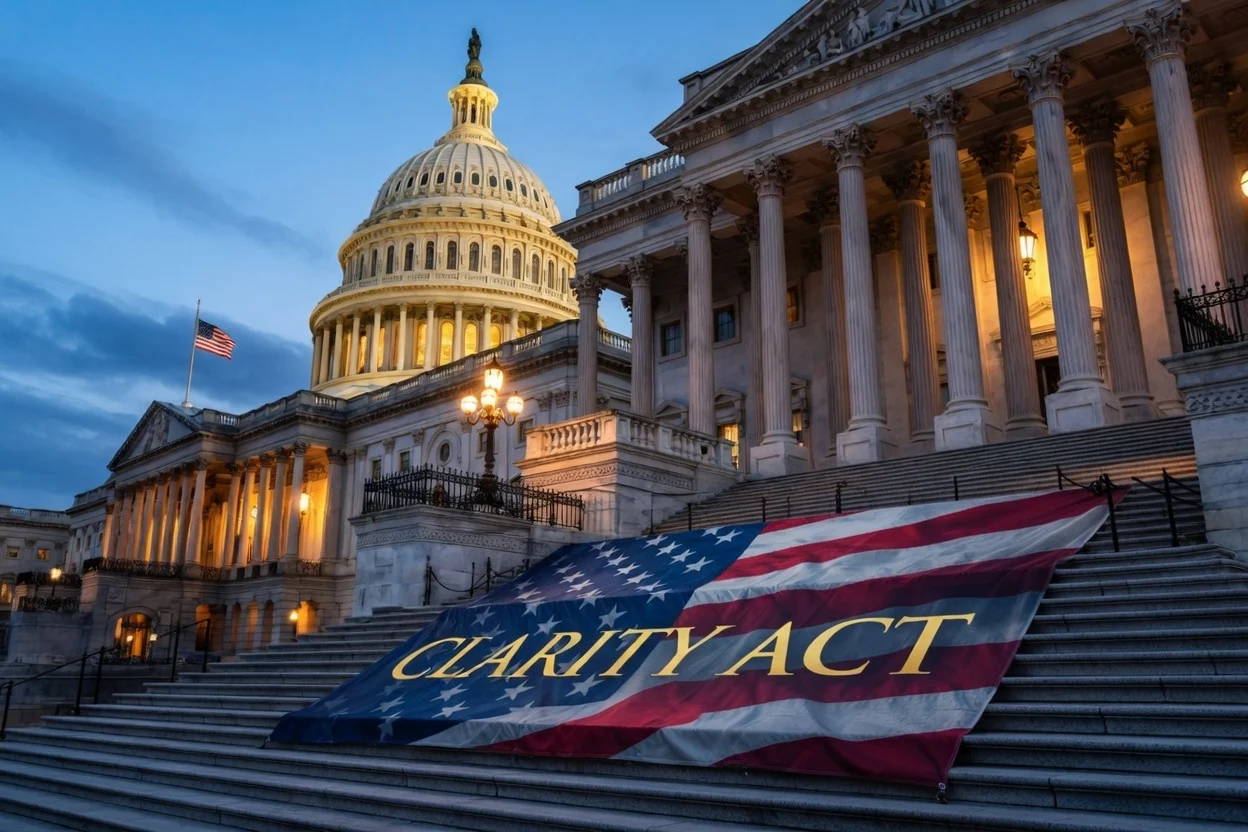
The CLARITY Act, a bipartisan legislative effort aimed at providing regulatory clarity for the burgeoning cryptocurrency industry in the United States, remains stalled in the U.S. Senate despite having secured robust cross-party support in the House of Representatives. This legislative inertia is drawing sharp criticism from prominent industry figures, including Mike Novogratz, founder and CEO of Galaxy Digital, who is urgently calling upon Democratic lawmakers to prioritize and act on crypto regulation. Novogratz contends that the ongoing regulatory vacuum is actively driving American innovation, investment, and talent offshore, imperiling the nation’s long-standing leadership in global finance. With an estimated 55 million Americans now owning some form of cryptocurrency, the stakes for maintaining the U.S.’s competitive edge and safeguarding its financial future are exceptionally high. The protracted delay in establishing a clear regulatory framework risks ceding significant ground to rival financial hubs actively courting crypto businesses, such as Singapore, Dubai, London, and even the European Union.
The Legislative Standoff: The CLARITY Act’s Journey
The CLARITY Act, a portmanteau for the "Blockchain Regulatory Certainty Act," was designed to provide much-needed legal certainty for entities that facilitate blockchain transactions without taking custody of digital assets. Its core premise is to differentiate between true digital asset custodians and those merely providing ancillary services, thereby reducing regulatory burdens on the latter and fostering innovation. The bill successfully navigated the House of Representatives in July of last year, passing with significant bipartisan endorsement, notably including the support of 78 Democratic representatives. This level of cross-aisle agreement in a deeply polarized Congress underscored a shared recognition of the need for a coherent national strategy on digital assets. However, upon its transmission to the Senate, the legislation has languished, failing to advance through committee or gain traction for a floor vote. This stagnation has left American crypto companies operating in a legal gray area, grappling with uncertainty over which regulatory bodies—the Securities and Exchange Commission (SEC) or the Commodity Futures Trading Commission (CFTC)—have jurisdiction over various digital assets, and under what conditions.
The absence of a clear regulatory framework in the U.S. stands in stark contrast to the proactive approaches adopted by several other major global economies. Jurisdictions like Singapore, the United Arab Emirates (UAE), and the United Kingdom have actively developed comprehensive regulatory frameworks designed to attract and nurture cryptocurrency businesses, positioning themselves as preferred destinations for innovation and capital. The European Union, through its landmark Markets in Crypto-Assets (MiCA) regulation, has also established a harmonized regulatory regime across its member states, offering a clear path for crypto companies seeking to operate within the bloc. This global race for crypto dominance highlights the growing concern among U.S. industry leaders that the country is falling behind due to internal political divisions and a lack of legislative urgency.
Industry’s Urgent Call: Novogratz’s Perspective
Mike Novogratz, a former hedge fund manager and a vocal advocate for digital assets, has been particularly outspoken about the perils of continued Senate inaction. His firm, Galaxy Digital, is a diversified financial services and investment management company in the digital asset sector, giving him a front-row seat to the challenges faced by the industry. Novogratz argues that the current regulatory vacuum acts as a powerful deterrent for both established firms and startups looking to build and operate within the United States. He points to the measurable shift of crypto activity away from American shores as direct evidence of this phenomenon.
Novogratz specifically highlighted the disparity in market share between global and U.S.-based exchanges. Binance, despite lacking a formal global headquarters and operating under various licenses, including one from Abu Dhabi, currently processes nearly 40% of the global spot crypto trading volume. In contrast, Coinbase, the largest and most prominent U.S.-based cryptocurrency exchange, handles approximately 6% of the global volume. This significant gap, Novogratz asserts, is a direct consequence of the U.S.’s ambiguous regulatory environment, which forces American businesses to compete at a disadvantage or consider relocating. He further emphasized that while the U.S. poured an astounding $2.4 trillion into crypto markets in a single year—nearly four times the investment of the next closest country—without domestic rules, a substantial portion of that capital flow is channeled through foreign platforms, diminishing the potential economic benefits for the U.S. economy.
The Galaxy Digital founder’s concerns are echoed across the industry, with many executives expressing frustration over the lack of a cohesive federal strategy. This sentiment is not new; back in 2022, Senator Kirsten Gillibrand (D-NY) collaborated with Senator Cynthia Lummis (R-WY) to introduce a bipartisan crypto framework, the Lummis-Gillibrand Responsible Financial Innovation Act. This comprehensive bill aimed to establish a clear regulatory structure, defining digital assets, assigning agency jurisdiction, and addressing consumer protection, stablecoins, and decentralized finance (DeFi). While the Lummis-Gillibrand bill was broader than the CLARITY Act, its bipartisan nature demonstrated a willingness to engage with the complex issues of crypto regulation. Novogratz, in a post on X (formerly Twitter), underscored the imperative for the Senate to "finish it," referring to the ongoing legislative efforts and the need to translate bipartisan agreement into concrete policy.
The Offshore Migration and Global Competition
The migration of crypto activity offshore is not merely a theoretical concern; it is a tangible trend with significant economic implications. Companies like Ripple, facing regulatory challenges from the SEC, have expanded their operations in jurisdictions with clearer rules, such as the UK and Switzerland. Other firms are opting to establish their primary operational bases in crypto-friendly locales from the outset. This "regulatory arbitrage" allows businesses to choose environments where rules are predictable, fostering innovation without the constant threat of enforcement actions or legal ambiguity.
The implications for the U.S. are multifaceted. Firstly, it means a loss of tax revenue that could be generated from thriving domestic crypto businesses. Secondly, it translates to fewer high-paying jobs in the financial technology sector, as companies choose to expand their workforces in other countries. Thirdly, and perhaps most critically, it risks diminishing the U.S.’s long-standing leadership in financial innovation. Historically, the U.S. has been at the forefront of developing new financial instruments and markets. Ceding this leadership in the digital asset space could have profound long-term consequences for its global economic standing and technological competitiveness.
Countries like Singapore have positioned themselves as premier fintech hubs, offering clear licensing regimes and regulatory sandboxes for crypto innovators. Dubai, within the UAE, has likewise attracted numerous crypto firms through its specialized free zones and progressive regulations. London, despite Brexit, continues to leverage its status as a global financial capital to attract crypto talent and investment, with the UK government actively consulting on and developing its own comprehensive crypto regulatory framework. These jurisdictions recognize the immense potential of digital assets to reshape global finance and are actively competing to become the centers of this transformation.
Regulatory Quagmire in the United States: A Deeper Dive
The root of the U.S. regulatory quagmire lies in a fragmented approach and a lack of consensus among key regulatory agencies and within Congress. The SEC, under Chairman Gary Gensler, has largely pursued an "enforcement-first" strategy, asserting that most cryptocurrencies are unregistered securities and thus fall under its purview. This stance has led to numerous lawsuits against prominent crypto companies, creating an environment of fear and uncertainty. Conversely, the CFTC has generally viewed certain cryptocurrencies, like Bitcoin and Ethereum, as commodities, advocating for a more principles-based regulatory approach. This inter-agency turf war, coupled with Congress’s inability to provide clear legislative mandates, has left the industry without a unified rulebook.
The debate extends beyond the SEC and CFTC to other federal agencies, including the Treasury Department, which focuses on anti-money laundering (AML) and combating the financing of terrorism (CFT) through its Financial Crimes Enforcement Network (FinCEN), and the Federal Reserve, which is exploring central bank digital currencies (CBDCs) and stablecoin regulation. Each agency operates within its existing statutory authority, often leading to overlapping jurisdictions or, more commonly, significant gaps. This piecemeal approach makes it exceedingly difficult for businesses to comply, as they may face different interpretations and requirements from multiple regulators.
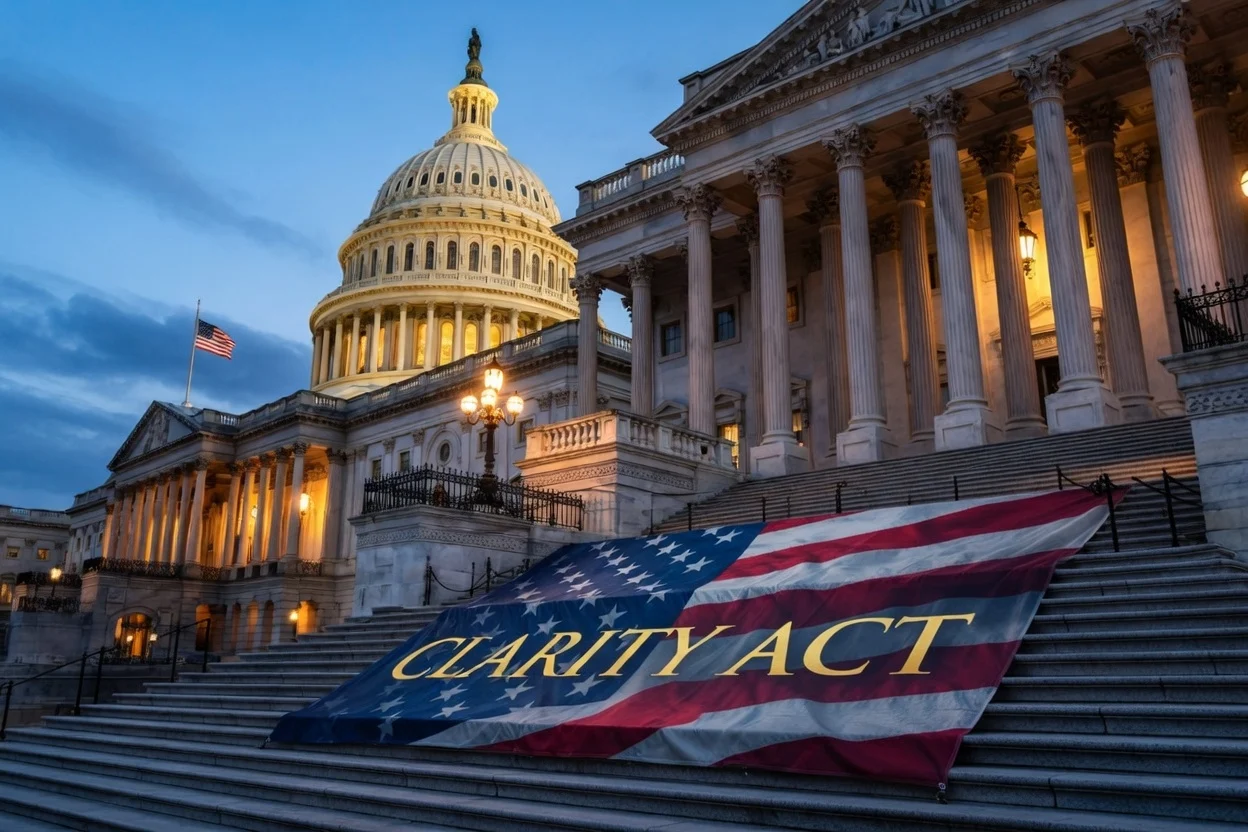
The CLARITY Act, by distinguishing between those who hold assets and those who merely provide a conduit, aims to simplify this landscape for a subset of crypto activities. Its passage would represent a small but significant step towards greater clarity, particularly for blockchain developers and network operators who do not control user funds but are essential to the functioning of decentralized networks.
Voices from Capitol Hill: Bipartisan Support and Democratic Divisions
While the Senate’s overall progress has been slow, there are notable voices within the Democratic caucus who are actively championing crypto-friendly policies. Senator Ruben Gallego, Arizona’s first Latino senator, has publicly stated his engagement with crypto policy stems directly from the interests of his constituents. He observes a growing interest in digital assets among working-class, Hispanic, and Black Americans in his state, viewing it as an avenue for financial empowerment. Gallego’s position, as referenced by Novogratz, is pragmatic: "If your constituents are showing interest in this, then you should show interest in it too." This perspective highlights a groundswell of interest in crypto among diverse demographic groups, challenging the perception that it is solely a concern of wealthy investors.
Similarly, Representative Ritchie Torres, who grew up in public housing in the Bronx and represents one of America’s poorest congressional districts, has become a vocal advocate for blockchain technology. Torres argues that blockchain can "liberate the lowest income communities from the high fees of the traditional financial system." He sees the technology as a tool for financial inclusion, offering lower transaction costs and greater access to financial services for underserved populations. Both Gallego and Torres exemplify a segment of the Democratic party that is actively engaging with the technology and its potential benefits, often in contrast to a more skeptical wing.
Novogratz frames the Senate’s delay not merely as a policy disagreement but as a "posture problem." He suggests that a vocal segment of the Democratic caucus views crypto legislation as a "corporate giveaway," driven by a distrust of large financial institutions and a perception that crypto primarily benefits the wealthy. However, Novogratz argues that this stance is counterproductive, leading directly to the very outcome it seeks to avoid: an unregulated, offshore market where consumer protections are weaker and illicit activities are harder to track. He emphasizes that embracing thoughtful regulation is essential for ensuring consumer safety, fostering legitimate innovation, and preventing bad actors from exploiting the unregulated space.
The Promise of Tokenization: Redefining American Financial Power
Beyond the immediate need for regulatory clarity for existing crypto assets, Novogratz identifies a larger, transformative opportunity in "tokenization." Tokenization refers to the process of converting rights to an asset into a digital token on a blockchain. This could include real-world assets like real estate, commodities, art, or even traditional financial instruments such as American equities, Treasury bonds, and investment funds.
The potential of tokenization is immense. Public blockchains could allow these American financial assets to reach billions of people globally who might never open a traditional U.S. brokerage account due to geographical barriers, high fees, or complex onboarding processes. This democratization of access to U.S. capital markets could significantly enhance the liquidity and reach of American financial products, attracting vast amounts of global capital. The CLARITY Act, by establishing clear rules for the underlying digital infrastructure and the entities facilitating these transactions, could pave the way for this tokenized future.
Novogratz argues that passing the CLARITY Act and other thoughtful crypto legislation is not just a financial decision but a strategic imperative for projecting American economic power. Countries like Singapore and the UAE are already making significant strides in exploring and implementing tokenization initiatives. For instance, Singapore has launched Project Guardian to test the feasibility of asset tokenization in regulated financial markets. The U.S., with its deep capital markets, immense investor demand, and robust legal infrastructure, possesses all the foundational elements to lead this global shift. What is currently lacking, according to industry leaders, is the legislative follow-through to unleash this potential.
Economic and Geopolitical Implications
The implications of the U.S.’s regulatory stance extend far beyond domestic economic considerations. On a geopolitical level, leadership in digital assets and blockchain technology is increasingly seen as a component of national power. The nation that establishes the most robust and attractive framework for digital assets could exert significant influence over the future of global finance, potentially shaping international standards and norms. By delaying action, the U.S. risks ceding this influence to other nations, particularly those with less democratic or transparent governance structures.
Moreover, a clear regulatory environment is crucial for national security. Without proper oversight, the movement of digital assets can be exploited by malicious actors for money laundering, terrorist financing, and sanctions evasion. By bringing crypto activity onshore and under a clear regulatory umbrella, the U.S. can enhance its ability to monitor transactions, enforce financial laws, and protect its national interests. The current offshore exodus, driven by regulatory uncertainty, paradoxically makes it harder for U.S. authorities to track and mitigate these risks.
Looking Ahead: The Path to Resolution
The path forward for the CLARITY Act and broader crypto regulation in the U.S. Senate remains uncertain. Overcoming the "posture problem" Novogratz identified will require a shift in perception among some Democratic lawmakers, recognizing that thoughtful regulation is not a corporate giveaway but a necessary step to protect consumers, foster innovation, and maintain American competitiveness. It also requires continued bipartisan efforts to bridge ideological divides and craft legislation that addresses the complexities of digital assets while balancing innovation with risk management.
Industry advocacy groups, such as the Blockchain Association and Coin Center, continue to lobby Congress, providing education and technical expertise to lawmakers. The growing number of crypto owners in the U.S., representing a diverse electorate, may also exert increasing pressure on elected officials to address the issue. As the 2024 election cycle approaches, crypto policy could become a more prominent issue, particularly in swing states where digital asset adoption is high.
Ultimately, Novogratz’s closing sentiment encapsulates the urgent call to action: "Pass the CLARITY Act. Show up. This is how Democrats win. This is how America wins." It underscores the belief that a proactive and clear regulatory approach to digital assets is not just about the crypto industry itself, but about securing America’s economic future, fostering innovation, and asserting its leadership in a rapidly evolving global financial landscape. The decision to act or to delay further will have profound and lasting consequences for the nation’s role in the digital age.