


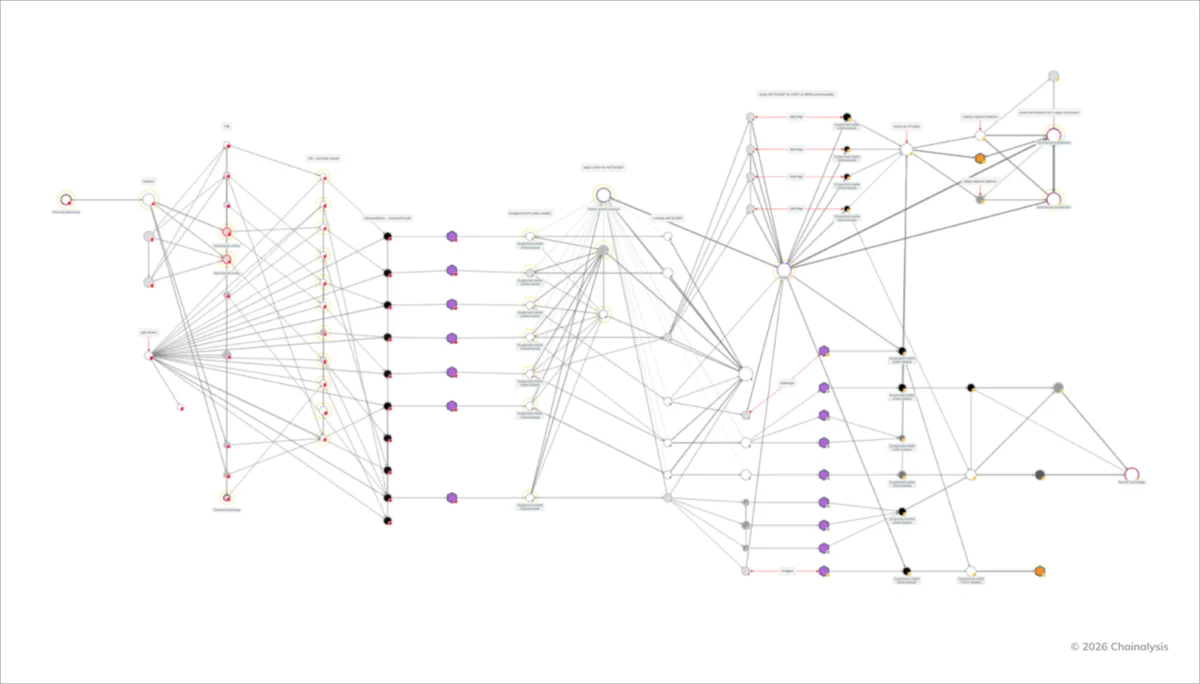
The United States Department of the Treasury’s Office of Foreign Assets Control (OFAC) significantly expanded its sanctions framework against the Iranian regime on April 24, 2026, by updating the designation of the Central Bank of Iran (CBI) to include several new cryptocurrency addresses on the Specially Designated Nationals (SDN) List. This regulatory move was synchronized with a massive private-sector enforcement action led by Tether, the issuer of the world’s most widely used stablecoin, which resulted in the freezing of $344 million in USDT. These funds were identified as being tied to the newly designated Iranian addresses, marking one of the largest coordinated strikes against state-sponsored illicit finance in the history of the digital asset industry.
The CBI was originally designated by the U.S. government in 2019 under counterterrorism authorities for its critical role in funneling billions of dollars to the Islamic Revolutionary Guard Corps (IRGC), its Quds Force, and the Lebanese militant group Hezbollah. The latest update to the SDN list reflects the evolving nature of the Iranian regime’s financial strategies, which have increasingly pivoted toward blockchain technology to bypass the traditional global banking system, specifically the SWIFT network, from which Iran has been largely disconnected for years.
Chronology of the Enforcement Action and Geopolitical Context
The enforcement actions of late April 2026 did not occur in a vacuum but were the culmination of several weeks of intensive intelligence gathering and a rapidly deteriorating security situation in the Middle East. The timeline of these events illustrates a complex interplay between maritime aggression, cyber-enabled financial crime, and international regulatory response.
The week of April 20, 2026, saw the initiation of a joint operation between U.S. law enforcement agencies and Tether’s internal compliance teams. This collaboration focused on tracing the flow of funds from Iranian state-linked entities through various intermediary wallets. On April 23, 2026, the Iranian government made a provocative public announcement, claiming that the CBI had successfully collected its first "toll revenue" from commercial vessels transiting the Strait of Hormuz. The Strait is a vital maritime chokepoint through which approximately one-fifth of the world’s total oil consumption passes daily.
This imposition of maritime tolls was characterized by international observers as a significant escalation of Iran’s "gray zone" tactics. However, the rollout of the toll system was marred by chaos. Maritime intelligence reports indicate that several shipping companies, desperate to avoid the seizure of their vessels by the IRGC Navy, attempted to pay these tolls using cryptocurrency. In the ensuing confusion, opportunistic offshore scammers posing as Iranian maritime authorities duped several firms into sending payments to fraudulent addresses. Because the official Iranian channels did not receive these funds, the affected shipping lines were subsequently harassed and, in some cases, boarded by IRGC naval assets, leading to a spike in insurance premiums and a temporary disruption of global shipping routes.
On April 24, 2026, following the successful freezing of the $344 million in USDT the previous day, OFAC formalized the status of the involved wallets by adding them to the CBI’s entry on the SDN List. This move effectively criminalizes any interaction with these addresses by U.S. persons or entities with a U.S. nexus, providing a legal basis for the permanent immobilization of the assets.
Technical Analysis of the Seized Funds and Laundering Networks
The two primary addresses identified in the OFAC update—TTiDLWE6fZK8okMJv6ijg42yrH6W2pjSr9 and TNiq9AXBp9EjUqhDhrwrfvAA8U3GUQZH81—showed balances that aligned perfectly with the figures reported by Tether and U.S. officials. On-chain analysis suggests these addresses functioned as high-capacity collection points for the Iranian regime’s broader financial network.
The seizure reveals a sophisticated laundering architecture designed to obscure the origin of funds. According to statements from U.S. officials, the $344 million was linked to a series of transactions that originated from Iranian domestic exchanges and were subsequently routed through a "daisy chain" of intermediary wallets. These intermediaries utilized decentralized finance (DeFi) protocols and cross-chain bridges to break the audit trail before the funds were consolidated into the designated CBI wallets.
This network is part of what analysts describe as Iran’s "shadow banking" system. The regime has historically relied on a network of front companies and offshore brokers to facilitate trade. A key figure in this ecosystem, Babak Morteza Zanjani, who was previously designated by OFAC, was recently linked to leaked documents that exposed the CBI’s use of specific brokers to convert fiat currency from illicit oil sales into stablecoins. One such broker, Alireza Derakhshan, is alleged to have coordinated the purchase of over $100 million in cryptocurrency between 2023 and 2025, acting as a bridge between the Iranian petroleum sector and the global digital asset market.

The reliance on USDT (Tether) is a strategic choice for the Iranian regime. As a dollar-pegged stablecoin with high liquidity, USDT allows the CBI to maintain the value of its holdings while avoiding the volatility of assets like Bitcoin. Furthermore, it provides a medium of exchange that is ostensibly outside the control of the U.S. Federal Reserve, although, as this recent seizure demonstrates, the centralized nature of the Tether smart contract allows for effective enforcement when the issuer cooperates with authorities.
Official Responses and Industry Reactions
The scale of the seizure and the direct coordination between a private stablecoin issuer and the U.S. government has drawn significant attention from both the political and financial sectors.
Paolo Ardoino, CEO of Tether, issued a robust defense of the company’s actions, emphasizing that the company is committed to preventing the misuse of its platform. "USDT is not a safe haven for illicit activity," Ardoino stated. "When credible links to sanctioned entities or criminal networks are identified, we act immediately and decisively. We combine blockchain transparency with real-time monitoring and direct coordination with law enforcement to stop funds before they can move."
A U.S. official, speaking to CNN on the condition of anonymity, highlighted the importance of this operation in the context of national security. The official noted that the funds were directly supporting the IRGC’s "malign activities" across the Middle East, including the provision of weaponry to proxy groups and the funding of maritime extortion schemes. The official emphasized that the U.S. would continue to use every tool at its disposal, including cutting-edge blockchain forensics, to "choke off the financial oxygen" of the Iranian regime.
The Iranian government, meanwhile, has denounced the seizure as "international piracy" and an infringement on its economic sovereignty. In a statement released through state media, a spokesperson for the CBI claimed that the funds were intended for the purchase of "humanitarian goods" and that the U.S. was "weaponizing the financial system" to harm the Iranian people.
Broader Implications for Global Sanctions and Compliance
The April 2026 enforcement action carries profound implications for the global financial landscape, particularly concerning the efficacy of sanctions in a digital age.
First, it underscores the vulnerability of state-sponsored sanctions evasion when conducted via transparent, public blockchains. While the Iranian regime likely viewed cryptocurrency as a way to circumvent the traditional banking sector’s gatekeepers, the inherent traceability of the blockchain allowed U.S. authorities and Chainalysis-style forensic firms to map the CBI’s network with high precision. This event serves as a warning to other sanctioned states that digital assets do not offer a foolproof method for bypassing international law.
Second, the action highlights the critical role of "teapot" refineries and the "shadow fleet" in Iran’s economic survival. Concurrent with the CBI designations, OFAC also sanctioned Chinese refineries, such as Hengli Petrochemical, and nearly 40 shipping firms involved in the transport of Iranian oil. The digital asset networks used by the CBI are the financial glue that holds this shadow trade together, allowing for the rapid settlement of multi-million dollar oil contracts that would otherwise be blocked by traditional banks.
For compliance teams at financial institutions and cryptocurrency exchanges, this event introduces a new layer of risk management. The emergence of maritime "tolls" and the associated scams in the Strait of Hormuz create a complex environment where legitimate shipping entities may inadvertently interact with sanctioned addresses. Compliance officers must now ensure that their screening processes are capable of identifying not only the primary designated addresses but also the secondary and tertiary wallets that interact with them.
Finally, the $344 million freeze demonstrates the growing power of public-private partnerships in the realm of financial oversight. The ability of the U.S. government to leverage the technical capabilities of private companies like Tether suggests a future where the enforcement of international sanctions is increasingly automated and real-time. As the world moves toward a more digitized economy, the battle between state-sponsored actors seeking to evade sanctions and the regulators seeking to uphold them will continue to play out on the blockchain, with significant consequences for global stability and the integrity of the financial system.














