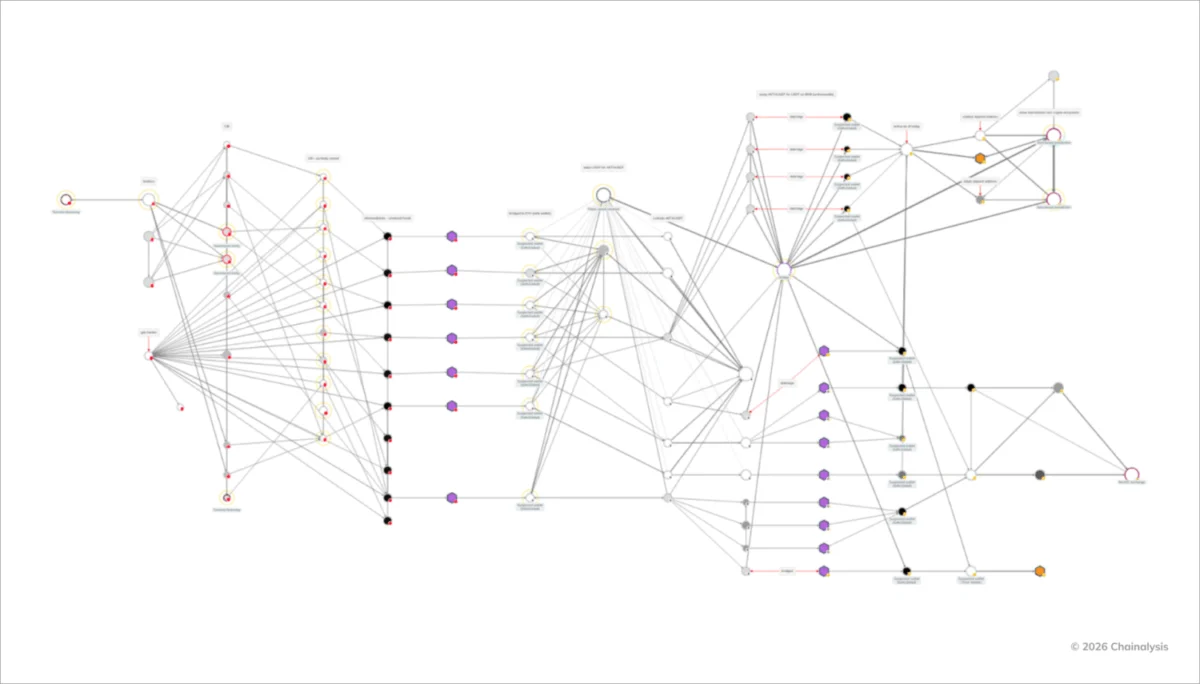
The United States Department of the Treasury’s Office of Foreign Assets Control (OFAC) has significantly expanded its enforcement actions against the financial infrastructure of the Iranian regime, signaling a new era of public-private cooperation in the digital asset space. On April 24, 2026, OFAC officially updated its designation of the Central Bank of Iran (CBI), integrating specific cryptocurrency addresses into the Specially Designated Nationals (SDN) list. This regulatory move was synchronized with a major enforcement operation led by Tether, the issuer of the world’s most widely used stablecoin, resulting in the freezing of more than $344 million in USDT. The coordinated strike targets a sophisticated network used by the Iranian government to fund the Islamic Revolutionary Guard Corps (IRGC) and its regional proxies, including Hezbollah, amidst escalating tensions in the Strait of Hormuz.
The 2026 Enforcement Action: A Multilateral Strike
The latest update to the SDN list is not merely a routine administrative adjustment but the culmination of a multi-agency investigation into Iran’s use of decentralized finance to bypass international sanctions. By adding specific digital wallet identifiers to the CBI’s designation, the U.S. government has effectively "blacklisted" these entry and exit points for capital, making it a federal crime for any U.S. person or entity—and a high-risk venture for international firms—to interact with them.
The Central Bank of Iran has been a primary target of U.S. sanctions since 2019. Originally designated for its role in facilitating the transfer of billions of dollars to the IRGC and Hezbollah, the CBI has increasingly turned to the cryptocurrency market to maintain liquidity. As traditional banking channels like SWIFT remain closed to Iranian institutions, the regime has pivoted toward stablecoins, which offer the speed of digital transfers with the price stability of the U.S. dollar.
This particular OFAC action coincides with a massive enforcement effort announced during the week of April 20, 2026. In a rare public display of cooperation, Tether worked alongside U.S. law enforcement to identify and freeze $344 million in USDT. These funds were found to be ostensibly tied to the newly designated CBI addresses, representing one of the largest seizures of digital assets linked to state-sponsored sanctions evasion in history.
Tether’s Role and Official Statements
The involvement of Tether is a critical component of this story. For years, critics have questioned the ability of stablecoin issuers to police their networks. However, the April 2026 seizure demonstrates a heightened level of compliance and technical capability. According to a public statement released by Tether, the company utilized real-time monitoring tools to track the movement of funds from Iranian exchanges through a series of intermediary "hop" addresses designed to obscure the trail.
Paolo Ardoino, CEO of Tether, emphasized the company’s commitment to security and legality following the seizure. "USDT is not a safe haven for illicit activity," Ardoino stated. "When credible links to sanctioned entities or criminal networks are identified, we act immediately and decisively. We combine blockchain transparency with real-time monitoring and direct coordination with law enforcement to stop funds before they can move."
A U.S. official, speaking to news outlets on the condition of anonymity, confirmed that the seized funds were directly linked to transactions involving Iranian exchanges. The official noted that the funds were being routed through complex laundering networks that eventually interacted with wallets controlled by the Central Bank of Iran.
Geopolitical Volatility: The Strait of Hormuz Crisis
The financial crackdown comes at a time of extreme geopolitical upheaval in the Middle East, specifically centered on the Strait of Hormuz. As one of the world’s most vital maritime chokepoints—through which approximately one-fifth of the world’s total oil consumption passes—the Strait has become a flashpoint for Iranian maritime aggression.
On April 23, 2026, the Iranian government made the provocative announcement that the CBI had collected its first "toll revenue" from commercial vessels transiting the Strait. This move, which many international legal experts characterize as a violation of the United Nations Convention on the Law of the Sea (UNCLOS), represents an attempt by Tehran to monetize its geographic position to offset the impact of sanctions.
However, the imposition of these tolls has led to a chaotic and predatory environment. Maritime intelligence reports indicate that several international shipping lines, desperate to avoid confrontation with IRGC naval vessels, have fallen victim to opportunistic scams. Fraudsters posing as Iranian maritime authorities have successfully diverted toll payments to offshore accounts. Because these funds never reached the Iranian government, the shipping companies were subsequently harassed and intercepted by the IRGC, leading to a dangerous cycle of extortion and maritime insecurity.

Analysts suggest that Iran’s preference for cryptocurrency in these transactions is a matter of necessity. With the regime largely cut off from the global dollar-clearing system, accepting stablecoins allows for the rapid collection of "tolls" that can be immediately converted into goods or used to fund military operations.
Chronology of the 2026 Sanctions Wave
The events of late April 2026 followed a series of escalating actions by both the U.S. government and the Iranian regime:
- Late 2025: Leaked documents attributed to Babak Morteza Zanjani, a previously designated Iranian billionaire, reveal internal CBI communications regarding the use of third-party brokers to purchase hundreds of millions in stablecoins using fiat currency.
- January 2026: U.S. intelligence identifies a "shadow banking" network operating out of East Asia and the Middle East, specifically designed to facilitate Iranian oil sales through digital assets.
- April 20, 2026: Tether and U.S. law enforcement begin the technical process of "blacklisting" addresses linked to the CBI, effectively freezing $344 million in USDT.
- April 21, 2026: Security firms warn of a surge in phishing and scam messages targeting shipping companies transiting the Strait of Hormuz, offering "safe passage" in exchange for crypto payments.
- April 23, 2026: Iran officially claims to have received its first maritime toll revenue via the CBI. Simultaneously, on-chain trackers observe the freezing of two major addresses:
TTiDLWE6fZK8okMJv6ijg42yrH6W2pjSr9andTNiq9AXBp9EjUqhDhrwrfvAA8U3GUQZH81. - April 24, 2026: OFAC formally updates the SDN list, codifying the designations and providing the legal framework for the permanent seizure of the frozen assets.
Supporting Data and On-Chain Forensics
Blockchain analysis has provided a transparent window into the regime’s laundering tactics. Data suggests that the Central Bank of Iran utilized a network of "nested" exchanges and decentralized finance (DeFi) protocols to move funds.
One prominent figure identified in this network is Alireza Derakhshan, an Iranian national previously designated by OFAC. Derakhshan is alleged to have coordinated the purchase of over $100 million in cryptocurrency between 2023 and 2025, specifically tied to illicit Iranian oil sales. The flow of funds typically follows a specific pattern:
- Origination: Proceeds from "shadow fleet" oil sales are collected in USDT or other stablecoins.
- Layering: The funds are moved through various bridges and DeFi protocols to break the direct link to the oil sale.
- Integration: The "cleaned" assets are transferred to CBI-controlled wallets or used to pay for dual-use technologies and military equipment.
Concurrent with the CBI update, OFAC also targeted the physical infrastructure supporting this trade. This included the designation of Chinese "teapot" refineries—independent refineries like Hengli Petrochemical—which are known to be primary purchasers of sanctioned Iranian crude. Additionally, nearly 40 shipping firms operating a "shadow fleet" of aging tankers were added to the SDN list.
Broader Economic and Regulatory Implications
The $344 million freeze and the updated SDN list have profound implications for the global financial and shipping industries. First, it underscores the reality that the perceived anonymity of cryptocurrency is a myth when faced with sophisticated chain-analysis tools and international cooperation. For state-sponsored actors, the transparency of the blockchain is increasingly becoming a liability rather than an asset.
For the maritime industry, the situation in the Strait of Hormuz introduces a high-stakes compliance challenge. Shipping companies must now navigate the threat of IRGC seizure on one hand and the risk of massive U.S. fines for violating sanctions on the other. Paying a "toll" to a designated entity like the CBI, even under duress, could trigger severe legal consequences in Western jurisdictions.
Furthermore, this event is likely to accelerate calls for stricter stablecoin regulation. As these digital assets become central to geopolitical conflicts, regulators in the U.S. and EU are expected to push for more direct oversight of reserve management and the "kill-switch" capabilities of asset issuers.
Conclusion and Compliance Outlook
The coordinated action by OFAC and Tether represents a landmark moment in the enforcement of international sanctions. By targeting both the digital wallets of the Central Bank of Iran and the physical vessels of the shadow fleet, the U.S. government is attempting to dismantle the entire lifecycle of Iran’s illicit revenue generation.
Compliance teams at financial institutions and shipping conglomerates are advised to immediately review their exposure to the newly designated addresses. As the Iranian regime continues to seek novel ways to bypass the global financial system, the use of on-chain monitoring and real-time data will be essential for maintaining regulatory integrity. The message from Washington is clear: whether in the deep waters of the Strait of Hormuz or the digital corridors of the blockchain, the movement of illicit Iranian capital will be met with decisive intervention.