


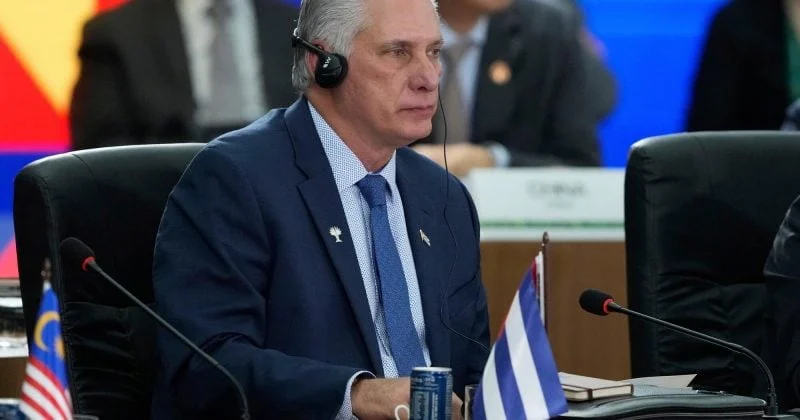
The United States Department of the Treasury’s Office of Foreign Assets Control (OFAC) announced a sweeping expansion of sanctions against the Cuban government on June 4, 2026, marking one of the most significant shifts in bilateral policy in recent years. By designating Cuban President Miguel Díaz-Canel Bermúdez, his immediate family, and several high-profile state entities as Specially Designated Nationals (SDNs), the US government has effectively severed the upper echelons of Havana’s leadership from the global financial system. This move represents a transition from targeted diplomatic pressure to a comprehensive economic blockade of the individuals and institutions that form the core of the Cuban state apparatus.
Under the new designations, all property and interests in property of the named individuals and entities that are within the United States or in the possession or control of US persons are frozen and must be reported to OFAC. Furthermore, any entities that are owned, directly or indirectly, 50 percent or more by one or more blocked persons are also blocked. These measures significantly increase the risk for international financial institutions and digital asset service providers, as any involvement in transactions related to these designated parties could result in severe secondary sanctions or civil penalties.
The Shift from Diplomatic Sanctions to Financial Isolation
The June 2026 designations signal a departure from the "targeted" approach observed during the 2024–2025 period. In late 2025, the US administration had relied primarily on visa restrictions under Section 212(a)(3)(C) of the Immigration and Nationality Act to signal its disapproval of Havana’s domestic policies. While those measures prevented Díaz-Canel and his cabinet from traveling to the United States, they had a negligible impact on the regime’s ability to conduct international commerce.
The elevation to the SDN list is a far more potent tool of economic statecraft. By placing the President of Cuba on the same list as designated terrorists and narcotics traffickers, the US Treasury is utilizing its maximum authority to isolate the Cuban executive branch. This "maximum pressure" tactic is designed not only to restrict the movement of the individuals involved but to paralyze the financial networks that sustain their political power.
Executive Order 14404, the legal foundation for these actions, was specifically amended to broaden the criteria for designation. It now encompasses not only senior government officials but also their immediate family members and any individuals perceived to be facilitating the circumvention of US sanctions. This "network-based" approach aims to prevent the transfer of state assets into private offshore accounts held by relatives.
Profiles of the Designated: Targeting the Inner Circle
The list of sanctioned individuals reflects a strategic focus on both the current political leadership and the enduring influence of the Castro family.
- Miguel Díaz-Canel Bermúdez: As the President of Cuba and the First Secretary of the Communist Party of Cuba (PCC), Díaz-Canel is the primary target. The US Treasury alleges that his administration has overseen the continued suppression of peaceful dissent and the mismanagement of the national economy.
- Lis Cuesta Peraza: The wife of the President, though not holding a formal cabinet position, is frequently seen in high-profile state functions. Her designation is intended to prevent the use of her name or accounts to shield presidential assets.
- Manuel Anido Cuesta: The stepson of Díaz-Canel, who has served as a personal advisor to the president. His inclusion highlights the US government’s focus on the younger generation of the Cuban elite who are being groomed for future leadership roles.
- Alejandro Castro Espín and Raúl Alejandro Castro Calis: The inclusion of the son and grandson of former President Raúl Castro underscores the US position that the Castro family remains a dominant force in Cuban governance and military intelligence, despite the formal transition of power to Díaz-Canel.
By targeting these specific individuals, the US Treasury is attempting to create a "cordon sanitaire" around the Cuban presidency, making it nearly impossible for foreign banks to handle any transactions that might benefit the first family, even indirectly.
Institutional Targets: The Pillars of the Cuban Economy
The institutional designations are perhaps more economically consequential than the individual sanctions. OFAC has targeted three entities that are central to Cuba’s foreign currency earnings and its military-industrial complex.
The Ministry of the Revolutionary Armed Forces (MINFAR)
MINFAR is the backbone of the Cuban state. Beyond its traditional defense role, the military operates a massive business conglomerate known as GAESA (Grupo de Administración Empresarial S.A.). GAESA controls a vast portion of the Cuban economy, including retail stores, hotels, and financial exchange services. By placing MINFAR on the SDN list, the US is effectively declaring the largest sector of the Cuban economy "off-limits" to US persons and any international entity that utilizes the US dollar.
Amistur Cuba S.A.
Amistur is the specialized travel agency of the Cuban Institute of Friendship with the Peoples (ICAP). It focuses on political tourism and "solidarity" delegations. Its designation targets the regime’s efforts to cultivate international political support through curated travel experiences, further squeezing the tourism sector—Cuba’s primary source of hard currency.
Minera La Victoria S.A.
Mining is one of Cuba’s most lucrative export industries, particularly regarding nickel and cobalt. Minera La Victoria S.A. is a state-linked entity involved in the extraction and processing of mineral resources. Sanctioning this company strikes at the heart of Cuba’s industrial exports, complicating the island’s ability to trade with major partners in Europe and Asia who rely on Cuban raw materials.
Chronology of US-Cuba Escalation (2021–2026)
To understand the gravity of the June 2026 sanctions, it is necessary to review the timeline of deteriorating relations:
- July 2021: Mass protests erupt across Cuba due to food shortages and lack of civil liberties. The US responds with targeted sanctions against police and military officials involved in the crackdown.
- 2022–2023: The US maintains a policy of "limited engagement," focusing on remittances and migration accords, while keeping Cuba on the State Sponsors of Terrorism (SST) list.
- January 2025: Following a change in administrative priorities in Washington, the US imposes strict visa bans on the Cuban cabinet, citing a lack of progress in democratic reforms.
- November 2025: Reports of increased military cooperation between Cuba and extra-hemispheric powers lead to a review of Executive Order 14404.
- June 4, 2026: The US Treasury moves to the "nuclear option" of SDN designations for the President and key state-linked industries.
Economic Data and the Impact on Cuba’s Fragile Economy
The timing of these sanctions is particularly precarious for Havana. Cuba’s economy has been in a state of contraction or stagnant growth since the COVID-19 pandemic. According to recent estimates, Cuba’s GDP remains significantly below 2019 levels, and inflation has fluctuated between 30% and 70% in the informal market.
Tourism, which accounted for approximately 10% of Cuba’s GDP pre-pandemic, has struggled to recover. The designation of MINFAR and Amistur is expected to further deter international travelers and travel agencies who fear falling afoul of US Treasury regulations. For every dollar of revenue lost in the tourism sector, the Cuban state loses the hard currency necessary to import food, fuel, and medicine—commodities for which the island is heavily import-dependent.
Furthermore, the mining sector’s designation complicates Cuba’s joint ventures. Foreign partners, particularly those from Canada and the European Union, now face a difficult choice: continue operations with Minera La Victoria and risk losing access to the US market, or divest from their Cuban holdings.
Implications for Global Markets and Digital Assets
The US Treasury’s action has immediate ramifications for the global financial services industry, particularly the rapidly evolving digital asset sector. OFAC has repeatedly signaled that "virtual currency" is subject to the same compliance standards as traditional fiat currency.
For cryptocurrency exchanges and peer-to-peer (P2P) platforms, the designation of the Cuban leadership requires an immediate update to their "Know Your Customer" (KYC) and "Anti-Money Laundering" (AML) screening protocols. Any digital wallet associated with Díaz-Canel, his family, or the sanctioned entities must be blacklisted. Given the pseudonymity of blockchain transactions, this poses a significant technical challenge. Platforms that fail to prevent transactions involving these SDNs risk multimillion-dollar fines and the loss of their operating licenses in the United States.
Furthermore, the designation of MINFAR—which often controls the entities that manage remittances—may push more Cubans toward unregulated or decentralized financial tools. However, the US Treasury has warned that it will aggressively pursue any "nested" exchanges or "mixers" that facilitate the laundering of state assets for the Cuban leadership.
Official Responses and Inferred Reactions
While the Cuban government has yet to release a comprehensive economic rebuttal, state media in Havana (Granma and Prensa Latina) have characterized the move as a "vile escalation of the criminal blockade." President Díaz-Canel, in a brief statement via social media, suggested that the sanctions are an attempt to "suffocate the Cuban people" and vowed that the "Revolution will not be intimidated by imperialist pressure."
In Washington, the State Department defended the move as a necessary response to the regime’s "persistent refusal to engage in meaningful dialogue with its own citizens." A spokesperson for the Treasury Department noted that the goal of the sanctions is to "disrupt the financial flows that enable the Cuban government to maintain its repressive apparatus while the people suffer from chronic shortages."
International reaction has been mixed. Traditional allies of the US, such as Canada and the EU, have expressed concern over the "extraterritorial reach" of the sanctions, which may affect their own companies’ legitimate business interests in Cuba. Conversely, human rights advocacy groups have largely welcomed the move as a long-overdue measure to hold the Cuban leadership personally accountable for the country’s political climate.
Fact-Based Analysis of Long-Term Implications
The decision to designate a sitting head of state as an SDN is a rare and aggressive move that typically signals a total breakdown in diplomatic relations. Historically, such measures are reserved for regimes where the US is seeking a fundamental change in governance or behavior, as seen in the cases of Venezuela, Syria, and Iran.
In the short term, these sanctions will likely exacerbate the humanitarian crisis in Cuba by further restricting the government’s access to foreign exchange. While the US maintains "humanitarian carve-outs" for food and medicine, the "chilling effect" on international banks often results in a de facto ban on even permitted trade, as banks choose to avoid the risk entirely.
In the long term, the sanctions may inadvertently push Cuba closer to alternative economic blocs. Deprived of access to the US financial system, Havana is likely to seek deeper integration with the financial systems of Russia, China, and the BRICS+ nations. This could lead to the establishment of "sanction-proof" payment corridors that operate outside the reach of the US Treasury, potentially accelerating the global trend of de-dollarization.
Ultimately, the June 4, 2026, designations represent a high-stakes gamble by the US government. The objective is to force the Cuban leadership into concessions through economic exhaustion. However, the resilience of the Cuban state apparatus and the potential for increased support from US adversaries remain the primary variables that will determine whether this policy achieves its intended goals or simply deepens the isolation of the island nation.














