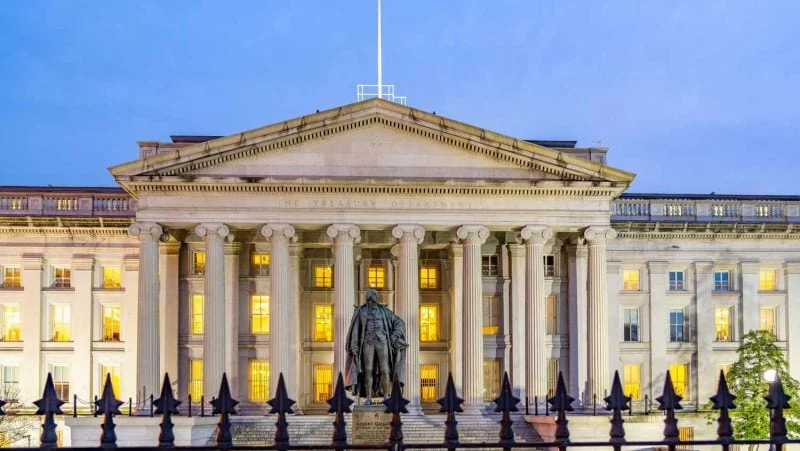
The United States Department of the Treasury has officially released a detailed set of proposed rules aimed at clarifying the regulatory obligations for stablecoin issuers and digital asset service providers under the landmark GENIUS Act. This Notice of Proposed Rulemaking (NPRM), announced on Monday, specifically addresses the implementation of Section 3 of the legislation, which establishes the jurisdictional boundaries for payment stablecoins within the United States. The proposal marks a pivotal moment in the federal government’s efforts to integrate digital assets into the formal financial system while mitigating systemic risks associated with the rapidly expanding stablecoin market.
Scheduled for formal publication in the Federal Register on August 18, the proposed rules will be open for a 60-day public comment period, allowing industry stakeholders, legal experts, and financial institutions to provide feedback on the technical and operational feasibility of the requirements. The GENIUS Act, which was signed into law in July 2025, represents the most significant piece of cryptocurrency legislation in U.S. history, mandating that all payment stablecoins maintain a one-to-one reserve of high-quality liquid assets.
Defining the Scope of U.S. Jurisdictional Authority
A central component of the Treasury’s proposal is the definition of what constitutes the issuance, offer, or sale of a stablecoin within the United States. Under the proposed framework, a stablecoin is generally deemed to be "issued in the U.S." if the issuing entity is physically located within the country at the time of issuance or if the digital asset is issued to a person located in the U.S.
To determine the location of an entity, the Treasury plans to apply a multi-pronged test. For individuals, the primary metric will be physical presence within U.S. borders. For corporate entities, the Treasury will look to the place of incorporation or the "principal place of business." This definition is designed to close loopholes that might allow domestic firms to evade regulation by using offshore shells while maintaining their core operations on American soil.
Furthermore, the proposal clarifies the criteria for when a platform is considered to be "offering or selling" a stablecoin to U.S. persons. This includes direct solicitation of U.S. users, localized advertising campaigns, and responding to inquiries from U.S.-based customers. Notably, the Treasury has identified "obfuscation tactics" as a violation; platforms that assist users in bypassing geographical restrictions—such as through the use of VPNs or by ignoring IP address checks—could be held liable for unauthorized sales to U.S. residents.
The Role and Requirements for Foreign Issuers
Recognizing the global nature of the digital asset market, the Treasury has outlined specific "safe harbor" provisions for foreign issuers. A foreign entity can avoid being classified as a U.S. issuer if it can demonstrate a "reasonable belief" that its recipients are located outside the United States. To maintain this status, foreign issuers must implement robust internal controls designed to prevent the issuance of tokens to U.S. persons and must refrain from any marketing activities targeting the U.S. market.
However, the exemption for foreign issuers is not absolute. To operate within the global financial ecosystem while interacting with U.S. digital asset service providers, foreign issuers must possess the technological capability to comply with lawful U.S. orders. This includes the ability to freeze assets, reverse transactions when legally mandated, and participate in reciprocal regulatory arrangements with U.S. authorities. This "technological compliance" requirement is expected to be a significant point of discussion during the comment period, as it necessitates a level of centralized control that contrasts with the decentralized ethos of many blockchain protocols.
Implementation Timeline and Deadlines
The Treasury has established a phased implementation schedule to allow the industry to adjust to the new standards. The GENIUS Act itself is slated to take full effect on January 18, 2027. From this date forward, the issuance of payment stablecoins within the U.S. will be strictly prohibited unless the issuer has obtained specific authorization under either a federal or state regulatory framework.
Following the issuance deadline, a second major milestone is set for July 18, 2028. At this point, digital asset service providers (DASPs)—including centralized exchanges, brokers, and custodial services—will be prohibited from facilitating the offer or sale of stablecoins to U.S. persons unless those stablecoins were produced by an authorized U.S. issuer or a "qualifying foreign issuer" that meets the Treasury’s stringent standards. This 18-month gap between issuer compliance and service provider restrictions is intended to prevent sudden liquidity crunches and allow platforms to delist non-compliant assets in an orderly fashion.
Reserve Requirements and Financial Stability
The core of the GENIUS Act, which these rules seek to implement, is the protection of consumers through strict reserve management. The law requires that payment stablecoins maintain reserves backing their outstanding tokens on a one-to-one basis. These reserves must consist of "eligible assets," which the Treasury defines as:
- Physical U.S. currency (cash);
- Insured bank deposits;
- Short-term Treasury securities with a maturity of 90 days or less.
By limiting reserves to these low-risk assets, the Treasury aims to prevent "bank runs" on stablecoins, similar to the collapse of algorithmic stablecoins witnessed in earlier years. The proposal reinforces that any deviation from this one-to-one backing or the use of "risky" collateral (such as other cryptocurrencies or commercial paper) would disqualify an issuer from receiving federal or state authorization.
Exemptions for Decentralization and Peer-to-Peer Transfers
In a nod to the technical realities of blockchain technology, the Treasury proposal includes specific exemptions for certain types of transactions. Section 3 prohibitions will generally not apply to direct transfers between individuals (peer-to-peer) or transactions involving "self-custody" or "unhosted" wallets, provided these activities do not involve a regulated intermediary.
These exemptions are intended to preserve the utility of blockchain for private, non-commercial use while ensuring that the "on-ramps" and "off-ramps" of the financial system—where digital assets are converted to fiat currency—are strictly regulated. However, the Treasury remains cautious regarding the risks of money laundering and illicit finance in the self-custody space.
Seeking Industry Feedback on Emerging Technologies
The Treasury’s proposal acknowledges that the digital asset landscape is evolving faster than traditional regulatory frameworks. As part of the NPRM, the department is explicitly seeking industry feedback on several complex areas:
- Blockchain Bridges: How the rules should apply to protocols that move stablecoins between different blockchain networks.
- Airdrops and Rewards: Whether the distribution of stablecoins through promotional "airdrops" constitutes an offer or sale.
- Wrapped Tokens: The regulatory status of tokens that represent a stablecoin on a different network (e.g., wrapped USDC).
- Market Makers and Liquidity Providers: The extent of liability for entities that provide depth to stablecoin markets without being the primary issuer.
This request for information suggests that the Treasury is open to refining the rules to avoid stifling innovation in the Decentralized Finance (DeFi) sector, provided that core safety and soundness principles are maintained.
Historical Context and Broader Regulatory Landscape
The GENIUS Act was born out of a period of intense volatility in the crypto markets between 2022 and 2024. Following the collapse of several high-profile digital asset firms, U.S. lawmakers felt a growing urgency to provide a clear legal framework. The Act’s name—an acronym for "Global Electronic Network Infrastructure and Utilization Security"—reflects its dual purpose: fostering technological infrastructure while ensuring national security and financial stability.
The current proposal does not exist in a vacuum. It is the third major component of the GENIUS Act’s implementation. In April, the Treasury, alongside the Financial Crimes Enforcement Network (FinCEN) and the Office of Foreign Assets Control (OFAC), proposed rules regarding Anti-Money Laundering (AML) and sanctions compliance. Those rules require stablecoin issuers to implement "Know Your Customer" (KYC) protocols and monitor transactions for suspicious activity.
Comparisons have already been drawn between the U.S. approach and the European Union’s Markets in Crypto-Assets (MiCA) regulation. While both frameworks emphasize reserve transparency and consumer protection, the U.S. proposal under the GENIUS Act is seen by some analysts as more restrictive regarding the types of assets that can be held in reserve, favoring direct government obligations over the broader basket of assets permitted in some international jurisdictions.
Potential Market Impact and Industry Reactions
The introduction of these rules is expected to have a profound impact on the $160 billion stablecoin market. Established players who already maintain high-quality reserves and have sought U.S. licenses may find the rules provide much-needed legal certainty. Conversely, issuers that rely on offshore structures or less transparent reserve compositions may face an existential threat to their U.S. market share.
Initial reactions from industry advocacy groups have been mixed. While many welcome the clarity, some have expressed concern over the "technological capability" requirement for foreign issuers, arguing it could lead to increased centralization and potential privacy infringements. "The Treasury is essentially asking for a ‘backdoor’ into global stablecoin protocols," noted one industry consultant who requested anonymity. "While the goal of law enforcement is understandable, the technical implementation could fundamentally change how these assets function."
As the 60-day comment period begins, the financial world will be watching closely. The final rules, once adopted, will not only define the future of stablecoins in the United States but will likely serve as a blueprint for global digital asset regulation for the remainder of the decade. With the 2027 and 2028 deadlines approaching, the race for compliance has officially begun for every major participant in the digital asset economy.