


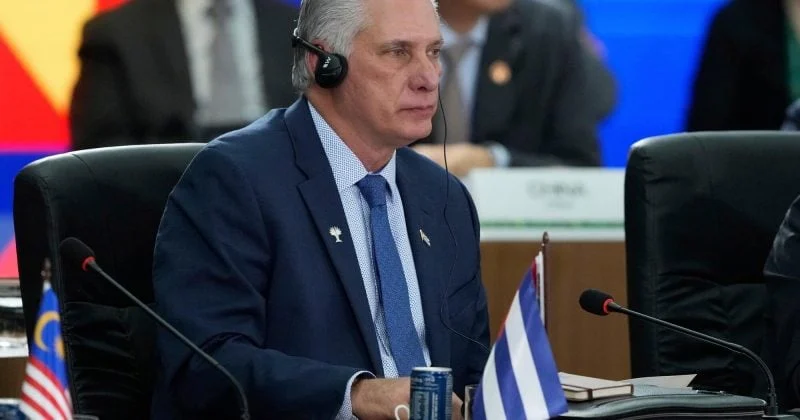
The United States Department of the Treasury’s Office of Foreign Assets Control (OFAC) enacted a sweeping expansion of its sanctions regime against the Cuban government on June 4, 2026, signaling a major shift in Washington’s approach toward the Caribbean nation. By designating Cuban President Miguel Díaz-Canel Bermúdez, several members of his immediate family, and three critical state-linked enterprises to the Specially Designated Nationals (SDN) list, the US government has effectively severed these individuals and entities from the global financial system. This move, executed under the authority of Executive Order 14404, moves beyond the diplomatic pressure of travel restrictions and into the realm of total financial isolation, freezing all assets held under US jurisdiction and prohibiting any US person or entity from engaging in transactions with those listed.
The escalation marks a definitive end to the era of limited engagement and heightens the stakes for international businesses, particularly those in the tourism, mining, and digital asset sectors. The inclusion of the Cuban president’s family members—specifically his wife, Lis Cuesta Peraza, and his stepson, Manuel Anido Cuesta—reflects a strategic decision to target the inner circle of the Cuban leadership, aiming to prevent the use of familial proxies to bypass previous financial hurdles. Furthermore, the designation of high-ranking figures from the Castro family lineage, including Alejandro Castro Espín and Raúl Alejandro Castro Calis, underscores a concerted effort to dismantle the legacy networks that have dominated Cuban political and economic life for over six decades.
The Scope of the New Designations
The June 2026 designations are notable not only for the seniority of the individuals targeted but also for the strategic nature of the sanctioned entities. The Office of Foreign Assets Control focused its efforts on three pillars of the Cuban economy: the military, the tourism industry, and the extractive sector.
The Ministry of the Revolutionary Armed Forces (MINFAR) is perhaps the most significant institutional designation. In Cuba, the military is not merely a defense force but a massive economic conglomerate. Through various subsidiaries and holding companies, MINFAR controls a vast portion of the island’s retail, tourism, and foreign exchange sectors. By placing MINFAR on the SDN list, the US Treasury has effectively labeled the backbone of the Cuban economy as a prohibited partner for any entity with exposure to the US financial system.
Amistur Cuba S.A., a state-run tourism agency, and Minera La Victoria S.A., a firm involved in the island’s mining operations, were also designated. These entities are primary vehicles for the Cuban state to acquire foreign hard currency. Tourism remains the lifeblood of the Cuban economy, while mining—specifically for nickel and cobalt—represents one of the few avenues for industrial growth. The sanctions on these companies are designed to starve the Cuban leadership of the liquidity required to maintain state operations and internal security apparatuses.
A Chronology of Escalation: From 2024 to 2026
The path to the June 2026 SDN designations has been characterized by a steady tightening of the noose around Havana’s leadership. To understand the gravity of the current situation, one must look at the timeline of US-Cuba policy over the preceding 24 months.
Throughout 2024, the US State Department issued a series of warnings regarding human rights abuses and the continued detention of political prisoners following the 2021 protests. While initial responses were limited to diplomatic censures, the political climate shifted significantly in early 2025. Following a change in administration rhetoric, the Trump administration in 2025 moved to impose strict visa restrictions on President Díaz-Canel and other senior members of the Communist Party of Cuba (PCC). These restrictions effectively barred the Cuban elite from entering the United States for diplomatic or personal reasons.
However, the 2025 measures were viewed by many hawks in Washington as insufficient, as they did not address the financial networks that sustained the regime. Between late 2025 and mid-2026, US intelligence and Treasury officials reportedly tracked a series of asset transfers intended to shield the Cuban leadership’s wealth from potential future seizures. This intelligence served as the catalyst for Executive Order 14404, which expanded the Treasury’s authority to target not just officials, but their family members and any entities used to facilitate their financial interests. The June 4, 2026, announcement is the culmination of this two-year policy pivot from "travel containment" to "financial neutralization."
The Economic and Regulatory Impact on Global Markets
The inclusion of these names on the SDN list creates immediate and severe compliance requirements for global financial institutions. Unlike simple trade embargoes, SDN designations carry the threat of "secondary sanctions," where non-US banks or companies can be penalized if they are found to be facilitating "significant transactions" for the sanctioned parties.
For the digital asset industry, the implications are particularly acute. Over the last several years, Cuba has seen a rise in the use of cryptocurrencies as a means of bypassing traditional banking hurdles. OFAC’s recent guidance has made it clear that virtual currency exchanges, hosted wallet providers, and other service providers are under a strict obligation to screen their users against the SDN list. Any platform that allows Manuel Anido Cuesta or Miguel Díaz-Canel to move funds—even in decentralized assets—faces the risk of being cut off from the US dollar clearing system.
Furthermore, the designation of MINFAR creates a "minefield" for foreign investors from Europe, Canada, and Latin America. Because MINFAR’s influence is so pervasive in the Cuban tourism sector, many foreign-owned hotels and resorts operate through joint ventures with military-linked entities. These foreign companies must now conduct emergency audits to ensure they are not inadvertently providing "material support" to a designated entity. Failure to decouple from MINFAR-linked businesses could result in these foreign firms being blacklisted themselves, a prospect that has already sent ripples through the international hospitality market.
Inferred Official Responses and Geopolitical Reactions
While the Cuban government has not yet released a full economic counter-plan, the official state media in Havana, Granma, has characterized the sanctions as "an act of financial genocide" and a violation of international law. In a televised address following the announcement, Cuban officials are expected to lean into a narrative of "sovereign resistance," accusing the United States of attempting to manufacture a humanitarian crisis to incite political instability.
Internationally, the reaction is likely to be divided. Allies of the United States, particularly in the European Union, have historically criticized the extraterritorial reach of US sanctions, yet many have also grown weary of the Cuban government’s slow pace of reform. Conversely, nations such as Russia and China are expected to denounce the move, potentially using the opportunity to further integrate Cuba into their own alternative financial systems, such as the BRICS-led payment initiatives. This creates a geopolitical paradox: while the sanctions isolate Cuba from the West, they may inadvertently drive the island closer to Washington’s primary global competitors.
Analysis of Long-term Implications
The decision to target the families of Cuban leaders represents a "maximum pressure" tactic intended to create internal friction within the Cuban elite. By freezing the assets of Lis Cuesta Peraza and Manuel Anido Cuesta, the US is betting that the personal cost of maintaining the current political status quo will eventually outweigh the benefits for those in Díaz-Canel’s inner circle. Historically, such "smart sanctions" have had mixed results, often succeeding in making life difficult for the elite but rarely resulting in immediate regime change.
However, the economic data suggests that Cuba is in a uniquely vulnerable position. With inflation remaining high and the tourism sector struggling to return to pre-pandemic levels, the loss of access to mining revenue and the complications introduced to military-run businesses could lead to a severe contraction of the island’s GDP.
In the regulatory sphere, this event reinforces the role of OFAC as the world’s most powerful financial regulator. For compliance officers at major banks and crypto exchanges, the message is clear: the US government is increasingly willing to use the SDN list not just against terrorist organizations or rogue states, but against the sitting heads of state and their families. This sets a precedent for future designations in other regions where the US seeks to exert influence without resorting to military conflict.
As the dust settles on the June 4 announcement, the focus will shift to enforcement. The Treasury Department has signaled that it will be monitoring global transaction logs and blockchain ledgers for any sign of "SDN evasion." For the people of Cuba, these sanctions likely herald a period of further economic hardship, as the state-controlled economy grapples with its near-total exclusion from the world’s most dominant financial networks. For the international community, it is a stark reminder of the power of the US dollar as a tool of foreign policy in the 21st century.














