


The United States Department of the Treasury’s Office of Foreign Assets Control (OFAC) announced a significant expansion of its sanctions regime on July 1, 2026, targeting the financial infrastructure of the Islamic State’s Khorasan province (ISIS-K) and the Brazilian criminal organization Primeiro Comando da Capital (PCC). This latest regulatory action involves the designation of 134 specific cryptocurrency wallets used by ISIS-K to facilitate global terrorism and the blacklisting of several individuals and entities linked to a $30 million money laundering operation for the PCC. The move underscores the growing intersection between traditional organized crime, extremist groups, and the digital asset ecosystem, while highlighting the Treasury’s commitment to disrupting the flow of illicit capital across international borders.
The Evolution of ISIS-K and its Digital Financial Strategy
ISIS-K, the regional affiliate of the Islamic State active in Afghanistan, Pakistan, and parts of Central Asia, has emerged as one of the most lethal branches of the global terror network. Since its initial designation as a Specially Designated Terrorist Group in September 2015, the group has evolved from a local insurgency into a sophisticated international threat capable of orchestrating high-profile mass-casualty events. The July 2026 update to the OFAC list specifically targets the group’s fundraising mechanisms, which have increasingly pivoted toward blockchain technology to bypass traditional banking restrictions.
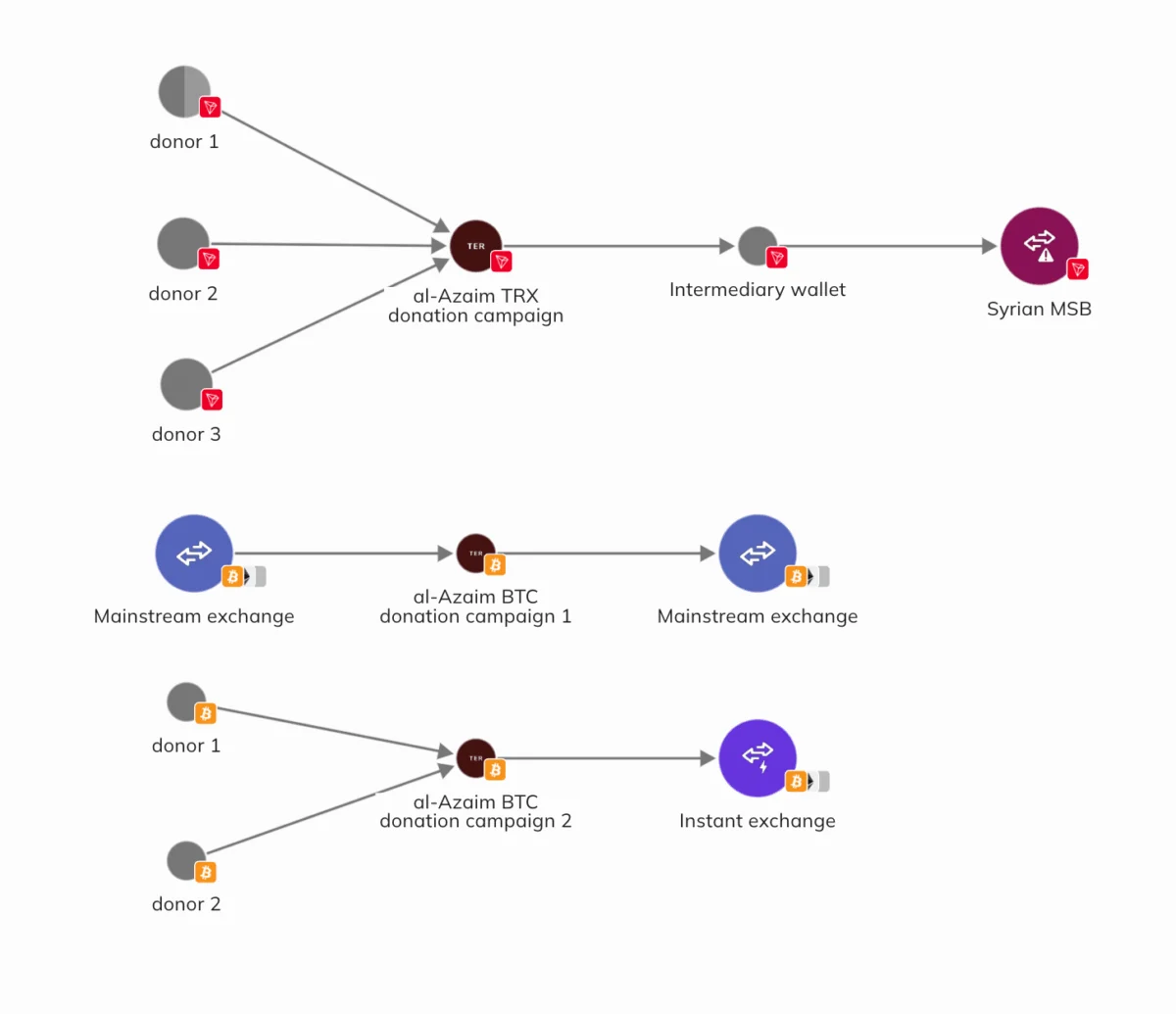
Central to this financial strategy is the al-Azaim Media Foundation, the propaganda arm of ISIS-K. Through its flagship publication, Voice of Khorasan, and various encrypted messaging platforms, the group has conducted aggressive crowdfunding campaigns. Unlike the large-scale state-level financing seen in previous decades, ISIS-K’s crypto-fundraising is characterized by a "micro-donation" model. By soliciting small amounts from a vast network of global sympathizers, the group attempts to fly under the radar of traditional anti-money laundering (AML) thresholds.
However, the scale of these operations is no longer negligible. According to data provided by blockchain analytics firms, the 131 TRON (TRX) addresses designated in this action have received more than $1.4 million since early 2023. Of that amount, approximately $880,000 has been moved through various mixers and Syria-based cryptocurrency exchanges, which serve as "cash-out" points for the organization. The inclusion of three Monero (XMR) addresses in the sanctions list also signals a growing concern regarding privacy coins, which are designed to obfuscate transaction details and are frequently utilized by actors seeking maximum anonymity.
Technical Breakdown of the Sanctioned Assets
The Treasury’s focus on the TRON network reflects a broader shift in the illicit finance landscape. While Bitcoin was once the primary vehicle for crypto-related crime, the TRON blockchain has become the preferred network for terrorist financing and stablecoin transfers due to its low transaction fees and high throughput.

Of the 134 wallets identified:
- 131 TRON Addresses: These wallets were primarily used to transfer Tether (USDT). Following the OFAC announcement, Tether—the issuer of the world’s largest stablecoin—moved swiftly to freeze the balances on all 131 TRON-based addresses, effectively neutralizing the group’s access to those specific funds.
- 3 Monero Addresses: The inclusion of Monero addresses highlights the difficulty regulators face when dealing with "dark coins." While the transparency of the TRON and Bitcoin blockchains allows for the tracking of fund flows, Monero’s stealth addresses and ring signatures make it a significant challenge for law enforcement.
The analysis of these wallets revealed a "heavy exposure" to mainstream cryptocurrency exchanges. This suggests that despite the illicit nature of the funds, the actors involved frequently attempted to interact with legitimate financial services to convert digital assets into fiat currency or to purchase goods and services.
Chronology of Sanctions and the Tightening Noose
The July 1, 2026, action is the culmination of a multi-year effort to dismantle the financial pillars of ISIS-K and its facilitators. The timeline of these efforts illustrates a persistent and adaptive regulatory approach:
- September 2015: ISIS-K is first designated as a Specially Designated Global Terrorist (SDGT) entity by the U.S. government.
- December 2021: The Primeiro Comando da Capital (PCC) is designated as a significant transnational criminal organization, setting the stage for future financial crackdowns.
- Early 2023: OFAC sanctions Ali Shafiu, a Maldives-based ISIS-K operative. Investigations reveal that Shafiu’s TRON wallets were interacting with exchange deposit addresses linked to Iranian financial networks.
- March 2024: Diego Macedo Gonçalves do Carmo is designated for his role in laundering millions for the PCC using complex digital asset structures.
- June 2026: Just one month prior to the current action, OFAC sanctioned a network of Syrian money service businesses (MSBs). These businesses acted as a critical bridge, allowing ISIS financiers like Miloud Abderrahmane to shuttle money from mainstream exchanges to Middle Eastern donation campaigns.
- July 1, 2026: The current update adds 134 wallets to the ISIS-K designation and targets the PCC’s $30 million laundering syndicate in Brazil and Portugal.
Targeting the PCC: A Transnational Crime Syndicate
In a parallel but distinct action, the Treasury also targeted the Primeiro Comando da Capital (PCC), Brazil’s most powerful criminal organization. The PCC has expanded far beyond its roots in the São Paulo prison system, now controlling major drug trafficking routes across South America and maintaining operatives in the United States and Europe.
The July 2026 designation focuses on two Brazilian nationals—Victor Henrique de Oliveira Shimada and Stella Stefanie Nunes Henrique de Oliveira—and four associated companies: Victory Trading, Pixwave, and Wave (based in Brazil), and Avenidas Flutuantes (based in Portugal).
According to OFAC, this network was responsible for laundering more than $30 million in illicit proceeds generated from drug trafficking operations in various U.S. cities. The syndicate utilized cryptocurrency as a primary vehicle for capital flight, moving funds from the U.S. back to the PCC’s home base in Brazil. This marks the third major action against the PCC, reinforcing the U.S. government’s strategy of treating the group not just as a local gang, but as a sophisticated financial entity.

Official Responses and Industry Impact
The U.S. Treasury’s aggressive stance has elicited a range of responses from the financial and technology sectors. In an official statement, a Treasury spokesperson emphasized that "cryptocurrency is not a safe haven for terrorists or transnational criminals. We will continue to use every tool at our disposal to identify and isolate those who use digital assets to fund violence and instability."
Tether’s decision to freeze the sanctioned TRON wallets was seen as a vital collaborative step. A representative from the stablecoin issuer stated, "We maintain a constant dialogue with international law enforcement and regulatory bodies. Our goal is to ensure that the USDT ecosystem remains a hostile environment for illicit actors."
For Virtual Asset Service Providers (VASPs), including exchanges, custodians, and payment processors, these designations carry immediate and heavy compliance burdens. Under U.S. law, all "U.S. persons"—which includes all U.S. citizens and residents, as well as entities organized under U.S. law—are prohibited from engaging in any transactions with the designated individuals, entities, or wallets. Furthermore, any assets belonging to these parties that are within U.S. jurisdiction must be blocked and reported to OFAC.
The implications extend globally. Foreign financial institutions that knowingly facilitate significant transactions for these sanctioned parties risk "secondary sanctions," which could result in their being severed from the U.S. financial system—a "death penalty" for most international banks.
Broader Implications for Global Compliance and Security
The July 2026 OFAC update serves as a landmark case study in the evolution of financial warfare. It highlights several critical trends that will likely define the coming years of international regulation:
- The Shift to Stablecoins and Alternative Chains: The heavy use of TRON and USDT by both ISIS-K and the PCC suggests that illicit actors are moving away from the volatility and high fees of Bitcoin in favor of more "utilitarian" digital assets. Regulators are responding by focusing their surveillance on these specific ecosystems.
- The Role of Blockchain Analytics: This action would likely have been impossible without the granular data provided by blockchain forensics. The ability to link seemingly anonymous wallets to known terrorists and criminals is the primary weapon in the modern regulatory arsenal.
- The Intersection of Terror and Crime: The simultaneous targeting of ISIS-K and the PCC illustrates how the methods used by ideological extremists and profit-driven criminals are converging. Both groups utilize the same technology, the same types of exchanges, and the same laundering techniques.
- The "Whack-a-Mole" Challenge: While the freezing of 134 wallets is a significant victory, the decentralized nature of cryptocurrency means that new wallets can be generated in seconds. This necessitates a proactive, data-driven approach to transaction monitoring rather than a reactive reliance on static blacklists.
As the digital asset market continues to mature, the tension between financial privacy and national security will remain a central theme. For now, the U.S. Treasury has sent a clear message: the digital "paper trail" left on the blockchain is a permanent and powerful tool for law enforcement, and the window of anonymity for global terror networks is rapidly closing. Organizations worldwide must now update their screening protocols to reflect these new high-risk identifiers, ensuring that the global financial system remains resilient against the dual threats of terrorism and organized crime.














