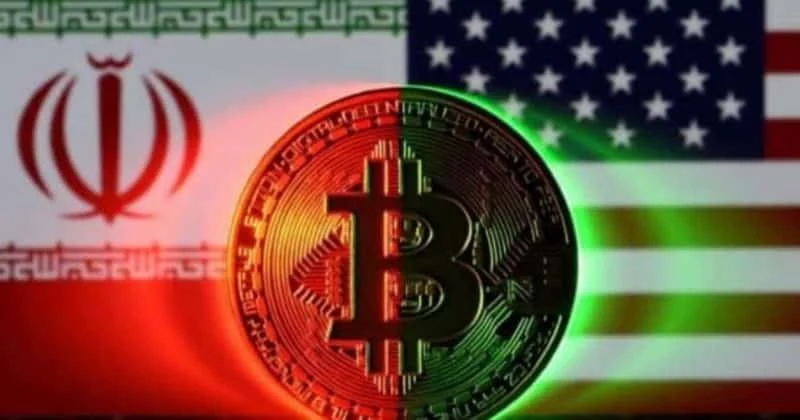
The United States Department of the Treasury’s Office of Foreign Assets Control (OFAC) has announced a sweeping new round of sanctions aimed at dismantling a sophisticated maritime revenue network orchestrated by the Islamic Revolutionary Guard Corps (IRGC). This latest regulatory action targets several entities and vessels accused of facilitating the illicit sale of Iranian petroleum and providing a clandestine insurance framework designed to bypass international financial restrictions. Central to this enforcement action is the identification of two specific firms—Persian Gulf Marine Insurance Company and HormuzSafe Marine Services Authority—which have allegedly established a cryptocurrency-based insurance scheme for commercial vessels transiting the strategically vital Strait of Hormuz.
According to official statements from the Treasury, these firms have been operating under the direction of the IRGC to provide mandatory insurance policies that cover risks typically excluded by Western insurers due to sanctions, such as vessel seizures and maritime accidents within Iranian-controlled waters. By accepting payments in Bitcoin and other digital assets, the network sought to insulate its financial transactions from the U.S. dollar-dominated banking system and the SWIFT messaging network, thereby complicating the ability of international regulators to track and block the flow of funds to Tehran.
The IRGC-Backed Insurance Framework and the Role of Digital Assets
The emergence of the "Hormuz Safe" initiative represents a significant evolution in Iran’s efforts to leverage emerging technologies to secure its economic interests. Reports initially surfaced via Fars News in May regarding the introduction of a maritime insurance platform that required or incentivized ship operators to settle policy premiums in Bitcoin. This initiative was not merely a financial workaround but a strategic move to assert greater Iranian oversight over the Strait of Hormuz, a chokepoint through which approximately one-fifth of the world’s total oil consumption passes.
By mandating or offering specialized insurance through the Persian Gulf Marine Insurance Company and HormuzSafe Marine Services Authority, the IRGC aimed to create a parallel maritime regulatory environment. Ship operators, often under duress or seeking to mitigate the risk of seizure by Iranian naval forces, obtained liability certificates through these platforms. The Treasury’s investigation revealed that these insurance schemes were designed to generate substantial revenue for the IRGC—with some estimates suggesting the initiative could generate upwards of $10 billion annually—while simultaneously providing a pretext for Iranian authorities to board, inspect, and monitor commercial traffic.
The use of digital assets is a cornerstone of this strategy. Because Bitcoin transactions can be conducted peer-to-peer across borders without the need for traditional intermediaries, the IRGC believed it could maintain a steady stream of revenue that was immune to the "maximum pressure" campaign of U.S. economic sanctions. However, the latest OFAC designations demonstrate that the U.S. government is increasingly capable of mapping the intersection between blockchain technology and illicit state-sponsored activity.
Targeting the Shadow Fleet and Global Oil Logistics
In addition to the insurance entities, the Treasury Department’s action included the sanctioning of eight shipping companies and the blocking of eight specific oil tankers. These vessels are identified as key components of Iran’s "shadow fleet"—a collection of aging tankers that use deceptive practices to transport millions of barrels of Iranian crude oil and petroleum products to international markets, primarily in China and the United Arab Emirates (UAE).
The shadow fleet typically employs various tactics to evade detection, including "spoofing" (transmitting false AIS signals), ship-to-ship (STS) transfers in deep-sea locations, and frequent re-flagging of vessels under different jurisdictions. The Treasury noted that with this latest round of designations, it has sanctioned more than 100 vessels associated with Iran’s clandestine oil trade in the year 2026 alone. This high volume of enforcement highlights the persistent and adaptive nature of the IRGC’s maritime operations.
The tankers blocked in this action were reportedly responsible for the delivery of sanctioned petroleum products that provide the Iranian government with the hard currency necessary to fund its regional proxies and internal security apparatus. By targeting the logistics providers and the vessels themselves, the U.S. aims to increase the operational costs and risks for any commercial entity considering involvement in the Iranian oil trade.
A Chronology of Escalating Maritime Tensions
The current sanctions must be viewed within the broader context of a multi-year escalation of tensions in the Persian Gulf and the Gulf of Oman. The timeline of events leading to these designations reflects a consistent pattern of Iranian efforts to weaponize its geography and develop alternative financial infrastructures.
- 2018–2020: Following the U.S. withdrawal from the Joint Comprehensive Plan of Action (JCPOA), the U.S. reimposed stringent sanctions on Iran’s energy and banking sectors. In response, Iran began experimenting with state-sanctioned cryptocurrency mining and international trade settlements using digital assets.
- 2021–2023: A series of vessel seizures and "limpet mine" attacks in the Strait of Hormuz increased the "war risk" premiums for commercial shipping. Western insurers became increasingly hesitant to cover ships transiting the region, creating a vacuum that the IRGC sought to fill.
- May 2026: Fars News and other state-affiliated outlets in Tehran announced the "Hormuz Safe" initiative. The program was marketed as a way to ensure "security and sovereignty" in the Strait of Hormuz while providing a "sanctions-proof" insurance solution via Bitcoin payments.
- Late 2026: The U.S. Treasury, utilizing advanced blockchain analytics and intelligence gathering, identified the specific corporate entities managing the Hormuz Safe platform, leading to the current round of OFAC designations.
Official Responses and Regulatory Warnings
U.S. Treasury officials have emphasized that these measures are intended to protect the integrity of the international financial system and the safety of global maritime trade. "Iran’s reliance on digital assets to fund the IRGC’s destabilizing activities will not go unnoticed," a Treasury spokesperson stated during a press briefing. "The designation of these insurance firms and shipping companies sends a clear message: the United States will continue to target every node of Iran’s illicit revenue networks, whether they operate in traditional or digital markets."
The Treasury also issued a stern warning to non-U.S. persons and foreign financial institutions. Under the authority of Executive Order 13902, which targets key sectors of the Iranian economy, the U.S. can impose "secondary sanctions" on any individual or entity that provides material support to, or facilitates significant transactions for, the designated parties. This means that a foreign bank or a maritime service provider in a third country could find themselves cut off from the U.S. financial system if they continue to engage with the Persian Gulf Marine Insurance Company or the sanctioned tankers.
While Tehran has not officially responded to the specific designations, state-aligned media has previously characterized U.S. sanctions as "economic terrorism." Iranian officials have often touted their "resistance economy" and the use of cryptocurrency as a legitimate means of circumventing what they describe as illegal unilateral restrictions.
Supporting Data: The Economic Scale of the Network
The scale of the Iranian shadow fleet and its associated revenue is substantial. Industry data from maritime tracking firms suggests that despite heavy sanctions, Iran has managed to maintain exports of over 1.2 million to 1.5 million barrels of crude oil per day throughout much of 2026.
- Revenue Estimates: The "Hormuz Safe" insurance premiums and associated transit fees are estimated to be a multi-billion dollar enterprise. If Tehran’s projections of $10 billion in revenue are even partially accurate, it would represent a significant portion of the IRGC’s annual budget.
- Vessel Concentration: The 100+ vessels sanctioned in 2026 represent a significant portion of the global "dark fleet." These ships often lack standard P&I (Protection and Indemnity) insurance from the International Group of P&I Clubs, making the IRGC-backed insurance the only available option for operators willing to take the risk.
- Digital Asset Volume: While the exact volume of Bitcoin processed by HormuzSafe is classified, blockchain analysis suggests that hundreds of millions of dollars in crypto-equivalent value have flowed through addresses linked to Iranian maritime interests over the past twelve months.
Broader Impact and Strategic Implications
The sanctions against the IRGC’s maritime insurance and shipping network have several long-term implications for global trade and geopolitics.
First, the focus on cryptocurrency indicates that the "front line" of sanctions enforcement has shifted to the digital realm. As state actors like Iran become more proficient in using decentralized finance (DeFi) and digital assets, regulators must develop more sophisticated tools to maintain the efficacy of economic statecraft. The designation of these firms serves as a case study for how the U.S. intends to police the use of Bitcoin by adversarial nations.
Second, the move increases the pressure on China and the UAE, the primary destinations for Iranian oil. By blocking the tankers and the firms that insure them, the U.S. is effectively raising the "compliance cost" for refiners in these countries. If a tanker is sanctioned, it becomes nearly impossible for it to dock at major international ports, refuel, or receive maintenance, eventually forcing the vessel into early retirement or making the trade too expensive to sustain.
Third, the battle over insurance in the Strait of Hormuz is a battle for regional influence. By attempting to force ships to use Iranian insurance, Tehran is trying to establish a de facto "toll" on global energy transit. The U.S. sanctions are an effort to delegitimize this Iranian-led regulatory structure and ensure that the Strait remains an international waterway governed by global norms rather than the dictates of the IRGC.
In conclusion, the Treasury’s latest action is a multi-layered strike against Iran’s economic resilience. By targeting the intersection of maritime logistics, insurance, and cryptocurrency, the United States is attempting to close the loopholes that have allowed the IRGC to maintain its influence and fund its operations. As the shadow fleet continues to evolve, the international community remains watchful of how these designations will affect the flow of energy and the stability of the world’s most critical maritime corridors.