Wall Street analysts are advising clients that the unprecedented $6.3 billion hack of Binance, the world’s largest cryptocurrency exchange, should be viewed as a strategic buying opportunity rather than a signal to divest. Leading financial institutions, including Cantor Fitzgerald, TD Cowen, and Compass Point, issued research notes on Friday, urging investors to acquire crypto-linked stocks while prices are depressed, asserting that the largest crypto hack in history is unlikely to derail the broader market’s nascent recovery.
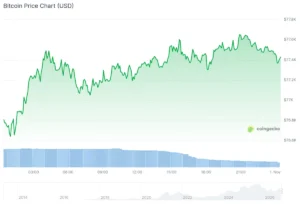
The reassurance from these prominent firms came just a day after the colossal exploit sent ripples of panic across the digital asset landscape, causing Bitcoin’s price to slide significantly, nearing the $77,000 mark. The incident, which exposed vulnerabilities in a high-profile centralized entity, has sparked a multifaceted debate within the financial community about the resilience of the crypto market, the efficacy of exchange security protocols, and the evolving risk appetite of institutional and retail investors.
The Incident Unfolds: A Record-Breaking Breach
Details surrounding the Binance hack revealed a sophisticated attack that resulted in the theft of approximately $6.3 billion in digital assets. While specific vectors of the attack were still under investigation, early indications and expert analyses pointed to a compromise of Binance’s "hot wallets" – online wallets used for day-to-day operations and liquidity. This incident immediately drew comparisons to previous major crypto exploits, such as the Ronin Network breach in March 2022 ($625 million) and the Poly Network hack in August 2021 ($610 million), but dwarfed them in scale, solidifying its status as the largest crypto hack ever recorded.
Binance, founded by Changpeng "CZ" Zhao, has long held its position as the undisputed leader in the cryptocurrency exchange space, commanding a significant share of global trading volume. Its sheer size and influence mean that any security breach of this magnitude inevitably sends shockwaves throughout the entire ecosystem, raising questions about the inherent risks associated with centralized intermediaries holding vast sums of customer funds. The immediate aftermath saw a dip in overall crypto market capitalization, as fear and uncertainty momentarily overshadowed the optimistic sentiment that had been building in recent weeks.
Immediate Market Reaction and Analyst Perspectives
Following the disclosure of the hack, Bitcoin, the bellwether cryptocurrency, experienced a noticeable downturn, retreating from recent highs and testing critical support levels around $77,000. This price action reflected an initial knee-jerk reaction from investors, many of whom opted to de-risk their portfolios in the face of uncertainty. Shares of publicly traded companies with significant exposure to the crypto market, such as Coinbase (COIN), Robinhood (HOOD), and MicroStrategy (MSTR), also saw their stock prices fall as the broader market digested the news.
However, a chorus of analysts from major Wall Street institutions quickly moved to temper the panic, framing the downturn as a transient blip rather than a fundamental flaw in the crypto market’s trajectory. Ramsey El-Assal, an analyst at Cantor Fitzgerald, highlighted the swift and coordinated response from the crypto industry in containing the damage. El-Assal noted that stablecoin issuers and other industry participants had acted rapidly to freeze approximately $3 billion of the stolen funds. Specifically, Tether, the issuer of the USDT stablecoin, froze over $1.5 billion, while Circle, responsible for USDC, froze around $800 million. Ripple, associated with the XRP token, also contributed by freezing approximately $200 million. This unprecedented level of collaboration in asset recovery underscored a maturing industry’s ability to respond to large-scale threats.
El-Assal expressed confidence that shares of Coinbase, Robinhood, and MicroStrategy would recover once the initial panic subsided. "We would be buyers on weakness," he wrote, emphasizing that despite the painful nature of the episode, "this is not 2022." This statement served as a crucial distinction, referencing the prolonged bear market and series of catastrophic collapses (like Terra/Luna, Three Arrows Capital, FTX) that characterized 2022, suggesting the current market environment possesses greater resilience and structural integrity.
Lance Vitanza of TD Cowen echoed this sentiment, arguing that the breach primarily exposed weaknesses in Binance’s internal security architecture rather than any inherent flaws in the underlying blockchain technology behind Bitcoin or other cryptocurrencies. Vitanza characterized the selloff as a prime opportunity for investors to increase their holdings in Bitcoin directly and in the stocks of public companies that either hold significant Bitcoin reserves or provide crypto-related services.
Analysts Ed Engel and Michael Donovan from Compass Point further supported the bullish outlook, stating that Binance possessed "more than enough liquidity to cover the hole." They acknowledged that reimbursing customers could potentially strain stablecoin supply in the short term and that rivals like Coinbase and decentralized exchange Hyperliquid might see an uptick in business as users seek alternatives. However, they identified the $75,000 to $77,000 Bitcoin range as a critical support level, suggesting a potential floor for the current dip.
Binance’s Swift Response and Damage Control
In the immediate aftermath of the hack, Binance moved quickly to address the crisis and reassure its vast user base. CEO Changpeng "CZ" Zhao confirmed that the company had allocated a substantial sum of $6.34 billion from its Secure Asset Fund for Users (SAFU) to cover all losses incurred by the hack. The SAFU fund, established in 2018, is an emergency insurance fund designed to protect users in extreme cases of security breaches, providing a critical layer of confidence for Binance’s customers. CZ’s public statements reiterated the company’s commitment to user safety, asserting that "your assets are safe" and that Binance would bear the full financial burden of the exploit.
The rapid deployment of the SAFU fund and the transparent communication from Binance’s leadership were pivotal in mitigating widespread panic. This proactive approach contrasted sharply with the responses of some past crypto entities embroiled in similar crises, where delays and opacity often exacerbated investor fear and led to greater market instability. The ability of stablecoin issuers like Tether and Circle to freeze a significant portion of the stolen funds also showcased a critical, albeit sometimes controversial, aspect of the centralized stablecoin ecosystem – the capacity for intervention to mitigate the impact of illicit activities. These actions demonstrated a level of industry coordination and crisis management that has evolved significantly since the early days of cryptocurrency.
The Counterpoint: Voices of Caution

Despite the optimistic assessments from several Wall Street firms, not all industry observers shared the same sanguine outlook. Cristiano Ventricelli, Vice President of Digital Assets at Moody’s Ratings, offered a more cautious perspective, highlighting the broader implications of such a large-scale security breach. Ventricelli emphasized that the incident "underscores the heightened cybersecurity risks associated with hot wallets" and "illustrates the risk concentration inherent in large, centralized intermediaries."
His remarks served as a crucial reminder of the fundamental security trade-offs involved in using centralized exchanges. While hot wallets offer convenience and liquidity for active trading, they are inherently more susceptible to online attacks compared to "cold wallets" (offline storage solutions). Ventricelli cautioned that the long-term implications of the hack would depend on several factors: the ultimate financial losses, the extent of affected counterparties, the success of further asset recovery efforts, and, most importantly, "whether the incident leads to wider disruption or loss of confidence" across the entire crypto market. Moody’s assessment points to the potential for regulatory bodies to intensify their scrutiny of exchange security protocols and risk management practices in response to such incidents.
Law Enforcement and Attribution: Tracing the Digital Footprint
The magnitude of the Binance hack quickly drew the attention of federal law enforcement agencies. Both the U.S. Secret Service and the Federal Bureau of Investigation (FBI) launched probes into the incident, signaling a coordinated effort to investigate the cybercrime and potentially recover stolen assets. The involvement of these agencies underscores the increasing national security implications of large-scale cryptocurrency thefts, particularly when they are linked to state-sponsored actors.
Early investigations by blockchain analytics firms, including TRM Labs and Chainalysis, quickly established a strong connection between the Binance hack and "TraderTraitor," a cybercrime group widely attributed to North Korea. TraderTraitor is a known alias for the notorious Lazarus Group, a state-sponsored hacking collective that has been responsible for numerous high-profile cyberattacks and cryptocurrency thefts globally. North Korea is known to leverage these illicit activities to fund its weapons programs and circumvent international sanctions. The attribution to TraderTraitor adds a geopolitical dimension to the Binance hack, transforming it from a mere financial crime into a matter of national security and international relations. This connection reinforces the need for robust cybersecurity measures and international cooperation to combat state-sponsored cyber warfare.
Strategic Investment: Crypto-Linked Stocks vs. Tokens
The logic behind Wall Street’s recommendation to purchase crypto-linked stocks over direct token investments during this period of weakness is multifaceted. For many traditional investors, regulated, exchange-listed proxies like Coinbase, Robinhood, and MicroStrategy offer exposure to the burgeoning cryptocurrency market without the direct custody risk that the Binance hack so vividly exposed. Investing in these companies means holding shares in a publicly traded entity subject to traditional financial regulations, rather than directly managing digital assets in a wallet or on an exchange.
When sentiment steadies, these stocks tend to rebound, often reflecting the broader recovery of the underlying crypto market without the immediate volatility or specific exchange-related risks associated with holding actual tokens. Coinbase, as a leading U.S.-regulated exchange, could even benefit from a flight to perceived safety, as some users might shift assets from less regulated platforms. MicroStrategy, with its substantial Bitcoin holdings, offers a leveraged play on Bitcoin’s price movements, appealing to investors who believe in Bitcoin’s long-term appreciation despite short-term setbacks. Robinhood, while offering broader investment services, has a significant and growing crypto trading segment that benefits from increased market activity. This strategy allows investors to participate in the potential upside of the crypto recovery while mitigating some of the unique operational and security risks inherent to the digital asset space.
Broader Implications for the Crypto Ecosystem
The Binance hack, despite the analyst’s optimistic outlook, carries significant broader implications for the entire cryptocurrency ecosystem. Firstly, it will undoubtedly intensify calls for enhanced security standards across all centralized exchanges. Regulatory bodies globally are likely to scrutinize current practices, potentially leading to stricter requirements for hot wallet management, cold storage ratios, internal auditing, and incident response protocols. This could accelerate the trend towards more robust security infrastructure, but also potentially increase operational costs for exchanges.
Secondly, the incident reignites the debate between centralized finance (CeFi) and decentralized finance (DeFi). While centralized exchanges offer ease of use and high liquidity, they represent single points of failure, making them attractive targets for hackers. DeFi protocols, by contrast, aim to minimize reliance on intermediaries through smart contracts and self-custody, though they come with their own set of risks, including smart contract vulnerabilities. The hack might encourage some users to explore self-custody solutions or migrate to more decentralized platforms, reinforcing the original ethos of cryptocurrency.
Thirdly, the swift and coordinated freezing of stolen stablecoins highlights the dual nature of these assets. While their centralized control allows for effective intervention in cases of theft, it also raises questions about censorship resistance and the power of issuers to control user funds, a point often debated within the crypto community.
Finally, the attribution of the hack to North Korea’s TraderTraitor group underscores the geopolitical dimension of cryptocurrency crime. It highlights how digital assets are increasingly being exploited by rogue states for illicit financing, prompting greater international cooperation among law enforcement agencies and intelligence communities to track and disrupt these operations. This ongoing challenge will likely lead to further integration of blockchain analytics into national security frameworks.
Looking Ahead: Resilience and Evolution
In conclusion, while the $6.3 billion Binance hack represents a monumental cybersecurity breach and a stark reminder of the risks inherent in the digital asset space, the prevailing sentiment among many Wall Street analysts suggests that the broader crypto market is resilient enough to absorb such shocks. The swift industry response, Binance’s commitment to covering losses, and the ongoing efforts to recover stolen funds paint a picture of an ecosystem maturing in its ability to manage crises.
The incident will undoubtedly serve as a catalyst for further advancements in security, regulatory oversight, and perhaps a renewed focus on the core principles of decentralization. For investors, the immediate aftermath presents a complex landscape: a moment of fear for some, and a calculated buying opportunity for others, particularly in regulated crypto-linked stocks that offer a more traditional avenue of exposure. As the market navigates these challenges, the long-term trajectory of cryptocurrency will continue to be shaped by its capacity to adapt, secure, and innovate in the face of evolving threats.