The Wyoming Stable Token Commission (WSTC) has officially announced a fundamental shift in the technological architecture supporting the state’s digital asset, the FRNT stable token. Following a rigorous and comprehensive security assessment, the Commission has moved its cross-chain operations away from LayerZero Labs, opting instead for Chainlink’s Cross-Chain Interoperability Protocol (CCIP). This decision marks a significant turning point for the first state-issued, US dollar-backed stable token in the United States, as the Commission seeks to implement "institutional-grade" security standards that align with the responsibilities of a government-backed financial instrument.
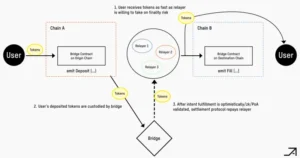
The transition follows a period of heightened scrutiny regarding the resilience of cross-chain bridges, which serve as the vital connective tissue for assets deployed across multiple blockchain ecosystems. The WSTC’s Chief Information Security Officer (CISO) presented the findings of a review that identified what were described as "repeated operational failures" at LayerZero Labs. These failures, according to the Commission, rendered the protocol unsuitable for the high-stakes environment of a state-sanctioned digital currency.
The Catalyst: Security Review and the KelpDAO Exploit
The impetus for the Commission’s pivot was a detailed investigation into recent security breaches within the broader decentralized finance (DeFi) ecosystem, most notably the $292 million exploit involving KelpDAO. In that specific incident, attackers linked to the Democratic People’s Republic of Korea (DPRK) successfully compromised the infrastructure operated by LayerZero Labs. By utilizing a forged message, the attackers were able to trigger an unauthorized release of funds on the Ethereum network.
The WSTC’s review concluded that the KelpDAO exploit was not an isolated technical anomaly but rather a symptom of deeper systemic issues within LayerZero’s operational framework. The Commission’s report highlighted several critical areas of concern, including:
- Compromised Access Controls: The review found that the administrative safeguards intended to protect the protocol were insufficient to prevent sophisticated state-sponsored actors from gaining unauthorized entry.
- Private Key Management: A particularly alarming finding involved the management of cryptographic keys. The Commission alleged that LayerZero Labs failed to maintain proper control over a critical private key associated with a live deployment of the FRNT token.
- Delayed Incident Disclosure: The Commission expressed dissatisfaction with how security incidents were communicated, suggesting that the transparency required for a government partnership was not consistently met.
- Operational Handoff Failures: According to the Commission, LayerZero Labs failed to transfer a production authorization to the state agency as previously agreed, effectively leaving a critical piece of the state’s financial infrastructure in the hands of a third-party private entity without direct oversight.
Architectural Disparities: LayerZero vs. Chainlink CCIP
A central theme of the Commission’s assessment was the philosophical and technical difference between the two protocols. The WSTC concluded that LayerZero’s "Omnichain" model placed an excessive amount of responsibility on individual developers to configure their own security parameters. This flexibility, while prized in the permissionless world of DeFi, was viewed as a liability for a state-issued asset. The Commission noted that LayerZero deployments could often become dependent on a single verifier or a dangerously small set of verifiers, creating a "single point of failure" risk.
In contrast, the Commission identified Chainlink CCIP as the only solution among those evaluated that met its specific institutional security requirements. The selection of Chainlink was based on several key pillars of its architecture:
- Decentralized Node Operators: Unlike protocols that rely on centralized or opaque relayers, CCIP utilizes Chainlink’s established network of independent, Sybil-resistant node operators. These operators have a proven track record of maintaining uptime during extreme market volatility and cloud service outages.
- The Risk Management Network: One of the deciding factors was CCIP’s secondary layer of security, known as the Risk Management Network. This is a separate, independent network that constantly monitors cross-chain transactions for anomalies. If a suspicious transaction is detected, the Risk Management Network can automatically pause the bridge, providing a "circuit breaker" functionality that the Commission deemed essential.
- Direct Issuer Control: The WSTC emphasized that CCIP allows the token issuer—in this case, the State of Wyoming—to maintain direct control over token contracts and implementation logic. This ensures that the state, not the infrastructure provider, remains the ultimate authority over the asset’s movement.
- Rate Limits and Audits: Chainlink’s implementation of configurable rate limits provides an additional layer of defense against mass-drain exploits, a feature that aligned with the Commission’s risk mitigation strategy.
Context: The Rise of the FRNT Token and Wyoming’s Digital Ambitions
The FRNT token represents a landmark achievement in the American digital asset landscape. Authorized under the Wyoming Stable Token Act (Senate File 127), the token is 100% backed by US dollars and high-quality liquid assets, such as US Treasury bills. Unlike private stablecoins like USDT (Tether) or USDC (Circle), FRNT is issued by a sovereign sub-national entity, with the intent of providing a trusted, transparent, and regulated medium of exchange for the digital economy.
Wyoming has long positioned itself as the "Crypto Cowboy" state, passing dozens of laws to provide legal clarity for blockchain firms and decentralized autonomous organizations (DAOs). The creation of the Stable Token Commission was the culmination of these efforts, aimed at generating new revenue streams for the state through the "seigniorage" (the interest earned on the reserves backing the token).
The FRNT token is currently deployed across eight major blockchain networks, including Ethereum, Polygon, and Avalanche. Because the token is intended to move seamlessly between these disparate environments, the "bridge" infrastructure is not merely a utility but a core component of the token’s solvency and security. The Commission’s decision to mandate CCIP as the exclusive infrastructure provider reflects a "security-first" approach that prioritizes the protection of state funds over rapid expansion or ease of integration.
Timeline of the Migration and Security Evaluation
The transition from LayerZero to Chainlink did not happen overnight. It was the result of a multi-month evaluation process:
- Early 2024: The Wyoming Stable Token Commission begins the initial rollout of the FRNT token, utilizing LayerZero as one of the primary interoperability providers to ensure wide distribution across chains.
- Mid-2024: The KelpDAO exploit occurs. The $292 million loss sends shockwaves through the industry, prompting the WSTC’s security team to launch an internal audit of all third-party infrastructure providers.
- Late 2024: The WSTC CISO identifies specific operational lapses at LayerZero Labs, including the failure to transfer production keys and the lack of robust access controls.
- December 2024: The Commission formally votes to terminate the relationship with LayerZero and designates Chainlink CCIP as the exclusive cross-chain infrastructure for the FRNT token.
- Current Phase: The Commission is currently in the process of migrating all FRNT liquidity and smart contract logic to the CCIP framework, ensuring that all future cross-chain transfers are governed by Chainlink’s decentralized oracle network.
Official Responses and Market Implications
While LayerZero Labs has historically defended its security model—arguing that it provides developers with the "optionality" to choose their own security levels—the Wyoming Commission’s public rebuke represents a significant blow to the protocol’s institutional aspirations. By labeling LayerZero’s practices as "repeated operational failures," the WSTC has set a high bar for what it expects from private-sector partners.
Chainlink, on the other hand, sees this as a validation of its "defense-in-depth" philosophy. Sergey Nazarov, co-founder of Chainlink, has frequently stated that the security of cross-chain movement is the most significant hurdle for institutional adoption of blockchain technology. The Wyoming mandate serves as a high-profile case study for other government entities and financial institutions considering similar digital asset initiatives.
The broader implications for the stablecoin market are substantial. As the US federal government continues to debate stablecoin legislation (such as the Lummis-Gillibrand bill), Wyoming’s proactive stance provides a blueprint for state-level regulation. By insisting on rigorous security audits and decentralized infrastructure, Wyoming is attempting to prove that a government-backed digital asset can be more secure and transparent than its private-sector counterparts.
Analysis: The Future of Government-Backed Digital Assets
The Wyoming Stable Token Commission’s decision highlights a growing divide in the crypto industry between "move fast and break things" protocols and "institutional-grade" infrastructure. For a state government, the reputational and financial risks of a protocol exploit are far higher than for a typical DeFi project. A $292 million exploit on a state-issued token would not just be a financial loss; it would be a political and legal crisis.
By choosing Chainlink CCIP, the WSTC is betting on a model that prioritizes redundancy and external verification over pure speed or low integration costs. This move may signal a trend where "sovereign-grade" digital assets gravitate toward infrastructure providers that offer SOC2 compliance, external audits, and decentralized governance.
Furthermore, the focus on "direct issuer control" suggests that the next generation of stablecoins will move away from "black box" bridging solutions. Issuers want to know exactly who is verifying their transactions and want the ability to intervene if something goes wrong. The WSTC’s insistence on holding its own production authorizations is a clear sign that the era of blind trust in third-party developers is ending for institutional players.
As the FRNT token continues its rollout, the success of this migration will be closely watched by other states and even national central banks. If Chainlink CCIP can provide the seamless, secure interoperability that Wyoming demands, it could become the de facto standard for the burgeoning "Internet of Value," where state-backed assets, tokenized real-world assets (RWAs), and traditional financial instruments interact across a unified, secure landscape.
For now, the Wyoming Stable Token Commission remains steadfast in its mission. As stated in their recent presentation, the goal is not just to issue a token, but to establish the "gold standard" for security in the digital asset age. The migration to Chainlink CCIP is the first major step in ensuring that the FRNT token remains a reliable and secure pillar of Wyoming’s financial future.