The cryptocurrency market is currently navigating a complex period of transition, where the dominance of Bitcoin is being balanced against the burgeoning potential of the altcoin sector. While Bitcoin has historically served as the primary engine for market-wide movements, seasoned analysts and market trackers are increasingly pointing toward Ethereum as the definitive catalyst required to ignite a sustained "altseason." For high-market-cap assets such as XRP, Solana (SOL), Cardano (ADA), BNB, and Dogecoin (DOGE), the path to significant expansion appears inextricably linked to Ethereum’s ability to reclaim its role as a relative strength leader.
According to recent research shared by the market analysis firm Altcoin Vector, Ethereum has faced considerable challenges in sustaining leadership since the broader market trends shifted in early 2024. Although the asset has made several attempts to anchor rotations into other altcoins, these movements have frequently lost momentum before evolving into the type of multi-week expansion seen in previous bull cycles. The current market structure suggests that while liquidity is present, it remains concentrated or hesitant, waiting for a definitive signal from the world’s second-largest cryptocurrency by market capitalization.
The Ethereum Leadership Vacuum and Altcoin Correlation
The relationship between Ethereum and the broader altcoin market is rooted in the decentralized finance (DeFi) ecosystem and the flow of capital. As the foundational layer for the majority of decentralized applications, Ethereum often serves as the "liquidity gateway" for the rest of the market. When Ethereum demonstrates relative strength against Bitcoin (the ETH/BTC pair), it typically signals a higher risk appetite among investors, who then rotate profits into higher-beta assets like Solana, Cardano, and various memecoins.
Data indicates that Ethereum’s inconsistent performance over the last several months has created a vacuum. While Solana has occasionally decoupled and performed independently due to its growing retail ecosystem, and XRP has reacted to specific legal milestones, a synchronized rally across the "Top 10" assets has remained elusive. Analysts suggest that the pattern of "faded moves" reflects a lack of conviction. However, even a temporary return to form for Ethereum—specifically a reclaim of key moving averages against Bitcoin—could serve as the spark for a massive capital rotation into the altcoin sector.
Historical Context: Realized Capitalization and Cycle Phases
To understand the current setup, it is necessary to look at the underlying financial metrics that govern long-term cycles. Analyst CW recently highlighted a pivotal shift in Ethereum’s realized capitalization. Realized capitalization—a metric that values each unit of a cryptocurrency based on the price at which it last moved—has turned positive on a one-year basis. Historically, this transition from negative to positive realized cap growth has been a reliable indicator of the early stages of a major bullish cycle.
The current trajectory mirrors the recovery phase that began in May 2023. During that period, the market was recovering from the post-FTX lows, and Ethereum began to lay the groundwork for a structural uptrend. If history serves as a guide, the move that started a year ago may only be the foundational stage of what could become the dominant upward move of the current four-year cycle. When realized cap trends upward, it indicates that new capital is entering the network at higher price points, creating a "floor" that supports future price appreciation.
Projecting the $30,000 Milestone: Catalysts and Institutional Interest
While the immediate focus is on reclaiming the $2,000 to $3,000 range, some market commentators are looking much further ahead. Analyst Crypto Patel has argued that long-term valuations as high as $30,000 for Ethereum should not be dismissed as mere hyperbole. Such a valuation would require a fundamental shift in how the asset is perceived and utilized globally. Several key factors are cited as the pillars for this extreme upside:
- AI-Integrated Payment Infrastructure: As artificial intelligence agents become more autonomous, they will require decentralized, permissionless payment rails. Ethereum’s smart contract capabilities make it the primary candidate for "AI-to-AI" transactions, potentially driving massive demand for ETH as gas.
- Quantum-Resistant Advantages: With the theoretical threat of quantum computing looming over traditional cryptography, Ethereum’s roadmap includes transitions to quantum-resistant signatures. This forward-thinking design could eventually position it as a "safer" alternative to older blockchain architectures.
- Institutional Staking and ETFs: The approval of Spot Ethereum ETFs in the United States marked a turning point. Financial giants like BlackRock and Fidelity are not just looking at Ethereum as a digital commodity, but as a yield-bearing asset. The potential inclusion of staking rewards in future ETF iterations could attract trillions in institutional capital seeking decentralized yield.
- Tokenization of Real-World Assets (RWA): The migration of traditional financial instruments—such as bonds, real estate, and credit—onto the Ethereum blockchain is already underway. BlackRock’s BUIDL fund is a primary example of this trend, utilizing Ethereum to provide institutional-grade liquidity.
Impact on Major Altcoins: XRP, Solana, and Cardano
If Ethereum achieves the milestone of reclaiming market leadership, the impact on the "Big Five" altcoins is expected to be exponential.
Solana (SOL): Often viewed as Ethereum’s primary competitor in the smart contract space, Solana tends to benefit from "overflow" liquidity. When the Ethereum ecosystem becomes congested or expensive, capital flows into Solana’s high-throughput network. A surging ETH price often validates the entire "L1 (Layer 1) thesis," driving SOL to test previous all-time highs.
XRP: XRP’s price action has been heavily influenced by the legal battle between Ripple and the SEC. However, once legal clarity is fully priced in, XRP reverts to following broader market trends. An Ethereum-led rally would provide the necessary macro tailwinds for XRP to break out of its multi-year consolidation pattern.
Cardano (ADA): Cardano has historically lagged in the early stages of a bull market but performs exceptionally well during the "mania" phase of an altcoin rotation. As Ethereum sets the pace, Cardano’s academic-led development and loyal community often catch up in a series of volatile "catch-up" trades.
BNB and DOGE: BNB remains the backbone of the Binance ecosystem, and its price is a direct reflection of trading volume and exchange activity. A market expansion led by ETH would see a massive spike in on-chain activity, directly benefiting BNB. Similarly, Dogecoin remains the primary barometer for retail sentiment. When Ethereum makes headlines for price gains, the speculative appetite of retail investors typically manifests in DOGE and the broader memecoin sector.
Current Market Data and Technical Resistance Levels
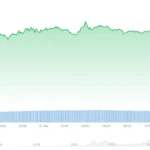
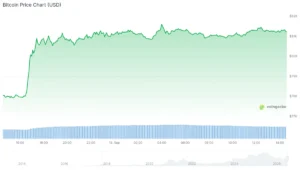
At the time of reporting, market data from CoinMarketCap shows Ethereum trading near the $2,113 mark, representing a 2.8% increase over a 24-hour period. This move coincides with a broader market lift led by Bitcoin, which has provided a temporary "halo effect" for the altcoin market.
From a technical perspective, Ethereum’s recent price action was bolstered by a breakout above key short-term moving averages. Trading volume has seen a significant uptick, suggesting that buyers are stepping in at the $2,000 support level. However, the path upward is not without obstacles. Analysts are closely watching the $2,147 resistance level. A clean break and hold above this price point could open the door for a retest of the $2,300 to $2,500 range, which has historically acted as a psychological barrier.
On the downside, maintaining the $2,100 level is critical for short-term bullish sentiment. A drop below $2,083 could signal that the recent move was a "fake-out," potentially leading to a period of further sideways consolidation or a retest of lower support levels near $1,900.
The Broader Impact of an Ethereum-Led Expansion
The implications of Ethereum reclaiming its leadership role extend beyond simple price appreciation. A thriving Ethereum network signifies a healthy decentralized economy. It validates the utility of Layer 2 scaling solutions like Arbitrum, Optimism, and Base, which in turn lowers the barrier to entry for millions of new users.
Furthermore, an Ethereum expansion would likely trigger a "wealth effect" across the crypto ecosystem. As ETH holders see their portfolios grow, they are more likely to reinvest in emerging sectors such as GameFi, decentralized social media (DeSo), and Decentralized Physical Infrastructure Networks (DePIN). This creates a virtuous cycle of innovation and investment that benefits all high-cap altcoins.
In summary, while Bitcoin remains the king of the market in terms of store-of-value, Ethereum remains the "Queen" of utility and the primary engine for altcoin growth. The current technical and fundamental setup suggests that the market is coiled for a significant move. If Ethereum can attain the milestone of relative strength leadership and hold its key support levels, the resulting expansion for XRP, Solana, Cardano, BNB, and DOGE could define the next phase of the 2024-2025 bull cycle. Institutional adoption via ETFs and the integration of AI and RWA technologies provide a long-term fundamental floor that may eventually turn the hypothetical $30,000 target into a tangible reality. For now, all eyes remain on the $2,147 resistance level as the first major hurdle in this potential journey.