


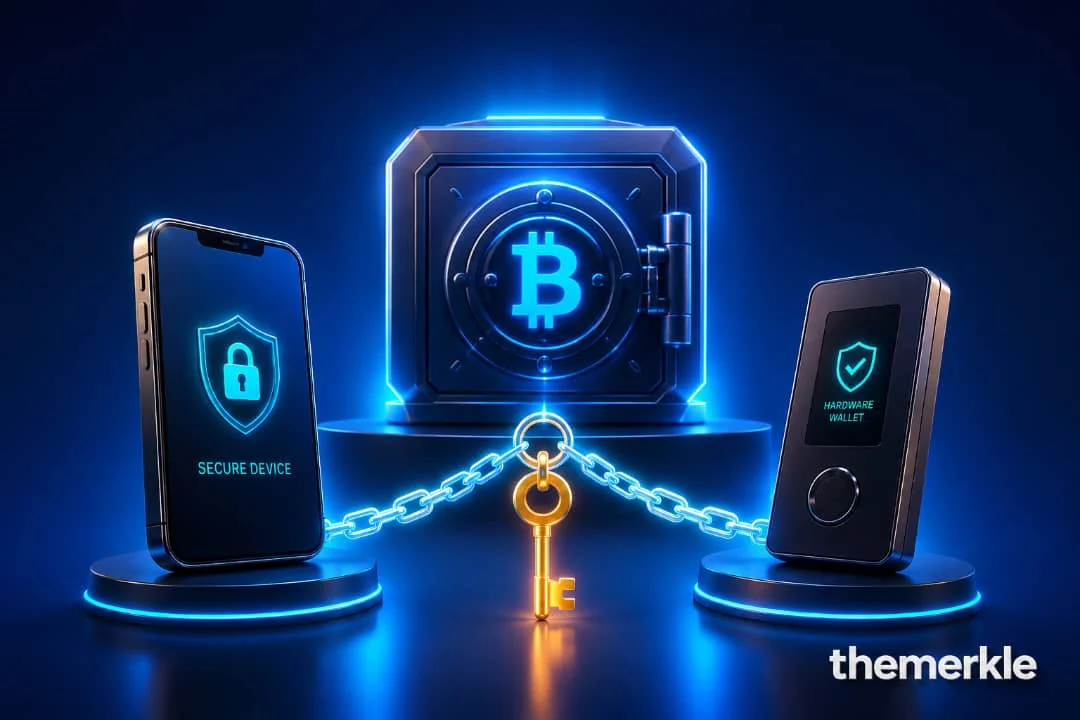
The cryptocurrency community has been thrust into a fervent discussion following prominent on-chain investigator ZachXBT’s recent comments regarding the security of hardware wallets, particularly Ledger, and his controversial recommendation for storing significant crypto holdings on a dedicated iPhone. While much of the initial discourse has fixated on a direct comparison between hardware wallets and mobile devices, a deeper, more critical question has emerged from the periphery: what provisions are in place for accessing these digital assets should the primary owner become incapacitated or pass away? This often-overlooked aspect of self-custody highlights a significant, unaddressed vulnerability in the broader crypto ecosystem.
ZachXBT, renowned for his investigative work in uncovering scams and illicit activities within the decentralized finance (DeFi) space, articulated his reservations via a Telegram post. He expressed a lack of trust in current hardware wallets for signing critical transactions or safeguarding substantial amounts of cryptocurrency. Instead, he advocated for the use of a dedicated iPhone, stripped of all other applications and solely purposed for crypto management. His sharpest criticisms were directed at Ledger, citing frequent and often disruptive updates to its Ledger Live software, which he argued provide minimal tangible benefit to users while consistently complicating basic functionalities. This perspective, coming from a highly respected figure in crypto security, immediately sparked widespread debate across social media platforms and industry forums.
The Evolution of Hardware Wallet Security and Its Discontents
Hardware wallets emerged as a pivotal innovation in the early days of cryptocurrency, offering a secure, offline method for storing private keys, thereby protecting assets from online threats like malware and phishing. Devices like Ledger and Trezor quickly became industry standards, designed to isolate the private key from internet-connected devices during transaction signing. This "air-gapped" security model was a significant leap forward from storing keys on hot wallets (connected to the internet) or simple paper wallets.
However, as the crypto landscape matured, so too did the attack vectors and the complexity of managing these devices. The user experience, often a secondary consideration to raw security, began to falter. ZachXBT’s critique taps into a growing sentiment among advanced users who find the constant software updates, occasional bugs, and the perceived friction of hardware wallet interfaces increasingly frustrating. For instance, Ledger Live, the companion application for Ledger devices, has undergone numerous iterations, each bringing changes that, while sometimes improving features, have also been reported to introduce new complexities or temporary disruptions to basic operations. This "update fatigue" is a genuine concern for users managing high-value assets, where stability and predictability are paramount.
A Single Device: The Paradox of Concentrated Security
While ZachXBT’s concept of a dedicated, air-gapped iPhone for crypto management presents an intriguing proposition for minimizing attack surface—by severely limiting the device’s internet exposure and app installations—it simultaneously introduces a critical vulnerability: the concentration of all security functions onto a single physical device. In such a setup, key storage, transaction signing, and crucial recovery information (if not meticulously documented and stored elsewhere) converge onto one iPhone, operable primarily by a single individual.
Hardware wallets, despite their contemporary flaws, were architected around the seed phrase recovery model with an inherent understanding of continuity. A 12- or 24-word seed phrase, representing the master key to all associated crypto assets, is explicitly designed to be written down, securely stored offline, and ideally, shareable with trusted individuals or entities in the event of the primary owner’s unavailability. This model facilitates a degree of succession planning, however rudimentary, for digital assets.
An iPhone-only setup, by contrast, quietly subverts this continuity model. Unless the owner undertakes an extraordinary level of documentation—detailing the exact device configuration, installed applications, security protocols, and testing the recovery process—and then shares this intricate knowledge with a trusted beneficiary, the dedicated iPhone transforms into an impenetrable vault. This singular dependence on one person’s operational knowledge and physical presence represents a far greater, often unacknowledged, risk than any software bug in a hardware wallet companion app. The potential for permanent loss due to death, incapacitation, or even simple memory lapse becomes exponentially higher without a robust, documented, and tested succession plan. This critical oversight has largely been absent from the mainstream coverage of ZachXBT’s commentary.
Chronology of High-Profile Incidents Fueling the Debate
The recent debate over crypto security has not emerged in a vacuum but is underscored by a series of high-profile incidents that have shaken user confidence and highlighted persistent vulnerabilities in the ecosystem. These events provide crucial context for ZachXBT’s warnings and the broader discussions on self-custody best practices.
- January 2023: The $282 Million Social Engineering Heist. One of the largest individual crypto thefts on record occurred when a single user lost an estimated $282 million through a sophisticated social engineering scam. While not directly tied to a hardware wallet vulnerability in terms of device compromise, this incident underscored the pervasive human element in crypto security. Attackers exploited psychological manipulation and user error, demonstrating that even advanced users with secure hardware can fall victim to well-executed phishing or impersonation tactics. It highlighted that the "ecosystem surrounding" hardware, including user vigilance and awareness, is often the weakest link.
- April 2023: The Fake Ledger Live App Scam. A significant breach of trust and security occurred when a fraudulent Ledger Live application successfully infiltrated Apple’s App Store. Before it was identified and removed, this imposter app managed to drain approximately $9.5 million from unsuspecting victims. The incident was a stark reminder of the "impersonation risk" and "phishing surface" that ZachXBT alluded to. Users, relying on the perceived security of official app stores, were misled into downloading malicious software that mimicked the legitimate Ledger interface, ultimately compromising their funds.
- Ongoing: Persistent UX Challenges and Update Fatigue. Beyond specific breaches, the continuous cycle of software updates for hardware wallet interfaces, particularly Ledger Live, has been a source of ongoing frustration for a segment of the user base. While updates are essential for security patches and new features, their frequency and occasional introduction of new bugs or interface changes can disrupt workflow and erode user confidence, as pointed out by ZachXBT. This creates a fertile ground for skepticism about the overall reliability and user-friendliness of these devices.
These incidents collectively paint a picture of an evolving threat landscape where not only the hardware itself but also the software, app distribution channels, and human interaction points are constantly under attack. ZachXBT’s argument, therefore, isn’t that hardware wallets are fundamentally broken in their core cryptographic function, but rather that the surrounding ecosystem—the apps, the risk of impersonation, the vast phishing surface—consistently fails users, leading to significant financial losses.
The Advanced User Caveat and Broader Implications
ZachXBT has been careful to qualify his advice, stating explicitly that it is intended for "advanced users" and not as a recommendation for mass migration. This caveat is more significant than it initially received credit for. Advanced users are precisely the demographic most likely to have already implemented sophisticated security protocols, including meticulously documented and tested recovery plans. They understand the intricacies of seed phrase management, multi-signature setups, and secure cold storage. For this cohort, optimizing their operational security by isolating a dedicated device for crypto transactions might indeed offer a marginal benefit by reducing software dependencies and potential attack vectors.
However, the risk lies with less experienced users who might adopt this advice without fully comprehending the underlying security implications, particularly the single point of failure inherent in an undocumented, single-device setup. These individuals, without a comprehensive recovery plan in place, are effectively trading one set of risks for another, potentially more catastrophic, one. They are inadvertently signing up for the same concentration of risk, simply wrapped in a different physical device.
The Security Community’s Nuanced Response
The reaction within the professional crypto security community to ZachXBT’s statements has been active and notably nuanced. While some agreed with the frustration regarding hardware wallet user experience, there was also significant pushback on the wisdom of abandoning hardware wallets entirely, especially for large sums. A recurring theme from security-focused users was an acknowledgment that the "hardware wallet experience today genuinely sucks," citing regular UI updates and software changes that often disrupt basic functionality and create a frustrating user journey. This sentiment has led some to lean away from Ledger towards alternatives like Trezor, though even Trezor is acknowledged to have its own imperfections and user interface challenges.
Crucially, the security community emphasized what a hardware wallet fundamentally protects against beyond mere offline storage: the ability to independently verify on the device’s own screen that the transaction details (recipient address, amount, asset type) being signed on an internet-connected device precisely match what is displayed on the hardware wallet. This physical, air-gapped verification step is the cornerstone of hardware wallet security, providing an immutable confirmation layer against sophisticated malware that might attempt to alter transaction details on the computer or phone screen without the user’s knowledge. An iPhone-only setup, without a secondary, independent display for transaction verification, completely foregoes this critical security measure. This fundamental difference in verification methodology deserves far more attention than the "brand-versus-brand" debate that has dominated much of the recent coverage.
The Unsolved Problem: Crypto Inheritance and Recovery Planning
Should an individual opt to follow ZachXBT’s advice, the recommendation to use an iPhone over an Android device for dedicated crypto management holds merit, primarily due to Android’s more fragmented security landscape and slower patch rollout cycles across various manufacturers. Furthermore, the imperative to store seed phrase backups offline—never as screenshots or digital files on the transacting device—remains absolutely essential, regardless of the chosen setup.
However, these operational security measures do not address the more profound and often-ignored challenge: the question of what happens to these digital assets if the owner is no longer able to access them. This encompasses scenarios ranging from accidental loss or damage of the device, to the owner’s incapacitation, or ultimately, their death. The current "self-custody culture" within cryptocurrency largely sidesteps the complexities of inheritance and long-term asset recovery.
Traditional financial systems have well-established mechanisms for asset inheritance: wills, trusts, executors, and regulated institutions. Cryptocurrency, by its very nature of self-custody and decentralization, lacks these institutional safeguards. If a dedicated iPhone becomes the sole custodian of one’s crypto wealth, and the owner has not meticulously documented the device’s setup, access credentials, and the seed phrases (and their physical locations) in a manner that can be securely transmitted to a trusted beneficiary, those assets are effectively lost forever.
Estimates suggest that billions of dollars in cryptocurrency are already considered "lost" due to forgotten passwords, misplaced seed phrases, or the death of owners without clear recovery instructions. A 2021 study by Chainalysis estimated that around 20% of all Bitcoin is lost, much of it irretrievably. This figure likely grows annually. The absence of a documented, tested, and shared recovery plan is a silent but immense risk for the vast majority of crypto holders. While multi-signature wallets and social recovery mechanisms are emerging as potential solutions, their adoption remains low due to technical complexity and a general lack of awareness. The burden of creating a robust inheritance plan for self-custodied crypto falls entirely on the individual, a responsibility that most people, even those with significant wealth, routinely neglect.
The Mobile Verification Gap: A Compounding Risk
Beyond the inheritance challenge, a smaller but equally relevant point concerns the inherent limitations of mobile interfaces in displaying transaction details. Smaller mobile screens often present less comprehensive information during a transaction compared to a desktop display. This reduced visibility can make it easier for users to miss subtle cues indicating a phishing site, a mismatched address, or an incorrect transaction amount. A laptop or desktop setup typically offers more visible context and a larger screen area, which can aid in meticulous verification, even though mobile devices have become the default for daily transactions for many.
When a phone-only setup is employed, this "reduced-visibility risk" compounds the "single-point-of-failure" problem. The device is now simultaneously carrying the full burden of asset custody, the operational risk of a single point of failure for recovery, and the heightened risk of transaction errors due to a constrained user interface. This tripartite risk profile underscores the necessity for extreme caution and meticulous attention to detail for anyone adopting such a setup for significant holdings.
Reframing the Central Question
ZachXBT’s advice, while well-intentioned and perhaps pragmatic for a highly skilled security researcher who intimately understands the precise location of their keys and the intricacies of their recovery processes, holds significantly less merit for the average or even moderately advanced crypto holder. For individuals who have not meticulously documented, rigorously tested, and securely shared a comprehensive recovery plan with trusted beneficiaries, adopting a single-device, phone-only strategy introduces an existential risk to their digital assets.
Therefore, the truly pertinent question that this debate should have illuminated is not merely "which device is safer today?" but rather, "what happens to these digital assets the day the original owner is no longer able to access them?" This is the fundamental challenge that self-custody culture, despite its advancements in cryptographic security, has yet to adequately solve. The long-term viability and accessibility of digital wealth hinge on developing robust, user-friendly, and legally sound mechanisms for inheritance and recovery—an area that deserves as much, if not more, attention than the ongoing discourse about hardware wallet brands or software updates. The crypto industry’s journey towards maturity requires not just technical innovation but also a profound reconsideration of human factors and life cycle events that impact asset ownership.
Disclosure: This is not trading or investment advice. Always do your research before buying any cryptocurrency or investing in any services.
Follow us on Twitter @themerklehash to stay updated with the latest Crypto, NFT, AI, Cybersecurity, and Metaverse news!














