


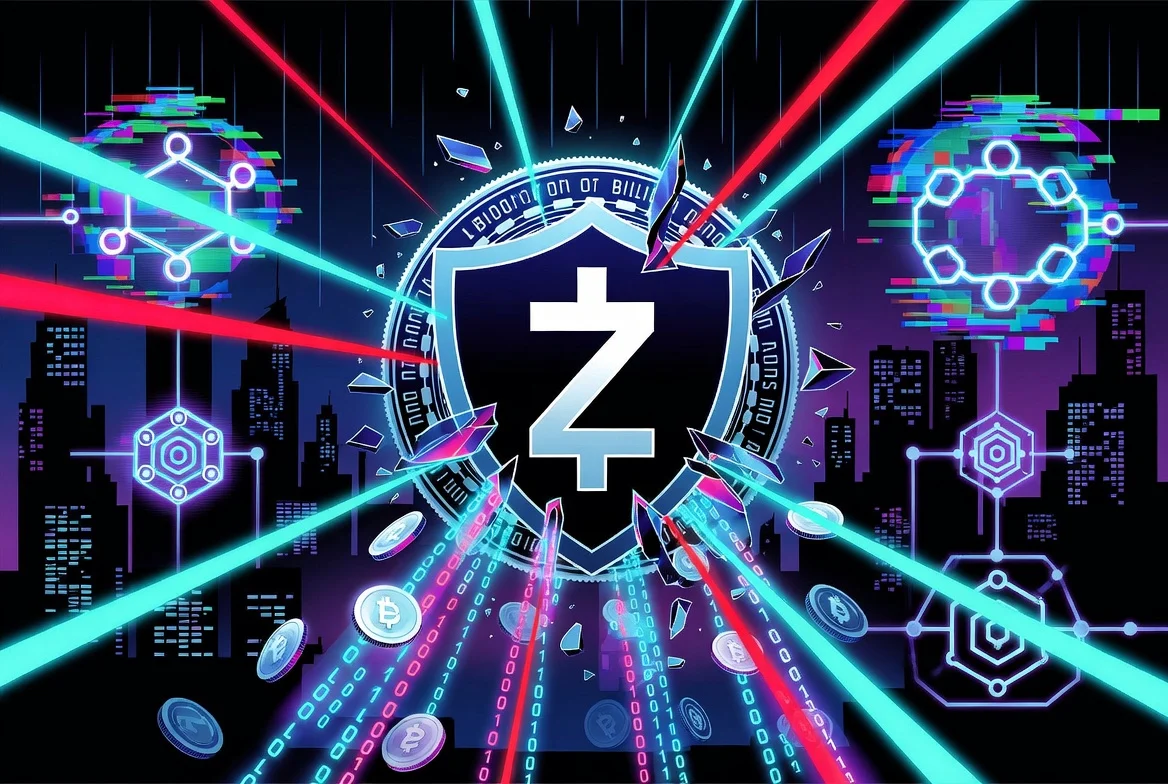
Zcash, a pioneer in the realm of privacy-preserving digital assets, has successfully navigated a significant security milestone following a comprehensive audit conducted by Anthropic’s Mythos AI model. The announcement, made by Zcash founder Zooko Wilcox, revealed that the automated security review—initiated at the request of Shielded Labs—did not uncover any new "serious bugs" within the Zcash protocol. This development comes at a critical juncture for the cryptocurrency industry, as privacy-centric protocols face intensifying regulatory scrutiny and technical challenges. While the audit confirms the current robustness of the Zcash codebase against known vulnerability patterns identifiable by advanced artificial intelligence, it also signals a broader shift in how blockchain infrastructure is maintained and secured in an era of rapid technological convergence.
The audit was spearheaded by Shielded Labs, an independent organization dedicated to the advancement and protection of the Zcash ecosystem. By leveraging Anthropic’s Mythos, a high-capacity AI model specifically tuned for complex reasoning and code analysis, the team sought to add a rigorous layer of automated scrutiny to the Zcash protocol. According to Wilcox, the primary objective was to identify potential flaws that might have escaped previous human-led reviews or traditional static analysis tools. The conclusion of this audit without the discovery of critical vulnerabilities serves as a testament to the rigorous engineering standards maintained by Zcash developers over the years, particularly as the protocol has transitioned through various iterations such as Sapling and Orchard.
The Evolution of Zcash Security and the Role of Shielded Labs
To understand the significance of this AI-driven audit, one must examine the historical trajectory of Zcash security. Since its inception in 2016, Zcash has differentiated itself through the use of Zero-Knowledge Succinct Non-Interactive Arguments of Knowledge (zk-SNARKs). This cryptographic framework allows transactions to be verified without revealing the sender, receiver, or transaction amount. However, the complexity of these cryptographic proofs necessitates a level of security diligence far beyond that of standard blockchain protocols.
Shielded Labs emerged as a pivotal entity in this ecosystem, focusing on the long-term sustainability and security hardening of the network. Their decision to employ Anthropic’s Mythos model reflects a proactive approach to protocol maintenance. In the past, Zcash has undergone numerous third-party audits by esteemed firms such as NCC Group and Least Authority. These human-led audits are often time-consuming and expensive, creating a bottleneck for continuous integration and rapid deployment of updates. The introduction of AI models into the auditing workflow represents a strategic move to democratize high-level security reviews, allowing for more frequent and comprehensive scans of the codebase.
Technical Context: AI as a Force Multiplier in Cybersecurity
The use of Anthropic’s Mythos model marks a notable evolution in the application of Large Language Models (LLMs) for cybersecurity. Unlike standard generative AI, models like Mythos are designed to handle massive datasets and identify non-linear relationships within code that might indicate a vulnerability. In the context of Zcash, this involves scanning thousands of lines of Rust code—the primary programming language for the Zcash node software—and analyzing the intricate logic of its shielded pool circuits.
AI-assisted auditing offers several advantages over traditional methods:
- Pattern Recognition: AI can quickly identify common vulnerability patterns, such as buffer overflows, reentrancy attacks, or logic flaws, across vast repositories.
- Speed and Scalability: An AI model can process a codebase in a fraction of the time it takes a human team, enabling "sanity checks" during every stage of the development lifecycle.
- Comprehensive Coverage: While humans may focus on high-risk areas, AI can perform an exhaustive scan of the entire codebase, including legacy components that might otherwise be overlooked.
However, Wilcox and other industry experts caution that AI is not a total replacement for human expertise. AI models can suffer from "hallucinations" or fail to grasp the deeper economic and game-theoretic implications of a protocol change. Therefore, the Mythos audit is viewed as a complementary tool—a "security headline" that bolsters confidence rather than a final, infallible certificate of safety.
Chronology of Zcash Security Milestones
The journey toward the 2026 AI audit is marked by several key events that have shaped Zcash’s reputation for security:
- October 2016: Zcash launches with its "Sprout" series, introducing the first widespread implementation of zk-SNARKs.
- February 2019: The Zcash team reveals they had quietly patched a "counterfeiting vulnerability" discovered in 2018. This bug, which could have allowed an attacker to create infinite ZEC, was fixed before it could be exploited, highlighting the critical importance of protocol audits.
- May 2022: The "Nu5" upgrade launches, removing the "Trusted Setup" requirement through the introduction of the Halo 2 proving system. This was a massive architectural shift that required extensive third-party auditing.
- 2024-2025: Regulatory pressure in Europe (MiCA) and the United States leads to the delisting of privacy coins from several major exchanges. Zcash focuses on "security hardening" to prove its technical integrity to institutional partners.
- June 2026: Zooko Wilcox announces the completion of the Mythos AI audit, confirming no serious bugs were found in the current protocol iteration.
Regulatory and Market Context
The timing of this announcement is particularly relevant given the global regulatory climate surrounding "Privacy-Enhancing Technologies" (PETs). Regulators in various jurisdictions have expressed concerns that privacy coins could be used for illicit activities. In response, the Zcash community has doubled down on transparency regarding its security processes. By demonstrating that the protocol is subject to cutting-edge AI scrutiny, Zcash aims to distance itself from the perception of being an "opaque" or "unregulated" system.
Market analysts suggest that security news often acts as a fundamental driver for long-term value in the privacy sector. While short-term price action in ZEC remains tied to broader market trends, the assurance of a "bug-free" protocol (to the extent detectable by modern AI) provides a necessary foundation for institutional adoption. For traders and investors, the Mythos audit serves as a signal that the development team is prioritizing the "safety" of the network over mere hype.
Official Responses and Future Outlook
While Shielded Labs has not yet released the full technical report of the Mythos audit, the initial feedback from the developer community has been cautiously optimistic. Developers within the Zcash Foundation and the Electric Coin Co. (ECC) have noted that while the absence of bugs is encouraging, the work of "security hardening" is never truly finished.
Wilcox emphasized that Shielded Labs and other contributors are continuing their efforts to fortify the protocol. This includes ongoing human-led research, bug bounty programs, and the potential for future AI audits as models like Mythos continue to evolve. The next steps for the project involve a deeper dive into the specific parameters used during the Mythos audit, including the commit range of the code analyzed and the specific model configurations employed by Anthropic.
Implications for the Broader Crypto Ecosystem
The Zcash-Anthropic collaboration sets a precedent for the wider cryptocurrency industry. As blockchain protocols become increasingly complex, the cost and difficulty of ensuring absolute security grow exponentially. If AI models can be reliably used to verify the integrity of financial systems, it could lead to a new standard in "Open Source Security."
For other privacy-focused projects like Monero or Dash, the Zcash audit provides a blueprint for how to engage with emerging technologies to validate their security claims. It also raises important questions about the role of AI companies in the crypto space. As Anthropic, OpenAI, and Google continue to develop more sophisticated models, their influence on the "trustlessness" of decentralized systems may become a central theme in tech governance.
In conclusion, the successful AI audit of Zcash represents more than just a technical update; it is a milestone in the maturation of the privacy coin sector. By integrating advanced AI into its security repertoire, Zcash is reinforcing its commitment to protecting its users while navigating a complex landscape of regulatory and technical challenges. As the industry watches for further disclosures from Shielded Labs, the message remains clear: in the digital age, privacy and security are not just features—they are ongoing processes that require the best tools available, whether human or machine.














