


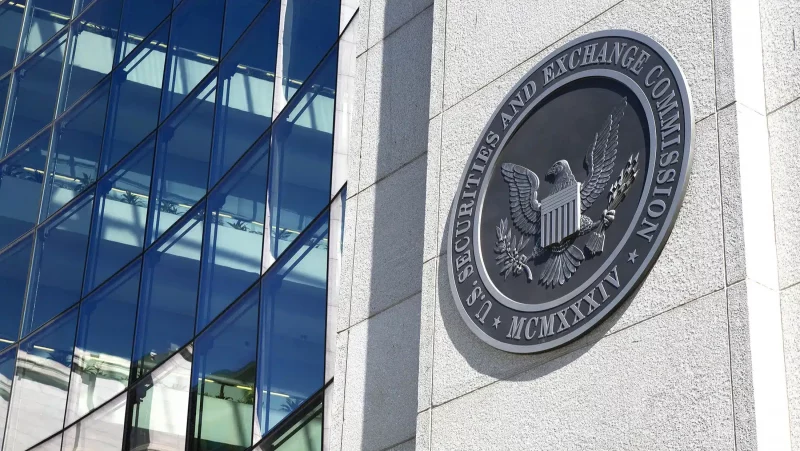
The Securities and Exchange Commission is preparing new crypto rule proposals for exchanges and broker-dealers as part of its 2026 regulatory agenda, signaling a significant shift in how the federal agency intends to oversee the digital asset industry. This move marks a transition from a period defined primarily by enforcement actions toward a more structured, formal rulemaking environment. The agency’s Unified Agenda of Regulatory and Deregulatory Actions now includes two specific crypto-focused items: Crypto Market Structure Amendments and Amendments to Broker-Dealer Financial Responsibility and Recordkeeping and Reporting Rules Regarding Crypto Assets. Both entries are currently listed at the proposed rule stage, indicating that while the SEC has identified these areas as critical priorities, it has not yet moved to adopt final regulations.
The inclusion of these items on the 2026 agenda suggests that the SEC is looking to establish a more permanent framework for digital assets, moving beyond the "regulation by enforcement" approach that has drawn criticism from both industry participants and lawmakers. By focusing on market structure and broker-dealer obligations, the commission is tackling two of the most technically complex and legally contentious aspects of the cryptocurrency ecosystem. The market structure proposals are expected to address the fundamental mechanics of how digital assets are traded, while the broker-dealer amendments will likely focus on the financial plumbing of the industry, including how firms hold, report, and account for digital assets on their balance sheets.
A Comprehensive Look at the Proposed Rulemaking Track
The "Crypto Market Structure Amendments" could potentially become the most consequential policy track at the agency in recent years. For years, the SEC has maintained that the majority of digital assets are securities and that the platforms trading them must register as national securities exchanges or alternative trading systems (ATS). However, the industry has long argued that existing securities laws are ill-suited for the decentralized and 24/7 nature of blockchain technology. The proposed market structure rules signal that the SEC is finally preparing to articulate exactly how platforms must register and which specific securities market rules apply to digital asset venues. This could include requirements for order execution, transparency, prevention of market manipulation, and the segregation of customer funds—all areas where crypto exchanges have historically differed from traditional equity or options markets.
Simultaneously, the "Amendments to Broker-Dealer Financial Responsibility and Recordkeeping and Reporting Rules Regarding Crypto Assets" addresses the practicalities of institutional participation. Under current regulations, broker-dealers face significant hurdles when dealing with digital assets. These hurdles primarily stem from the SEC’s Net Capital Rule (Rule 15c3-1) and the Customer Protection Rule (Rule 15c3-3). Traditionally, for a broker-dealer to hold an asset, it must be able to prove "possession or control." In the world of private keys and decentralized ledgers, proving exclusive control has been a point of friction between firms and regulators. The proposed amendments suggest the SEC is looking to codify standards for custody, capital treatment, and recordkeeping, providing a clearer roadmap for traditional financial institutions that wish to offer crypto services without running afoul of financial responsibility requirements.
Chronology of Regulatory Evolution and Shift in Focus
The path to the 2026 agenda has been marked by a series of incremental steps and a recent, notable pivot in the agency’s strategy. Over the past three years, the SEC’s focus was largely on its Division of Enforcement and its Division of Examinations. In prior years, the agency’s annual examination priorities explicitly listed crypto-related services as a standalone focus, leading to a surge in "wells notices" and lawsuits against major platforms like Coinbase, Binance, and Kraken.
However, the 2026 agenda follows a pivotal development in March 2024, when the SEC issued an interpretive release clarifying how federal securities laws apply to certain crypto assets and transactions. This release was framed as part of a broader effort to define the boundaries of the SEC’s jurisdiction. Shortly thereafter, reports emerged that the SEC had removed crypto from its dedicated examination priorities for the upcoming cycle. While some observers initially interpreted this as a sign of the SEC backing away from the sector, the new rulemaking agenda clarifies that the agency is simply changing its tools. Instead of looking for violations of existing, often ambiguous rules through exams, the SEC is now attempting to write new rules that the industry must follow prospectively.
Technical Implications for Broker-Dealers and Market Participants
The technical challenges facing broker-dealers are substantial. Under current guidance, specifically Staff Accounting Bulletin No. 121 (SAB 121), firms that guard crypto assets for users are required to list those assets as liabilities on their own balance sheets. This requirement has been a major deterrent for banks and traditional broker-dealers because it forces them to maintain significant capital reserves against those liabilities, making the business of crypto custody prohibitively expensive.
The proposed amendments to financial responsibility rules may address these capital treatment issues. If the SEC provides a path where digital assets can be treated similarly to traditional securities for capital purposes—provided certain technological safeguards are met—it could trigger a wave of institutional entry into the market. Furthermore, the recordkeeping and reporting aspect of the proposal is likely to address the unique nature of "on-chain" data. Traditional reporting relies on centralized ledgers and periodic audits; the SEC’s new proposals will likely need to reconcile these requirements with the immutable, real-time data provided by public blockchains.
Market Structure and the Redefinition of "Exchange"
The market structure amendments are expected to revisit the definition of an "exchange." In 2023, the SEC proposed expanding the definition of an exchange to include "systems that offer the use of non-firm trading interest and communication protocols." This was widely seen as an attempt to bring decentralized finance (DeFi) protocols and automated market makers (AMMs) under the SEC’s regulatory umbrella.
By including market structure in the 2026 agenda, the SEC is signaling that it intends to finalize how these platforms—whether centralized or decentralized—must interface with the regulatory state. Key issues will include:
- Registration Requirements: Whether platforms must register as National Securities Exchanges or if a modified ATS framework will be provided.
- Disclosures: The type of information platforms must provide to investors regarding the assets traded.
- Conflict of Interest: Rules preventing platforms from acting as both the exchange and the market maker, a common practice in the crypto industry that is strictly limited in traditional finance.
Inferred Reactions and Industry Impact
While the SEC has not released the full text of these proposals, the industry reaction is expected to be a mix of cautious optimism and continued legal maneuvering. Major trade groups, such as the Blockchain Association and the Crypto Council for Innovation, have long called for "bespoke" rules rather than the application of 1930s-era statutes. The fact that the SEC is moving toward formal rulemaking provides the industry with an opportunity for "notice and comment," a process where stakeholders can provide feedback on proposed rules before they are finalized.
However, many in the industry remain skeptical. Critics argue that if the proposed rules are too restrictive, they may effectively serve as a "de facto" ban on certain types of digital asset activity in the United States. For example, if the recordkeeping rules are impossible for decentralized protocols to meet, those protocols may simply block U.S. users entirely. Conversely, if the rules provide a clear, achievable path for compliance, it could lead to the "institutionalization" of crypto, where digital assets are traded with the same level of oversight and investor protection as the New York Stock Exchange.
Economic and Strategic Analysis of the 2026 Agenda
The SEC’s shift to a 2026 horizon also reflects the political and legal realities facing the agency. With several high-profile court cases involving the SEC and crypto firms currently working their way through the appellate system, the commission may be waiting for judicial clarity before finalizing its rules. Courts have recently issued split decisions on whether certain crypto sales constitute investment contracts, and a definitive ruling from a higher court could significantly alter the SEC’s jurisdiction.
Strategically, the 2026 agenda places the SEC in a position to react to potential legislative changes. Congress is currently considering several bills, such as the Financial Innovation and Technology for the 21st Century Act (FIT21), which would redistribute regulatory authority between the SEC and the Commodity Futures Trading Commission (CFTC). By putting these items on the agenda now, the SEC is asserting its continued relevance in the space, regardless of the legislative outcome.
The broader impact of these rules cannot be overstated. If the SEC successfully implements a comprehensive framework for market structure and broker-dealer responsibility, it will likely provide the legal certainty that large-scale asset managers and pension funds have been waiting for. This could lead to increased liquidity, lower volatility, and the integration of digital assets into a wider array of financial products. However, the path to 2026 remains fraught with technical hurdles and potential political shifts that could reshape the agency’s priorities once again. For now, the message from the SEC is clear: the era of sporadic enforcement is giving way to a new era of formal, structural regulation.














