


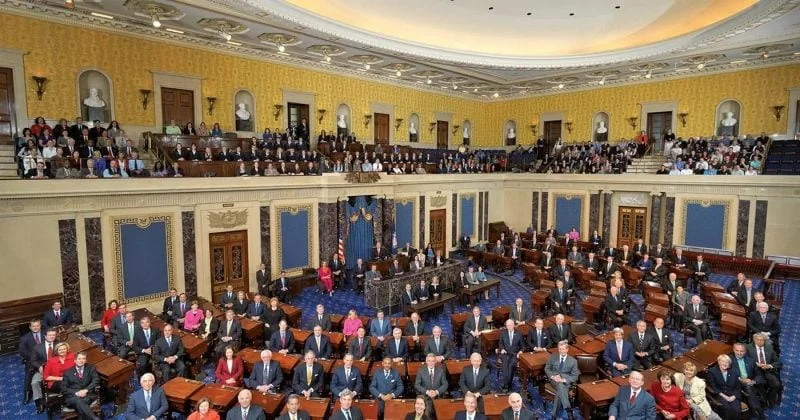
The United States Senate is currently grappling with a condensed legislative calendar that threatens to derail the passage of the Digital Asset Market Clarity Act, a comprehensive framework intended to provide long-awaited regulatory certainty to the burgeoning cryptocurrency industry. While Senate leadership has expressed a desire to initiate the floor process before the upcoming summer recess, the prospects of meeting the industry’s self-imposed August 7 deadline are increasingly dim. Senate Majority Leader John Thune indicated to reporters on Thursday that while the intention remains to bring the bill to the floor, the timing and the necessary consensus remain fluid. Thune noted that he would like to at least begin the preliminary stages of the process to gauge where the votes lie, though he stopped short of guaranteeing a final vote before lawmakers depart Washington for their state work periods.
The current legislative logjam is primarily a result of a crowded Senate docket. As of late July, the chamber has prioritized judicial nominations, a resolution regarding Iran war powers, and the high-stakes annual defense authorization bill. These items have effectively pushed the Digital Asset Market Clarity Act to the periphery of the immediate floor schedule. Industry advocates and congressional negotiators have long identified August 7 as a critical milestone. This date represents the practical cutoff point before the focus of both parties shifts decisively toward the November midterm elections, a period during which complex or controversial bipartisan legislation typically becomes much harder to pass.
The Legislative Timeline and the Race Against the Recess
The Senate is scheduled to begin its summer state work period on August 10, with a planned return to the capital on September 14. This five-week hiatus creates a significant gap in the legislative process. If the Senate fails to at least begin the floor process—a move known as "invoking cloture" or starting the motion to proceed—before the August break, the path for the bill in the final quarter of the year becomes much narrower. Upon their return in September, senators will face a limited window of productivity before the campaign trail demands their full-time attention.
Furthermore, the legislative process for the Digital Asset Market Clarity Act is complicated by the fact that any version approved by the Senate that differs from the House version must return to the lower chamber for reconciliation. The House of Representatives approved its own version of a crypto market structure bill in July 2025, meaning that a significant amount of inter-chamber negotiation is still required before a final bill can reach President Donald Trump’s desk for signing. The urgency felt by industry stakeholders stems from the fear that if a bill is not finalized by the end of this session, the entire process might have to start from scratch in a new Congress, potentially under a different political alignment.
Core Provisions of the Digital Asset Market Clarity Act
The Digital Asset Market Clarity Act represents a historic attempt to bridge the jurisdictional gap between the Securities and Exchange Commission (SEC) and the Commodity Futures Trading Commission (CFTC). For years, the digital asset industry has operated in a "gray zone" where the two agencies often disagreed on whether specific tokens should be classified as securities or commodities. The current draft of the bill, which combines proposals from the Senate Banking and Agriculture committees, seeks to provide a definitive legal framework for these classifications.
Under the proposed rules, the bill sets clear guidelines for digital asset exchanges, intermediaries, and issuers. It aims to establish federal oversight that protects consumers while fostering innovation. Key provisions include:
- Jurisdictional Clarity: Defining which digital assets fall under the SEC’s "investment contract" purview and which are "digital commodities" subject to CFTC oversight.
- Stablecoin Regulation: Setting capital requirements and operational standards for issuers of stablecoins, which are digital assets pegged to the value of a fiat currency like the US dollar.
- Consumer Protections: Implementing mandatory disclosures for token issuers and requiring exchanges to maintain segregated customer funds to prevent the type of commingling seen in previous high-profile industry collapses.
- Intermediary Registration: Requiring brokers and dealers in the digital asset space to register with the appropriate federal regulators, ensuring they meet minimum standards of conduct and financial stability.
Persistent Policy Disputes and Partisan Divisions
Despite the bipartisan recognition that the crypto industry requires a clearer regulatory framework, specific provisions within the Clarity Act have become flashpoints for debate. One of the primary areas of contention involves the treatment of stablecoin rewards. Some Republicans have expressed opposition to strict limitations on how stablecoin issuers can distribute rewards or interest to holders, arguing that such restrictions could stifle the utility of these assets as a modern payment tool.
On the other side of the aisle, Democrats have raised significant concerns regarding ethics restrictions and enforcement mechanisms. The current draft includes provisions that would impose strict ethics rules on senior government officials transitioning into the private crypto sector. However, a group of Democratic senators has objected to giving the Department of Justice (DOJ) the primary responsibility for enforcing these specific rules, preferring instead that regulatory agencies like the SEC maintain a stronger hand in oversight.
Senator Cynthia Lummis, a prominent advocate for digital asset legislation, has acknowledged these hurdles. She noted that while the bill is a result of extensive negotiation, several contentious provisions remain open to revision. The challenge for Lummis and her colleagues is to find a middle ground that can secure the 60 votes required to overcome a filibuster in the Senate. Without broad Democratic support, the bill risks stalling indefinitely, particularly as the political climate becomes more polarized ahead of the elections.
The Economic and Global Context of Regulatory Delay
The stakes for the Digital Asset Market Clarity Act extend beyond domestic politics. As the US struggles to finalize its regulatory stance, other jurisdictions are moving forward with their own frameworks. The European Union’s Markets in Crypto-Assets (MiCA) regulation is already providing a clear set of rules for the 27-nation bloc, attracting firms that seek legal certainty. Industry representatives argue that the US risks losing its competitive edge and its status as a global financial hub if it continues to rely on "regulation by enforcement" rather than clear statutory guidance.
Data from the digital asset sector underscores the scale of the market. With the total crypto market capitalization fluctuating between $2 trillion and $2.5 trillion, and stablecoins accounting for over $160 billion of that liquidity, the lack of federal standards is seen by many economists as a systemic risk. Proponents of the Clarity Act argue that passing the bill would unlock significant institutional investment. Many large-scale pension funds and traditional financial institutions have remained on the sidelines, citing the risk of regulatory backlash or legal ambiguity as a primary deterrent to entry.
Reactions from the Industry and Policy Analysts
The reaction from the crypto industry to the potential delay has been a mix of frustration and cautious optimism. Organizations such as the Blockchain Association and the Crypto Council for Innovation have spent months lobbying for a vote before the summer recess. In statements following Senator Thune’s comments, industry leaders emphasized that while "getting it right" is important, the cost of inaction is rising.
Policy analysts suggest that the Senate leadership’s current strategy is one of "momentum preservation." By starting the floor process now, even if it does not conclude before August 10, the Senate establishes a procedural foothold. This allows them to pick up the debate immediately in September without the need for redundant committee hearings. However, analysts also warn that the closer the calendar gets to November, the more likely it is that "poison pill" amendments—provisions added specifically to make the bill unpalatable to one side—will be introduced for political leverage.
The Role of the Executive Branch and Future Implications
The stance of the White House also remains a critical factor. While the bill is a legislative product, the Trump administration’s willingness to sign it into law depends on whether the final version aligns with its broader goals of financial deregulation and American technological dominance. The administration has generally been viewed as more open to the digital asset industry than previous iterations of the executive branch, but the specific details of federal oversight and the powers granted to the SEC remain points of internal discussion.
If the August window is missed, the Digital Asset Market Clarity Act will face an uphill battle. The "lame duck" session—the period between the November election and the seating of the new Congress in January—is often a time when significant legislation is passed, but it is also a period of high unpredictability. Should the bill fail to pass in 2026, the industry could face another year of legal challenges and enforcement actions from agencies that are currently operating without the specific mandates the Clarity Act would provide.
In conclusion, the Digital Asset Market Clarity Act stands at a crossroads. The next two weeks will determine whether the Senate can move beyond its internal divisions and the distractions of other legislative priorities to provide the framework the digital asset market has sought for over a decade. While Leader Thune’s comments suggest a willingness to engage, the ticking clock and the looming midterm elections represent the most significant obstacles to achieving "clarity" in the American crypto landscape.














