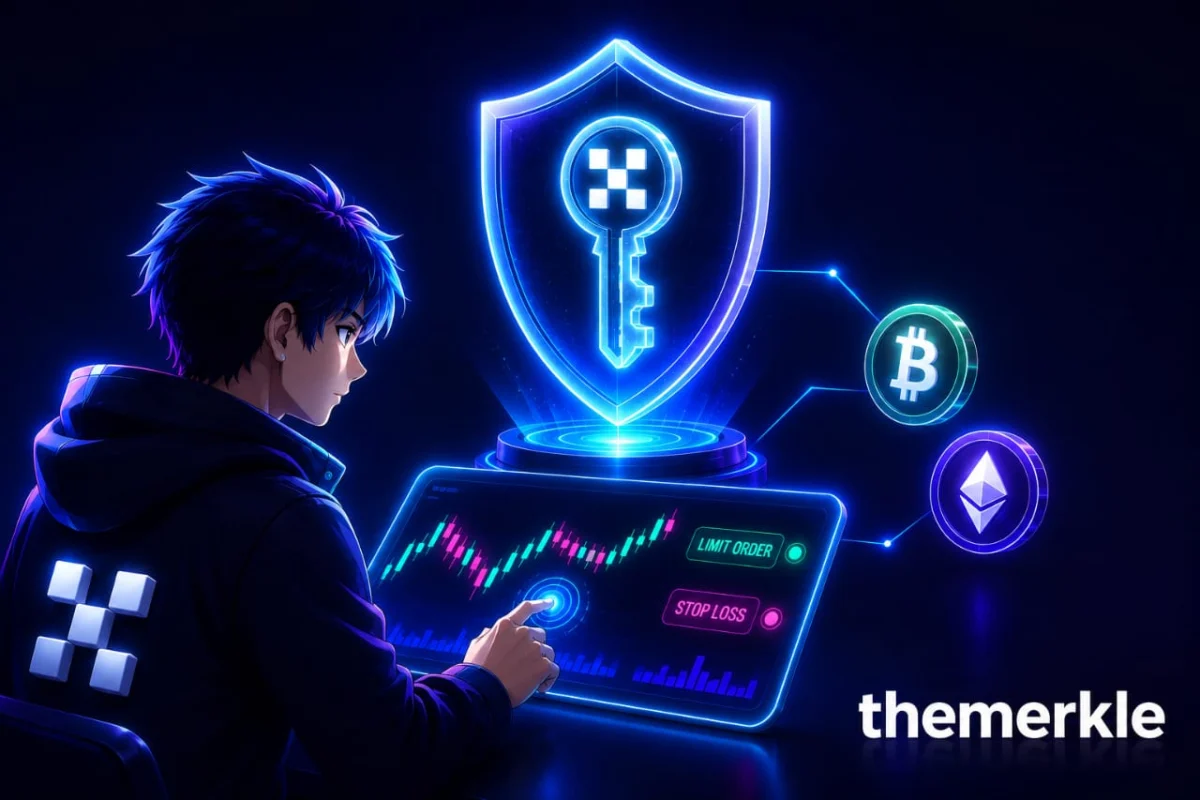
The digital asset landscape has long presented a fundamental trade-off: the robust feature sets and automation offered by centralized exchanges (CEXs) versus the immutable security and self-sovereignty of self-custodial wallets. For years, advanced trading functionalities such as limit orders, stop-losses, and copy trading remained largely exclusive to CEX platforms, requiring users to deposit their assets into custodial accounts, thereby relinquishing direct control over their private keys. This inherent conflict has been a persistent challenge for retail and professional traders alike, forcing them to choose between convenience and security. However, OKX Wallet’s recently launched Trader Mode aims to bridge this gap, offering sophisticated, automated trading tools directly within a self-custodial environment, leveraging advanced cryptographic and hardware-based security mechanisms to ensure that users’ private keys never leave their direct control.
The introduction of Trader Mode by OKX Wallet marks a significant evolution in the self-custody paradigm. The feature, initially met with skepticism by many who have observed countless "self-custodial trading" pitches quietly compromise asset control, demonstrates a fundamental architectural shift. The core innovation lies in its utilization of Trusted Execution Environments (TEEs), a secure, isolated section of hardware designed to protect sensitive data even from the device’s own operating system. This technological backbone ensures that a user’s private key remains encrypted and confined within this hardware enclave, inaccessible to OKX itself, even while the wallet is actively executing complex trading strategies on the user’s behalf. This is not merely a minor technical detail; it represents a crucial validation of the self-custody promise against functionalities that have historically necessitated a compromise of that very principle.
The Enduring Dilemma: Security vs. Functionality in Crypto Trading
The cryptocurrency market has witnessed explosive growth, attracting millions of participants ranging from casual investors to high-frequency traders. Despite this growth, the foundational dilemma between asset security and trading functionality has persisted. Centralized exchanges, with their high liquidity, advanced order types, and integrated analytics, have traditionally been the go-to platforms for active trading. However, the recurring incidents of hacks, regulatory pressures, and platform insolvencies affecting CEXs have consistently underscored the risks associated with relinquishing custody of digital assets. Data from various analytics firms consistently shows billions of dollars lost to exchange hacks over the past decade, fueling a strong demand for self-custodial solutions.
Conversely, self-custodial wallets, which empower users with absolute control over their private keys, have long been championed as the embodiment of blockchain’s decentralized ethos. Yet, these wallets historically lacked the sophisticated trading tools necessary for active market participation. Executing complex strategies, such as setting precise limit orders or implementing risk management tools like stop-losses, typically required manual intervention or interaction with decentralized exchanges (DEXs) that, while self-custodial, often present higher gas fees, fragmented liquidity, and a less intuitive user experience compared to their centralized counterparts. The global daily trading volume on CEXs often dwarfs that on DEXs by a significant margin, highlighting the functional gap that self-custodial solutions needed to address to attract a broader trading audience. Trader Mode directly confronts this historical trade-off, aiming to deliver the best of both worlds.
Architectural Breakthrough: Trusted Execution Environments (TEEs)
At the heart of OKX Wallet’s Trader Mode lies the sophisticated integration of Trusted Execution Environments (TEEs). A TEE is a secure area of a main processor that guarantees code and data loaded inside it are protected with respect to confidentiality and integrity. It is an isolated environment that runs concurrently with the operating system but is cryptographically separated from it, making it resilient to software attacks originating from outside the TEE. Common examples include Intel SGX (Software Guard Extensions) and ARM TrustZone, widely used in mobile devices and servers for protecting sensitive data like biometric information or digital rights management keys.
In the context of Trader Mode, when a user enables the feature, their private key is encrypted and securely provisioned into this TEE. Crucially, OKX asserts that it cannot view, copy, or extract this key once it resides within the enclave. This architectural design means that even if the host device’s operating system were compromised, or if OKX itself were to face an internal breach, the private key stored within the TEE would remain protected. All trading operations, such as signing transactions for limit orders or stop-losses, are performed by the isolated environment, using the private key within its secure confines, without ever exposing the key to the broader system or to OKX’s servers. This adherence to industry-standard TEE functionality provides a robust, hardware-backed assurance of key security, a critical differentiator from solutions that might perform similar automation but rely on less secure software-based key management.
Empowering Traders: Feature Set and Functionality
The initial release of Trader Mode boasts a feature set that is more comprehensive than typically expected from a nascent self-custodial trading solution. It directly addresses the most common needs of active retail traders, bringing capabilities previously confined to CEXs into the self-custody realm.
- Market Orders: These execute immediately at the best available price, a standard functionality but now performed directly from the user’s self-custodied funds.
- Limit Orders: Trader Mode offers two distinct types:
- USD Price Triggered: Users can set an exact USD price at which they wish to buy or sell an asset. The order automatically executes once this condition is met.
- Guaranteed Swap Rate Triggered: This innovative feature allows users to specify a desired swap rate for a token pair. The order then executes only when that guaranteed rate is achievable, offering more precision in decentralized swaps.
- Auto-Sell Strategies (Take-Profit & Stop-Loss): A crucial risk management tool, this allows users to set both take-profit and stop-loss thresholds concurrently with a market buy order. Both thresholds are calculated in USD terms from the entry price, providing automated protection against adverse market movements and ensuring profit realization without constant monitoring.
- Copy Trading: This feature enables users to automatically mirror the trades of higher-performing addresses. While common on CEXs, its implementation in a self-custodial environment represents a significant step towards democratizing sophisticated trading strategies without requiring asset transfer to a third party.
The development roadmap for Trader Mode further underscores OKX’s commitment to evolving this product beyond its initial offerings. Planned features include:
- Creator Sell-Off Alerts: Automatically selling tokens when the project’s creator or large whale wallets liquidate their holdings, a mechanism to protect against potential rug pulls or significant price drops.
- Token Sniping: The ability to execute immediate buys of tokens shortly after a migration event or a new listing, allowing users to capitalize on early price movements.
- Dollar-Cost Averaging (DCA): A strategy to spread trades out over time, reducing the impact of market volatility by averaging the purchase price.
- Trailing Stops: Dynamic stop-loss orders that adjust automatically as the market moves in a favorable direction, locking in profits while still limiting downside risk.
This robust lineup, both current and planned, positions Trader Mode as a powerful tool capable of satisfying the daily needs of a serious retail trader, signaling that OKX views this as an evolving platform rather than a static product.
Seamless Integration: Setting Up OKX Trader Mode
Integrating Trader Mode into an existing OKX Wallet is designed to be straightforward, emphasizing its nature as an enhanced state layered onto a user’s current self-custodial wallet rather than a separate account type. This approach minimizes user friction and leverages existing wallet infrastructure. The activation process involves a few intuitive steps:
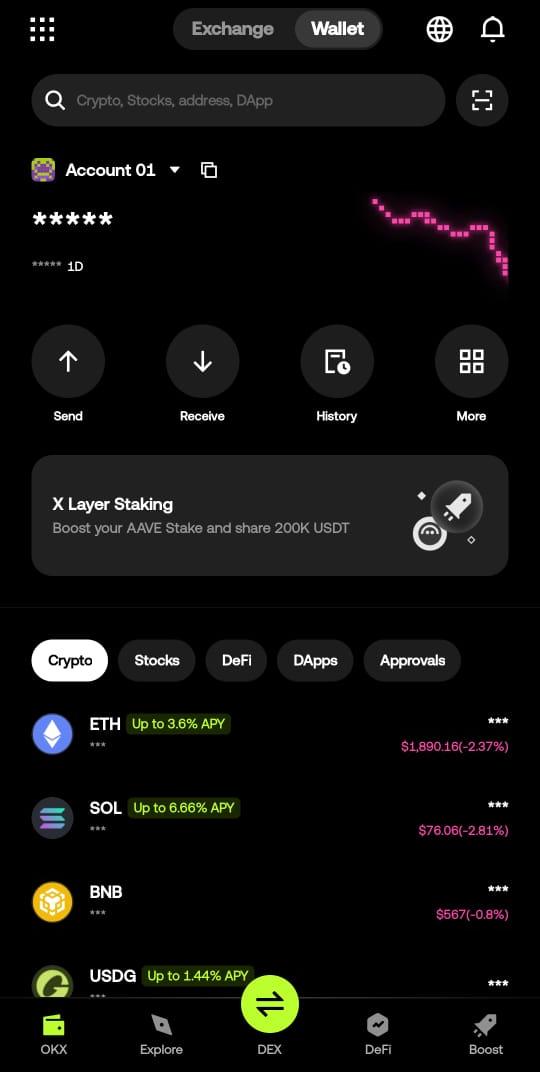
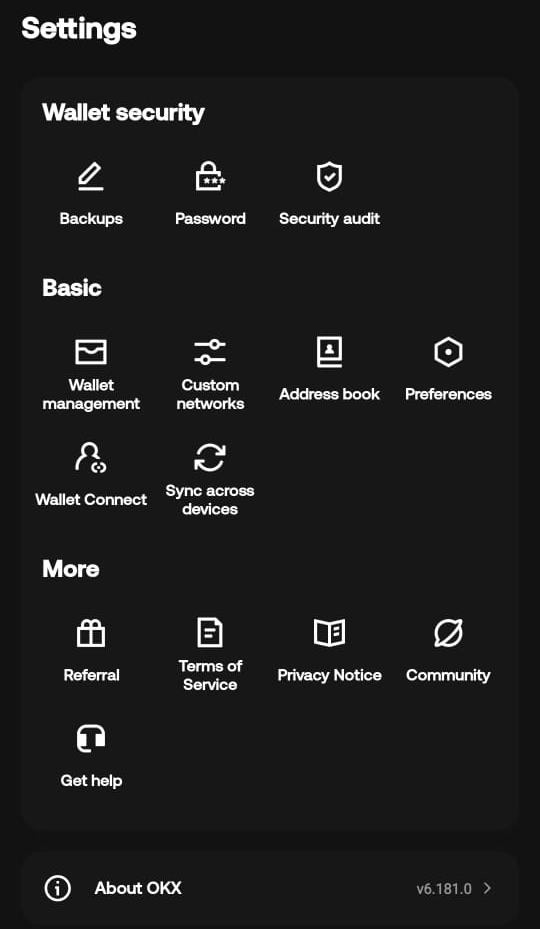
- Accessing Wallet Settings from the Homepage: Users begin on their OKX Wallet homepage. The "Settings" icon, typically located in the bottom right corner of the navigation bar, serves as the gateway to preferences and management options. This standard UI design ensures familiarity for existing users.
- Navigating to Wallet Management: Within the "Settings" menu, users scroll to locate "Wallet Management." Tapping this option reveals a comprehensive list of all imported wallets associated with their OKX Wallet application. This centralizes control over multiple self-custodial addresses.
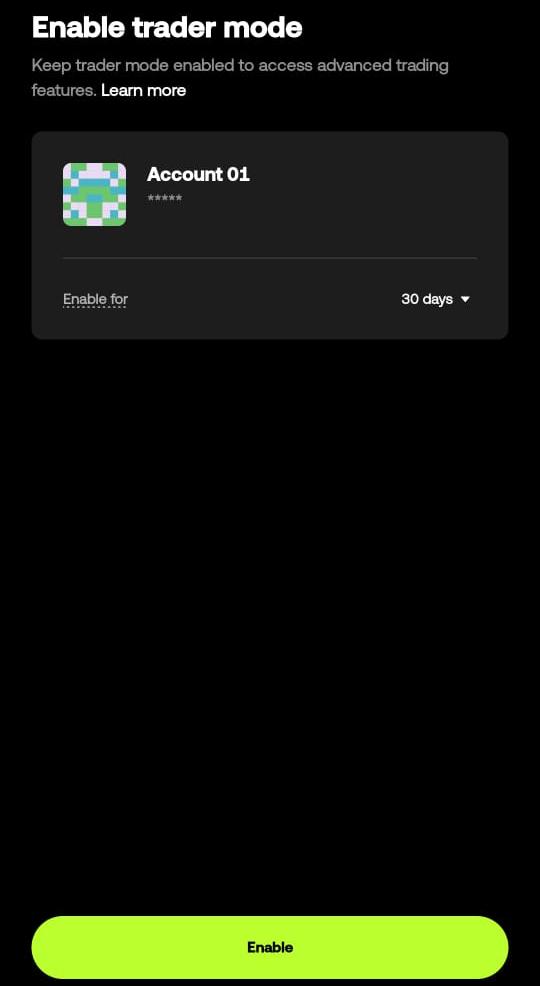
- Activating Trader Mode for a Selected Wallet: Users then select the specific wallet they intend to use for automated trading. On the wallet’s configuration screen, a clearly visible "Trader Mode" toggle is presented. Switching this toggle to the "On" position initiates the activation sequence. This granular control allows users to enable the feature only for specific wallets, segmenting their trading activities if desired.
- Defining the Enable Period: Upon activation, a prompt appears, requesting the user to select an "Enable Period" in days. This duration determines how long Trader Mode will remain active for the chosen wallet. This design choice is a crucial security measure; it prevents private keys from lingering indefinitely within the TEE if the feature is no longer actively used, enhancing overall security posture by limiting exposure windows. Users confirm their selection, and Trader Mode becomes operational.
This streamlined setup process underscores OKX’s commitment to user experience, making sophisticated trading accessible without complex technical hurdles.
Beyond Automation: Enhanced Security and User Experience
Two critical design choices within Trader Mode highlight OKX’s attention to detail regarding security and user experience, often overlooked in similar solutions:
- Authentication for Open Orders: To view active orders (such as pending stop-losses or take-profits), users are required to sign a verification message. This seemingly minor step is a potent defense against common market manipulation tactics. Without this authentication, malicious actors could potentially identify pending orders and attempt to front-run executions or deliberately push market prices towards trigger levels. By requiring a cryptographic signature, Trader Mode significantly closes this information asymmetry gap, protecting users from predatory trading practices.
- Automatic Pausing of Orders: In scenarios where Trader Mode expires or requires an upgrade, all open strategy orders are automatically paused. This intelligent default prevents "broken" orders from attempting to execute on-chain without valid signing authority, which would result in wasted gas fees and failed transactions. Instead, pausing ensures that orders remain dormant until the user manually resumes or re-enables Trader Mode, providing a safer and more efficient user experience. This proactive risk mitigation contrasts sharply with systems that might silently fail, leading to financial losses or missed opportunities.
These features, while not revolutionary on their own, collectively contribute to a more secure and robust trading environment, demonstrating a thoughtful approach to potential vulnerabilities and user pain points.
Industry Implications and Market Position
The advent of OKX Wallet’s Trader Mode carries significant implications for the broader cryptocurrency ecosystem. It represents a tangible step towards the realization of "smart accounts" and account abstraction—a concept that aims to make self-custodial wallets as user-friendly and feature-rich as centralized accounts, without sacrificing decentralization. By bringing CEX-grade automation to self-custody, OKX is not only enhancing its own product offering but also pushing the boundaries of what users can expect from decentralized applications.
This innovation could significantly accelerate the adoption of self-custody among traders who have previously hesitated due to the lack of advanced tools. It challenges other wallet providers and decentralized finance (DeFi) protocols to innovate further, potentially leading to a new wave of self-custodial solutions that prioritize both security and comprehensive functionality. For institutions and high-net-worth individuals, the ability to execute complex strategies while maintaining direct custody could also prove highly attractive, mitigating counterparty risk associated with centralized exchanges.
OKX’s commitment to independent audits and open-sourcing the code for Trader Mode, once the hardening process is complete, is a strategic move to build trust and transparency. This "hardening first, transparency after" approach is generally favored by security experts, ensuring that the system is thoroughly vetted for vulnerabilities before its internal workings are exposed. Such commitments are crucial for gaining credibility in a space where trust is paramount.
Expert and Community Reception (Inferred)
While specific expert statements on Trader Mode’s recent launch are still emerging, the general sentiment within the crypto community and among security analysts regarding such innovations is cautiously optimistic. The core premise of retaining self-custody while gaining advanced functionality aligns with the long-term vision of Web3. Security researchers would likely scrutinize the implementation of the TEE, verifying that the private key truly remains isolated and that no side-channel attacks are possible. Compliance experts would note that while the technology enhances user control, the automated nature of trading still requires users to understand and adhere to local regulatory frameworks, particularly concerning trading activities.
The broader trading community would likely welcome the convenience, especially those who have grown weary of moving funds between self-custodial wallets and centralized exchanges. The ability to manage risk and execute strategies directly from their own wallet, without sacrificing security, represents a significant improvement in workflow and peace of mind.
Challenges and Future Outlook
Despite its innovations, Trader Mode, like any new technology, faces certain challenges. User education will be paramount; ensuring that users fully understand how TEEs function and the nuances of self-custodial automated trading will be key to adoption. Integration with the ever-expanding universe of DeFi protocols and various blockchain networks will also be an ongoing endeavor. Scalability and performance, especially under high market volatility, will be critical metrics to monitor.
Looking ahead, Trader Mode represents a crucial step in the convergence of traditional financial market sophistication with the decentralized principles of blockchain. It underscores a growing trend where user experience and advanced functionality are no longer seen as antithetical to self-custody. As the digital asset space matures, solutions like Trader Mode will likely become the standard, empowering users with greater control and more sophisticated tools, ultimately reshaping how individuals interact with their digital wealth.
In conclusion, OKX Wallet’s Trader Mode is a credible and significant attempt to resolve the long-standing tension between centralized exchange automation and self-custodial security. By meticulously leveraging Trusted Execution Environments, offering a robust set of trading features, and implementing thoughtful security enhancements, OKX has introduced a product that challenges existing paradigms. For self-custody advocates seeking advanced trading capabilities without compromising their core principles, Trader Mode presents a compelling and noteworthy solution worthy of exploration.