The United States Court of Appeals for the District of Columbia Circuit has issued a pivotal ruling affirming the reliability and admissibility of blockchain analytics as forensic evidence in federal criminal proceedings. In a decision that carries significant weight for the future of cryptocurrency investigations, the appellate court upheld the original conviction of Roman Sterlingov, the operator of the notorious Bitcoin Fog mixing service. Central to the court’s decision was the determination that Chainalysis Reactor, a leading blockchain analytics tool, meets the stringent Daubert standard for scientific and technical evidence. This ruling marks the first time an appellate court has scrutinized and validated the methodology behind blockchain attribution, providing a legal bedrock for law enforcement agencies and financial institutions that rely on these tools to track illicit digital asset flows.
The appellate decision follows a 2024 trial in the U.S. District Court for the District of Columbia, where Sterlingov was found guilty of money laundering and operating an unlicensed money-transmitting business. Sterlingov, a dual Swedish-Russian national, had challenged the government’s use of Chainalysis Reactor, arguing that the software’s "clustering" algorithms were unreliable and lacked the necessary peer review to be admitted as expert testimony. By rejecting these claims, the D.C. Circuit has signaled that blockchain forensics has matured into a recognized and dependable field of forensic science.
The Rise and Fall of Bitcoin Fog
To understand the significance of the court’s ruling, it is necessary to examine the history of the service at the heart of the case. Bitcoin Fog was one of the longest-running "mixer" or "tumbler" services on the darknet. Launched in 2011, during the early years of Bitcoin’s existence, the service was designed to anonymize cryptocurrency transactions by pooling together the funds of multiple users and redistributing them in a way that obscured the original source and destination.
Over the course of its decade-long operation, Bitcoin Fog moved over 1.2 million Bitcoin, valued at approximately $400 million at the time of the transactions. Law enforcement investigations revealed that the vast majority of these funds originated from darknet marketplaces associated with narcotics trafficking, computer fraud, identity theft, and child sexual abuse material (CSAM).
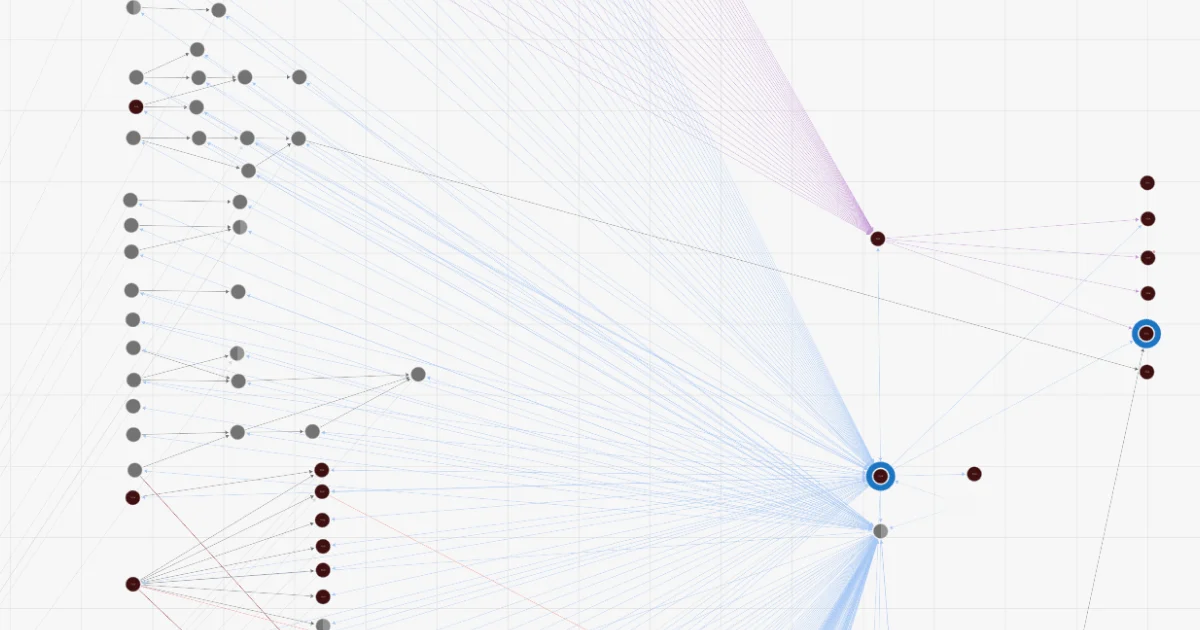
The investigation into Roman Sterlingov was a multi-year effort involving the FBI, the IRS Criminal Investigation unit, and international partners. Investigators used Chainalysis Reactor to trace the flow of funds from these darknet markets through the Bitcoin Fog "fogging" process. The software allowed analysts to identify over 900,000 Bitcoin addresses associated with the service, ultimately linking Sterlingov to the administrative backend of the mixer through a complex web of financial transactions and digital footprints.
The Daubert Standard and the Legal Challenge
The primary legal battleground in both the initial trial and the subsequent appeal was the "Daubert standard." Named after the 1993 Supreme Court case Daubert v. Merrell Dow Pharmaceuticals, Inc., this standard requires trial judges to act as gatekeepers, ensuring that any expert scientific or technical testimony is not only relevant but also based on a reliable methodology.
Under the Daubert framework, courts typically consider four non-exhaustive factors:
- Whether the theory or technique can be (and has been) tested.
- Whether the theory or technique has been subjected to peer review and publication.
- The known or potential rate of error.
- Whether the theory or technique has gained "general acceptance" in the relevant scientific community.
During the 2024 trial, Sterlingov’s defense team moved to exclude evidence derived from Chainalysis Reactor, arguing that the software’s proprietary algorithms were a "black box" that could not be independently verified. They specifically pointed to the lack of traditional academic peer review and the absence of a defined "error rate" for the tool’s clustering capabilities.
However, the District Court, and now the Appellate Court, found these arguments unpersuasive. The courts noted that while blockchain analysis is a relatively new field, the methodology used by Chainalysis—which combines "change address analysis" with "digital fingerprinting"—is grounded in logical, observable patterns on the public ledger.
Chronology of the Legal Proceedings
The legal journey of the United States v. Sterlingov case provides a timeline for the evolution of blockchain forensics in the American judiciary:
- April 2021: Roman Sterlingov is arrested at Los Angeles International Airport and charged with money laundering and operating an unlicensed money-transmitting business in connection with Bitcoin Fog.
- Late 2023 – Early 2024: Pre-trial hearings focus on the admissibility of Chainalysis Reactor. Expert testimony is provided by FBI Specialist Luke Scholl and Chainalysis expert Elizabeth Bisbee.
- March 2024: A jury finds Sterlingov guilty on all counts. The court formally rules that the evidence provided via Chainalysis Reactor meets the Daubert standard, marking a historic first for the industry.
- September 2024: Sterlingov is sentenced to 12 years and six months in prison. He is also ordered to pay a forfeiture money judgment of $395 million and forfeit seized cryptocurrencies valued at approximately $1.76 million.
- Late 2024: Sterlingov files an appeal with the U.S. Court of Appeals for the D.C. Circuit, specifically challenging the reliability of the blockchain forensics used against him.
- September 2026: The D.C. Circuit issues its opinion, upholding the lower court’s decision and confirming that Reactor-based testimony is admissible under federal law.
Technical Reliability and the "Conservative Approach"
A key element of the appellate court’s reasoning was the "conservative" nature of the Chainalysis methodology. In forensic science, a "false positive" (wrongly identifying a connection) is generally considered more damaging than a "false negative" (failing to identify a connection). The court highlighted that Chainalysis Reactor prioritizes "underinclusive" clustering. This means the software only attributes addresses to an entity when there is high-confidence evidence, rather than making speculative links.
FBI Specialist Luke Scholl and Chainalysis expert Elizabeth Bisbee testified that in their extensive experience, they could not recall a single instance where a Reactor attribution was later proven to be incorrect. This track record of accuracy served as a practical proxy for a formal "error rate."
Furthermore, while Sterlingov argued that the software had not undergone traditional peer review, the court observed that the technology is "generally accepted" within the community of law enforcement and financial compliance professionals. The court also took note of a 2025 independent academic study that performed a granular evaluation of various blockchain analysis tools. That study concluded that Chainalysis data was the most accurate in the industry, featuring the lowest false-positive rate and the highest coverage across different blockchains.
Broader Implications for the Cryptocurrency Industry
The affirmation of Chainalysis Reactor’s reliability has implications that extend far beyond the sentencing of a single darknet operator. This ruling provides a "green light" for the continued and expanded use of blockchain analytics in several key areas:
1. Law Enforcement and Prosecution:
Prosecutors now have a binding appellate precedent to cite when introducing blockchain evidence in future cases. This reduces the likelihood of lengthy and expensive pre-trial "Daubert hearings" for every new crypto-related case, as the underlying methodology of the industry’s primary tools has already been vetted at the highest levels.
2. Regulatory Compliance:
Financial institutions, including cryptocurrency exchanges and traditional banks, rely on blockchain analytics to satisfy Anti-Money Laundering (AML) and Know Your Customer (KYC) requirements. The court’s validation of these tools reinforces the legitimacy of the compliance frameworks that keep the digital asset ecosystem integrated with the global financial system.
3. The Role of Artificial Intelligence:
As the volume of blockchain data grows, analytics providers are increasingly integrating Artificial Intelligence (AI) to speed up investigations. The court’s focus on "methodological rigor" is particularly relevant here. As noted in the Chainalysis analysis of the $387 million Bitget hack in early 2026, AI can accelerate an investigation, but it cannot fix a flawed foundation. By validating the "foundation" of Reactor, the court has paved the way for more advanced, AI-driven forensic tools to be developed on top of this reliable base.
4. Defense Strategies:
The ruling also signals a shift for defense attorneys. Challenging the validity of the software itself is now a much steeper uphill battle. Instead, defense strategies may shift toward questioning the application of the tool in specific instances or challenging the human interpretation of the data provided by the software.
Analysis of the Judicial Shift
The D.C. Circuit’s decision reflects a broader judicial shift toward embracing technology-driven forensics. Historically, courts were hesitant to admit evidence from "novel" fields until they had decades of academic backing. However, the rapid pace of digital transformation has forced a more pragmatic approach.
The court recognized that in the fast-moving world of cryptocurrency, waiting for twenty years of peer-reviewed journals is not feasible. Instead, the court looked at the practical application: Is the tool used by the government? Is it used by the private sector? Can its results be corroborated by other evidence (such as the physical evidence and server logs found in the Sterlingov case)? By answering "yes" to these questions, the court has modernized the application of the Daubert standard for the digital age.
Conclusion
The appellate ruling in United States v. Sterlingov is a landmark moment for the blockchain industry. It confirms that the transparency of the public ledger, when analyzed through rigorous and conservative methodologies, provides evidence that is sufficient for the highest levels of the American legal system. As Chainalysis remains the only provider to have successfully navigated the Daubert standard through the appellate level as of late 2026, the decision reinforces the company’s position as a critical infrastructure provider for the digital economy.
Ultimately, the court’s decision rests on the principle that the truth on the blockchain is discoverable. For law enforcement, it is a validation of their investigative techniques. For the cryptocurrency industry, it is a step toward greater legitimacy. And for the legal system, it is a testament to the durability of the Daubert standard in the face of unprecedented technological change.