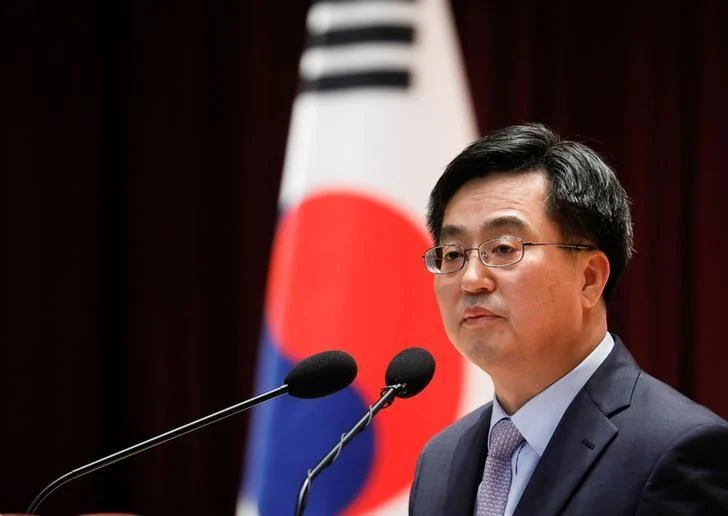
The South Korean government is reportedly reconsidering its stringent stance on Initial Coin Offerings (ICOs), signaling a potential pivot that could allow domestic companies to raise capital through digital tokens under specific regulatory conditions. According to reports from The Korea Times and sources familiar with the matter, financial authorities have initiated high-level discussions with the nation’s tax agency, the Ministry of Justice, and other relevant government bodies. These deliberations aim to establish a framework that would permit ICOs within the country, provided they adhere to strict investor protection and transparency standards.
This development marks a significant departure from the hardline policy adopted in late 2017, which saw the Financial Services Commission (FSC) issue a blanket ban on all forms of ICOs. At the time, the government characterized the practice as a high-risk speculative activity prone to fraud and money laundering. However, the burgeoning importance of blockchain technology in the global economy and the persistent demand from the domestic tech sector appear to have prompted a re-evaluation of this restrictive approach.
The Evolution of South Korea’s Regulatory Climate
To understand the weight of this potential policy shift, one must look back at the volatile relationship between South Korean regulators and the cryptocurrency market. Throughout 2017, South Korea emerged as one of the most active hubs for digital asset trading in the world. The "Kimchi Premium"—a phenomenon where Bitcoin and other cryptocurrencies traded at significantly higher prices on Korean exchanges than on global markets—became a symbol of the country’s intense retail interest.
However, this enthusiasm was met with stern warnings from political leaders. Senior officials frequently voiced concerns regarding the potential for "irrational exuberance" and the use of cryptocurrencies in illicit activities. The environment grew increasingly hostile following a series of high-profile security breaches at domestic exchanges, which resulted in the loss of millions of dollars in investor funds. These events, coupled with the September 2017 ban on ICOs, contributed to a broader cooling of the global market, as South Korea then represented a double-digit percentage of the world’s total trading volume.
By early 2018, the rhetoric began to soften. While the government remained committed to curbing speculation, it also recognized that overly aggressive regulation could stifle the development of blockchain technology, which the administration views as a cornerstone of the "Fourth Industrial Revolution." The current discourse suggests that the FSC is looking for a middle ground—one that allows for legitimate capital raising while maintaining the integrity of the financial system.
Official Stance and the FSC Perspective
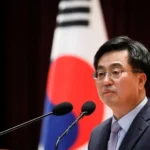
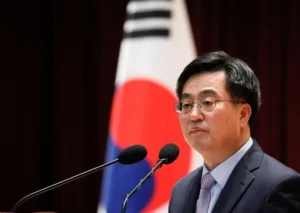
Kang Young-soo, the official overseeing cryptocurrency trading policies at the Financial Services Commission, recently clarified the current status of ICO regulation. While he acknowledged the ongoing discussions regarding a potential lifting of the ban, he emphasized that an official government-wide policy has not yet been finalized.
"The financial authorities have been talking to the country’s tax agency, justice ministry, and other relevant government offices about a plan to allow ICOs in Korea when certain conditions are met," an anonymous source told the press, highlighting the inter-departmental nature of the deliberations.
Kang himself noted that there is currently no specific law that expressly prohibits the act of launching a token, but rather a regulatory directive that has been enforced since 2017. He indicated that the FSC is listening to third-party views and industry stakeholders but remains cautious. "The FSC has acknowledged a third-party view regarding the issue, but there’s nothing that we can say officially at the moment," Kang stated.
Crucially, Kang drew a distinction between the speculative trading of cryptocurrencies and the advancement of blockchain technology. Speaking at an industry forum at the National Assembly, he noted, "We have to have plans on how to advance blockchain-related technologies and effectively regulate crypto-trading. This is a separate issue."
The Economic and Market Significance
South Korea’s influence on the global cryptocurrency market cannot be overstated. Despite its relatively small geographic size, the country has consistently ranked among the top five markets for Bitcoin-to-fiat trading pairs. The potential legalization of ICOs would likely see a surge in domestic investment and provide a much-needed boost to the local startup ecosystem.
Currently, many South Korean blockchain entrepreneurs are forced to establish "paper companies" in crypto-friendly jurisdictions like Singapore or Switzerland to launch their ICOs. This results in significant capital flight and prevents the South Korean government from collecting tax revenue on these ventures. By internalizing the ICO process, South Korea could reclaim its position as a global leader in the digital economy while ensuring that the wealth generated stays within its borders.
Furthermore, the implementation of the "Real-Name Account System" in early 2018 has already provided a foundation for more regulated trading. This system requires cryptocurrency traders to use bank accounts that match their real identities, effectively ending anonymous trading. If ICOs are permitted, they would likely be integrated into this existing Anti-Money Laundering (AML) and Know Your Customer (KYC) framework.
Addressing Security and Money Laundering
Despite the optimistic outlook for ICOs, the South Korean government remains vigilant regarding security and financial crimes. The ban on foreigners trading on domestic exchanges remains in place, a measure intended to prevent the country from becoming a conduit for international money laundering.
The memory of the 2017 and early 2018 hacks continues to influence policy. Exchanges like Bithumb and the now-defunct Youbit suffered major losses, leading to calls for stricter cybersecurity mandates. Any new framework for ICOs will undoubtedly include rigorous auditing requirements and security standards to prevent the "exit scams" and "rug pulls" that have plagued the unregulated global ICO market.
The Ministry of Justice, in particular, has been a vocal advocate for maintaining strict oversight. Their involvement in the current talks suggests that any relaxation of the ICO ban will be accompanied by heavy penalties for fraudulent activities. The goal is to create a "sandbox" environment where legitimate projects can flourish while bad actors are swiftly identified and prosecuted.
A Chronology of South Korean Crypto Regulation
The path to the current policy deliberations has been marked by several key milestones:
- September 2017: The FSC announces a total ban on domestic ICOs, citing risks of financial fraud and a lack of investor protection.
- December 2017: The government announces emergency measures to curb speculation, including a ban on opening new virtual accounts for cryptocurrency trading.
- January 2018: Finance Minister Kim Dong-yeon and other officials send mixed signals regarding an exchange shutdown, causing massive market volatility. Eventually, the government clarifies it will regulate rather than ban exchanges.
- January 30, 2018: The "Real-Name Account System" is officially implemented, requiring all traders to link their exchange accounts to verified bank accounts.
- February 2018: Over 220,000 citizens sign a petition to the Blue House (the presidential residence) protesting excessive regulation, forcing the government to provide a formal response pledging to support blockchain development.
- March 2018: Reports emerge that the FSC and other ministries are discussing the conditional legalization of ICOs.
The Broader Impact and Global Context
South Korea’s potential shift occurs against a backdrop of varying international approaches to digital assets. While China has maintained a strict ban on both ICOs and exchange operations, Japan has moved in the opposite direction, recognizing Bitcoin as a legal form of payment and establishing a licensing system for exchanges.
If South Korea follows a path similar to Japan—focusing on regulated growth rather than outright prohibition—it could set a precedent for other Asian economies. The "middle path" being discussed by the FSC involves setting "certain conditions," which market analysts speculate may include minimum capital requirements for issuers, mandatory whitepaper disclosures, and limits on individual investor contributions.
The implications for the blockchain industry are profound. South Korea is home to some of the world’s largest conglomerates, such as Samsung, LG, and Hyundai, all of which have expressed interest in or have already begun exploring blockchain applications. A regulated ICO market would allow these giants, as well as agile startups, to tap into a new pool of liquidity, potentially accelerating the adoption of decentralized technologies in logistics, healthcare, and finance.
Conclusion: The Path Forward
While the South Korean government has not yet set a definitive date for the lifting of the ICO ban, the shift in tone is undeniable. The transition from a policy of total prohibition to one of conditional allowance reflects a maturing understanding of the digital asset landscape. By acknowledging that blockchain technology and cryptocurrency trading are distinct yet interconnected, South Korean regulators are attempting to balance the need for innovation with the necessity of financial stability.
For the global cryptocurrency community, South Korea’s move toward a more "crypto-friendly" system is a bullish signal. As one of the world’s most technologically advanced nations, South Korea’s embrace of regulated ICOs could provide the blueprint for a sustainable, institutional-grade digital asset market. For now, the industry awaits the official word from the FSC, watching closely as the "Republic of Samsung" prepares to possibly reopen its doors to the next generation of financial technology.