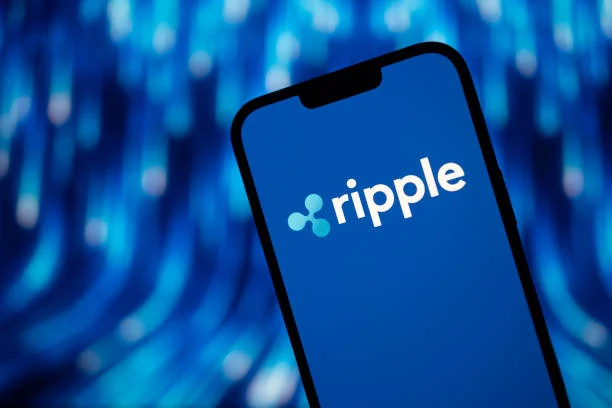
The intersection of global philanthropy and decentralized financial technology is set to take center stage at the upcoming Ripple Swell 2026 conference. Ripple, a leader in enterprise blockchain and crypto solutions, has officially announced that Academy Award-winning actor and humanitarian Matt Damon will serve as a keynote speaker for its flagship annual event. Damon will appear not in his capacity as a Hollywood figure, but as the co-founder of Water.org, a global nonprofit organization dedicated to providing access to safe water and sanitation. This high-profile collaboration highlights a strategic pivot in the digital asset industry, moving away from speculative trading narratives and toward the practical application of stablecoins and cross-border payment infrastructure to solve humanitarian crises.
The announcement comes at a pivotal moment for Ripple as it aggressively markets its new stablecoin, Ripple USD (RLUSD). By positioning RLUSD as a primary tool for Water.org’s "Get Blue" campaign, Ripple is attempting to demonstrate that blockchain technology can provide a more efficient, transparent, and cost-effective alternative to traditional banking rails, particularly in the context of international aid and microfinance.
The Genesis of the Partnership: Water.org and the "Get Blue" Campaign
Water.org, founded by Matt Damon and Gary White in 2009, has long been at the forefront of innovative financing for water and sanitation. Unlike traditional charities that rely solely on direct grants, Water.org pioneered the "WaterCredit" model, which applies microfinance principles to the water sector. This model empowers individuals in developing nations to take out small, affordable loans to install household water taps or toilets, effectively breaking the cycle of poverty associated with the lack of basic resources.
The "Get Blue" campaign represents the latest evolution of this mission. Designed to scale financing for household-level solutions, the campaign seeks to mobilize consumer participation and brand partnerships to close the massive funding gap in the global water sector. According to Water.org, the goal is to expand access to safe water for millions of people by streamlining the way capital flows from international donors to local microfinance institutions (MFIs) in emerging markets.
Ripple has been named the exclusive digital asset and payments partner for the "Get Blue" initiative. This partnership is multi-faceted, involving direct seed funding from Ripple and the integration of Ripple Payments technology. Most significantly, the collaboration will utilize RLUSD to facilitate the movement of funds to Water.org’s microfinance partners. By using a US dollar-pegged stablecoin on a high-speed blockchain, the partnership aims to mitigate the high fees and long settlement times typically associated with traditional international wire transfers.
The Strategic Role of RLUSD in Humanitarian Aid
The inclusion of RLUSD in the "Get Blue" campaign serves as a critical proof-of-concept for Ripple’s stablecoin strategy. While the stablecoin market is currently dominated by incumbents like Tether (USDT) and Circle (USDC), Ripple is carving out a niche by focusing on institutional grade compliance and specific enterprise use cases.
RLUSD is a 1:1 US dollar-pegged stablecoin, backed by a reserve of US dollar deposits, short-term US Treasuries, and other cash equivalents. It is designed to operate on both the XRP Ledger (XRPL) and the Ethereum blockchain, providing a bridge between the speed of the XRPL and the vast ecosystem of the Ethereum network. In the context of Water.org, RLUSD offers several distinct advantages over traditional fiat currency transfers:
- Reduction in Intermediary Friction: Traditional cross-border payments often pass through multiple correspondent banks, each taking a fee and adding a delay. RLUSD allows for near-instant settlement directly to a partner’s digital wallet.
- Lower Transaction Costs: For a nonprofit like Water.org, every dollar saved on banking fees is a dollar that can be redirected toward a water project. Blockchain-based transfers can reduce costs by up to 80% compared to traditional methods.
- Transparency and Auditability: Because transactions are recorded on a public ledger, donors and partners can track the flow of funds with greater precision, ensuring that capital reaches its intended destination without being siphoned off by administrative overhead.
Chronology of Ripple’s Evolution and the Path to Swell 2026
To understand the significance of Matt Damon’s appearance at Swell 2026, one must look at the timeline of Ripple’s development and its long-standing commitment to social impact.
- 2017-2018: Ripple establishes "Ripple for Good," a social impact program focused on financial inclusion and education. The company commits over $100 million in combined philanthropic giving.
- 2020-2023: Ripple navigates a high-profile legal battle with the U.S. Securities and Exchange Commission (SEC). During this period, the company shifts its focus toward international markets and infrastructure, emphasizing the utility of the XRP Ledger for central bank digital currencies (CBDCs).
- 2024: Ripple announces the development of RLUSD, signaling its entry into the $150 billion stablecoin market. The company begins pilot programs with various financial institutions.
- 2025: The "Get Blue" campaign is launched in partnership with Water.org. Ripple begins integrating RLUSD into its liquidity hubs for non-speculative use cases.
- 2026 (Upcoming): Ripple Swell 2026 serves as the official stage for Matt Damon and the Water.org leadership to present the initial results of the RLUSD integration.
Supporting Data: The Scale of the Challenge
The partnership between Ripple and Water.org is addressing a global crisis of staggering proportions. Supporting data from the World Health Organization (WHO) and UNICEF highlights the urgency of the mission:
- Global Access: Approximately 2.2 billion people worldwide lack access to safely managed drinking water services.
- Sanitation Gap: Over 3.5 billion people lack access to safely managed sanitation.
- Economic Impact: It is estimated that the global economy loses $260 billion annually due to the lack of basic water and sanitation. Conversely, every $1 invested in water and sanitation yields a $4 economic return through increased productivity and reduced healthcare costs.
- The Funding Gap: To achieve the United Nations Sustainable Development Goal 6 (safe water and sanitation for all by 2030), global investment must triple to approximately $114 billion per year.
By introducing blockchain efficiency into this equation, Ripple and Water.org are attempting to maximize the "velocity of aid." If funds can move faster and more cheaply, the frequency and volume of micro-loans can increase, accelerating the rate at which communities gain access to clean water.
Official Responses and Market Reactions
While Matt Damon has been a vocal advocate for Water.org for decades, his pivot toward blockchain-based solutions has drawn significant attention from both the tech and philanthropic sectors. In previous statements regarding the "Get Blue" campaign, Water.org leadership has emphasized that technology is a prerequisite for scaling their impact.
"The challenge of the global water crisis is not just a lack of resources, but a lack of access to affordable financing," Gary White, CEO and co-founder of Water.org, has noted. "By partnering with Ripple and utilizing their payment technology, we are exploring how digital assets can remove the barriers that prevent capital from reaching the people who need it most."
Ripple executives have echoed this sentiment, framing the partnership as a validation of their long-term vision. Brad Garlinghouse, CEO of Ripple, has frequently argued that the "killer app" for crypto is not trading, but payments. The collaboration with Damon and Water.org provides a tangible, human-centric example of this utility, which is crucial for Ripple’s reputation as it seeks to distance itself from the volatility and scandals that have plagued the broader crypto industry.
Industry analysts suggest that Damon’s involvement serves a dual purpose. For Ripple, it provides "mainstream legitimacy" that few other figures can offer. For Water.org, it opens up a new frontier of Silicon Valley-style "impact investing" and philanthropic technology that could define the next decade of charitable giving.
Broader Impact and Implications for the Industry
The presence of Matt Damon at Ripple Swell 2026 is emblematic of a broader trend: the "institutionalization" of the blockchain space. As the industry matures, the focus is shifting from "degen" culture to "ESG" (Environmental, Social, and Governance) standards.
The use of RLUSD for humanitarian aid could set a precedent for other NGOs. If Water.org successfully demonstrates that stablecoins can manage microfinance flows more effectively than local banks, other organizations like the Red Cross or the World Food Programme may follow suit. This would create a massive, stable demand for compliant stablecoins, independent of the ups and downs of the Bitcoin price.
Furthermore, this partnership challenges the negative environmental narrative surrounding crypto. By utilizing the XRP Ledger—which is inherently carbon-neutral and significantly more energy-efficient than Proof-of-Work blockchains like Bitcoin—Ripple is aligning itself with the sustainability goals of modern philanthropy.
Analysis of Potential Risks
Despite the optimism surrounding the partnership, several challenges remain. The first is regulatory. The use of stablecoins in emerging markets is a legal gray area in many jurisdictions. Ripple and Water.org must navigate a complex web of "Know Your Customer" (KYC) and "Anti-Money Laundering" (AML) regulations to ensure that the digital rails do not inadvertently facilitate illicit activity.
The second risk is the "celebrity effect." The crypto industry has a checkered history with celebrity endorsements, most notably the backlash following the collapse of platforms like FTX and the criticism of Matt Damon’s own "Fortune Favors the Brave" ad for Crypto.com in 2021. However, the Ripple Swell appearance is fundamentally different. This is not an advertisement for a retail trading platform, but a keynote about a philanthropic partnership involving a regulated stablecoin. The success of this narrative depends on the actual performance of the RLUSD integration in delivering water to those in need.
Conclusion
As Matt Damon prepares to take the stage at Ripple Swell 2026, the message is clear: the blockchain industry is entering its "utility era." The "Get Blue" campaign and the integration of RLUSD represent a sophisticated attempt to merge high-finance technology with grassroots humanitarian work. If successful, this partnership will not only help solve a portion of the global water crisis but will also provide a blueprint for how the digital asset economy can serve a higher purpose. For Ripple, the event is more than just a conference; it is a declaration that the future of payments is not just about moving numbers on a screen, but about moving resources to the edges of the world where they are needed most.