Bitcoin (BTC) experienced a period of relative price stagnation on Saturday, following a brief stabilization after a significant downturn earlier in the week. This consolidation has prompted widespread discussion among market participants and analysts regarding the underlying health of the cryptocurrency market and its potential trajectory. The recent price action, coupled with evolving on-chain data, paints a complex picture, raising concerns about the sustainability of current market conditions and the potential for a prolonged bearish phase.
Recent Price Action and Market Reaction
On Thursday, Bitcoin saw a notable dip, falling to approximately $72,642. This marked the lowest point for the digital asset since mid-April. The sharp decline was largely attributed to market reactions to escalating geopolitical tensions, specifically following U.S. military strikes on Iranian facilities. While prices have since seen a modest recovery, Bitcoin has continued to trade in a tight range, hovering near the $73,000 mark. This current price level represents a significant retreat, approximately 11% below its recent peak of around $83,000, underscoring the volatility inherent in the cryptocurrency market.
The rapid fluctuations highlight the sensitivity of Bitcoin to global events and investor sentiment. The initial surge to record highs in the preceding weeks had been fueled by a combination of factors, including the approval of spot Bitcoin ETFs in the United States, institutional adoption, and a general bullish sentiment in the broader financial markets. However, the recent downturn serves as a stark reminder that these gains are not immune to external shocks and shifts in risk appetite.
Analyst Concerns: Beyond Apparent Stability

Despite the current price consolidation, seasoned analysts are urging caution, suggesting that the market’s apparent stability may be deceiving. Ki Young Ju, the founder of CryptoQuant, a leading on-chain analytics firm, has articulated a bearish outlook, indicating that the broader market structure still exhibits characteristics of a bearish phase. His analysis, drawing upon various on-chain indicators, points towards weakening demand and a prolonged period of asset distribution by large holders.
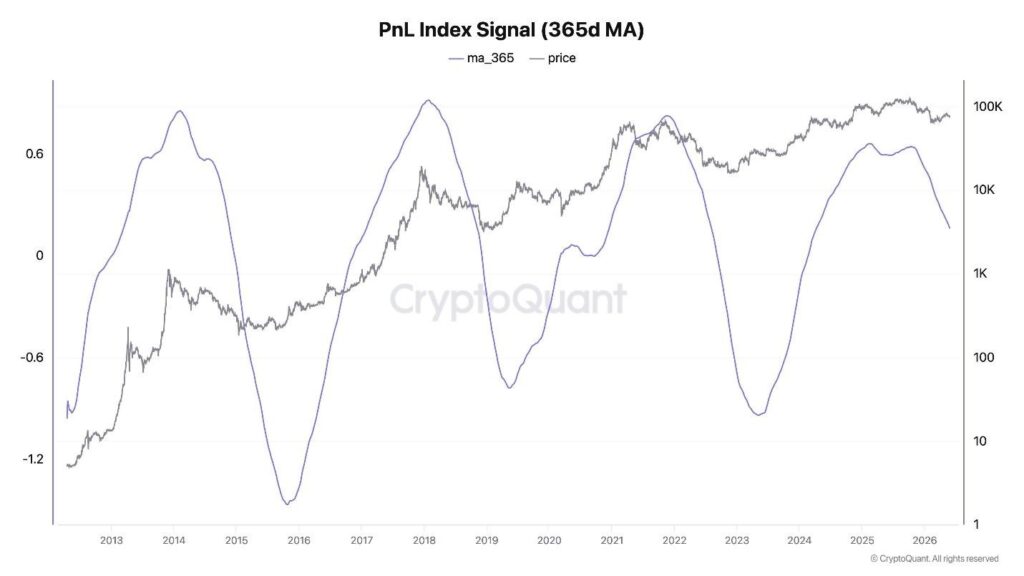
"Once profit-taking cascades, Bitcoin investors’ PnL typically falls for about 18 months… Since the trend turned in Oct 2025, the bear market could last until early 2027," Ki Young Ju tweeted on Friday, accompanied by a chart illustrating historical market cycles. This projection suggests a potentially extended period of price decline, a scenario that would significantly impact investor portfolios and the overall digital asset ecosystem.
Ju further elaborated that a genuine trend reversal would necessitate the re-emergence of sustained unrealized profits and a renewed wave of accumulation by investors. These conditions, according to his assessment, have yet to materialize, reinforcing his conviction in the ongoing bearish sentiment.
The Shadow of "Whale" Activity: A Declining Influence
A particularly concerning trend highlighted by CryptoQuant data is the significant decline in whale activity. Whales, defined as entities holding between 1,000 and 10,000 Bitcoins, have been observed to be reducing their holdings at one of the fastest rates seen this year. This pattern bears a striking resemblance to previous bear market phases, most notably the market downturn experienced in 2022. During that period, large holders transitioned from accumulation to distribution as market momentum began to wane.
The decrease in whale accumulation or the increase in their distribution can have a profound impact on market dynamics. These large holders possess substantial capital and their trading activities can significantly influence price action. A consistent outflow of Bitcoin from whale wallets can create selling pressure, potentially exacerbating price declines and discouraging new investment. This behavior often signals a lack of confidence in the short-to-medium term price appreciation of the asset.
The Slowdown of "Dolphins" and Emerging Demand Concerns
Adding to the concerns, the accumulation trend among smaller institutional-like holders, commonly referred to as "dolphins" (those holding between 100 and 1,000 BTC), has also experienced a sharp slowdown. After reaching a peak of approximately +970,000 BTC in October 2025, their accumulation rate has fallen considerably below historical averages. Analysts contend that this demographic has been a crucial driver of demand in the current market cycle. Their diminishing participation therefore raises serious questions about the sustainability of Bitcoin’s price levels and its ability to absorb potential selling pressure.
The role of these "dolphin" investors has been increasingly significant in recent market cycles. They often represent a more diversified investor base compared to whales and can act as a buffer against extreme price volatility. A slowdown in their accumulation suggests a more cautious approach, possibly due to increased perceived risk or a reassessment of investment strategies in the face of uncertain market conditions.
Historical Cycles and Future Projections
Adding a more nuanced perspective to the timing of potential market bottoms, Maartum, an analyst at CryptoQuant, shared his insights based on historical cycle analysis. "Today +11 days marks the point in the 2012 cycle where we bottomed… However, based on more recent cycles, the bottom could still be ~119 days away," he noted in a recent post. This comparative analysis, while acknowledging historical precedents, suggests that relying solely on past patterns might not be sufficient in predicting the current market’s trajectory. The increasing complexity and interconnectedness of global financial markets, along with the evolving nature of cryptocurrency adoption, can introduce new variables that deviate from historical norms.
Diminishing Spot Market Activity and Institutional Product Inflows

Further reinforcing the narrative of cooling demand, additional data from Glassnode, a reputable blockchain analytics platform, reveals a decline in spot market activity. This indicates a reduction in the volume of Bitcoin being traded on exchanges. Concurrently, inflows into exchange-traded Bitcoin products (ETPs) have also seen a decrease. ETPs, particularly those tracking Bitcoin, have become a significant channel for institutional and retail investors to gain exposure to the cryptocurrency without directly holding the underlying asset. A slowdown in their inflows suggests a waning interest from these investor segments.
The reduction in spot market activity and ETP inflows collectively point towards a broader disengagement from the market by both retail and institutional players. This can be attributed to various factors, including the recent price corrections, macroeconomic uncertainties, and a general shift in investor sentiment from risk-on to risk-off.
Broader Market Shift Towards Risk Aversion
The shift in market sentiment is not confined to Bitcoin alone. Analysts at SwissBlock, a digital asset research and advisory firm, have observed a broader trend of risk aversion within the overall market structure. They have noted that capital is increasingly rotating away from speculative assets, including cryptocurrencies, towards safer havens.
"Bitcoin chose to retreat back into Risk-Off mode. This is the defensive transition we warned about," SwissBlock analysts stated in a social media post. "Observe the sequence: Risk expands → BTC loses structural strength → USDT dominance rebounds… the market prioritizes survival over upside." This observation suggests a fundamental change in investor priorities, where capital preservation is taking precedence over aggressive pursuit of high returns. The resilience of stablecoins, such as USDT, often increases during periods of market uncertainty as investors seek refuge from volatility.
Implications for the Digital Asset Ecosystem
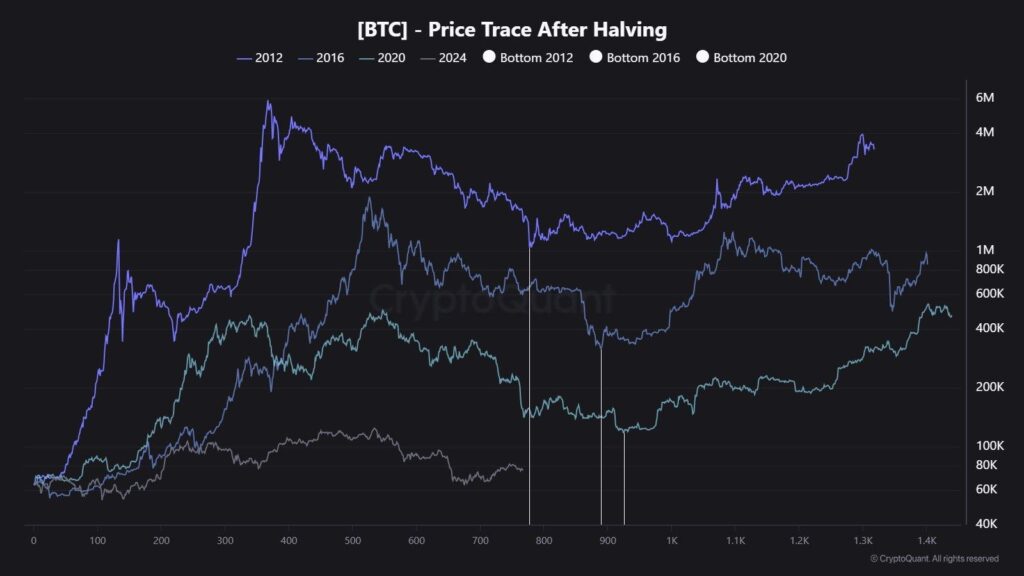
Taken in its entirety, the confluence of these signals suggests that Bitcoin’s current market environment remains fragile. The slowing participation of large holders and institutional-like investors, coupled with weakening demand across spot and ETP markets, points towards a potentially extended period of market correction. Analysts at CryptoQuant maintain that the market may still be in the early to mid-stages of a broader bear cycle. Their projections indicate that this bearish phase could potentially extend well into 2026 or even persist into early 2027.
This outlook carries significant implications for the broader digital asset ecosystem. A prolonged bear market could lead to reduced investment in new blockchain projects, slower adoption rates, and increased regulatory scrutiny. Furthermore, it could test the resilience of the crypto infrastructure and the commitment of investors to the asset class. However, it also presents opportunities for long-term investors to accumulate assets at lower valuations and for innovation to continue unhindered by speculative frenzies.
At the time of reporting, BTC was trading at approximately $73,848, reflecting a modest decrease of 0.22% over the preceding 24 hours. This price action, while not dramatic, underscores the ongoing uncertainty and lack of clear direction in the market. The coming weeks and months will be crucial in determining whether Bitcoin can break free from its current consolidation and resume a strong upward trajectory, or if the bearish sentiment will continue to dominate, leading to a more prolonged period of price discovery. The "troubling question" left for market participants is not just about the immediate future, but about the duration and depth of this potential downturn, and how the cryptocurrency market will ultimately navigate these challenging conditions. The "passing away" of a significant whale, while a metaphorical representation of reduced influence, highlights the interconnectedness of market actors and the profound impact of their collective behavior on the overall health and direction of the digital asset landscape. The focus now shifts to whether other, perhaps larger, whales will emerge to provide support or if the trend of distribution will continue to define the market’s narrative.