The cryptocurrency market is currently navigating a period of significant structural adjustment as altcoins endure their most intense and prolonged stretch of spot-market selling pressure in nearly five years. According to the latest on-chain analytics and market data provided by CryptoQuant, the cumulative buy/sell volume difference for altcoins has reached a staggering negative $209 billion, marking a level of capital outflow and investor divestment not seen since the market troughs of 2020. This data highlights a profound shift in market participant behavior, where the appetite for assets outside of Bitcoin and major stablecoins has diminished in favor of lower-risk profiles or highly concentrated institutional vehicles.
This defensive posture among traders suggests that the broader altcoin market is struggling to find a sustainable floor. While Bitcoin has benefited from a unique set of catalysts, including the success of spot Exchange-Traded Funds (ETFs) and its growing status as a digital gold equivalent, the thousands of assets that comprise the altcoin sector are facing a liquidity vacuum. The current trend reveals that instead of the "rotation" typically seen during bullish cycles—where profits from Bitcoin flow into Ethereum and then into smaller-cap assets—investors are instead opting to exit altcoin positions entirely or move back into fiat-pegged stablecoins.
Analyzing the $209 Billion Liquidity Gap
The $209 billion figure cited by CryptoQuant represents the net difference between buying and selling volume in the spot market over a sustained period. In spot markets, as opposed to futures or derivatives markets, transactions involve the actual exchange of the underlying asset. Therefore, a deep negative cumulative volume indicates that holders are physically offloading their tokens rather than simply hedging their positions through short contracts.
This magnitude of selling pressure is historically significant. In 2020, similar levels of sell pressure preceded the massive liquidity injection and retail frenzy of 2021. However, the current context differs due to the sheer size of the market and the increased sophistication of institutional players. The data suggests that the "bid" for altcoins—the price at which buyers are willing to step in—has become increasingly fragile. For many mid-cap and small-cap projects, the lack of consistent buy-side demand means that even moderate selling pressure can result in significant price depreciation, creating a feedback loop where falling prices trigger further liquidations and exits.
Historical Context and the 2020 Comparison
To understand the gravity of the current data, one must look back to the market conditions of 2020. That year was defined by the "COVID-19 crash" in March, followed by a slow, agonizing recovery that eventually led to the "DeFi Summer." During that period, altcoins faced extreme skepticism as Bitcoin dominance rose and investors questioned the long-term viability of decentralized applications.
Today’s sell pressure mirrors that era’s sentiment but on a much larger scale. In 2020, the total crypto market capitalization was a fraction of what it is today. A $209 billion net sell-off now represents a systemic re-evaluation of the altcoin sector’s value proposition. Since the 2021 bull market peak, the industry has seen the collapse of major ecosystems like Terra-LUNA and the bankruptcy of centralized entities like FTX. These events have left a lasting scar on retail investor confidence, leading to a "flight to quality" where capital remains tethered to Bitcoin or exits the ecosystem altogether.
Factors Driving the Prolonged Sell-Off
Several macroeconomic and internal market factors have converged to create this environment of sustained selling pressure. Chief among these is the "Bitcoin Dominance" phenomenon, which has seen Bitcoin’s share of the total market cap climb steadily as institutional products absorb the majority of new capital entering the space.
The Institutional Siphon
The approval and subsequent success of spot Bitcoin ETFs in the United States have fundamentally altered the flow of capital. Institutional investors, who previously might have experimented with a basket of crypto assets, now have a regulated, high-liquidity vehicle to gain exposure to Bitcoin alone. This has effectively "siphoned" liquidity that might have otherwise trickled down to altcoins. For many institutional desks, the risk-adjusted return of Bitcoin is currently more attractive than the high-volatility, low-liquidity profile of the broader altcoin market.
Ethereum’s Identity Crisis
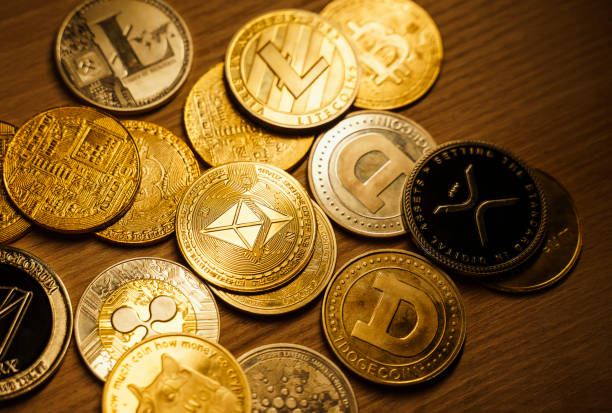
Ethereum, traditionally the leader of the altcoin market, has also faced headwinds. While it remains the dominant platform for smart contracts and tokenization, the rise of Layer 2 scaling solutions has fragmented liquidity within the Ethereum ecosystem itself. Furthermore, the narrative around Ethereum has shifted from a high-growth speculative asset to a yield-bearing utility token, a transition that has not yet captured the same level of retail excitement as the "meme coin" cycles or the 2021 NFT boom.
The Rise of Stablecoins and Yield Products
In previous cycles, traders who sold altcoins often kept their capital within the crypto ecosystem, waiting for the next opportunity. Today, the proliferation of high-yield stablecoin products and the availability of attractive interest rates in traditional finance (TradFi) mean that capital is leaving the volatile altcoin market for safer pastures. When investors can earn 5% on a US Treasury bill or a similar return on a regulated stablecoin, the incentive to hold a volatile altcoin with a 40% drawdown risk is significantly diminished.
Market Sentiment and the Retail Absence
A critical component of any "altcoin season" is the presence of retail investors. Historically, retail participants drive the speculative manias that send small-cap tokens to astronomical valuations. However, current data suggests that retail demand remains largely dormant or hyper-concentrated in very specific, high-risk niches like meme coins.
The CryptoQuant analysis points to a "mid-range" reading on altcoin-season gauges. This indicates that while the market is not in a state of total despair, it is far from the "euphoria" required to sustain a broad-based rally. Retail investors, many of whom suffered losses during the 2022 bear market, have been slow to return to the complexity of DeFi or the uncertainty of new Layer 1 blockchains. Without this influx of "new money," the altcoin market is largely a zero-sum game where existing participants rotate capital between different tokens, leading to the "choppy" and "extractive" price action observed throughout 2024 and early 2025.
The Contrarian Perspective: Is a Bottom Near?
While the data regarding sell pressure is objectively bearish, contrarian analysts often view extreme selling as a prerequisite for a market bottom. The logic is based on the concept of "investor exhaustion." When a market experiences such a deep and prolonged period of net selling, the "weak hands"—investors with low conviction or high leverage—are eventually flushed out.
Once the majority of motivated sellers have exited their positions, the market reaches a state of equilibrium. At this point, even a modest increase in buying demand can lead to significant price recoveries because there is no longer a large wall of sell orders to overcome. The fact that the market is currently at its most stressed point since 2020 could suggest that the "capitulation" phase is nearing its conclusion. However, as the CryptoQuant report warns, exhaustion is not the same as a reversal. A market can remain in a state of low-liquidity depression for an extended period if no new catalyst emerges to entice buyers back into the fold.
Broader Implications for the Crypto Industry
The current sell pressure on altcoins has broader implications for the development of the blockchain industry. If capital remains concentrated in Bitcoin, smaller projects may find it increasingly difficult to fund operations, maintain developer interest, and achieve the network effects necessary for survival.
- Consolidation of Projects: We may be entering an era of "Darwinian" consolidation, where only altcoins with clear utility, strong revenue models, or massive community backing survive. The thousands of "zombie" projects with no active users but high market caps are the most vulnerable to this ongoing sell pressure.
- Focus on Real-World Assets (RWA): As speculative interest in "pure-play" crypto tokens fades, there is a growing trend toward tokenizing real-world assets like real estate, bonds, and commodities. This shift could provide a new foundation for the altcoin market, moving it away from pure speculation toward tangible value.
- Regulatory Clarity as a Catalyst: One of the primary reasons for the "altcoin discount" is regulatory uncertainty. In the United States, the ongoing debate over which tokens constitute securities has kept many institutional and retail buyers on the sidelines. A clearer regulatory framework could be the necessary spark to reverse the current net-selling trend.
Conclusion: A Market in Search of a Narrative
The data from CryptoQuant serves as a sobering reminder that the "altcoin season" many traders have been waiting for is currently being suppressed by a massive volume of spot-market selling. The $209 billion gap represents a significant hurdle that the market must overcome before any sustained recovery can take place.
For now, the altcoin market is a "show-me" market. Investors are no longer willing to buy into promises or whitepapers; they are demanding evidence of adoption, liquidity, and regulatory safety. Until the trend shifts from net selling to sustained accumulation, the broader altcoin sector is likely to remain under pressure, trailing behind Bitcoin’s institutional-led ascent. The current environment is a test of endurance for long-term holders and a cautionary tale for those looking for quick gains in an increasingly sophisticated and bifurcated digital asset landscape. Whether this period of intense pressure is the final hurdle before a new bull cycle or the beginning of a permanent shift in market dynamics remains to be seen, but the data confirms one thing: the altcoin market is currently facing its most significant challenge in half a decade.