


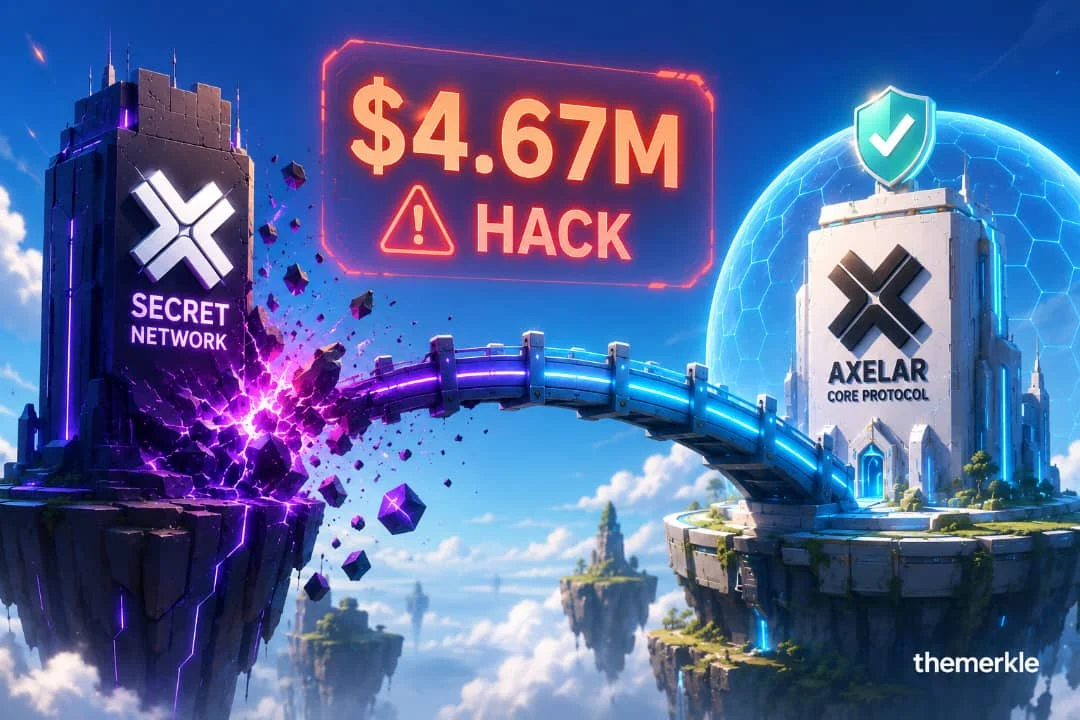
Axelar, a prominent cross-chain infrastructure provider, has moved swiftly to contain the fallout from a security incident that has resulted in the loss of approximately $4.67 million worth of tokens. The breach specifically targeted assets bridged via the Inter-Blockchain Communication (IBC) protocol from the Axelar chain to Secret Network, prompting immediate emergency action to sever the affected connection and initiate a comprehensive containment and recovery process. The incident underscores the persistent challenges in securing the complex landscape of cross-chain interoperability within the decentralized finance (DeFi) ecosystem.
Immediate Response and Initial Assessment
The security breach was identified and confirmed by the Axelar team, affecting assets that had been transferred from the Axelar chain to Secret Network via IBC. The official statement from Axelar explicitly confirmed the scale of the loss at approximately $4.67 million and detailed the swift, decisive steps taken in response. This direct communication aimed to provide clarity and reassure stakeholders amidst the unfolding situation. Simultaneously, Secret Network issued its own statement, corroborating Axelar’s assessment and emphasizing the isolated nature of the incident within its ecosystem.
Upon detecting the anomaly, Axelar’s emergency committee immediately disabled the connection pathways between Axelar and Secret Network, specifically the Secret and Secret-SNIP connections. This critical decision effectively quarantined the compromised vector, preventing any further unauthorized outflows of tokens. While such a measure inevitably disrupts legitimate cross-chain activity for users relying on this particular bridge, it is a standard and necessary protocol in an active exploit scenario to staunch financial losses and allow for thorough investigation. Beyond the technical shutdown, Axelar has also initiated outreach to relevant centralized exchanges and law enforcement agencies, a crucial step in tracing the stolen funds and potentially facilitating their recovery should the attackers attempt to liquidate assets through regulated platforms.
Pinpointing the Vulnerability: The ICS-20 Smart Contract
Axelar’s preliminary investigation has shed light on the specific source of the breach, identifying a vulnerability isolated to a particular component of the bridge infrastructure. The issue traces back to the Secret-side ICS-20 smart contract, which is integral to managing the Cosmos IBC connection between Secret Network and Axelar. Crucially, the exploit was confined to the pathway designated for assets moving from Axelar to Secret Network.
ICS-20 stands as a foundational standard interface within the broader Cosmos IBC ecosystem, specifically designed to facilitate fungible token transfers across interconnected blockchains. Its role is to standardize how tokens are represented and transferred between chains, ensuring compatibility and secure communication. When a contract layer like ICS-20 is compromised, it can create a critical opening for the unauthorized release of tokens. This type of vulnerability does not necessarily require an attacker to breach the core validator set or consensus mechanism of either blockchain involved, a distinction Axelar has been keen to highlight. By framing the issue as isolated to this specific smart contract, Axelar aims to draw a clear boundary around the extent of the impact, distinguishing what was affected from what remains secure within its broader infrastructure.
The Architecture of Cross-Chain Bridges: Necessity and Vulnerability
To understand the gravity and recurrence of such incidents, it is essential to grasp the fundamental role and inherent complexities of cross-chain bridges. Axelar itself is a vital piece of the interoperability puzzle, enabling secure cross-chain communication for Web3. It allows dApps to build on any chain and interact with users, assets, and applications across all other chains. Secret Network, on the other hand, is a privacy-preserving blockchain built on Cosmos, offering programmable privacy for dApps and tokens. The IBC protocol, developed within the Cosmos ecosystem, is a robust, inter-chain communication standard that allows independent blockchains to exchange data and tokens in a trust-minimized way.
Cross-chain bridges like the one affected between Axelar and Secret Network are critical conduits for liquidity and data flow across disparate blockchain networks. They essentially "wrap" assets from one chain to represent them on another, facilitating seamless transactions that would otherwise be impossible. This translation of trust and asset representation across fundamentally separate blockchain environments, however, introduces layers of smart contract complexity. This complexity, in turn, expands the potential attack surface. A vulnerability within a single contract responsible for cross-chain transfers can be exploited even if the underlying security mechanisms of the chains themselves remain robust. In this specific case, the integrity of Axelar’s core protocol and Secret Network’s broader chain security were not the points of failure; rather, a specific contract facilitating one connection pathway was exploited. This pattern is sadly familiar within the crypto space.
A History of Bridge Exploits: A Recurring Challenge
The incident involving Axelar and Secret Network is not an isolated event but rather fits into a concerning pattern of exploits targeting cross-chain bridges. Over the past few years, these bridges have consistently been among the most exploited categories of infrastructure in the broader crypto ecosystem.
- Poly Network (August 2021): One of the largest exploits, resulting in over $600 million stolen. The attacker later returned most of the funds.
- Ronin Bridge (March 2022): The sidechain bridge for Axie Infinity suffered a staggering loss of over $625 million, largely due to compromised validator keys.
- Wormhole (February 2022): Attackers exploited a vulnerability to mint 120,000 wETH, valued at over $325 million at the time, on the Solana network.
- Harmony Horizon Bridge (June 2022): Approximately $100 million was stolen from the bridge connecting Harmony to Ethereum, Binance Smart Chain, and Polygon.
- Nomad Bridge (August 2022): A chaotic exploit saw nearly $190 million drained, largely due to a configuration vulnerability that allowed users to withdraw funds without proper verification.
These high-profile incidents collectively represent billions of dollars in losses and highlight the inherent security challenges in designing and maintaining these complex systems. The Axelar-Secret Network incident, while smaller in scale compared to some of the largest, reinforces the ongoing vulnerability of these critical pieces of Web3 infrastructure. The common thread in many of these attacks is often a smart contract vulnerability, a logic flaw, or compromised private keys, rather than a breach of the underlying blockchain’s consensus mechanism. This makes securing the "connective tissue" between blockchains a paramount, yet exceedingly difficult, task.
Emergency Response and Containment Timeline
The speed of Axelar’s response is a critical aspect of mitigating further damage. While specific timestamps are not publicly available, the sequence of events can be inferred:
- T0: Incident Detection: Axelar’s monitoring systems or community reports likely flagged unusual activity or unauthorized token movements on the Axelar-Secret Network bridge.
- T0 + Minutes: Emergency Committee Activation: Immediately upon detection, Axelar’s emergency committee was activated. This committee is typically composed of core developers, security experts, and operational leads.
- T0 + Rapid Action: Bridge Shutdown: Without waiting for a full root cause analysis, the committee made the critical decision to disable the affected Secret and Secret-SNIP connections. This "kill switch" mechanism is designed for rapid response to active exploits.
- T0 + Ongoing: Investigation and Communication: Post-shutdown, a deeper forensic investigation began to pinpoint the exact vulnerability (later identified as the Secret-side ICS-20 smart contract). Concurrently, official statements were prepared and disseminated to the community and stakeholders, outlining the incident, the loss amount, and the immediate actions taken.
- T0 + Subsequent Steps: External Outreach: Axelar initiated contact with centralized exchanges to flag the stolen funds and with law enforcement agencies to pursue legal avenues for recovery.
This rapid, multi-faceted response demonstrates a prepared incident response plan, prioritizing containment over immediate full diagnosis in a live exploit scenario.
Assessing the Scope: What Remains Unaffected
A key element of Axelar’s and Secret Network’s communication strategy has been to precisely delineate the scope of the incident, reassuring users about unaffected parts of their ecosystems. Both protocols have emphasized that the breach is isolated to assets on Secret Network that were specifically bridged over IBC from Axelar.
- No Other IBC Connections Impacted: Importantly, no other IBC connections within the Secret Network ecosystem appear to have been affected. This suggests the vulnerability was specific to the Axelar-Secret pathway rather than a systemic issue with Secret Network’s general IBC implementation.
- No Other Secret Tokens Compromised: Beyond the affected bridged assets, no other native Secret tokens or tokens from other bridge pathways show signs of compromise. This provides significant reassurance to the broader Secret Network community.
- Axelar’s Core Protocol Untouched: Axelar has explicitly stated that its core protocol remains secure and unaffected by this incident. This is a crucial distinction, as Axelar serves as a foundational layer for dozens of other chains and applications that rely on its robust cross-chain messaging infrastructure. The exploit appears confined to this one specific Secret Network connection rather than representing a systemic vulnerability across Axelar’s broader network of integrations.
- Minimal Impact for Unexposed Users: For users and protocols built on Axelar that have no exposure to the Secret Network bridge, the practical impact of this incident should be minimal, based on the information disclosed so far. Their assets and operations on other chains connected via Axelar are deemed secure.
This clear scoping is vital for maintaining trust and preventing a broader panic, ensuring that users understand the specific risks and where their assets stand within the interconnected Web3 landscape.
Implications for Interoperability and Trust in DeFi
The Axelar-Secret Network incident, like its predecessors, carries significant implications for the future of interoperability and trust within the decentralized finance sector.
- Reinforced Scrutiny on Bridge Security: The recurring nature of bridge exploits will undoubtedly intensify scrutiny on the security architectures of all cross-chain solutions. Developers will face increased pressure to implement rigorous auditing, bug bounty programs, and multi-layered security measures. The concept of "trustless" bridges often comes with an asterisk, reminding users that while the underlying blockchains may be trust-minimized, the smart contracts governing the bridge introduce new vectors of trust and potential failure.
- The Cost of Interoperability: While interoperability is widely recognized as essential for the growth and scalability of Web3, these incidents highlight the significant security costs associated with it. The complexity required to bridge assets across diverse ecosystems inherently increases the attack surface. This will likely lead to ongoing debates about the trade-offs between seamless cross-chain functionality and robust security.
- Impact on User Confidence: Each exploit, regardless of its scale, erodes user confidence in the safety of decentralized protocols. Users who have experienced losses or disruptions may become more hesitant to use cross-chain services, potentially stifling liquidity and growth in interconnected ecosystems. Restoring and maintaining this trust requires not only robust technical solutions but also transparent communication and effective recovery strategies.
- Evolution of Security Standards: The continuous wave of exploits drives innovation in security. We can anticipate further advancements in areas like formal verification of smart contracts, multi-party computation (MPC) for key management, and more decentralized bridge designs that distribute risk. The industry learns from each incident, leading to an iterative improvement in security practices.
- Regulatory Scrutiny: Repeated high-value exploits also attract the attention of regulators. As DeFi matures, governments and financial bodies are increasingly looking at ways to mitigate risks for users. Security incidents provide further impetus for potential regulatory frameworks around bridge operations, asset custody, and incident response, which could have far-reaching effects on the decentralized nature of these services.
For an ecosystem that depends heavily on interoperability to function, facilitating the movement of assets, data, and liquidity across dozens of chains, incidents like this are stark reminders of the ongoing challenge in securing the connective tissue between blockchains, even when the blockchains themselves remain robust.
Looking Ahead: Enhancing Cross-Chain Security
The incident serves as a critical learning opportunity for Axelar, Secret Network, and the broader Cosmos ecosystem. The immediate priority remains a full forensic analysis to understand the precise mechanism of the exploit, develop a patch, and restore the bridge connection safely. Beyond immediate containment, the long-term focus will be on further enhancing the security posture of cross-chain infrastructure. This will likely involve:
- Enhanced Audits and Formal Verification: Increasing the frequency and depth of security audits by independent third parties, coupled with formal verification methods that mathematically prove the correctness of smart contract code.
- Bug Bounty Programs: Continuously incentivizing ethical hackers and security researchers to identify and report vulnerabilities before malicious actors can exploit them.
- Decentralized Governance and Multi-Sig Security: Implementing more robust multi-signature (multi-sig) schemes and decentralized governance structures for critical bridge operations, requiring multiple independent parties to approve transactions or changes, thereby reducing single points of failure.
- Real-time Monitoring and Threat Intelligence: Investing in advanced real-time monitoring systems that can detect anomalous activity and potential threats more rapidly, coupled with sharing threat intelligence across the ecosystem.
- Progress in IBC Security: For the Cosmos ecosystem, this incident will likely spur further development and hardening of the IBC protocol’s security best practices, even if the vulnerability was in a specific smart contract implementation rather than the core protocol.
The path to truly secure and scalable cross-chain interoperability is an iterative one, marked by continuous innovation, vigilance, and adaptation in response to evolving threats. While the $4.67 million loss is significant, the rapid response and transparent communication by Axelar and Secret Network are crucial steps in rebuilding trust and demonstrating resilience in the face of adversity. The ongoing commitment to securing these vital bridges will dictate the future growth and adoption of a truly interconnected Web3.
Disclosure: This is not trading or investment advice. Always do your research before buying any cryptocurrency or investing in any services.














