


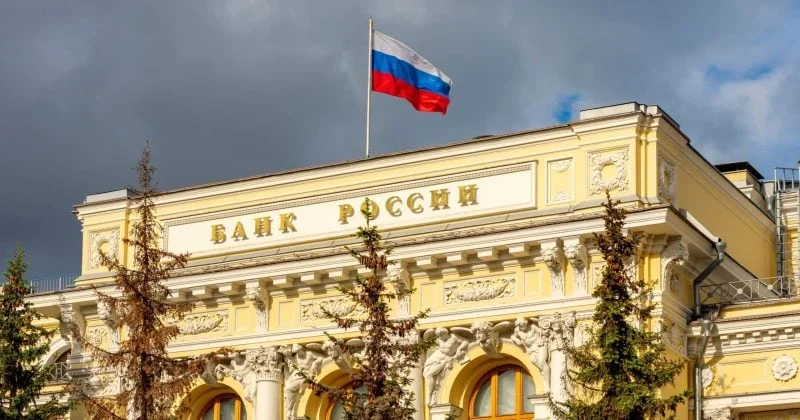
The Bank of Russia has formally established a definitive timeline for the widespread domestic adoption of its Central Bank Digital Currency (CBDC), with Governor Elvira Nabiullina confirming that major financial institutions and retailers are required to support the digital ruble by September 1, 2026. This announcement marks a pivotal transition for the Russian financial system, shifting the digital ruble from a protracted experimental phase into a mandatory component of the national economy. The move represents the culmination of a multi-year development cycle that originated in late 2020, accelerated primarily by the geopolitical shifts and subsequent economic sanctions that have redefined Russia’s relationship with the global financial order.
The digital ruble is designed to function as a third form of the national currency, existing alongside physical cash and traditional electronic bank deposits. Unlike standard digital payments processed through commercial banks, digital ruble transactions occur directly on the central bank’s distributed ledger. This architecture provides the state with unprecedented visibility into capital flows while offering a streamlined, low-cost alternative for retail and peer-to-peer transactions. As the Western world remains embroiled in debates regarding the privacy implications and necessity of CBDCs, Moscow is moving forward with a top-down mandate, viewing the technology not merely as an innovation, but as a survival mechanism for its sanctioned economy.
The Regulatory Framework and Implementation Timeline
The roadmap toward full integration has been methodical, characterized by a series of legislative milestones and technical pilots. The legal foundation for the currency was solidified on July 24, 2023, when President Vladimir Putin signed a comprehensive bill establishing the digital ruble’s status as a legal tender and defining the central bank’s role as the platform’s sole operator. However, the groundwork was laid much earlier.
The chronological development of the digital ruble highlights the government’s sense of urgency:
- October 2020: The Bank of Russia releases its first consultation paper, "A Digital Ruble," outlining the potential benefits of a CBDC.
- December 2021: A prototype of the digital ruble platform is completed, allowing for initial internal testing.
- January 19, 2022: The first pilot tests involving commercial banks begin, focusing on the issuance of the currency and person-to-person transfers.
- April 1, 2023: Real-world testing expands to include a limited group of retail clients and employees from 13 participating banks.
- July 2023: The State Duma passes the final readings of the CBDC legislation, providing the necessary legal clarity for systemic expansion.
- September 1, 2026: The mandatory deadline for all "systemically important" financial institutions to provide full support for digital ruble accounts and transactions.
The September 2026 deadline is specifically targeted at Russia’s largest financial entities. These include institutions such as Sberbank, VTB, Alfa-Bank, and Gazprombank. By requiring these "systemically important" banks to lead the charge, the Bank of Russia ensures that the vast majority of the population will have immediate access to digital ruble infrastructure through their existing banking applications.
Technical Architecture and Consumer Utility
The digital ruble operates on a hybrid model. While the central bank maintains the ledger and manages the issuance, commercial banks act as intermediaries, providing the user interface for clients to manage their digital wallets. For the end-user, the experience is intended to mirror existing mobile banking apps or digital wallets like Venmo. However, the underlying mechanics differ significantly: the funds are a direct liability of the central bank, meaning they are theoretically safer than commercial bank deposits during a financial crisis.
From a consumer perspective, the digital ruble offers several theoretical advantages, including zero-commission transfers between individuals and the ability to make offline payments—a feature the Bank of Russia is currently perfecting. For the government, the digital ruble allows for "programmability." This means the state can tag specific funds—such as social welfare payments or government contracts—to ensure they are spent only on intended purposes, thereby reducing corruption and misappropriation of state funds.
Addressing the Enthusiasm Gap: Incentives and Mandates
Despite the government’s aggressive push, public sentiment toward the digital ruble has been characterized by apathy. Recent surveys indicate that many Russian citizens see little difference between the digital ruble and the digital banking services they already use, such as the Faster Payments System (SBP). To combat this indifference, the Bank of Russia has introduced a series of financial incentives designed to jumpstart the ecosystem.
The central bank has implemented a micro-incentive structure for commercial banks to encourage the migration of payroll services to the digital ruble platform. Banks are currently rewarded with 0.67 rubles (approximately $0.01) for every salary payment processed via the CBDC. Additionally, a minimum payment threshold of 10 rubles (about $0.13) has been set for certain payroll distributions. While these figures appear negligible, they represent a strategic attempt to lower the friction of adoption for the banking sector.
The real driver of adoption, however, will not be small rewards but the "September Mandate." By making the digital ruble a requirement for major retailers and the 12 largest banks, the government is creating an environment where the public will eventually use the currency by default rather than by choice.
The Sanctions Wall and the Quest for Payment Sovereignty
The primary catalyst for the digital ruble’s development is the "sanctions wall" erected by Western nations following the events of February 2022. The exclusion of major Russian banks from the SWIFT international messaging system and the withdrawal of Visa and Mastercard from the Russian market exposed the vulnerabilities of Russia’s dependence on Western financial rails.
The digital ruble is a cornerstone of Russia’s "Financial Sovereignty" strategy. By creating a domestic payment system that is entirely independent of the U.S. dollar and Western-controlled infrastructure, Moscow aims to insulate its economy from future external pressures. However, the international community has anticipated this move. The European Union, as part of its 20th sanctions package, proactively banned transactions involving the digital ruble starting May 24, 2026. This preemptive strike targets not only the digital ruble but also ruble-linked stablecoins and tokens, effectively cordoning off the CBDC from the European financial market before it even reaches mass adoption.
This creates a paradox: while the digital ruble secures domestic transactions, its utility for circumventing international sanctions remains limited unless other nations adopt compatible systems. To address this, Russia is looking East.
The China-Russia CBDC Corridor
The most significant geopolitical implication of the digital ruble lies in its potential integration with China’s digital yuan (e-CNY). Both nations are pioneers in the CBDC space and share a common interest in de-dollarizing their bilateral trade. A CBDC-to-CBDC corridor would allow for direct, instantaneous settlement of trade between Moscow and Beijing, bypassing the U.S. banking system and the SWIFT network entirely.
Negotiations regarding the interoperability of the digital ruble and the digital yuan are ongoing. If successful, this "bridge" could serve as a blueprint for other BRICS nations (Brazil, India, China, and South Africa), potentially creating a parallel global financial system. Such a development would represent the most significant challenge to the hegemony of the U.S. dollar in decades.
Impact on the Cryptocurrency Market
The rise of the digital ruble has complex implications for the private cryptocurrency market in Russia. Since 2022, Russians have increasingly turned to stablecoins like Tether (USDT) and Bitcoin to preserve wealth and facilitate cross-border payments. The introduction of a state-controlled CBDC is likely to bifurcate the market.
For domestic transactions—such as paying taxes, buying groceries, or receiving state benefits—the digital ruble will likely become the standard, potentially dampening the use of crypto for everyday payments. However, the digital ruble does not offer the privacy or the global liquidity of decentralized assets. Because the digital ruble is fully transparent to the Russian government and blocked by the EU, it cannot replace Bitcoin or USDT for individuals seeking to move capital out of the country or engage in international trade.
Consequently, analysts expect a "split ecosystem" where the digital ruble handles the domestic economy while private cryptocurrencies continue to serve as a bridge to the outside world and a hedge against the ruble’s volatility.
Broader Implications and Global CBDC Race
Russia’s commitment to a 2026 launch places it at the forefront of the global CBDC race, albeit for reasons of necessity rather than pure innovation. In comparison, the United States remains in a research phase, with significant political opposition to a "Digital Dollar" due to privacy concerns. The European Central Bank is moving forward with the "Digital Euro," but its launch remains years away and faces stiff regulatory hurdles.
Russia’s experience will serve as a high-stakes case study for the rest of the world. Global central banks will be watching closely to see if a CBDC can truly function as a sanctions-evasion tool and how a population reacts to a currency that offers the government total visibility into their spending habits.
The success of the digital ruble depends on two critical factors: the technical stability of the platform under the load of millions of transactions and the willingness of international partners—specifically China and other BRICS members—to integrate their systems. If the September 2026 deadline holds, Russia will have successfully built a financial fortress that is, for the first time, truly decoupled from the traditional Western financial architecture. Whether this fortress provides prosperity or merely isolation remains the defining question for the future of the Russian economy.














