


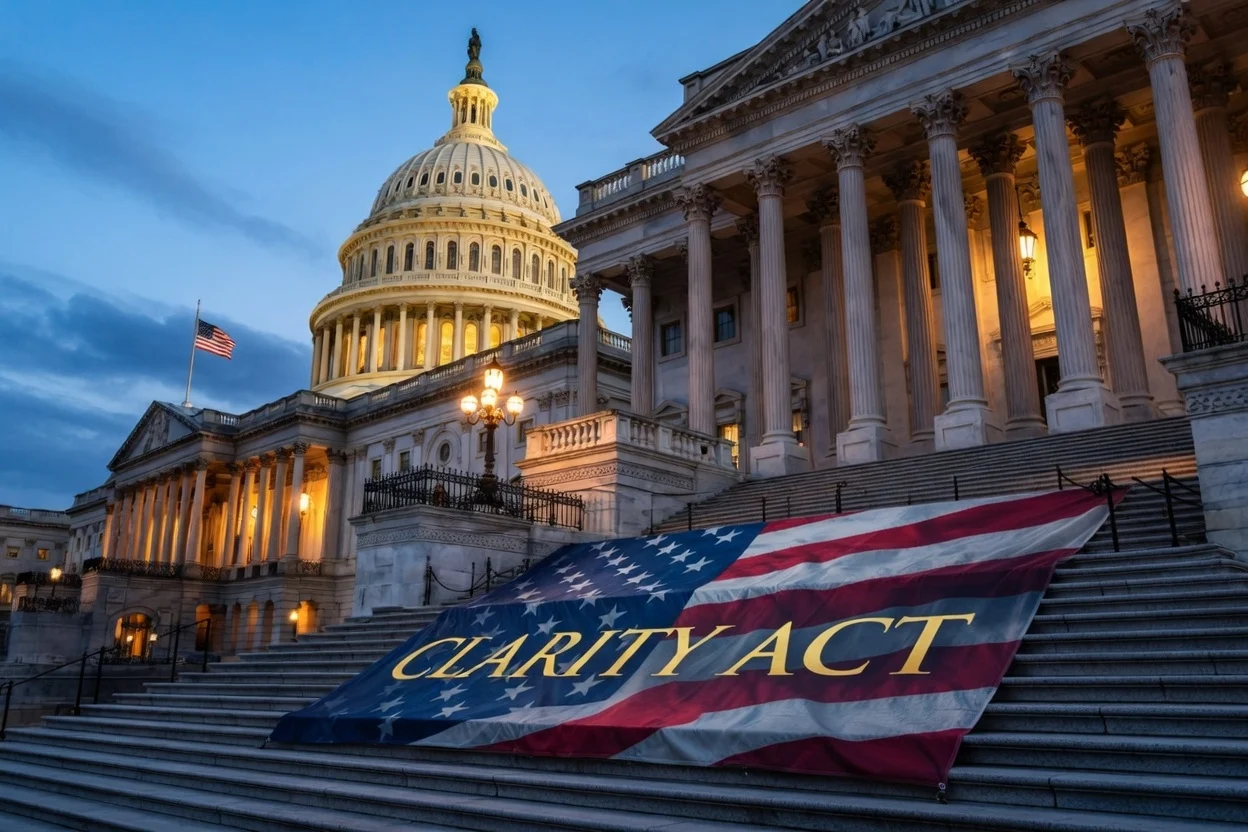
The CLARITY Act, a pivotal piece of legislation aimed at establishing a comprehensive federal framework for digital assets, has encountered a significant new hurdle, stalling its progress through the Senate. Lawmakers failed to release a promised revised Senate text following a critical White House meeting, extending uncertainty around the contentious crypto market structure bill. Industry sources now anticipate the document’s release will slip into the following week, further delaying a legislative process already under immense pressure. This latest setback has significantly eroded confidence in the bill’s near-term prospects, with prediction markets like Polymarket reflecting a sharp decline in approval odds for 2026, which plummeted from 73% in May to as low as 31% before a modest recovery to 35% on Friday.
The current impasse is largely centered on a fierce ethics dispute and the challenge of securing sufficient Democratic votes, a necessity for the bill to overcome a 60-vote threshold in the Senate. While a House field hearing in New York recently underscored the policy arguments for the bill, it holds no sway over the Senate’s timetable or its direct legislative advancement. The delay in releasing updated text signals a deeper chasm in negotiations, particularly concerning the ethical guidelines for public officials with significant crypto holdings, an issue intensified by recent financial disclosures from prominent political figures.
The CLARITY Act: A Quest for Regulatory Certainty
The CLARITY Act, formally known as H.R. 3633, represents a bipartisan effort to bring much-needed regulatory clarity to the rapidly evolving digital asset space in the United States. Its primary objective is to define "digital commodities" and delineate the oversight responsibilities between the Securities and Exchange Commission (SEC) and the Commodity Futures Trading Commission (CFTC). For years, the U.S. digital asset industry has grappled with a fragmented and often ambiguous regulatory landscape, leading to uncertainty for businesses, investors, and developers alike. The absence of a clear federal framework has been cited as a major impediment to innovation and investment within the country, with many firms considering or moving operations to jurisdictions with more defined rules.
The bill aims to establish clear rules for registration, disclosures, custody, and market infrastructure for digital asset entities. Currently, various digital assets exist in a gray area, often subject to differing interpretations by federal agencies, leading to a regulatory environment characterized by enforcement actions rather than proactive guidelines. Proponents argue that the CLARITY Act would foster innovation by providing a predictable operating environment, enhance consumer protection through robust safeguards, and solidify the U.S.’s position as a leader in the global digital economy. The legislation seeks to provide a definitive answer to the long-standing question of whether a digital asset falls under securities law or commodities law, thereby assigning clear jurisdiction to either the SEC or the CFTC.
A Tumultuous Legislative Journey and the Latest Stalling Point
The CLARITY Act’s journey through Congress has been marked by periods of optimistic momentum interspersed with significant political friction. The bill successfully navigated the House of Representatives and advanced through the Senate Banking Committee on May 14 with a notable 15-9 bipartisan vote. Subsequently, it was reported to the Senate on June 1 and placed on the legislative calendar as Calendar No. 423. Despite this progress, a floor vote has yet to be scheduled, highlighting the deep-seated challenges that persist beyond committee approval.
The most recent and critical setback unfolded after President Donald Trump met with Republican senators on Thursday to discuss the contentious ethics provisions embedded within the legislation. This high-stakes meeting was widely expected to yield an updated draft of the bill, potentially signaling a breakthrough in negotiations. However, the anticipated text failed to materialize. Veteran journalist Eleanor Terrett reported that industry leaders, who had been keenly awaiting the revised language, now expect the release to slip into the following week, further extending the period of regulatory limbo.
This delay is particularly significant given the rapidly approaching August recess, which leaves Senate leaders with a shrinking window to forge a bipartisan coalition robust enough to secure the 60 votes required for the bill to advance. The necessity of this supermajority means the legislation is heavily dependent on the cooperation of Democratic senators, many of whom are vocally advocating for stronger conflict-of-interest rules concerning public officials’ financial interests in the crypto sector. The failure to release the text promptly means critical negotiation time has been lost, pushing the legislative timeline dangerously close to the recess period, when political momentum often dissipates.
The Ethics Standoff: A Billion-Dollar Quandary
At the core of the current legislative paralysis lies a profound ethics dispute, primarily fueled by concerns over potential conflicts of interest among high-ranking government officials and members of Congress who possess substantial holdings in digital assets. Democratic lawmakers have been insistent that the current Republican-proposed ethics language is too lenient. Senator Ruben Gallego, a prominent voice on this issue, has openly described the Republican ethics provisions as "too weak," underscoring the deep ideological divide.
Democrats are pushing for significantly tighter restrictions that would encompass the President, Vice President, senior executive branch officials, and members of Congress with vested crypto interests. Their demands stem from a desire to prevent any perception of undue influence or personal gain from legislation that could directly impact their financial portfolios. This debate has been particularly inflamed by the public disclosure of President Donald Trump’s 2025 financial report, which revealed more than $1 billion in crypto-related gains. This staggering figure has intensified the scrutiny and amplified calls for robust ethical safeguards, as critics argue that such substantial personal financial stakes could compromise the impartiality of legislative decision-making.
Senator Cory Booker, while acknowledging the complexities, has maintained an open line for negotiations, emphasizing that the legislation absolutely requires a bipartisan pathway to succeed. The concern among some Democrats is that releasing updated legislative text without first securing substantial bipartisan consensus on these critical ethics provisions could inadvertently harden opposition, making it even more challenging to settle the most contested language later. The specter of a bill passing that could be seen as benefiting certain politicians financially looms large, making Democrats wary of endorsing anything less than ironclad ethical guidelines. The history of legislative bodies around the world is replete with examples of public distrust arising from perceived self-enrichment, and lawmakers are keen to avoid such a precedent in the nascent digital asset space.
Polymarket Reflects Diminished Confidence
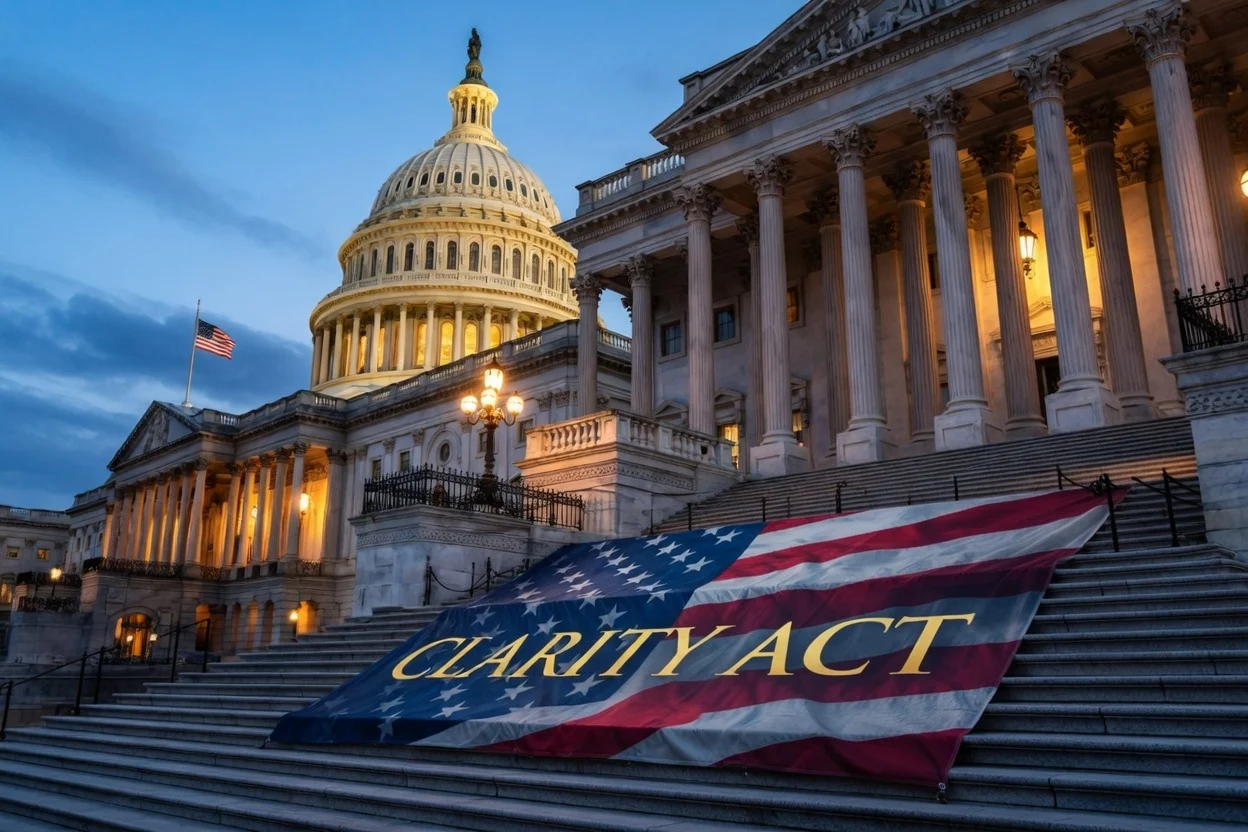
The palpable uncertainty surrounding the CLARITY Act’s future has been vividly reflected in prediction markets, which serve as a real-time barometer of public and investor sentiment. Polymarket, a prominent platform for event-based forecasting, has tracked the approval odds for the CLARITY Act becoming law in 2026 with considerable volatility.
In early May, following its successful passage through the Senate Banking Committee, the contract for the CLARITY Act’s approval in 2026 soared, trading near an optimistic 73%. This figure reflected strong confidence that the bipartisan momentum would carry the bill through to final enactment. However, as the ethics dispute began to escalate and the legislative timeline stretched, these odds began to fall. By early June, the probability had declined to approximately 47%. The most recent developments, including the failure to release the revised Senate text, triggered a precipitous drop. During Friday’s trading session, the Polymarket contract plunged to near 31%, before recovering slightly to 35% by the close of the day.
This sharp decline underscores the growing skepticism among market participants regarding the bill’s ability to clear the remaining legislative hurdles by the December 31, 2026, deadline. It’s important to note that the Polymarket contract’s resolution conditions are stringent: the bill, H.R. 3633, must pass both chambers of Congress and receive the President’s signature within the specified timeframe. A Senate vote alone, even if successful, would not settle the contract, as lawmakers would still need to reconcile any differences between the Senate’s amended version and the House-approved bill, a process that itself can be fraught with political challenges. The prediction market’s downward trend signals that political gridlock, particularly over the ethics provisions, is now perceived as a formidable obstacle that may prove insurmountable within the given timeframe.
House Field Hearing: An Informational Aside
Concurrently with the Senate’s legislative struggles, the House Financial Services Committee held a field hearing in New York at 10 a.m. ET on Friday. The session was designed to explore how the CLARITY Act could foster digital asset innovation and establish clearer federal oversight. The hearing featured a diverse panel of witnesses, including representatives from key industry players and advocacy groups such as Nova Labs, Bullish, WisdomTree, and Coin Center.
Their testimony covered a broad spectrum of critical topics within the digital asset landscape, including the nuanced rules governing digital commodities, the development of robust market infrastructure, the implementation of comprehensive consumer safeguards, and necessary protections for software developers working in the blockchain space. The witnesses generally advocated for the bill’s principles, emphasizing the need for regulatory certainty to unlock the full potential of digital assets.
However, despite its valuable contributions to policy discourse and its role in highlighting industry perspectives, the House hearing carried no direct authority over the Senate’s legislative process. It was purely informational, serving to build a public record and inform future policy discussions, but it did not, and could not, influence the Senate’s timetable, nor did it offer any immediate solution to the ethics standoff currently gripping the upper chamber. Its occurrence served as a reminder of the broad support for regulatory clarity within the industry, yet also highlighted the disconnect between policy advocacy and the realities of legislative gridlock.
Broader Implications for the Digital Asset Industry
The prolonged delay and escalating uncertainty surrounding the CLARITY Act carry significant implications for the entire digital asset ecosystem. Compliance teams within crypto businesses, exchanges, brokers, custodians, and even non-custodial developers are left in a state of suspended animation, without the final language on crucial regulatory requirements. This includes details regarding registration processes, disclosure mandates, custody standards, and the highly debated developer liability provisions.
The absence of a clear federal framework forces these entities to operate under a patchwork of existing, often ill-fitting, regulations or, worse, in a regulatory vacuum. This ambiguity directly hinders strategic planning, stifles investment in new ventures, and can even push innovative companies to seek more welcoming regulatory environments abroad. Startups and established firms alike require predictability to allocate resources, develop new products, and onboard customers securely. Without it, the U.S. risks falling behind other jurisdictions, such as the European Union with its Markets in Crypto-Assets (MiCA) regulation, which have made more decisive strides in establishing comprehensive digital asset frameworks.
Moreover, the ethics dispute itself casts a shadow over the entire legislative effort. The ability of lawmakers to resolve this particular issue will be a litmus test for the capacity of Congress to legislate effectively in a rapidly evolving technological domain. Failure to reach a consensus could erode public trust not only in the digital asset market but also in the legislative process itself, particularly when perceived conflicts of interest are involved. The initial bipartisan momentum that propelled the CLARITY Act through committee stages now faces its most formidable test, as the bill’s future hinges on the willingness of both parties to compromise on politically charged ethical considerations.
The Road Ahead: Challenges and Potential Outcomes
The path forward for the CLARITY Act is fraught with challenges. To break the current deadlock, a significant compromise on the ethics language is paramount. This would likely involve Democrats moderating some of their demands and Republicans accepting stronger, more explicit conflict-of-interest provisions that address the concerns raised by President Trump’s substantial crypto holdings. Senator Booker’s continued engagement suggests that a bipartisan pathway, though difficult, is still being sought.
Should negotiators fail to settle the ethics dispute and secure enough Democratic votes before the August recess, the bill’s chances of passing in 2026 will diminish further. The legislative calendar is tight, and critical issues often lose momentum after extended breaks. A prolonged delay could lead to several outcomes: continued regulatory uncertainty for the digital asset industry, potential for state-level actions to fill the federal void, or an increased reliance on executive orders and enforcement actions by existing agencies, which often creates a less predictable and less stable regulatory environment.
The CLARITY Act stands at a critical juncture. Its fate will not only determine the future regulatory landscape for digital assets in the United States but also serve as a telling indicator of Congress’s ability to adapt and legislate effectively in the face of complex, rapidly evolving technological and ethical challenges. The digital asset industry and the broader financial markets will be watching closely to see if political will can overcome the current impasse and deliver the much-needed clarity that the act promises.














