


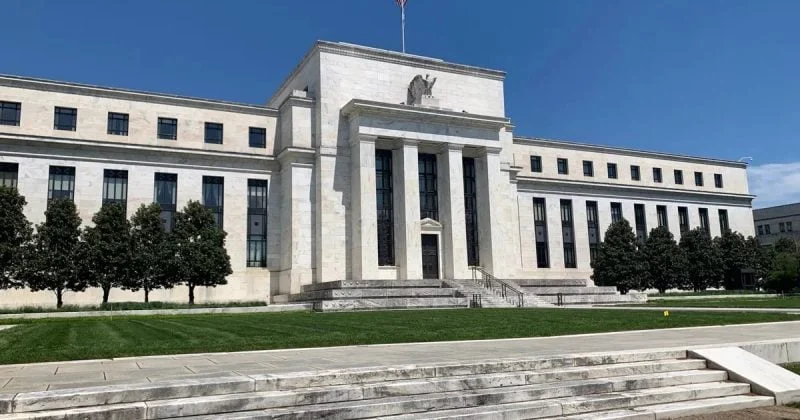
The legal battle between Custodia Bank and the Federal Reserve, a confrontation that has simmered within the American judicial system since 2022, is now escalating toward the highest court in the land. Custodia Bank, a Wyoming-chartered institution designed to bridge the gap between traditional finance and digital assets, has signaled its intent to file a petition for a writ of certiorari with the United States Supreme Court. The central question of the case involves the extent of the Federal Reserve’s discretionary power: can the central bank indefinitely deny master accounts to legally eligible, state-chartered banks without adhering to clear statutory limits? This case, which began as a dispute over a single bank’s operational requirements, has evolved into a landmark struggle over the future of the dual banking system in the United States and the integration of digital assets into the national financial infrastructure.
The Foundation of the Conflict: Master Accounts and Banking Rails
At the heart of this multi-year litigation is the "master account," an essential component for any modern financial institution. A master account at the Federal Reserve provides a bank with direct access to the nation’s payment systems, including Fedwire and the Automated Clearing House (ACH) network. These "rails" allow banks to settle transactions in real-time, move liquidity efficiently, and interact with the broader financial ecosystem without the need for an intermediary.
For Custodia Bank, which operates under Wyoming’s Special Purpose Depository Institution (SPDI) framework, the master account is not merely a convenience but a core operational necessity. Without it, Custodia is forced to rely on "correspondent banks"—larger, often Fed-member institutions—to process transactions. This dependency introduces third-party risk, higher costs, and a lack of autonomy that Custodia’s founder and CEO, Caitlin Long, has characterized as an existential threat. Long has repeatedly stated that the denial of a master account serves as a "death sentence" for the bank’s business model, which aims to provide 100% reserve banking services for digital asset firms.
A Chronology of Legal Escalation
The friction between Custodia and the Federal Reserve began in October 2020, when Custodia first submitted its application for a master account. Under the Monetary Control Act of 1980, Custodia argued that the Federal Reserve is mandated to provide services to all eligible depository institutions. However, the application languished for nearly two years without a formal decision, prompting Custodia to file its initial lawsuit in June 2022 against the Federal Reserve Board of Governors and the Federal Reserve Bank of Kansas City.
The timeline of the litigation highlights the deepening divide between the digital asset sector and federal regulators:
- October 2020: Custodia Bank applies for a Federal Reserve master account.
- June 2022: Custodia sues the Federal Reserve, alleging an "unlawful delay" in processing its application.
- January 2023: The Federal Reserve officially denies Custodia’s application for both membership in the Federal Reserve System and a master account, citing "significant safety and soundness risks" related to the bank’s focus on crypto-assets.
- March 2024: A U.S. District Court judge rules against Custodia, stating that federal law does not require the Fed to grant every eligible bank a master account and that the central bank maintains discretionary authority.
- October 31, 2025: The 10th Circuit Court of Appeals affirms the lower court’s decision, upholding the Fed’s right to deny access.
- March 13, 2026: The 10th Circuit denies Custodia’s petition for an en banc rehearing. Notably, the vote was 7-3, indicating a significant minority of judges believed the case warranted further scrutiny.
- May 22, 2026: Custodia files for a 30-day extension to submit its formal petition to the U.S. Supreme Court.
- July 11, 2026: The new deadline for Custodia to file its petition for a writ of certiorari.
The Significance of the 10th Circuit Dissent
While Custodia lost its appeal at the 10th Circuit, the 7-3 vote on the petition for a rehearing is viewed by legal scholars as a potential "hook" for Supreme Court interest. The three dissenting judges raised concerns about the unchecked nature of the Federal Reserve’s discretion. The dissent suggested that if the Fed can unilaterally block a state-chartered bank from the payment system, it effectively grants the federal government a veto over a state’s power to charter banks.
This touches upon the "dual banking system," a bedrock of American finance where state and federal regulators share authority. If the Federal Reserve can use administrative denials to pick and choose which state-chartered models are viable, the autonomy of states like Wyoming to innovate within their own borders is significantly diminished. Custodia’s legal team is expected to argue that the Fed’s current stance creates an "unconstitutional delegation of power" and violates the clear intent of the Monetary Control Act.
The Kraken Variable: A New Precedent?
In a surprising twist in March 2026, Kraken, another Wyoming-chartered SPDI, was granted a "limited master account." This development has complicated the narrative of the Federal Reserve’s absolute opposition to crypto-focused entities. A limited master account provides access to some payment rails but often comes with stringent oversight and restricted functionality compared to a full account.
The granting of a limited account to Kraken suggests that the Federal Reserve may be moving toward a tiered system of access. However, for Custodia, a limited account may not be sufficient to fulfill its promise of providing a full-service bridge between crypto and the U.S. dollar. Reports suggest that while Custodia is preparing its Supreme Court filing, it may also be exploring the possibility of a limited account application as a secondary track to ensure its survival.
Technical and Economic Arguments
The Federal Reserve’s primary justification for denying Custodia has been "safety and soundness." The Fed argues that the volatility of the digital asset market and the potential for "runs" on crypto-focused banks could pose systemic risks to the broader financial system.
Custodia has countered these claims by highlighting its unique 100% reserve model. Unlike traditional commercial banks that engage in fractional reserve banking—lending out the majority of their deposits—Custodia is required by Wyoming law to maintain $1.08 in cash for every $1.00 deposited by its customers. Custodia argues that this model is actually safer than the traditional banking model, as it eliminates the risk of insolvency due to loan defaults. Furthermore, Custodia asserts that by being denied a master account, it is forced to hold its reserves at other banks, which actually increases systemic risk by concentrating assets in fewer, potentially more leveraged institutions.
Broader Implications for the Financial Industry
The outcome of this case will have far-reaching consequences for several sectors:
- Digital Asset Integration: A victory for Custodia would provide a clear legal pathway for other crypto-native firms to enter the regulated banking system, potentially ending what many in the industry call "Operation Choke Point 2.0"—a perceived coordinated effort by federal regulators to cut off crypto firms from banking services.
- State Sovereignty: The case will define the limits of federal regulatory overreach. If the Supreme Court rules that the Fed must grant accounts to eligible state banks, it will empower states to continue developing specialized banking charters (such as for fintech or green energy) without fear of a federal blockade.
- Administrative Law: This case sits at the intersection of a broader judicial trend in the United States to limit the power of "alphabet soup" agencies. The Supreme Court has recently shown a willingness to curtail the discretion of federal agencies that act without explicit congressional authorization (the "Major Questions Doctrine").
Official Reactions and Industry Sentiment
The Federal Reserve has remained steadfast in its position, maintaining that it has the statutory duty to protect the stability of the U.S. economy. In previous statements, Fed officials have emphasized that "membership in the Federal Reserve is a privilege, not a right," and that the risks associated with digital assets are not yet sufficiently understood or mitigated.
Conversely, the digital asset industry and proponents of financial innovation have rallied behind Custodia. Trade groups have filed amicus briefs in support of the bank, arguing that the Fed’s current policy stifles competition and pushes digital asset activity into offshore, unregulated markets. Caitlin Long has been vocal in her criticism, stating that the Fed is using "dark-room" administrative processes to bypass the legislative process and stifle a nascent industry.
Looking Ahead: The July 11 Deadline
As the July 11, 2026, deadline approaches, the financial and legal communities are closely watching Custodia’s next move. If the Supreme Court decides to hear the case (granting certiorari), a final decision would likely not be reached until late 2026 or early 2027.
The Supreme Court typically accepts fewer than 1% of the petitions it receives. However, cases involving fundamental disputes between state and federal power, combined with significant dissent in the lower appellate courts, are often viewed as prime candidates for review. If the Court declines to hear the case, the 10th Circuit’s ruling will stand, cementing the Federal Reserve’s broad discretionary power to act as the gatekeeper of the American financial system. For Custodia and the wider digital asset industry, the stakes could not be higher; the resolution of this "legal cage match" will determine whether the future of finance is built on open access or centralized discretion.














