


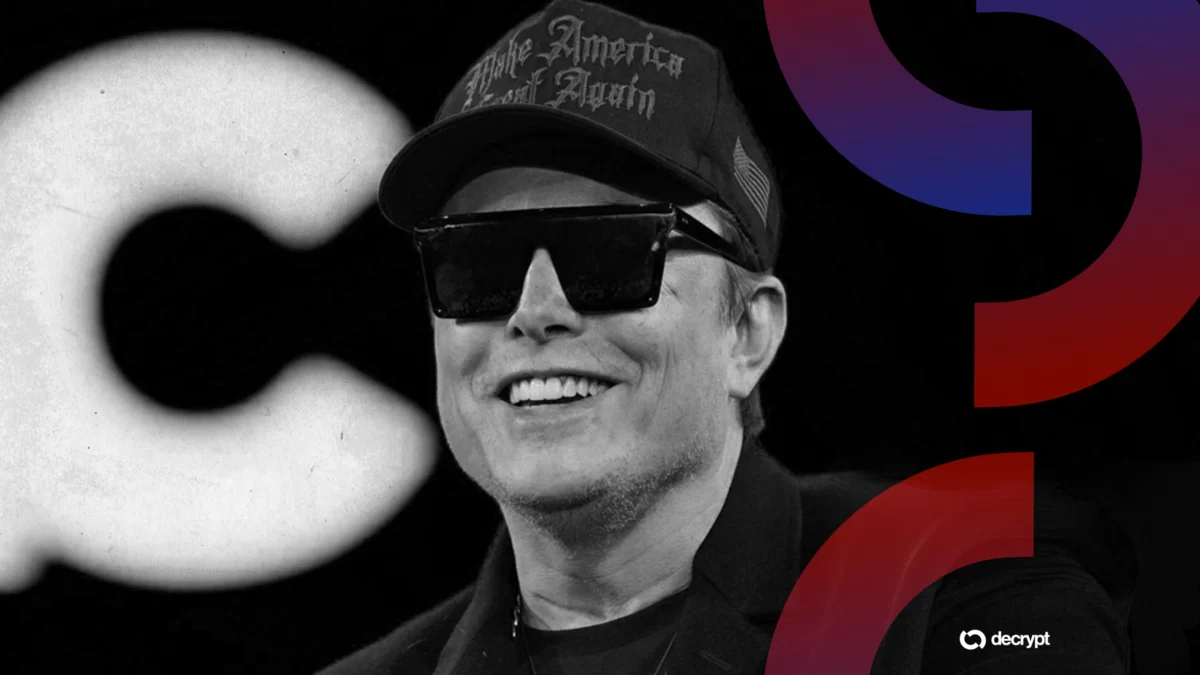
San Francisco, California – In a significant legal victory for OpenAI, a California jury on Monday rejected Elon Musk’s sweeping $150 billion lawsuit against the artificial intelligence powerhouse, its CEO Sam Altman, and co-founder Greg Brockman. The verdict effectively clears one of the most substantial legal threats facing the creator of ChatGPT, allowing the company to focus unimpeded on its rapid innovation and intensifying competition within the global AI landscape. Jurors in the Superior Court of California for San Francisco County ultimately determined that Musk had waited too long to bring his claims, which accused OpenAI’s leadership of improperly profiting from an organization he helped establish with an explicit non-profit mission. This application of the legal doctrine of "laches," pertaining to an unreasonable delay in asserting legal rights, proved to be the decisive factor in the case.
The lawsuit, filed in February 2024, alleged a breach of founding agreements, a deviation from the original non-profit mission of developing artificial general intelligence (AGI) for the benefit of humanity, and a shift towards a profit-driven model primarily benefiting Microsoft. Musk sought to compel OpenAI to revert to its original non-profit status and make its technology open-source, in addition to the hefty financial damages. The collapse of this legal challenge removes a significant cloud of uncertainty that had lingered over OpenAI, a company now valued by some estimates at over $80 billion, as it continues to lead the charge in the burgeoning generative AI sector.
The Genesis of OpenAI: A Visionary Foundation
To understand the crux of Musk’s legal grievances, it is essential to revisit the founding principles of OpenAI. Established in December 2015, OpenAI was conceived as a non-profit research company dedicated to developing safe artificial general intelligence (AGI) that would benefit all of humanity, rather than being controlled by a single corporation or individual. The initial mission statement explicitly emphasized this altruistic goal, stating that "our goal is to advance digital intelligence in the way that is most likely to benefit humanity as a whole, unconstrained by a need to generate financial return."
Elon Musk was a pivotal figure in its creation, co-founding the organization alongside Sam Altman, Greg Brockman, Ilya Sutskever, John Schulman, Wojciech Zaremba, and Andrej Karpathy. Musk personally invested a substantial sum, reportedly around $44 million, into the nascent venture and served on its initial board of directors. His vision, shared by the other founders, was to counteract the perceived dangers of powerful AI being developed by for-profit entities, envisioning an open, transparent approach to AI development that would prevent potential monopolization and ensure broad societal benefit. The "open" in OpenAI was a direct reflection of this commitment to collaborative and publicly accessible research.
The Pivot to Profit: Strategic Evolution and Microsoft’s Influence
The trajectory of OpenAI began to shift significantly in 2018, the year Elon Musk departed from its board of directors. While the reasons for his departure have been a point of contention – with Musk citing potential conflicts of interest with Tesla’s own AI ambitions, and OpenAI suggesting a disagreement over control and funding – it marked a critical juncture.
In 2019, OpenAI announced a radical restructuring, transitioning from a pure non-profit to a "capped-profit" model. This involved the creation of OpenAI LP, a for-profit subsidiary that would allow the company to raise substantial capital from investors while ostensibly retaining its non-profit parent’s mission and governance oversight. The stated rationale for this pivot was the immense financial resources required to develop cutting-edge AI. Training large language models and advanced AI systems demands extraordinary computational power, often costing hundreds of millions, if not billions, of dollars. The capped-profit structure was presented as a necessary mechanism to attract top engineering talent and secure the massive investments needed to compete with tech giants like Google and Meta.
This strategic shift was quickly followed by a groundbreaking partnership with Microsoft. In 2019, Microsoft invested $1 billion into OpenAI LP. This initial investment blossomed into a multi-billion-dollar relationship, with Microsoft committing an additional $10 billion in 2023, making it the largest investor and partner in OpenAI. This deep integration saw OpenAI’s technologies, such as its generative AI models, being incorporated into Microsoft’s suite of products and cloud services, most notably Azure. For many, including Musk, this close commercial alliance and the capped-profit structure represented a fundamental departure from the original non-profit, open-source ethos.
Chronology of a Disputed Vision
- December 2015: OpenAI is founded as a non-profit research company by Elon Musk, Sam Altman, Greg Brockman, Ilya Sutskever, and others, with a mission to develop AGI for the benefit of humanity. Musk invests significantly and joins the board.
- February 2018: Elon Musk departs from OpenAI’s board of directors, citing potential conflicts of interest with Tesla’s AI development efforts.
- March 2019: OpenAI announces its transition to a "capped-profit" model, establishing OpenAI LP, a for-profit subsidiary designed to attract investment while maintaining its original mission under the non-profit parent.
- July 2019: Microsoft makes its initial $1 billion investment in OpenAI, solidifying a strategic partnership.
- November 2022: OpenAI launches ChatGPT to the public, sparking a global frenzy and rapidly popularizing generative AI. Its unprecedented success propels OpenAI to the forefront of the AI industry.
- January 2023: Microsoft announces a multi-year, multi-billion-dollar investment in OpenAI, reportedly totaling $10 billion, further deepening their partnership.
- July 2023: Elon Musk launches xAI, his own artificial intelligence company, stating its mission is to "understand the true nature of the universe" and serve as an alternative to OpenAI.
- February 2024: Elon Musk files a lawsuit against OpenAI, Sam Altman, and Greg Brockman in San Francisco Superior Court, alleging breach of contract and fiduciary duty, among other claims. He seeks to compel OpenAI to return to its non-profit, open-source mission and demands $150 billion in damages.
- June 2024: A California jury rejects Musk’s lawsuit, ruling that he waited too long to bring his claims.
Musk’s Allegations: Breach of Contract and Fiduciary Duty
Elon Musk’s lawsuit was built on the premise that OpenAI had fundamentally betrayed its founding covenant. The core of his legal argument centered on two main allegations:
- Breach of Contract: Musk contended that the original founding agreement, though perhaps informal in its initial written form, established a clear contractual obligation for OpenAI to remain a non-profit entity dedicated to developing AGI for humanity, not for profit or for the benefit of a specific corporation. He argued that the transition to a capped-profit model and the exclusive partnership with Microsoft constituted a direct breach of this understanding.
- Breach of Fiduciary Duty: As a co-founder and initial board member, Musk argued that Altman and Brockman, along with other leaders, owed a fiduciary duty to uphold the organization’s stated mission. By steering OpenAI towards a commercialized, closed-source approach, he alleged they had prioritized personal gain and corporate interests over the collective good and the original vision.
Musk’s legal filing specifically highlighted the shift from "open" to "closed-source" AI development, pointing to OpenAI’s increasing proprietary control over its advanced models like GPT-4. He expressed grave concerns that this approach could lead to the development of a powerful AGI controlled by a single entity, posing significant risks to humanity – a concern he has voiced repeatedly in public forums. The $150 billion figure was a staggering demand, intended to reflect the perceived commercial value generated by OpenAI’s deviation from its non-profit path and its current market capitalization.
OpenAI’s Defense and the Jury’s Deliberation
OpenAI vehemently denied Musk’s allegations, characterizing the lawsuit as "frivolous" and "without merit." Their defense strategy primarily rested on several key points:
- No Formal Binding Agreement: OpenAI’s legal team argued that no legally binding contract existed that indefinitely committed the organization to a perpetual non-profit, open-source model. They contended that the founding documents and discussions allowed for flexibility in strategy to achieve the ultimate mission of developing AGI safely.
- Necessity of Evolution: OpenAI maintained that the transition to a capped-profit model and the partnership with Microsoft were essential for its survival and its ability to compete in the extremely capital-intensive field of advanced AI research. Without substantial funding, they argued, they would have been unable to attract the necessary talent, acquire the immense compute power, and ultimately make progress towards AGI.
- Musk’s Own Motives: OpenAI’s counter-narrative suggested that Musk’s departure in 2018 was due to his desire to take full control of the organization and potentially merge it with Tesla, or to launch his own competing AI venture, which he later did with xAI. They implied that his lawsuit was motivated by sour grapes and an attempt to disrupt a successful competitor.
- The "Laches" Defense: Crucially, OpenAI’s lawyers emphasized the doctrine of laches, arguing that Musk had waited far too long to bring his claims. He was aware of the capped-profit transition in 2019, the Microsoft partnership, and the increasingly commercial direction of OpenAI for several years before filing the lawsuit in 2024. The jury’s decision ultimately hinged on this point.
The jury deliberated on the evidence presented, including detailed accounts of OpenAI’s founding, its strategic shifts, and the timeline of Musk’s involvement and subsequent criticisms. Their focus was not on the philosophical merits of OpenAI’s mission or its commercial success, but on the legal enforceability of Musk’s claims within the established framework of contract law and corporate governance.
The Verdict: "Laches" Prevails
The jury’s decision to reject Elon Musk’s lawsuit was a decisive victory for OpenAI, rooted firmly in the legal principle of laches. This doctrine prevents a party from asserting a claim or right that has been unreasonably delayed, thereby prejudicing the opposing party. In this case, the jurors concluded that Musk’s delay in filing the lawsuit, despite his evident awareness of OpenAI’s structural and operational changes as far back as 2019, was unreasonable and detrimental to OpenAI’s ability to defend itself against claims relating to its long-established business model.
Legal experts widely concur that the laches defense is often potent in cases involving rapidly evolving technology companies, where initial informal agreements can quickly become outdated in the face of exponential growth and changing market dynamics. "This verdict underscores the importance of timely action in legal disputes, especially in the fast-paced tech sector," commented Sarah Chen, a corporate litigation attorney. "Musk had years to challenge OpenAI’s pivot to a capped-profit model and its partnership with Microsoft. Waiting until the company achieved massive success with ChatGPT significantly weakened his position, regardless of the perceived moral arguments." The jury’s finding suggests that while Musk may have held strong personal convictions about OpenAI’s original mission, those convictions were not translated into timely legal action to preserve his alleged rights.
Reactions from the Parties and Legal Experts
Following the verdict, OpenAI is expected to issue a statement expressing satisfaction with the outcome. A representative for OpenAI, speaking on background, indicated that the company views the verdict as an affirmation of its strategic decisions and its continued commitment to its mission of building safe AGI, now unburdened by this particular legal distraction. "This allows us to fully focus on our research, development, and delivering cutting-edge AI to the world," the representative stated, likely echoing sentiments from CEO Sam Altman and President Greg Brockman. The company’s internal communications are expected to emphasize that its evolution was necessary to secure the resources required to pursue its ambitious goals, ultimately benefiting humanity as intended.
Elon Musk, while not immediately issuing a public statement, is likely to express disappointment with the legal outcome. Through his social media platform X, he has frequently voiced his concerns about OpenAI’s direction, often contrasting it with his own xAI’s purported commitment to "truth-seeking AI" and open-source principles (though xAI’s models are not fully open-source). This legal setback may intensify his public criticism of OpenAI, positioning himself further as a champion of AI safety and open innovation, even as his legal challenge failed. It is plausible he might reiterate his belief that OpenAI has strayed from its core values, irrespective of the court’s procedural ruling.
Legal analysts are quick to highlight the precedent this case sets, particularly concerning founder disputes in high-growth startups. "The Musk v. OpenAI case was a high-profile example of the tension between initial visionary ideals and the practical realities of scaling a technology company," noted Dr. Eleanor Vance, a professor of corporate law. "The jury’s decision reinforces that informal agreements, however heartfelt, must be formalized and challenged promptly if a party believes a breach has occurred. Otherwise, the passage of time, especially in a rapidly appreciating asset like an AI company, can be fatal to a claim."
Implications for OpenAI: Clearing the Path Forward
The rejection of Elon Musk’s lawsuit represents a monumental relief for OpenAI. The $150 billion claim and the demand to revert to a non-profit, open-source model posed an existential threat to its current business structure and future trajectory. With this legal cloud lifted, OpenAI can now proceed with greater certainty and investor confidence.
- Unimpeded Innovation: The company can fully concentrate its resources and talent on advancing its AI models, expanding its product offerings, and integrating its technology more deeply into various industries. This includes continued development of GPT-5 and beyond, as well as specialized AI applications.
- Investor Confidence: The verdict solidifies OpenAI’s capped-profit structure and its partnership with Microsoft, reassuring existing investors and potentially attracting new ones. The uncertainty of a massive lawsuit and a forced structural change had undoubtedly created a degree of hesitation in the market.
- Market Leadership: As a key player in the AI race, OpenAI can now dedicate its full attention to maintaining its competitive edge against formidable rivals like Google DeepMind, Anthropic, and Musk’s own xAI. This includes aggressive talent acquisition, strategic partnerships, and rapid product deployment.
- Strategic Autonomy: While still closely tied to Microsoft, OpenAI retains the autonomy to define its own strategic direction without the legal pressure to revert to an outdated operational model.
Broader Impact on the AI Landscape and Corporate Governance
The outcome of Musk v. OpenAI extends beyond the immediate parties, sending ripples through the broader AI industry and influencing discussions on corporate governance in emerging technologies.
- Balancing Ideals and Reality: The case highlights the inherent tension between the idealistic, often altruistic, founding missions of innovative tech companies and the immense capital requirements needed to bring cutting-edge technologies to fruition. It underscores that for-profit structures, even capped-profit ones, are often deemed necessary to attract the investment and talent needed for grand ambitions.
- Clarity in Founding Agreements: For future AI startups and other high-tech ventures, this case serves as a cautionary tale. It emphasizes the critical importance of clearly defined, legally binding agreements among founders, particularly regarding mission, governance, and profit-sharing, especially when a company’s trajectory might deviate from its initial vision. Ambiguous or informal understandings, even among close collaborators, can lead to costly disputes down the line.
- The AI Race Intensifies: With one of its primary legal distractions removed, OpenAI is now free to accelerate its efforts in the fiercely competitive AI landscape. This could prompt other major players to redouble their own investments and research, further fueling the global AI arms race.
- Governance Models for AGI: The debate surrounding OpenAI’s structure also reignites broader discussions about the optimal governance models for companies developing powerful AGI. Should such transformative technology be developed within non-profit frameworks, for-profit entities, or some hybrid model? While the court ruled on a procedural matter, the underlying philosophical questions about the control and purpose of AGI remain highly relevant for policymakers and ethicists worldwide.
The Future of AI Competition
The verdict in the Elon Musk v. OpenAI lawsuit is more than just a legal decision; it’s a significant marker in the ongoing saga of artificial intelligence development. It solidifies OpenAI’s current operational model and frees it to navigate the complex future of AGI without the immediate threat of a crippling legal reversal. As companies like Google, Anthropic, Meta, and xAI continue to pour billions into AI research, the competitive landscape will only become more intense. OpenAI, now with a major legal hurdle cleared, is poised to continue its leadership role, shaping not just the technology itself, but also the business models and ethical considerations that will define the AI era for decades to come.














