


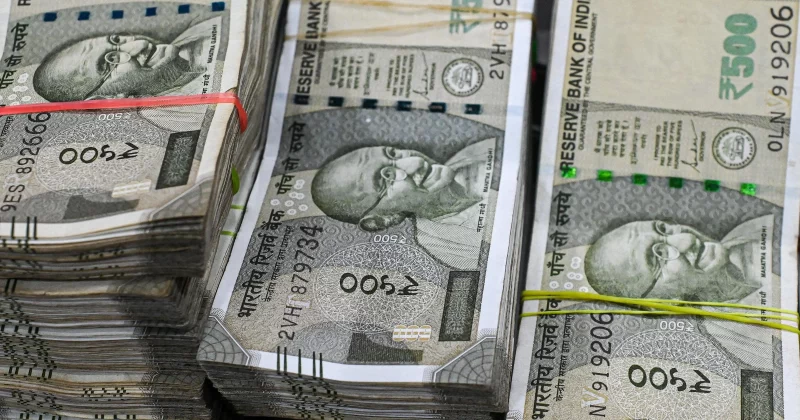
In a decisive move to manage its trade balance and defend the national currency, the Indian government has enacted a series of stringent measures targeting the import of high-purity silver. Effective May 16, 2026, the Directorate General of Foreign Trade (DGFT) has reclassified silver bars with a purity of 99.9% or higher from the "Free" category to "Restricted." This regulatory shift means that more than 90% of all silver entering the country now requires a specific government-issued license, effectively ending the era of open-market silver importation for domestic consumption. This policy change arrives on the heels of a massive hike in import duties, signaling a coordinated effort by the Ministry of Finance and the Ministry of Commerce to curb the outflow of foreign exchange and stabilize the Indian Rupee (INR) amid mounting global economic pressures.
The reclassification specifically targets silver bars under the Indian Trade Classification (Harmonized System) codes 71069221 and 71069229. For decades, these codes represented the primary channel through which bullion dealers and industrial users sourced high-grade silver from international markets. By moving these items to the restricted list, the government has introduced a layer of bureaucratic oversight designed to prioritize essential industrial use while throttling speculative investment and non-essential domestic consumption.
The Regulatory Timeline: A Week of Rapid Policy Escalation
The transition to a restricted trade regime for silver did not occur in isolation. It was the culmination of a high-pressure week for Indian trade officials. On May 12, 2026, just four days prior to the licensing announcement, the Ministry of Finance issued a notification significantly increasing the basic customs duty on both gold and silver. The duty was hiked from 6% to 15%, a 150% increase in the tax rate. When combined with the existing 3% Integrated Goods and Services Tax (IGST) and other minor surcharges, the effective tax burden on imported bullion now sits at nearly 20%.
This rapid-fire policy implementation reflects an atmosphere of urgency in New Delhi. On May 13 and 14, market analysts observed a surge in silver "panic buying" as traders anticipated further restrictions. The DGFT’s May 16 notification served as the final blow to the previous liberalized regime. By Saturday evening, the infrastructure for "Free" imports had been dismantled, leaving hundreds of shipments in a state of regulatory limbo as importers scrambled to understand the new licensing requirements.
Macroeconomic Drivers: The Rupee and the Energy Crisis
The primary catalyst for these aggressive measures is the continued depreciation of the Indian Rupee. Throughout the first half of 2026, the INR has faced sustained pressure from a strengthening U.S. Dollar and a widening trade deficit. India’s status as one of the world’s largest importers of crude oil makes its economy uniquely sensitive to geopolitical instability in energy-producing regions. As global energy costs escalated due to ongoing regional conflicts, India’s import bill swelled, placing an immense strain on its foreign exchange (forex) reserves.
Silver, often referred to as the "poor man’s gold," has seen a dramatic rise in demand within India over the last 24 months. While gold has traditionally been the primary target of government restrictions, silver’s dual role as an industrial metal and an investment asset has made it a significant contributor to the current account deficit (CAD). By targeting silver, the government aims to plug a hole in the trade balance that had become increasingly prominent as investors shifted away from high-priced gold toward more accessible silver bullion.
Closing the UAE-CEPA Arbitrage Loophole
A critical component of the new policy is the closure of a pricing gap created by the India-UAE Comprehensive Economic Partnership Agreement (CEPA). Under this free trade agreement, certain importers were able to bring silver into India from the UAE at preferential duty rates, often significantly lower than the standard most-favored-nation (MFN) rates applied to other countries.
This created an arbitrage opportunity that many bullion traders exploited. Large volumes of silver were being routed through Dubai to take advantage of the lower tariffs, effectively undermining the government’s revenue collection and its efforts to control bullion inflows. By reclassifying high-purity silver as "Restricted," the government has effectively neutralized the CEPA advantage for silver bars. Even if an importer qualifies for a lower tariff under the trade agreement, they must still obtain a government license—a process that officials can now use to cap the total volume of silver entering the country through any specific corridor.
Exemptions for the Export Sector
Despite the broad restrictions, the Indian government has maintained a "carve-out" for businesses that contribute to the country’s export earnings. The new licensing requirements do not apply to:
- 100% Export Oriented Units (EOUs): Facilities that export their entire production of goods.
- Special Economic Zones (SEZs): Duty-free enclaves treated as foreign territory for trade operations.
- Export Promotion Schemes: Specific programs that allow for the duty-free import of raw materials intended for the manufacturing of export products.
This distinction highlights the government’s strategic intent: Delhi is not opposed to silver itself, but rather to the "dead-end" consumption of silver within the domestic market. If silver is imported to be manufactured into jewelry, silverware, or industrial components for sale in Europe or North America, it brings in foreign currency, offsetting the initial outflow. However, silver bars that are sold to domestic retail investors or stored in private vaults represent a net loss to the nation’s forex reserves without any corresponding economic productivity.
Industry Reaction and Market Impact
The suddenness of the policy shift has sent shockwaves through India’s bullion industry. The India Bullion and Jewellers Association (IBJA) and various regional trade bodies have expressed concerns regarding the potential for a "license raj" to return to the precious metals sector. Traders fear that the licensing process will be slow, opaque, and prone to corruption, leading to supply shortages in the domestic market.
"The move from ‘Free’ to ‘Restricted’ is a massive hurdle for small and medium-sized bullion dealers," noted a senior analyst at a Mumbai-based commodity brokerage. "While the large players might have the legal departments to navigate the DGFT’s requirements, the average dealer will now have to rely on a handful of licensed importers, which will likely lead to higher premiums on silver prices within India."
In the immediate aftermath of the announcement, domestic silver prices in India began to decouple from international spot prices. The "India Premium"—the additional cost paid by Indian buyers over the global price—is expected to widen significantly as supply tightens. This could have the unintended consequence of incentivizing smuggling, a perennial challenge for Indian customs officials whenever import duties on precious metals exceed the 10-12% threshold.
The Role of Silver in Modern Indian Industry
Beyond jewelry and investment, silver is an essential component in several high-growth sectors that the Indian government is actively promoting. These include:
- Photovoltaics: Silver paste is a critical element in the production of solar panels.
- Electronics: As a superior conductor, silver is used in everything from smartphones to electric vehicle (EV) components.
- Medicine: Silver’s antimicrobial properties make it vital for advanced wound dressings and medical equipment.
Industry experts are watching closely to see how the "Restricted" status will affect these strategic sectors. If the licensing process becomes too cumbersome, it could potentially slow down India’s ambitious renewable energy targets and its "Make in India" electronics manufacturing push. The government has signaled that industrial users will be prioritized in the licensing queue, but the logistical reality of verifying "actual user" status for thousands of manufacturers remains a daunting task for the DGFT.
Analysis: A Return to Protectionism or Necessary Defense?
The shift in silver policy represents a broader trend in Indian economic management toward proactive intervention. In the 1990s and 2000s, India moved steadily toward trade liberalization. However, the volatility of the 2020s—marked by a pandemic, supply chain disruptions, and localized wars—has prompted a return to more defensive trade postures.
By combining high tariffs with quantitative restrictions (licensing), India is utilizing a "belt and braces" approach to trade. The 15% duty makes imports expensive, while the "Restricted" status gives the government a "tap" that it can turn off entirely if forex reserves dip to critical levels.
From a fiscal perspective, the move is a windfall. The higher duties on gold and silver are expected to generate billions in additional tax revenue, helping to narrow the fiscal deficit. However, the long-term cost may be a less efficient market and a potential rise in the "grey market" for bullion.
Conclusion and Future Outlook
As the May 16 deadline passes, the Indian silver market enters a period of significant uncertainty. The success of the policy will be measured by two primary metrics: the stabilization of the Indian Rupee and the narrowing of the trade deficit. If the CAD improves without stifling the domestic jewelry and electronics industries, the government will likely view this as a successful intervention.
However, if the "India Premium" leads to a surge in illicit trade or if the solar and electronics sectors face supply bottlenecks, the DGFT may be forced to recalibrate the licensing criteria. For now, the message from New Delhi is clear: the preservation of foreign exchange reserves is the top priority, and the era of easy, high-volume silver imports is officially over. Investors and traders must now navigate a landscape defined by higher costs, more paperwork, and a government that is increasingly willing to intervene in the flow of precious metals to protect the national interest.














