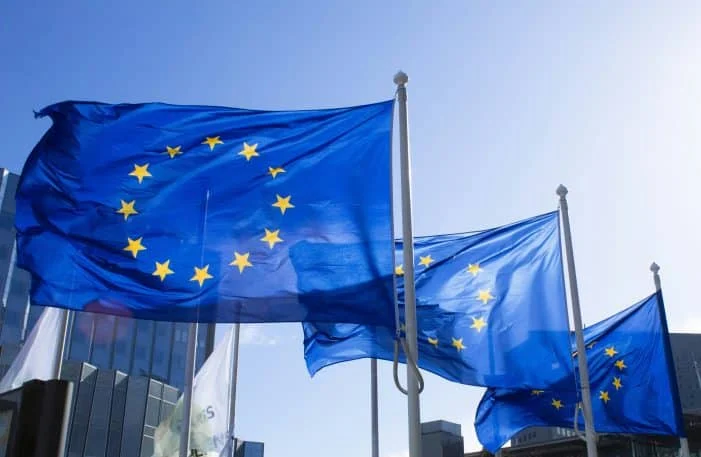
The European Commission has officially launched a comprehensive targeted consultation aimed at assessing the necessity of expanding the Markets in Crypto-Assets (MiCA) regulation to encompass sectors currently operating outside its primary legal boundaries. This strategic move signals a significant shift in the European Union’s approach to digital finance, as policymakers seek to address the rapid evolution of decentralized finance (DeFi), non-fungible tokens (NFTs), crypto-asset staking, lending, prediction markets, and tokenized deposits. By inviting industry stakeholders, financial institutions, and legal experts to provide feedback through August 31, 2026, the Commission is laying the groundwork for what many analysts are already labeling "MiCA 2.0." The initiative reflects a growing concern among regulators that the initial scope of MiCA, while groundbreaking, may have left critical gaps that could jeopardize financial stability and consumer protection as the digital asset ecosystem matures.
The Evolution of the MiCA Framework and Current Regulatory Gaps
When the European Union first proposed MiCA in 2020 as part of its broader Digital Finance Package, the primary objective was to provide legal certainty for a nascent industry and to mitigate the risks associated with stablecoins and centralized exchanges. Following years of negotiation, the regulation was officially adopted in 2023, with its provisions regarding asset-referenced tokens (ARTs) and e-money tokens (EMTs) coming into effect in June 2024, followed by the broader rules for Crypto-Asset Service Providers (CASPs) in December 2024. However, the original text of MiCA included a notable exemption: services provided in a "fully decentralized manner without any intermediary" were largely excluded from the regulation’s requirements.
This exemption was initially intended to foster innovation and acknowledge the technical difficulty of regulating protocols that do not have a centralized legal entity. Since then, however, the DeFi sector has experienced exponential growth and complexity. Market data suggests that the Total Value Locked (TVL) in DeFi protocols has frequently fluctuated between $50 billion and $100 billion globally, representing a significant portion of the total crypto market capitalization. Policymakers now argue that the assumptions underlying the initial exemption may no longer hold true, as many "decentralized" protocols often retain elements of centralized control through governance tokens held by a small group of founders or venture capital investors.
Defining Decentralization: The Regulatory Challenge
A central pillar of the Commission’s consultation is the pursuit of a standardized definition of decentralization. Currently, there is no legal or technical consensus on what constitutes a "fully decentralized" protocol. Regulators are concerned that some projects may use the label of decentralization as a "regulatory shield" while still exercising significant influence over the protocol’s operations, upgrades, and financial flows.
The consultation document explores several criteria for determining the degree of decentralization, including:
- Governance Structures: Whether a protocol is governed by a decentralized autonomous organization (DAO) and the distribution of voting power among participants.
- Operational Control: Whether any single entity has the power to pause the protocol, modify smart contracts, or control user funds.
- Revenue Streams: How fees are collected and distributed, and whether a central entity profits from the protocol’s activity.
The Commission is also weighing the possibility of requiring crypto firms to only connect users to "certified" or "vetted" DeFi applications. This would shift the burden of compliance onto the interface providers and wallet developers, potentially creating a "whitelisted" ecosystem of protocols that meet specific EU safety and transparency standards.
Expanding the Scope: NFTs, Staking, and Lending
Beyond DeFi, the European Commission is revisiting several asset classes and activities that were intentionally omitted or lightly touched upon in the first iteration of MiCA.
Non-Fungible Tokens (NFTs):
Initially, NFTs were largely excluded from MiCA under the premise that they represent unique, non-fractionalized digital collectibles. However, the rise of NFT fractionalization—where a single NFT is broken into smaller parts to be traded like shares—and the use of NFTs as collateral in lending protocols have blurred the lines between digital art and financial instruments. The Commission is now assessing whether certain NFTs should be reclassified as financial instruments under the stricter Markets in Financial Instruments Directive (MiFID II) or if they require a bespoke regulatory regime within MiCA.
Staking and Lending:
Crypto-asset staking and lending have become fundamental components of the digital asset economy, providing users with yields that often exceed traditional banking products. These activities, however, carry inherent risks, including liquidity mismatches and the potential for "bank runs" on protocols. The consultation seeks to determine if staking and lending should be subject to capital requirements, transparency mandates, and consumer disclosure rules similar to those found in traditional retail banking.
Prediction Markets and Perpetual Futures:
The success of decentralized prediction markets, which allow users to bet on the outcome of real-world events, has caught the attention of regulators. These platforms often operate as unlicensed derivatives exchanges. The Commission is investigating whether these activities should fall under the MiFID II framework, which governs traditional derivatives, or if a specialized framework is necessary to manage the unique risks of blockchain-based betting and perpetual futures trading.
Tokenized Deposits and the Role of Traditional Banking
One of the most forward-looking aspects of the consultation involves tokenized deposits. Unlike stablecoins, which are typically issued by non-bank entities and backed by reserves, tokenized deposits are digital representations of traditional bank deposits held on a blockchain. These instruments are being explored by major global banks for cross-border payments, atomic securities settlement, and institutional liquidity management.
The Commission is assessing whether the existing banking framework—specifically the Capital Requirements Directive (CRD) and the Deposit Guarantee Scheme Directive (DGSD)—is sufficient to handle the risks associated with tokenized deposits. Regulators are particularly interested in the "atomic" nature of these assets, which allows for the simultaneous exchange of assets and payment, potentially reducing counterparty risk but introducing new technical vulnerabilities.
Chronology of European Crypto Regulation
The current consultation is part of a multi-year roadmap designed to keep the European Union at the forefront of digital finance regulation:
- September 2020: The European Commission proposes the Digital Finance Package, including the first draft of MiCA.
- April 2023: The European Parliament votes overwhelmingly in favor of adopting MiCA.
- June 2024: Provisions for stablecoins (ARTs and EMTs) enter into force across the EU.
- December 2024: Full implementation of MiCA for all Crypto-Asset Service Providers (CASPs).
- 2025 – Early 2026: Data collection and industry dialogue phase.
- August 31, 2026: Closing date for the current targeted consultation.
- Late 2026 – 2027: Expected legislative proposals for "MiCA 2.0" based on consultation findings.
Industry Reactions and Potential Implications
The announcement of the consultation has drawn mixed reactions from the crypto industry and financial sectors. Advocacy groups like Blockchain for Europe have previously emphasized that overly stringent regulation on DeFi could drive innovation out of the EU and into jurisdictions with more lenient frameworks. They argue that the unique "code-is-law" nature of DeFi requires a fundamentally different regulatory approach than centralized finance.
Conversely, traditional financial institutions have largely welcomed the move. Banking associations in the EU have often called for a "same activity, same risk, same regulation" approach, arguing that if DeFi protocols and tokenized deposits perform the same functions as banks and brokerage firms, they should be subject to the same rigorous oversight to ensure a level playing field.
From a consumer protection standpoint, advocates point to the various collapses in the crypto space over the last several years as evidence that unregulated lending and staking protocols pose a direct threat to retail investors. A certification scheme for smart contracts, as proposed in the consultation, could significantly reduce the prevalence of "rug pulls" and technical exploits that have plagued the DeFi sector.
Analysis: The "Brussels Effect" and Global Standards
The European Commission’s move to expand MiCA is likely to have global ramifications, a phenomenon often referred to as the "Brussels Effect." As the first major jurisdiction to implement a comprehensive crypto framework, the EU’s standards are frequently used as a blueprint by regulators in other regions, including parts of Asia and Latin America.
By tackling the complexities of DeFi and NFTs, the EU is attempting to solve a problem that regulators worldwide are struggling with: how to govern a borderless, permissionless technology within a Westphalian legal system. If the EU successfully creates a workable certification model for DeFi, it could become the global gold standard, forcing developers worldwide to adhere to EU technical standards if they wish to access the European market.
However, the path forward is fraught with technical and political challenges. The consultation’s long timeframe—extending to mid-2026—suggests that the Commission is aware of the difficulty in balancing innovation with safety. The final outcome of this process will likely determine whether the European Union becomes a global hub for decentralized innovation or a strictly controlled environment that prioritizes stability over the disruptive potential of blockchain technology.
As the consultation progresses, the focus will remain on the delicate interplay between code and law. Stakeholders have until August 2026 to shape a regulatory landscape that will define the next decade of digital finance in Europe. For now, the message from Brussels is clear: the era of "regulatory-free" decentralized finance is rapidly coming to a close, replaced by a push for transparency, accountability, and institutional integration.