


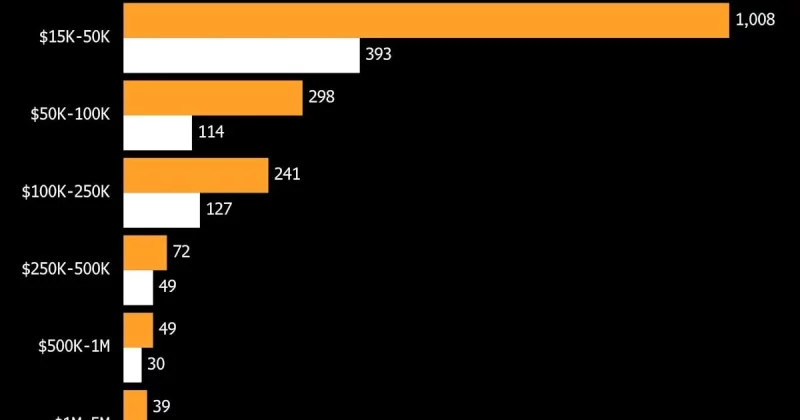
The financial disclosures of a sitting or former head of state often serve as a window into their personal wealth management, but the most recent first-quarter filing from Donald Trump has provided a view that is unprecedented in its scale and frequency. According to the disclosure documents, the former president or his designated financial advisers executed approximately 3,700 transactions within a single three-month period. This volume averages out to roughly 40 trades per business day, representing a total estimated trading volume between $220 million and $750 million. Such a high level of activity, typically reserved for institutional quantitative funds or professional day traders, has sparked intense debate among ethics watchdogs, market analysts, and constitutional scholars regarding the intersection of executive power and private capital.
The bulk of this activity reflects a aggressive pivot within the technology and semiconductor sectors, moving away from established "Magnificent Seven" giants toward specific hardware and infrastructure plays. The disclosure reveals that major positions in Amazon, Meta, and Microsoft were significantly reduced, with individual sell orders ranging from $5 million to $25 million. Simultaneously, the portfolio initiated substantial new positions in Nvidia, Broadcom, and Intel. Many of these new acquisitions involved multiple transactions exceeding $1 million each, signaling a concentrated bet on the semiconductor industry and the ongoing artificial intelligence infrastructure boom.
The Mechanics of a Presidential Portfolio Pivot
While the rotation of assets is a standard practice for sophisticated investors seeking to capture emerging market trends, the context of these specific trades is what draws scrutiny. The first quarter of the year saw a massive surge in semiconductor valuations, driven largely by the global demand for AI-capable chips. For a private citizen, buying Nvidia or Broadcom would be seen as a savvy move to capture the momentum of the AI cycle. However, when the investor in question is a figure who holds, or has held, significant influence over the regulatory and geopolitical environment of these companies, the narrative shifts from market strategy to ethical inquiry.
The semiconductor industry is uniquely sensitive to federal policy. Decisions regarding export controls to China, the allocation of billions of dollars in subsidies through the CHIPS and Science Act, and the negotiation of trade agreements with manufacturing hubs like Taiwan and South Korea are all directed from the executive branch. The disclosure shows that as these policy levers were being debated and adjusted, the Trump portfolio was actively repositioning itself to benefit from the volatility and growth within that specific sector.
Chronology of Key Transactions and Policy Intersections
To understand the gravity of the disclosure, one must examine the timeline of specific trades against the backdrop of political and economic events. The first quarter of the year was marked by significant rhetoric regarding domestic manufacturing and trade protectionism—themes that have long been central to Trump’s platform.
In early January, the portfolio began its divestment from "Old Tech." Large blocks of Microsoft and Meta stock were liquidated as the market reached local highs. By late January and throughout February, the capital was redeployed into the semiconductor space. On February 10, a notable transaction occurred: a stake in Dell Technologies, valued between $1 million and $5 million, was initiated. Shortly thereafter, public statements and endorsements were made regarding the company’s role in the American tech landscape.
This pattern of "trade-then-talk" or "talk-then-trade" is a primary concern for ethics committees. While the filing uses the ambiguous phrasing "President Trump or his advisers" to describe the decision-making process, the lack of a formal, blind trust means the wall between the office and the portfolio remains porous. In a traditional blind trust, an independent trustee manages assets without the owner’s knowledge or input to prevent even the appearance of a conflict of interest. The high frequency of these trades suggests a highly active management style that is inconsistent with the passive nature of a blind trust.
The Information Asymmetry Problem and the STOCK Act
The primary ethical concern cited by market analysts is information asymmetry. A president, or a high-ranking candidate for the office, has access to non-public briefings regarding national security, sensitive trade negotiations, and upcoming regulatory shifts. If trades are made based on this information, it constitutes a form of insider trading that is notoriously difficult to prosecute under existing laws.
For years, members of Congress have faced similar scrutiny. The Stop Trading on Congressional Knowledge (STOCK) Act of 2012 was passed to increase transparency by requiring lawmakers to disclose their financial transactions within 45 days. However, the executive branch operates under a different set of rules. While the President is required to file annual financial disclosures, they are largely exempt from the specific conflict-of-interest statutes that govern other federal employees, under the theory that the President’s duties are so broad that almost any financial holding could technically pose a conflict.
The sheer volume of the Trump filing—3,700 trades—makes manual oversight nearly impossible for the underfunded ethics offices tasked with reviewing them. Analysts note that to properly vet these transactions, one would need to cross-reference each of the 40 daily trades against a minute-by-minute log of presidential meetings, phone calls, and policy drafts. The administrative burden of such a task effectively creates a shield of "complexity" that protects the investor from detailed accountability.
Supporting Data: Market Impact and Liquidity Concerns
The scale of the trading volume, potentially reaching $750 million in a single quarter, introduces a secondary concern: direct market impact. While the large-cap US equity market is highly liquid, concentrated buying or selling of $25 million blocks in specific names can influence price action, particularly if other institutional investors catch wind of the activity.
Data from the disclosure indicates:
- Total Transactions: ~3,700
- Estimated Volume: $220M – $750M
- Top Sectors: Semiconductors, AI Infrastructure, Large-cap Tech
- Notable Divestments: Meta Platforms (estimated $15M reduction), Amazon ($10M reduction)
- Notable Acquisitions: Nvidia (multiple $1M+ entries), Broadcom (new position), Intel (new position)
When a disclosure of this magnitude becomes public, it often creates a "signaling effect." Retail investors may view the moves of a former president—who has access to high-level economic data—as a de facto endorsement of certain stocks. This can lead to a "Trump Bump" for specific tickers, further inflating the value of the positions held in the portfolio and creating a feedback loop that benefits the account holder.
Official Responses and Watchdog Reactions
The release of the disclosure has prompted a wave of reactions from across the political and financial spectrum. Ethics watchdog groups, such as Citizens for Responsibility and Ethics in Washington (CREW), have been vocal in their criticism. In a preliminary analysis, representatives from such organizations argued that the volume of trading is "fundamentally incompatible" with the public interest, suggesting that a sitting or aspiring president should not be a "day trader in chief."
Legal experts have pointed out that while the trades may be legally permissible under the current interpretation of executive exemptions, they violate the spirit of the 1978 Ethics in Government Act. The intent of that legislation was to ensure that public officials do not use their positions for private gain.
On the other side of the debate, supporters and some market libertarians argue that the trades are merely the result of professional wealth management. They contend that as long as the transactions are disclosed according to the law, the "advisers" mentioned in the filing are simply performing their fiduciary duty to grow the portfolio’s value in a volatile market. They point out that many wealthy individuals use high-frequency strategies to hedge against inflation and currency fluctuations.
Broader Implications for Presidential Transparency
The implications of this disclosure extend beyond the immediate financial gains or losses of a single individual. It raises fundamental questions about the adequacy of current financial disclosure laws for the modern era. The 1978 and 2012 frameworks were designed for a world of "buy and hold" investing, not for an era of high-frequency algorithmic trading and instant global market shifts.
If a president can move three-quarters of a billion dollars in and out of sectors that they directly regulate, the public’s trust in the neutrality of federal policy is at risk. This situation may lead to renewed calls for legislative reform, specifically:
- Mandatory Blind Trusts: Requiring all presidential candidates and incumbents to divest from individual stocks and move assets into diversified mutual funds or blind trusts managed by third parties.
- Real-Time Disclosure: Shortening the window for disclosure from months to days, mirroring the requirements for corporate insiders.
- Sector-Specific Prohibitions: Limiting the ability of executive branch members to trade in industries currently receiving federal subsidies or undergoing major regulatory overhauls.
As the tech sector continues to be the primary engine of the American economy, the overlap between Silicon Valley and Pennsylvania Avenue will only intensify. The first-quarter disclosure serves as a case study in the potential for conflict when the person setting the nation’s economic course is also a high-volume participant in the markets they influence. Whether this leads to a shift in policy or remains a footnote in the history of presidential finances will depend on the appetite for reform in a deeply divided political landscape. For now, the 3,700 trades stand as a testament to a new era of high-stakes, high-frequency presidential wealth management.














