This Friday, we examine Ethereum, Ripple, Cardano, Binance Coin, and Hyperliquid in greater detail. The cryptocurrency market, a realm of perpetual flux and significant volatility, continues to capture global attention. As investors and enthusiasts alike scrutinize the performance of major digital assets, understanding the nuances of their recent price action, underlying technological developments, and broader market sentiment becomes paramount. This analysis delves into the week’s movements for Ethereum (ETH), Ripple (XRP), Cardano (ADA), Binance Coin (BNB), and Hyperliquid (HYPE), offering a comprehensive overview of their current standing and potential future trajectories.
Ethereum (ETH): Navigating Resistance Amidst a Macro Downtrend
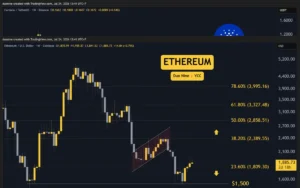
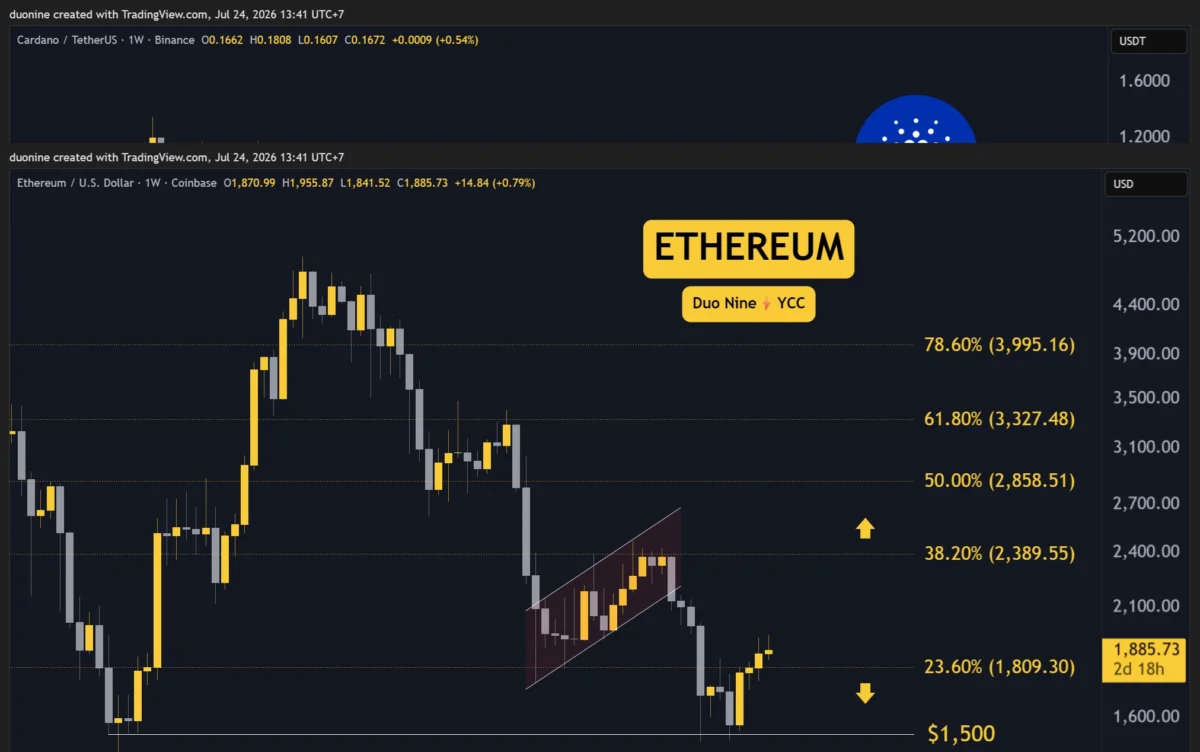
Ethereum, the second-largest cryptocurrency by market capitalization, has experienced a notable upswing of 3% this week. This positive momentum can be attributed to buyers regaining control of price action since late June, a rally that began following a successful test and hold of the critical support level at $1,500. As of this report, ETH is approaching a significant psychological barrier at the $2,000 mark, a level that historically has attracted selling pressure and could potentially trigger a pullback.
The broader context for Ethereum remains a macro downtrend, a situation shared by many cryptocurrencies in the current market cycle. While the recent relief rally is a welcome development for bulls, sustaining this upward momentum beyond the $2,000 resistance presents a considerable challenge. Analysts suggest that a decisive break and subsequent consolidation above $2,000, transforming it into a support level, would be a crucial indicator for ETH to mount a credible challenge against the prevailing downtrend.
The underlying technology of Ethereum continues to evolve, with ongoing development in areas such as scalability solutions and the transition to more energy-efficient consensus mechanisms. These advancements, while not always immediately reflected in short-term price action, are crucial for the long-term viability and adoption of the network. The upcoming Ethereum upgrades, aimed at enhancing transaction speeds and reducing fees, are closely watched by the community as potential catalysts for future growth. However, regulatory uncertainties surrounding digital assets, particularly in major economic blocs, continue to cast a shadow, influencing investor sentiment and market stability.
Ripple (XRP): Consolidation Above Support, Awaiting Momentum
Ripple’s XRP has also seen a modest gain of 3% this week, maintaining its position comfortably above the key support level of $1. The immediate resistance hurdle for XRP is identified at $1.2, and a sustained break above this level is considered necessary for the cryptocurrency to achieve significant and lasting gains.
A concerning trend for XRP has been the steady month-over-month decline in trading volume. This suggests a lack of robust buying interest and diminished momentum, which could impede any major breakout attempts. Market participants appear to have retreated since a notable drop observed in February, and a return of significant trading activity has yet to materialize.
Despite the challenges, the current consolidation phase above the $1 support level is viewed as a positive development by some analysts. However, this period of stability could equally be interpreted as a temporary pause for sellers before they regroup and attempt another challenge at this critical support. The ongoing legal proceedings involving Ripple and the U.S. Securities and Exchange Commission (SEC) continue to be a significant factor influencing XRP’s price and market perception. Any definitive resolution or major development in this case is likely to have a substantial impact on XRP’s future trajectory.
The broader implications of the Ripple-SEC lawsuit extend beyond XRP itself, influencing the regulatory landscape for other digital assets. A favorable outcome for Ripple could pave the way for clearer regulatory frameworks, potentially fostering greater institutional adoption of cryptocurrencies. Conversely, an unfavorable ruling could introduce further uncertainty and stricter oversight.
Cardano (ADA): Signs of a Reversal Amidst Bullish Indicators
Cardano (ADA) has had a positive week, closing 6% higher. This uptick follows a significant development where the price appears to have formed a head and shoulders reversal pattern, with key support holding firm around the $0.15 mark. As long as this support level remains intact, buyers are considered to hold the advantage in the short term.
For a definitive confirmation of a trend reversal and an end to the current macro downtrend, Cardano needs to establish a consistent pattern of higher lows and higher highs. Achieving this would require the price to decisively move beyond the $0.25 resistance level.
Looking ahead, technical indicators on the weekly chart, such as the MACD (Moving Average Convergence Divergence), are exhibiting a bullish bias. This suggests a potential exhaustion of selling pressure, which could empower buyers to regain and sustain control of the market for an extended period. Cardano’s development roadmap, characterized by its peer-reviewed research and phased approach to upgrades, continues to be a focal point for its community. Recent progress in areas like smart contract capabilities and decentralized application (dApp) development are contributing to the network’s growing ecosystem.
The emphasis on academic rigor and formal verification in Cardano’s development process aims to create a more secure and robust blockchain. While this approach may lead to slower development cycles compared to some competitors, it is intended to foster long-term stability and trust. The upcoming "Haskell" era upgrades, focusing on enhancing the network’s capabilities, are eagerly anticipated by ADA holders.
Binance Coin (BNB): Facing Resistance and Regulatory Headwinds
Binance Coin (BNB) has exhibited weakness over the past seven days, failing to register any significant gains. The price is currently encountering strong resistance at the $580 level, a barrier that has effectively capped buyer advances for the past month. Without a clear breakout above this resistance, BNB is likely to continue trading sideways or potentially face downward pressure as sellers seek to push the price lower.
The cryptocurrency has also experienced decreased volatility and trading volume. This subdued market activity could be partially attributed to recent regulatory actions that have impacted Binance’s operations in certain regions, such as the European Union. These regulatory changes have prompted some EU users to seek alternative exchanges, which could translate into reduced demand for the BNB token, a bearish signal for its price.
From a long-term perspective, BNB remains within a downtrend, with no immediate signs indicating an imminent end to this pattern. Traders are advised to monitor the support level at $500, which could be tested in the future before any significant return of buyers. The regulatory environment surrounding centralized cryptocurrency exchanges like Binance is a critical factor influencing BNB’s performance. Increased scrutiny and potential enforcement actions in various jurisdictions could continue to exert pressure on the token.
The utility of BNB within the Binance ecosystem, including trading fee discounts and participation in token sales, remains a key driver of its demand. However, the increasing complexity of global regulations poses a significant challenge to Binance’s expansion plans and, consequently, to the outlook for BNB. The platform’s ability to navigate these regulatory hurdles while continuing to innovate and attract users will be crucial for BNB’s future prospects.
Hyperliquid (HYPE): A Potential Correction on the Horizon
Hyperliquid (HYPE) has seen a flat performance this week, a continuation of a trend that has resulted in a 5% valuation loss over the past month. This lack of upward momentum suggests that the prior uptrend may be waning. The price is currently trading below the $60 mark, a level that is causing concern among market observers and could embolden sellers to push prices even lower.
If Hyperliquid loses its macro uptrend, a more substantial and significant correction could follow. The longer the price remains below $60, the higher the probability of a considerable decline. Key support levels to watch in such a scenario are identified at $56 and $52.
Looking ahead, Hyperliquid experienced a remarkable rally in the first half of the year. However, the latter half of 2026 could potentially see a major correction. Such a downturn might lead Hyperliquid to revisit levels below $50. While this could be a cause for concern for existing holders, it might also present a key buying opportunity for those seeking to enter the market at a more attractive valuation. The performance of Hyperliquid is often influenced by broader market sentiment and the general appetite for high-growth, albeit potentially more speculative, altcoins.
The rapid ascent of HYPE earlier in the year was likely driven by strong market enthusiasm and speculative interest. As the market matures and undergoes cyclical rotations, assets that have experienced parabolic growth often face periods of consolidation or correction. The key for Hyperliquid will be its ability to maintain fundamental growth and adoption that can support its valuation once the speculative fervor subsides. Investors are closely watching for any signs of sustained development and real-world use cases that can underpin its long-term value proposition.
Disclaimer: The information presented in this article is for informational purposes only and does not constitute financial advice. Investing in cryptocurrencies involves significant risk, and individuals should conduct their own thorough research and consult with a qualified financial advisor before making any investment decisions. Past performance is not indicative of future results. The author and publisher are not responsible for any losses incurred as a result of the information provided.