The resurgence of interest in the Non-Fungible Token (NFT) market has brought with it a familiar sense of déjà vu, not just in terms of soaring trading volumes and renewed speculative fervor, but also in the reappearance of prominent figures from previous cycles. Among them is Cole Villemain, known online as ColeThereum, a co-founder of the once-iconic Pudgy Penguins collection, whose return to the forefront of the digital asset space has ignited a fresh wave of discussion and scrutiny. His recent venture, Spritehood, a collection launched on Robinhood Chain, has rapidly amassed over a million dollars in funding within hours, prompting many online commentators, including detailed analyses by accounts like @ProMint_X, to question whether the market has forgotten, or simply chosen to overlook, a documented history of past controversies.
The Swift Rise of Spritehood and Renewed Scrutiny
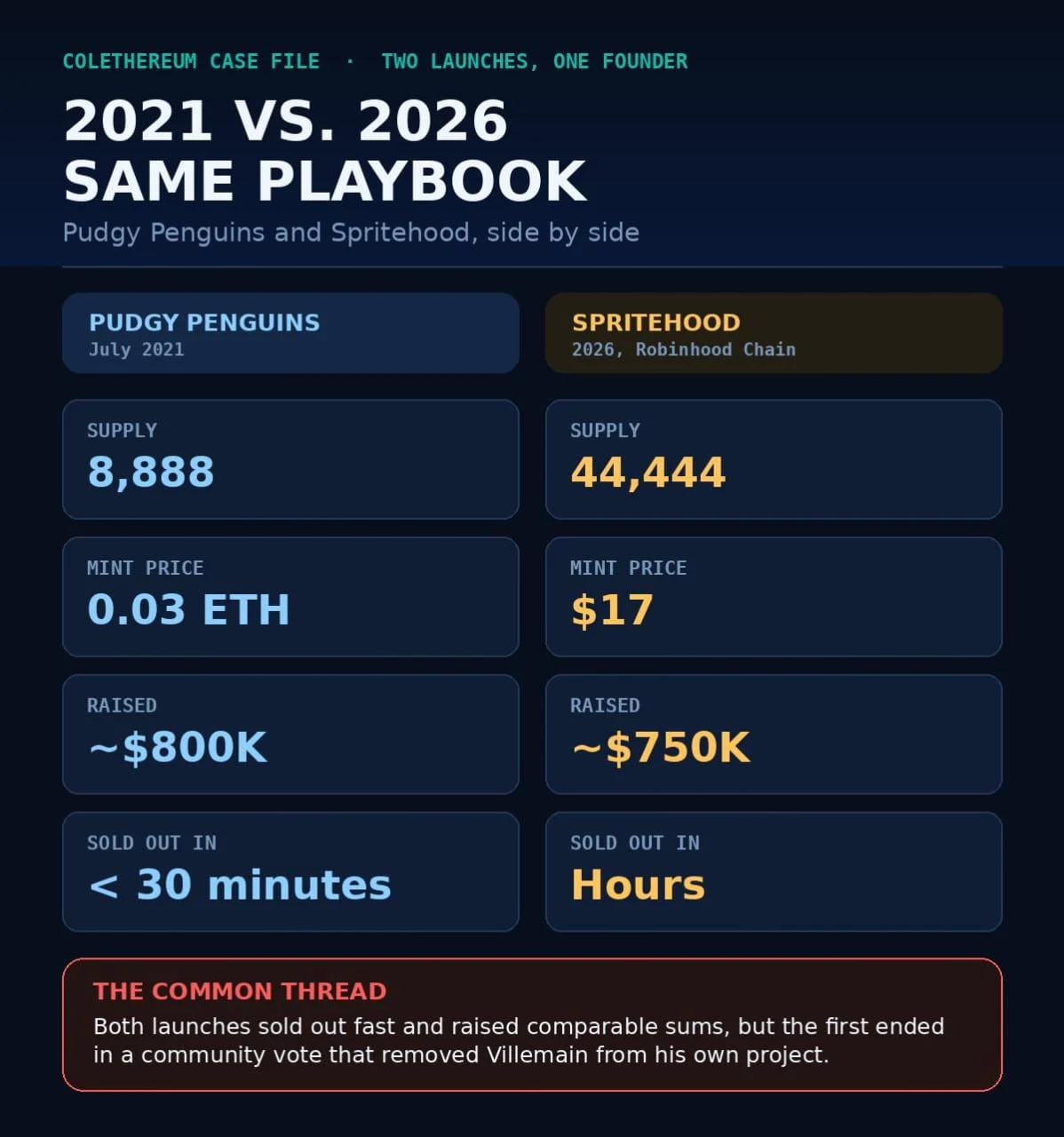
The latest chapter in Villemain’s career began to unfold in 2026, as the broader NFT market showed signs of renewed vitality across various blockchain networks. Under the moniker SuperThereum, a name he adopted in 2023 to signal his intent to re-engage with the NFT ecosystem, Villemain launched Spritehood. This new collection is notably built directly on Robinhood Chain, the blockchain infrastructure associated with the popular trading platform Robinhood. The collection, comprising approximately 44,444 pieces, was offered at a mint price of $17 per NFT. The launch proved to be an immediate financial success, selling out completely and raising an estimated $750,000 within a mere few hours. Reports indicate that the collection subsequently traded at multiples above its initial mint price, underscoring the rapid investor enthusiasm.
This swift financial triumph, however, was immediately met with a torrent of online commentary and skepticism. The speed and scale of the capital raised, particularly given Villemain’s well-documented public record, became the focal point of a burgeoning debate. The central question resonating across social media platforms was whether the market’s current enthusiasm for NFTs was outrunning its collective memory regarding the individuals behind these projects. The re-emergence of Villemain and the immediate success of Spritehood serve as a potent barometer for the current state of NFT sentiment, where rapid capital deployment often precedes comprehensive due diligence.
Early Ventures and the Foundations of Controversy: eBoy Outlet
Long before the advent of NFTs propelled Cole Villemain into the spotlight, his entrepreneurial endeavors included an e-commerce dropshipping operation named eBoy Outlet. Dropshipping, a retail fulfillment method where the seller doesn’t keep products in stock but instead transfers customer orders and shipment details to a third-party vendor, gained significant traction in the mid-2010s due to its low overhead and barrier to entry. While offering an accessible pathway for entrepreneurs, it also presented challenges related to supply chain management, quality control, and customer service, particularly when relying on external suppliers.
eBoy Outlet’s operations, however, were plagued by numerous complaints and negative reviews disseminated across its Facebook and Instagram pages. Dissatisfied customers frequently reported issues ranging from unreceived orders to unfulfilled refund requests. This mounting wave of public criticism eventually attracted the attention of ZachXBT, a prominent on-chain investigator renowned for exposing fraudulent activities and questionable practices within the cryptocurrency and NFT space. Following ZachXBT’s public highlighting of these social media pages, both the Facebook and Instagram profiles for eBoy Outlet were swiftly deleted, adding another layer of suspicion to the venture.
When pressed on these allegations, Villemain offered a defense, characterizing eBoy Outlet as an early-stage dropshipping business he founded with limited capital. He attributed the business’s collapse primarily to the widespread disruptions caused by the COVID-19 pandemic, arguing that he lacked the financial reserves to sustain operations through the ensuing chaos. His explanation posited that the failure was a consequence of unforeseen economic circumstances rather than any deliberate intent to defraud customers. This early episode established a pattern where business failures were met with public accusations, followed by Villemain’s explanations often citing external factors.
The 2021 NFT Boom and ZachXBT’s Initial Investigation
By 2021, the digital landscape had shifted dramatically with the explosion of the NFT market. Cole Villemain, having rebranded himself as ColeThereum, successfully cultivated a substantial following on NFT Twitter. In this nascent and largely unregulated market, influencers and promoters played a crucial role in disseminating information and driving interest in new projects. Many followers placed significant trust in individuals like ColeThereum to guide them toward promising investments.
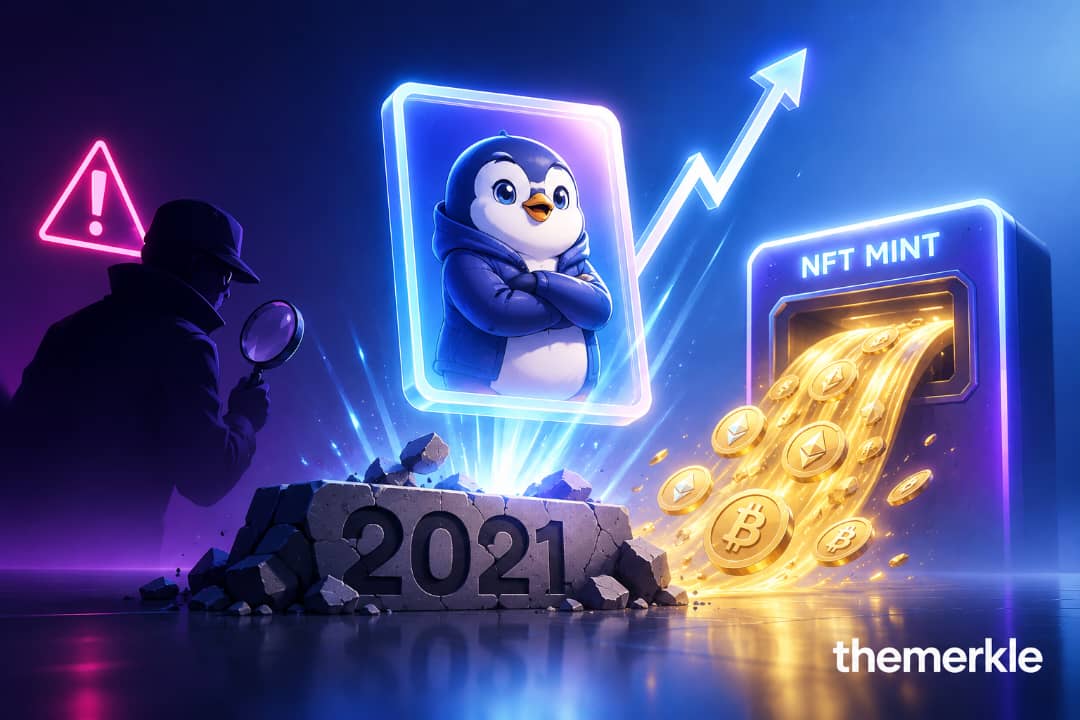
This trust was severely tested on August 12, 2021, when ZachXBT published a widely shared tweet thread that systematically accused Villemain of unethical conduct. The investigation extended beyond the prior eBoy Outlet complaints, delving into practices more directly relevant to the burgeoning NFT ecosystem. A key accusation centered on Villemain’s admission of promoting NFT projects without transparently disclosing that he had received payment for these endorsements. In the fast-paced and speculative environment of early NFTs, undisclosed paid promotions were a significant concern, as they could mislead investors into believing an endorsement was organic rather than a compensated advertisement, potentially influencing market dynamics unfairly.
Villemain did not outright deny the paid-promotion accusation. His response, widely quoted at the time and recently recirculated by accounts like @starplatinum_, was direct: "I share NFT projects. It’s what I do. Was I paid a couple times? Yes. Do I regret those? Yes. Am I going to stop sharing NFT projects I like? No. Am I going to be more careful? Yes." This statement was met with mixed reactions; while some followers accepted it as an acknowledgment and commitment to improvement, others viewed it as confirmation of their existing suspicions about the transparency of certain influencers.
Further allegations surfaced regarding a promised giveaway of a Fame Lady Squad NFT to a follower. Critics claimed that instead of fulfilling the giveaway, Villemain listed the same NFT for sale on OpenSea, a major NFT marketplace. Villemain later countered this, asserting that the giveaway was still planned and that the OpenSea listing had only been made public after a community member questioned the status of the promised gift, suggesting it was a temporary measure or a misunderstanding.
Adding to the list of concerns, Villemain had also launched an NFT collection called My Fucking Pickle prior to Pudgy Penguins. This project was widely described by some as a "cash grab" due to its perceived lack of innovation or long-term utility, a common critique leveled against many quickly-launched NFT collections during the boom phase. ZachXBT’s original investigation identified Villemain as the founder of My Fucking Pickle, a project that, like several others associated with his name over the years, eventually became inactive and was ultimately abandoned. These early incidents painted a picture of a founder with a history of launching projects that, for various reasons, failed to deliver sustained value or meet community expectations.
The Tumultuous Journey of Pudgy Penguins: From Phenomenon to Fallout
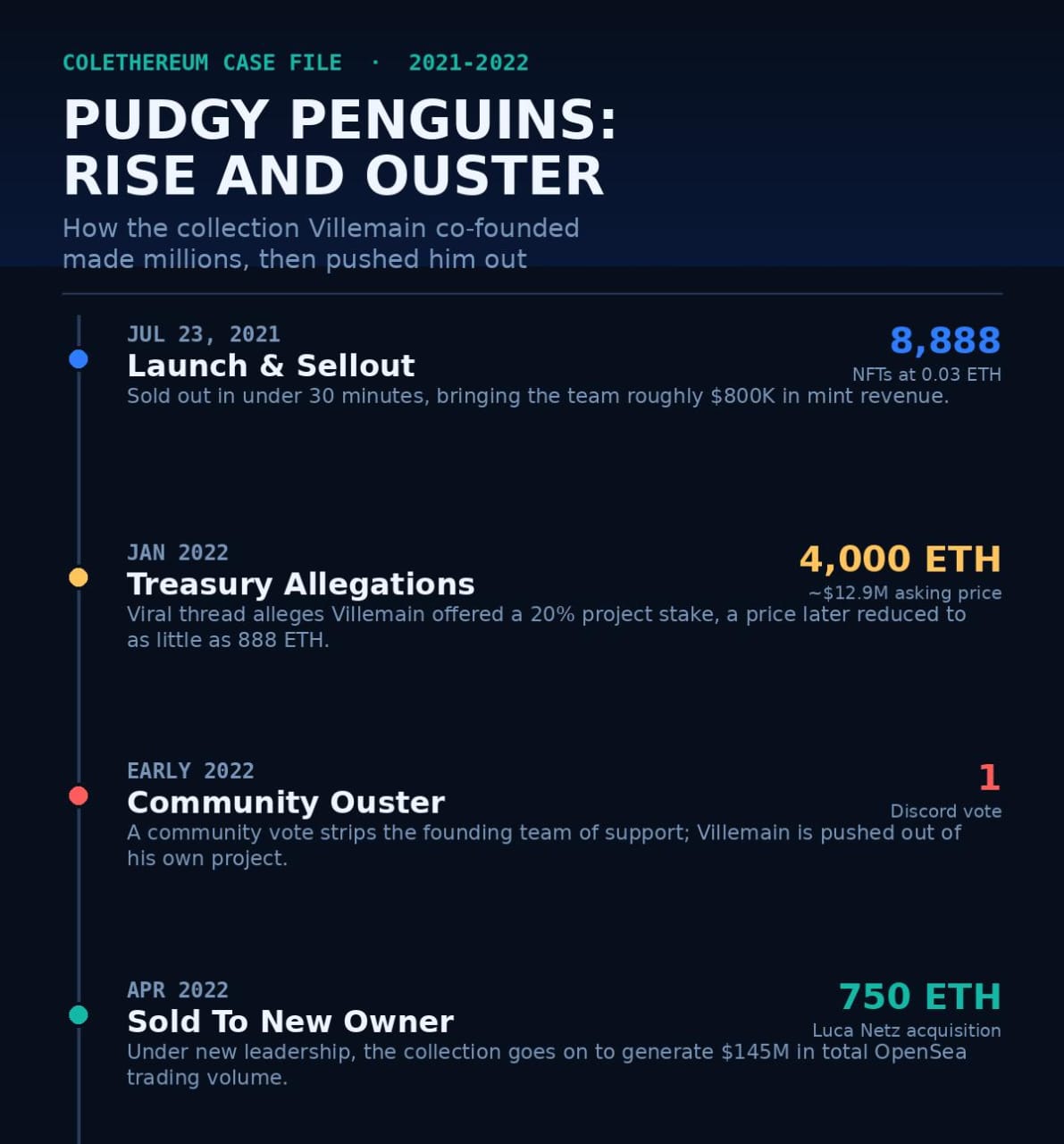
Despite the accumulating controversies, Cole Villemain’s involvement did not prevent Pudgy Penguins from becoming one of the most recognizable and successful NFT collections of its cycle. Launched on July 23, 2021, the collection comprised 8,888 unique NFTs on the Ethereum blockchain, each priced at 0.03 ETH. The project’s initial mint was a resounding success, selling out in less than 30 minutes and generating approximately $800,000 in revenue for the founding team. The collection’s popularity continued to soar, eventually achieving an impressive total trading volume of $145 million on OpenSea, solidifying its status as a blue-chip NFT project.
However, the initial euphoria proved to be short-lived. Within months, the Pudgy Penguins community began to vocalize significant concerns. Holders pointed to a series of unfulfilled roadmap promises, weak execution on announced features, a perceived lack of transparency regarding the management and usage of the project’s treasury funds, and a growing sense of distrust toward the founding team. These issues are particularly detrimental in Web3 projects, where community engagement, trust, and transparent governance are often foundational to long-term success.
By January 2022, these underlying concerns escalated into open accusations. A highly influential and widely shared thread by NFT influencer 9x9x9eth alleged that the Pudgy Penguins founders were actively seeking to sell the project after having purportedly emptied its treasury for personal gain. The thread specifically claimed that Villemain had offered to sell a 20% stake in the project for a staggering 4,000 ETH, which was valued at approximately $12.9 million at the time. As community confidence rapidly eroded, the alleged asking price was reportedly reduced to as little as 888 ETH, highlighting the project’s deteriorating market perception.
The response from the community was decisive and unprecedented. ZachXBT, along with numerous other community members, publicly questioned the integrity and intentions of the original founding team. This collective outrage culminated in a private community vote conducted through Discord. The outcome of this vote was a clear expression of no confidence, effectively leading to the team losing the support of its holders. Through this unique form of decentralized governance, the community effectively pushed Cole Villemain and the original team out of the project they had co-founded.
In the aftermath, some recent online posts and recap threads, including the detailed list published by @ProMint_X, have described the treasury allegations as "confirmed theft." It is crucial to note, however, that while these claims led to significant reputational damage and his ouster from Pudgy Penguins, Cole Villemain has never faced formal legal proceedings or convictions directly related to these specific allegations. The reputational fallout, nonetheless, has remained permanently attached to his public profile within the crypto community.
The story of Pudgy Penguins took a remarkable turn in April 2022 when Luca Netz acquired the project for 750 ETH. Under Netz’s leadership, Pudgy Penguins underwent a significant transformation, evolving into one of the most successful brand-crossover stories in the NFT space. This revival, characterized by strategic partnerships, merchandising, and a renewed focus on community building, stands in stark contrast to the brink of collapse the project faced under its initial leadership, demonstrating the profound impact of effective leadership and community trust in the Web3 ecosystem.
The "SuperThereum" Interlude and the Return with Spritehood
Following his forced departure from Pudgy Penguins, Cole Villemain did not entirely disappear from the Web3 landscape. In 2023, he resurfaced under the new pseudonym "SuperThereum," a clear signal of his intention to return to building and promoting projects within the NFT space. This period served as a quiet prelude to his more significant comeback.
The launch of Spritehood in 2026 marked his full-fledged return, coinciding with a renewed upswing in NFT trading volumes across various new blockchain platforms. The decision to build Spritehood directly on Robinhood Chain, the blockchain infrastructure associated with the widely recognized Robinhood trading platform, is particularly noteworthy. This choice leverages the brand recognition of a mainstream financial platform, potentially attracting a broader audience beyond traditional crypto natives. Villemain’s direct promotion of Spritehood through his own X (formerly Twitter) profile further amplified its reach and immediate impact.
The rapid financial success of Spritehood, raising approximately $750,000 in hours and trading at significant multiples above its mint price, has undeniably been the catalyst for the current online debate. The central question remains whether the market’s enthusiasm is a sign of selective amnesia or a deliberate choice to prioritize potential gains over past controversies.
Divergent Reactions and Broader Market Implications
The online reaction to Cole Villemain’s comeback has largely coalesced into two distinct perspectives. One camp advocates for a belief in second chances and rehabilitation. Proponents of this view argue that individuals deserve an opportunity to rebuild after making mistakes, especially considering the often chaotic, experimental, and largely unregulated nature of the early NFT boom, where numerous founders made questionable decisions or faced unforeseen challenges. This perspective emphasizes personal growth and the potential for redemption, suggesting that past errors should not permanently preclude future endeavors.
The opposing side, however, is significantly less forgiving. This group actively circulates detailed recap threads, systematically linking the eBoy Outlet complaints, the undisclosed paid promotions, and the Pudgy Penguins treasury allegations. They interpret these incidents not as isolated occurrences but as a consistent "pattern rather than a series of unrelated incidents." Their argument posits that the undelivered dropshipping orders, the admitted shilling without disclosure, and the serious treasury allegations, followed by the rapid launch of a new NFT collection that generated substantial capital, collectively paint a picture of recurrent questionable conduct. This sentiment is often sharply articulated, with some posts arguing that the market’s willingness to embrace such figures, and the subsequent poor investment decisions, contribute to keeping the broader crypto market in a "bear cycle" rather than fostering genuine, sustainable growth and innovation.
What truly distinguishes this current comeback is the unprecedented speed and scale of capital involved. The ability to raise approximately $750,000 within hours on a relatively new blockchain, with a founder who has a well-documented public record of past controversies, speaks volumes about the current state of NFT market sentiment. It suggests that, at least for a significant segment of investors, immediate enthusiasm and the potential for quick returns are currently outweighing historical memory and detailed due diligence.
The implications of this phenomenon are multifaceted. It raises critical questions about investor protection in decentralized markets, the effectiveness of community governance in holding founders accountable, and the long-term sustainability of an ecosystem where past controversies may be easily overlooked. The success of Spritehood will ultimately depend on Cole Villemain’s ability to deliver on his promises and build a legitimate, long-term project. However, the market’s initial reaction has already provided a stark reminder of the ongoing tension between rapid innovation, speculative investment, and the enduring challenge of trust and accountability within the ever-evolving world of digital assets. Whether the market remembers the history that came with the current enthusiasm remains a crucial and unfolding question.