


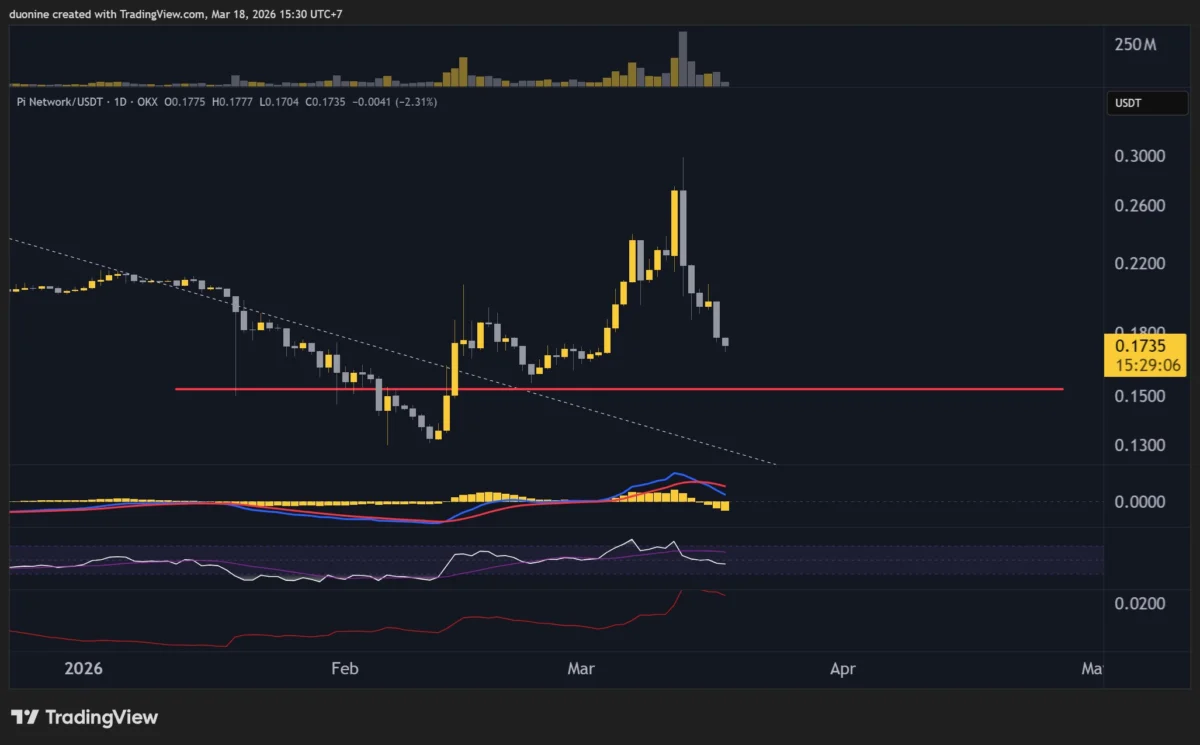
The recent bullish momentum surrounding the PI Network (PI) cryptocurrency has been decisively halted as sellers have returned with considerable force, threatening to erase a significant portion of the gains achieved in the preceding period. The price has plunged below the critical 20-cent mark this week, marking a steep decline of over 40% from its recent peak around 30 cents. This sharp reversal underscores the volatility inherent in the cryptocurrency market and highlights the fragility of upward price movements when faced with sustained selling pressure.
The brief surge above the $0.28 resistance level proved to be a fleeting event, ultimately morphing into what traders term a "bull trap." This phenomenon occurs when an asset’s price temporarily breaks above a resistance level, enticing buyers with the promise of further gains, only to reverse sharply and decline. The failure of PI to sustain its price above $0.28 served as a potent signal of weakness, emboldening sellers and accelerating the downward trajectory.
PI Turns Bearish Amidst Aggressive Selling Pressure
The narrative surrounding PI Network has shifted dramatically from one of optimism to one of caution, driven by the aggressive actions of sellers. The cryptocurrency, which had experienced a notable rally, has now entered a bearish phase. Key support levels identified by market analysts are currently being tested, with $0.15 emerging as a crucial psychological and technical barrier. Conversely, resistance levels at $0.20 and $0.28 now represent significant hurdles that the price must overcome to signal a potential return of bullish sentiment.
The aggressive selling observed in the market has led to a breakdown of the previous uptrend. The price is now characterized by a series of lower highs and lower lows, a classic indicator of a bearish trend. This pattern suggests that each subsequent attempt to rally is met with renewed selling pressure, preventing the price from reaching previous highs and instead pushing it to new lows within the current downtrend.
Sell Volume Spiked, Signaling a Potential Reversal
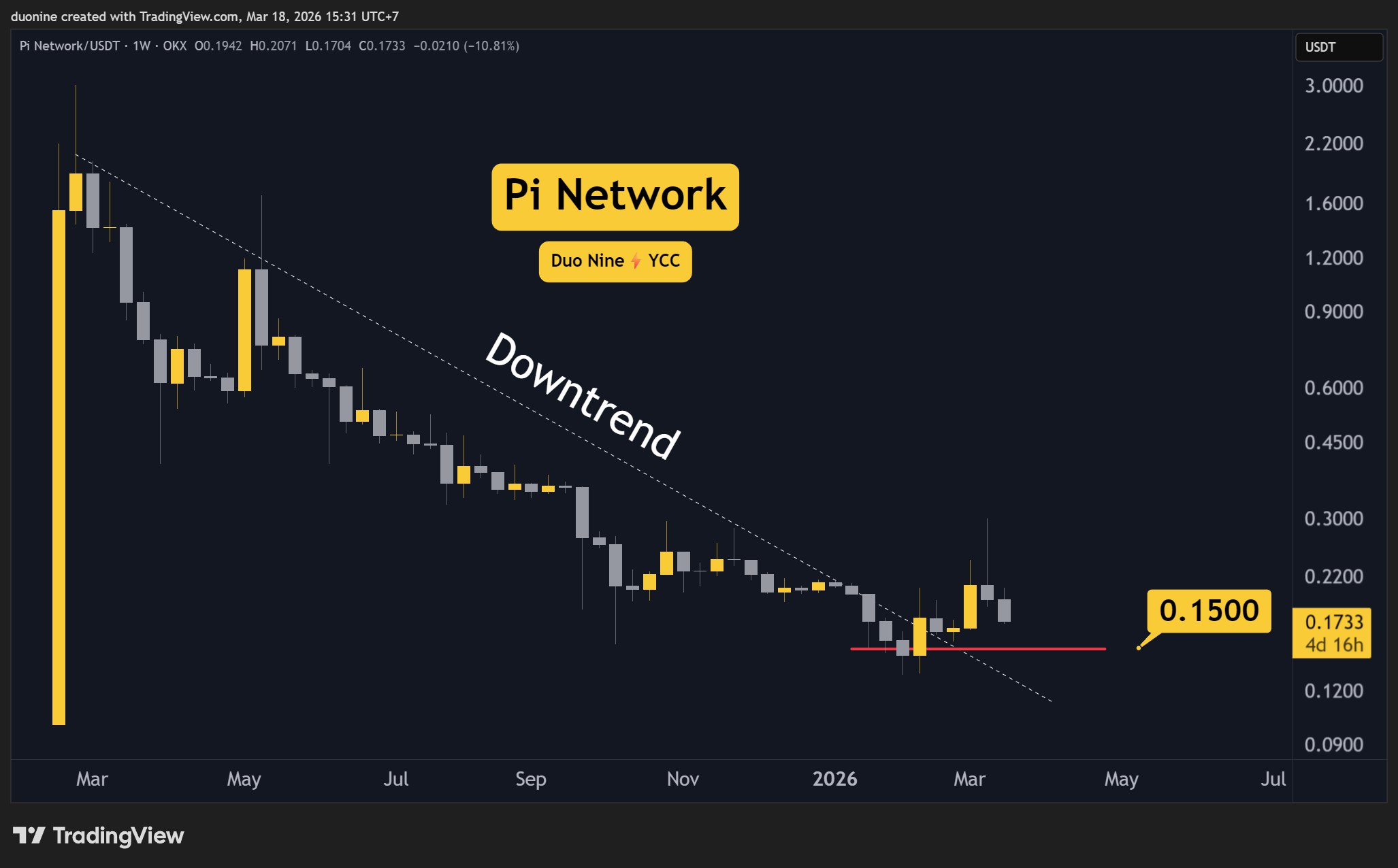
A critical indicator of the impending bearish turn was the significant spike in sell volume during the recent rally. This surge in selling activity often precedes a reversal, as it suggests that a large number of holders are looking to exit their positions, potentially overwhelming buying demand. Following this spike in sell volume, the price has exhibited a clear downtrend, marked by lower highs and lower lows.
Market analysts are closely watching the $0.15 support level. This level is considered the most likely point at which the current downtrend might find a bottom. However, the significance of this support cannot be overstated. A failure to hold at $0.15 would have severe implications, potentially negating all recent gains and opening the door for further price depreciation to levels not seen in the current cycle. Traders are advised to monitor this level closely, as its defense or breakdown will provide crucial insights into the future direction of PI.
Daily MACD Turned Bearish, Intensifying Downtrend
Further corroborating the bearish outlook, the daily Moving Average Convergence Divergence (MACD) indicator turned negative last Sunday. The MACD is a widely followed momentum indicator that can signal shifts in trend. A bearish crossover, where the MACD line crosses below the signal line, often precedes a sustained price decline. Since this bearish signal, the downtrend in PI has intensified, with little to suggest an immediate cessation of selling pressure.
The daily MACD histogram, which represents the difference between the MACD line and the signal line, has also been making lower lows. This reinforces the bearish momentum. For a potential bullish reversal to emerge, traders will be looking for the MACD histogram to cease making lower lows. Such a development could indicate that selling momentum is waning and that buyers may be preparing to re-enter the market.
Background and Context: The PI Network Ecosystem
The PI Network is a cryptocurrency project that aims to build a digital currency and smart contract platform accessible to everyone. Launched in 2019, PI Network has garnered a substantial user base through its mobile mining application, which allows users to "mine" PI coins without requiring significant technical expertise or computational power. The project emphasizes community building and aims to create a decentralized ecosystem where PI can be used for transactions and within various applications.
However, the PI token has faced scrutiny and skepticism due to its extended development phase and the lack of official listing on major cryptocurrency exchanges for a significant period. While the project has a large number of users who have accumulated PI, the token’s actual market value and liquidity have been subjects of debate. The recent price action, albeit on a less liquid market or through peer-to-peer trading, reflects the ongoing dynamics of supply and demand within the PI community and among early adopters.
Market Dynamics and Investor Sentiment
The current bearish sentiment surrounding PI can be attributed to several factors. Firstly, the broader cryptocurrency market has experienced a period of correction, with many altcoins following Bitcoin’s lead. Secondly, the failure to break through significant resistance levels suggests that the buying conviction among investors may be weakening. The "bull trap" scenario is a common occurrence in volatile markets and can lead to significant losses for traders who are caught on the wrong side of the trade.
The aggressive selling observed indicates that a considerable number of holders are likely seeking to de-risk their portfolios or take profits after the previous rally. This outflow of capital puts downward pressure on the price. The key challenge for PI bulls now is to stem the tide of selling and find a level where demand can absorb the available supply.
Potential Implications and Future Outlook
The immediate future for PI appears challenging, with the $0.15 support level being a critical point to watch. If this level fails, the price could fall significantly further, potentially discouraging new investment and leading to a prolonged period of low prices. The success of PI in the long term will depend on its ability to deliver on its development roadmap, foster a robust ecosystem, and gain wider adoption and liquidity.
For existing PI holders, the current market conditions necessitate a cautious approach. Understanding key support and resistance levels, as well as monitoring technical indicators like the MACD, can help in making informed decisions. The eventual recovery of PI, if it occurs, will likely be driven by renewed buying interest, positive project developments, and a more favorable broader market sentiment. Until then, the prevailing trend suggests a period of consolidation or further downside risk.
The coming days and weeks will be crucial for PI. A successful defense of the $0.15 support could pave the way for a gradual recovery, potentially testing the $0.20 resistance once more. However, a breach of this support would signal a significant setback, requiring a reassessment of the project’s short-term prospects. Investors and enthusiasts alike will be closely observing the market’s reaction to these key price levels to gauge the next phase of PI’s journey.
The current price action of PI Network highlights the inherent risks and rewards of participating in the cryptocurrency market. While the project has built a considerable community, its valuation and price discovery mechanisms are still evolving. The aggressive sell-off serves as a stark reminder that even with a large user base, market sentiment and technical factors play a pivotal role in determining short-term price movements. The resilience of the $0.15 support level will be a key determinant in whether PI can regain its footing or faces a more extended period of bearish pressure.














