


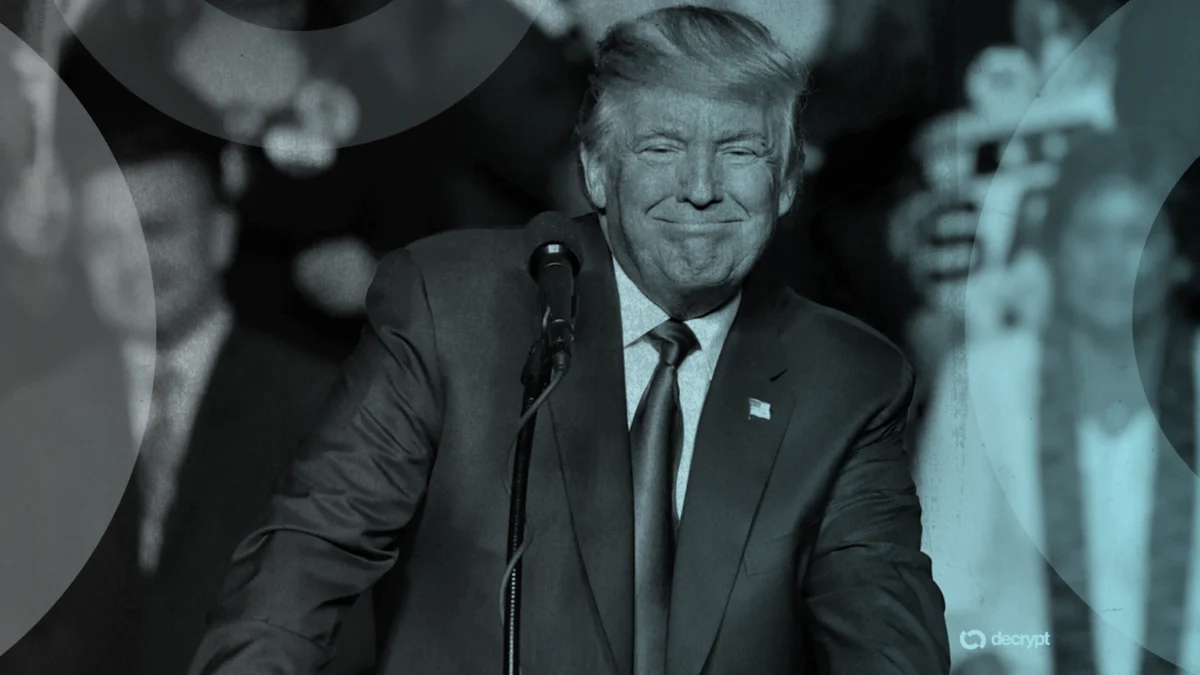
Donald Trump’s social media enterprise, Trump Media & Technology Group (TMTG), the parent company behind Truth Social, has officially announced the withdrawal of its applications for both a Bitcoin exchange-traded fund (ETF) and a Bitcoin-Ethereum ETF. This strategic reversal signals an abandonment of its initial plans to enter the burgeoning cryptocurrency investment product market, as outlined in a recent filing with the U.S. Securities and Exchange Commission (SEC). The firm stated concisely in its submission that "The Company has determined to withdraw the Registration Statement and not to pursue the public offering at this time," indicating a significant pivot in its approach to digital asset offerings.
Official Rationale: A Shift Towards the ’40 Act
The stated reason for TMTG’s withdrawal centers on a strategic re-evaluation of its regulatory approach. Steve Neamtz, president of Yorkville America, which serves as the sponsor and investment advisor for Truth Social’s planned funds, articulated this shift in a public statement. Neamtz emphasized that the decision was made to allow for greater flexibility in product development, asserting, "Our focus has always been on delivering the right strategies through the right structures." He elaborated on the advantages of adopting a different regulatory framework, noting that "the ’40 Act structure allows us to bring more differentiated investment strategies to our investors that are not possible under the ’33 Act framework."
This distinction between the ’33 Act and the ’40 Act is crucial for understanding TMTG’s stated rationale. The Securities Act of 1933 (’33 Act) primarily governs the initial public offering (IPO) and subsequent sale of securities, focusing on robust disclosure requirements to protect investors. Many traditional exchange-traded products (ETPs), including the spot Bitcoin ETFs that have recently gained approval, operate under this framework. In contrast, the Investment Company Act of 1940 (’40 Act) provides a more comprehensive regulatory structure for investment companies, such as mutual funds and a broader range of ETFs. Products registered under the ’40 Act typically offer enhanced investor protections, including requirements for independent boards of directors, regular reporting, and specific operational guidelines designed to safeguard fund assets and shareholder interests. By shifting towards a ’40 Act structure, TMTG and Yorkville America might be signaling an intent to launch more complex or actively managed digital asset products that could benefit from the broader scope and investor-centric provisions of the ’40 Act. This could potentially include funds that incorporate derivatives, leverage, or actively manage portfolios beyond simple spot exposure, which are often more challenging to structure under the ’33 Act.
Analyst Perspectives: Competition and Market Dynamics
While TMTG cited a regulatory strategy shift, market analysts offer a potentially more pragmatic interpretation of the withdrawal. James Seyffart, a prominent Bloomberg Research Analyst specializing in ETFs, voiced his skepticism regarding the stated reason. In a widely circulated tweet, Seyffart questioned the novelty of the regulatory distinction, stating, "Reasoning is below in press release. But it doesn’t make a ton of sense to me. Of course a 33 act ETP is different from a 40 act ETF and it has less protections. Anyone in this space knows that. Nothing has changed."
Seyffart’s analysis pointed instead to a "more competitive landscape" as a primary driver for TMTG’s decision. This perspective aligns with the intense competition that has characterized the U.S. spot Bitcoin ETF market since its inception. The entry of major financial institutions and the subsequent "fee war" have significantly altered market dynamics, making it increasingly challenging for new entrants to carve out a substantial market share without a distinct competitive advantage.
The Intensifying Spot Bitcoin ETF Landscape
The U.S. spot Bitcoin ETF market has experienced unprecedented growth and competition since the SEC granted approval for the first products in January 2024. This regulatory landmark opened the floodgates for institutional and retail investors to gain exposure to Bitcoin through regulated, traditional investment vehicles, sparking one of the most successful ETF launches in history. According to data from SoSoValue, the market has attracted an impressive $57.4 billion in cumulative inflows since its inception, demonstrating robust investor appetite for digital assets.
This rapid expansion has, however, led to fierce competition, particularly in terms of expense ratios. Major financial players, including BlackRock, Fidelity, and Grayscale, quickly moved to capture market share, often by undercutting each other on fees. BlackRock’s iShares Bitcoin Trust (IBIT) and Fidelity’s Wise Origin Bitcoin Fund (FBTC), for instance, launched with competitive expense ratios of 25 basis points (0.25%). Grayscale’s converted Bitcoin Mini Trust (BTC) followed suit with a 15 basis point fee, signaling a clear trend toward lower costs for investors.
The competitive landscape further intensified with the entry of Morgan Stanley. Its Morgan Stanley Bitcoin Trust (MSBT), which launched in April 2026 (as per the original article’s timeline), quickly became a significant disruptor. MSBT has already accumulated a substantial $266.72 million in total net assets in a relatively short period. A key factor in its rapid success is its market-leading annual expense ratio of 0.14%, which significantly undercuts most established competitors. This aggressive pricing strategy by a major institutional player like Morgan Stanley sets a new benchmark for affordability in the spot Bitcoin ETF space, making it exceptionally challenging for new entrants like TMTG to attract capital without offering equally, if not more, compelling terms.
For a company like TMTG, which is relatively new to the financial services sector and does not possess the established distribution networks or brand recognition of traditional asset managers, competing in such a cutthroat environment would require substantial investment in marketing and potentially operating at very thin margins. This intense pressure from well-capitalized and experienced financial giants likely played a significant role in TMTG’s decision to reconsider its direct entry into this specific market segment.
Trump Media & Technology Group’s Broader Forays into Crypto
TMTG’s aborted ETF plans are not an isolated incident but rather the latest chapter in a series of ventures by the Trump family and associated entities into the volatile world of cryptocurrencies and digital assets. These engagements underscore a growing, albeit sometimes controversial, connection between prominent political figures and the emerging digital economy.
Among the most notable crypto-related endeavors linked to Donald Trump are the highly publicized Trump-themed NFT (Non-Fungible Token) collections. These digital collectibles, often featuring stylized images of the former president, have generated significant media attention and, according to various financial disclosures, substantial earnings for Trump himself. The collections have seen fluctuating market interest, reflecting the broader volatility of the NFT market and the polarizing nature of their subject matter.
Beyond NFTs, the digital asset ecosystem has also seen the emergence of the TRUMP meme coin. While not directly issued by TMTG or Donald Trump, meme coins often derive their value and popularity from cultural phenomena, internet trends, or, in this case, political figures. The TRUMP meme coin, like many in its category, has experienced extreme price swings, indicative of the speculative nature of such assets.
Another significant initiative is the World Liberty Financial DeFi platform. While details surrounding its full operational scope have been somewhat opaque, this decentralized finance (DeFi) project is another indication of the Trump family’s exploration of blockchain technology beyond simple digital collectibles. DeFi platforms aim to recreate traditional financial services like lending, borrowing, and trading on a decentralized network, often using cryptocurrencies and smart contracts. These ventures collectively paint a picture of TMTG’s and the Trump family’s interest in diversifying into digital asset categories, leveraging their brand recognition to tap into new markets.
Political and Regulatory Undercurrents
The increasing entanglement of the Trump family with the crypto industry has not escaped the scrutiny of political adversaries and regulatory bodies, transforming into a significant political flashpoint. This intersection of digital assets and high-profile political figures raises questions about potential conflicts of interest, market integrity, and the broader regulatory framework governing cryptocurrencies.
Last year, a partisan report from the House Judiciary Democrats leveled serious accusations against the Trump White House, controversially claiming it operated "the world’s most corrupt crypto startup operation." This report, while politically charged, highlighted concerns among some lawmakers regarding the ethical implications of public figures engaging in cryptocurrency ventures, especially when those figures might influence policy or regulation related to the sector. The report’s timing and content underscored a growing partisan divide on how to approach and regulate the nascent crypto industry.
More recently, in the lead-up to the withdrawal of TMTG’s ETF applications, Democratic Senators attempted to introduce dozens of amendments to a proposed crypto market structure bill. These amendments were notably aimed at limiting crypto-related ventures linked to the president and his family, and even referenced figures like Jeffrey Epstein in some contexts, signaling an intent to impose stricter ethical guidelines and prevent perceived undue influence or conflicts of interest. The "Clarity Act" amendments, as they were sometimes referred to, sought to enhance transparency and accountability within the crypto space, particularly concerning individuals with political power.
These legislative and investigative efforts reflect a broader concern among some policymakers that the rapid growth and relatively unregulated nature of parts of the crypto market could create opportunities for illicit activities, market manipulation, or unethical financial dealings, especially when connected to individuals holding or seeking public office. The scrutiny surrounding Trump’s crypto ties is thus part of a larger debate about how to integrate digital assets into the mainstream financial system responsibly while safeguarding against potential abuses.
Implications and Future Outlook
The withdrawal of TMTG’s Bitcoin and Bitcoin-Ethereum ETF applications marks a significant moment for the company and the broader crypto investment landscape. For TMTG, it represents a recalibration of its digital asset strategy, suggesting a potential pivot towards more complex or niche investment products under the ’40 Act, or perhaps a temporary retreat from the highly competitive spot ETF market altogether. The decision could also be influenced by TMTG’s broader financial performance and its recent public listing, which has brought increased scrutiny on its business diversification efforts.
For the crypto ETF market, TMTG’s withdrawal reinforces the formidable barriers to entry, particularly for firms without deep financial services experience or a willingness to engage in aggressive fee competition. The success of products like Morgan Stanley’s MSBT and the continued dominance of BlackRock and Fidelity underscore that market leadership requires not only innovative products but also unparalleled scale, distribution, and cost-efficiency.
The political dimension of Trump’s crypto ventures will undoubtedly continue to be a subject of intense debate, especially as the U.S. heads into another election cycle. The scrutiny from House Democrats and Senators indicates a persistent desire among some lawmakers to establish clearer ethical boundaries and regulatory frameworks for public figures involved in the digital asset space. This ongoing political discourse could shape future legislation and influence how readily other high-profile individuals or entities might enter the crypto market.
Ultimately, TMTG’s decision highlights the complex interplay of market forces, regulatory considerations, and political pressures that define the evolving digital asset economy. While the immediate plans for a Bitcoin and Bitcoin-Ethereum ETF have been shelved, the underlying interest in leveraging the Trump brand within the crypto sphere is likely to persist, albeit potentially through different avenues and structures in the future. The episode serves as a clear reminder that success in the competitive and politically charged crypto landscape demands adaptability, strategic foresight, and a keen awareness of both market dynamics and regulatory realities.














