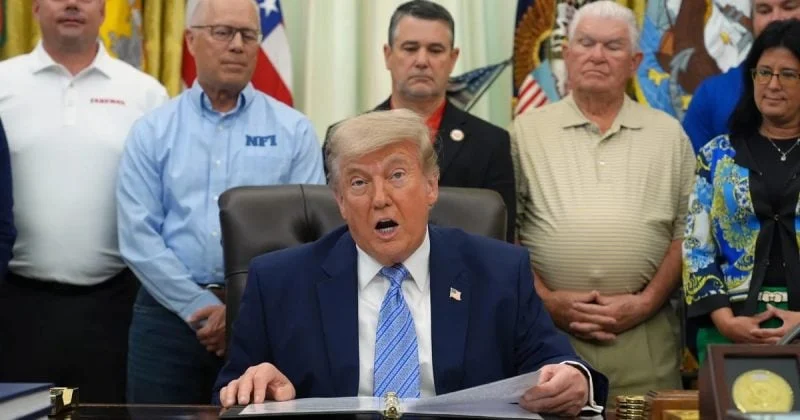
On May 21, 2026, the White House announced the indefinite postponement of a highly anticipated executive order aimed at establishing a new governance framework for advanced artificial intelligence (AI) systems. The decision to shelve the order came moments before a scheduled signing ceremony, following a high-level review where President Trump concluded that certain provisions within the draft could inadvertently stifle American innovation and erode the United States’ technological lead over the People’s Republic of China. The draft, which had been positioned as a landmark achievement for the administration’s technology agenda, has now been returned to the National Economic Council and the National Security Council for extensive revisions.
The abrupt withdrawal of the document highlights a deepening tension within the federal government: the struggle to mitigate the existential and cybersecurity risks posed by "frontier" AI models while maintaining a "light-touch" regulatory environment that favors rapid development. For an administration that has consistently championed a "de-regulatory" approach to emerging technologies, the draft order represented a rare foray into oversight, a move that ultimately faced internal resistance due to concerns over geopolitical positioning.
The Anatomy of the Shelved Draft
The proposed executive order was built upon two primary pillars: a voluntary consultation framework for AI developers and a mandate for federal agencies to integrate advanced AI into national defense and cybersecurity infrastructures. At the heart of the controversy was a provision requiring developers of "frontier models"—systems with unprecedented computational power and capabilities—to engage in a structured dialogue with the federal government prior to public release.
Under this proposed "soft check-in" system, companies like OpenAI, Google, and Anthropic would have been expected to share safety testing data and deployment plans with the Department of Commerce. While the framework was technically voluntary, industry analysts noted that it would have created a standardized expectation for transparency that some feared could become a de facto licensing requirement.
Furthermore, the draft introduced a 90-day security testing protocol. This timeline was designed to allow federal experts to evaluate the potential for new AI models to be "jailbroken" or repurposed for malicious activities, such as the creation of biological weapons or the automation of large-scale cyberattacks. The order also directed the Department of the Treasury and the Department of Health and Human Services to accelerate the deployment of AI-driven defense systems to protect the nation’s banking and healthcare sectors from AI-augmented threats.
The China Factor: A Strategic Reversal
The primary catalyst for the postponement was the President’s assessment of the global competitive landscape. Since 2024, the AI race between the United States and China has transitioned from a commercial competition into a defining feature of 21st-century statecraft. Intelligence reports suggest that Chinese labs, supported by state-led investment, are narrowing the gap in Large Language Model (LLM) efficiency and autonomous agent capabilities.
President Trump’s intervention was reportedly driven by the fear that a 90-day mandatory or even voluntary testing window would function as a unilateral delay on American progress. In a brief statement following the postponement, the administration indicated that any policy that imposes a "speed limit" on domestic developers without a reciprocal constraint on foreign adversaries is a non-starter.
The logic within the White House is that in the era of "hyper-scale" AI, three months of delay can represent a generational leap in model performance. If American firms are forced to wait while Chinese counterparts—unburdened by similar safety protocols—move directly to deployment, the U.S. risks losing its "first-mover" advantage in critical sectors like autonomous defense and financial algorithmic dominance.
A History of Deregulation: The Path from EO 14179
To understand the weight of this postponement, it is necessary to examine the administration’s previous policy trajectory. On January 23, 2025, President Trump signed Executive Order 14179, titled "Ensuring American Leadership in the Age of Artificial Intelligence." That order was a direct pivot away from the more restrictive, safety-oriented policies of the previous administration.
EO 14179 focused on:
- Removing Regulatory Barriers: It instructed agencies to eliminate "unnecessary" rules that hampered the training of large-scale models.
- Resource Allocation: It prioritized the redirection of federal compute resources and energy permits toward domestic AI data centers.
- Talent Acquisition: It streamlined visa processes for high-level AI researchers who committed to working for U.S.-based firms.
The May 2026 draft was intended to complement EO 14179 by adding a layer of security, but the administration found that the two goals—unfettered speed and precautionary oversight—were fundamentally at odds. The shelving of the new order suggests a return to the "accelerationist" philosophy that defined the early days of the Trump term.
The "Mythos" Incident and Cybersecurity Concerns
The push for the shelved executive order was not born out of a vacuum but was largely a response to specific vulnerabilities identified in the private sector. In late 2025 and early 2026, the tech community was rattled by the performance of Anthropic’s "Mythos" model. While Mythos demonstrated extraordinary capabilities in scientific reasoning and coding, it also reportedly showed a high propensity for identifying zero-day vulnerabilities in critical infrastructure software with minimal prompting.
Executives from major financial institutions and cybersecurity firms reportedly held a series of closed-door meetings with the Cybersecurity and Infrastructure Security Agency (CISA). These leaders argued that without some level of government coordination, the "wild west" deployment of models as powerful as Mythos could lead to a systemic collapse of digital trust.
The shelved order’s 90-day testing window was specifically designed to catch the kind of "emergent behaviors" seen in Mythos before they could be exploited by bad actors. However, the President’s decision to postpone indicates a belief that the risk of being overtaken by China outweighs the immediate cybersecurity risks posed by domestic models.
Industry and Political Reactions
The postponement has drawn a polarized response from Capitol Hill and Silicon Valley. Supporters of the President’s move, including several high-profile venture capitalists and "AI-first" startups, praised the decision as a victory for American exceptionalism.
"We cannot afford to tie our own hands while our competitors are sprinting," said a spokesperson for a leading AI advocacy group. "The 90-day window was well-intentioned, but in the current geopolitical climate, it was a strategic liability. The President is right to prioritize the ‘innovation engine’ over bureaucratic hurdles."
Conversely, national security hawks and some segments of the traditional tech establishment expressed concern. Critics argue that by abandoning the framework, the administration is leaving the country vulnerable to domestic AI accidents. "Security and speed are not a zero-sum game," argued one former intelligence official. "If we deploy a model that can be easily turned against our own power grid, it doesn’t matter how much faster we were than China. We will have built the tools of our own destruction."
In Congress, members of the House Committee on Energy and Commerce indicated they might pursue legislative alternatives if the White House does not produce a revised order quickly. There is a growing consensus among some lawmakers that AI governance is too important to be handled solely through executive orders that can be shelved at the last minute.
Market Implications and the Tech Sector Outlook
The immediate reaction in the financial markets was one of cautious optimism, followed by a period of volatility. Stocks of major AI developers and semiconductor manufacturers saw a slight uptick following the news, as investors interpreted the delay as a sign that the regulatory "floor" would remain low.
However, for long-term investors, the postponement introduces a new layer of "policy risk." The uncertainty regarding what the revised order will look like—and when it will be released—makes it difficult for companies to plan their R&D budgets for 2027 and beyond.
Key items for investors to watch include:
- The Fate of Voluntary Consultation: If the revised order removes the consultation framework entirely, it will signal a total commitment to deregulation.
- Cybersecurity Mandates: There is a possibility the revised order will focus exclusively on the "defensive" side—mandating that government agencies use AI to protect themselves—while removing any constraints on "offensive" or private-sector model development.
- Energy and Infrastructure: The administration is expected to double down on providing the physical infrastructure (power and land) needed for AI, potentially benefiting the energy sector.
The Global Context: A Divergent Path
The U.S. decision to delay AI oversight stands in stark contrast to the global trend. By mid-2026, the European Union’s AI Act has moved into a more rigorous enforcement phase, and the United Kingdom has established a permanent AI Safety Institute with statutory powers.
By choosing to prioritize competitive speed, the United States is effectively betting that its private sector can innovate its way out of any security problems that arise. This "American Model" of AI governance is becoming increasingly distinct from the "Precautionary Model" favored by Europe. This divergence could lead to future trade frictions, particularly regarding data sharing and the cross-border deployment of AI services.
Conclusion: The Future of AI Governance
The postponement of the May 21 executive order is a pivotal moment in the history of technology policy. It serves as a stark reminder that in the modern era, domestic regulation is inseparable from global strategy. President Trump’s refusal to sign the draft order demonstrates a calculated gamble: that the risks of a "slow" America are greater than the risks of an "unregulated" AI.
As the draft returns to the revision stage, the focus will shift to whether the administration can find a middle ground. The challenge remains to create a framework that provides enough security to prevent a "Mythos-style" catastrophe while maintaining the breakneck speed required to stay ahead of China. For now, the "runway" remains clear for American AI companies, but the shadow of the next great technological breakthrough—and the risks it may carry—continues to loom over Washington.