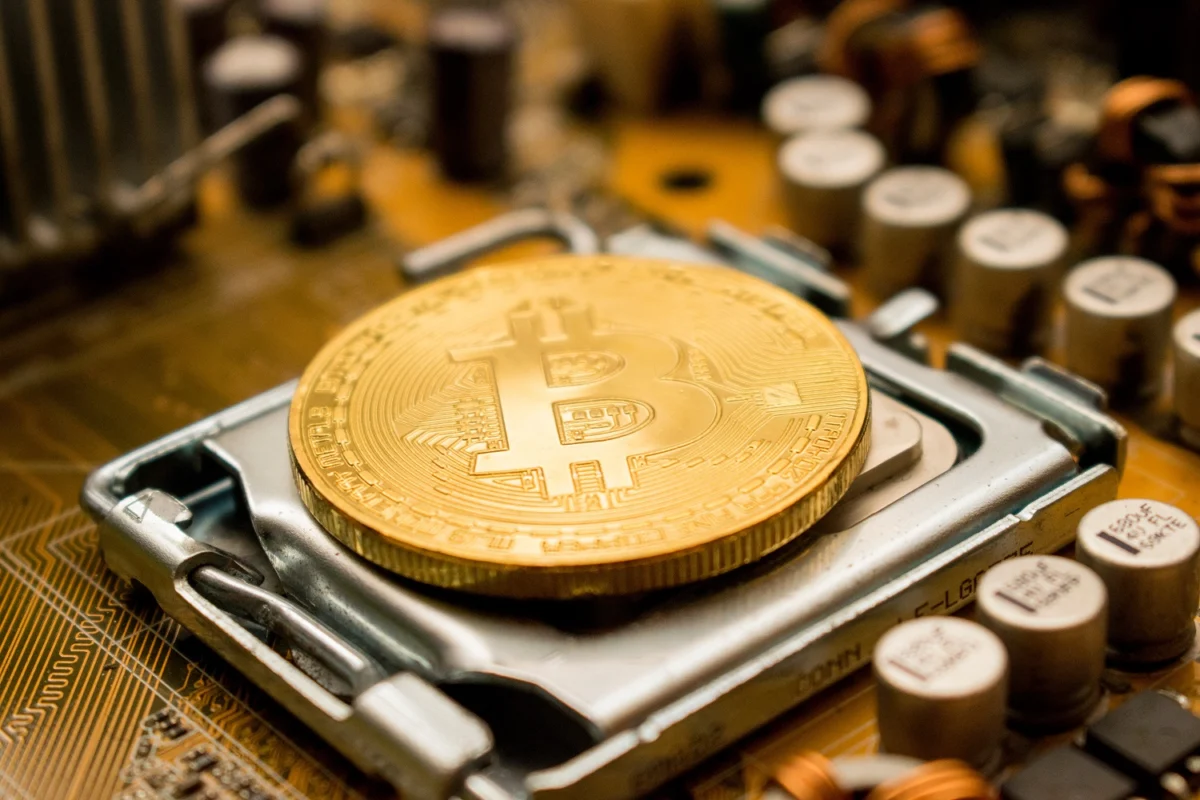
The Russian Association of Crypto Industry and Blockchain (RACIB) has formally launched a strategic initiative designed to transform the Russian Federation into a premier destination for international Bitcoin mining operations. This move comes at a critical juncture in the history of digital assets, as the global hashrate undergoes a massive redistribution following aggressive regulatory prohibitions in China. By leveraging its vast energy reserves, favorable climatic conditions, and existing industrial infrastructure, Russia aims to capture a significant portion of the "Great Hashrate Migration," positioning itself against rivals like the United States and Kazakhstan.
The Great Migration: From China to the World
The catalyst for Russia’s renewed interest in mining is the systemic dismantling of the crypto-mining industry in China. For years, China was the undisputed center of the Bitcoin network, at one point controlling over 65% of the global hashrate. However, beginning in mid-2021, the Chinese State Council and various provincial authorities—including those in Sichuan, Xinjiang, Inner Mongolia, and Anhui—implemented a total ban on mining activities. The crackdown was motivated by a combination of environmental targets, concerns over capital flight, and the preparation for the launch of the digital yuan (eCNY).
As thousands of mining rigs were disconnected from the Chinese power grid, the global Bitcoin hashrate experienced a temporary but historic collapse. This created a vacuum that other nations have been eager to fill. While many miners initially looked to North America or neighboring Kazakhstan, the Russian Association of Crypto Industry and Blockchain (RACIB) believes that Russia offers a superior long-term value proposition for large-scale industrial miners.
Russia’s Strategic Advantages: Energy and Climate
RACIB’s pitch to international investors and displaced miners centers on several unique geographical and economic advantages. Foremost among these is Russia’s status as a global energy powerhouse. Currently ranking among the top five countries in the world for total electricity production, Russia possesses an immense surplus of power. According to RACIB, some Russian regions operate with an energy surplus of up to 50%, providing a stable and inexpensive supply of electricity that is essential for the high-energy demands of Proof-of-Work (PoW) mining.
The accessibility of traditional fuels, such as natural gas and coal, ensures a consistent baseline of power. Furthermore, Russia has begun exploring innovative energy solutions for miners, such as utilizing associated petroleum gas (APG)—a byproduct of oil extraction that is typically flared (burned off). Companies like Gazprom Neft have already piloted projects where this excess gas is converted into electricity to power mobile mining containers on-site at oil fields.
Beyond energy costs, Russia’s northern geography provides a natural solution to one of mining’s greatest overhead expenses: cooling. Bitcoin mining rigs, particularly the latest Application-Specific Integrated Circuit (ASIC) models, generate immense heat. In warmer climates, miners must invest heavily in industrial air conditioning or liquid cooling systems. In the Siberian regions of Russia, the naturally low ambient temperatures allow for passive or low-cost cooling, significantly improving the "Power Usage Effectiveness" (PUE) of mining data centers.
The Green Mining Narrative
As environmental, social, and governance (ESG) criteria become increasingly important to institutional investors, Russia is highlighting its "green" energy credentials. RACIB notes that approximately 40% of Russia’s power grid is supported by eco-friendly or low-carbon sources, including large-scale hydroelectric power and nuclear energy.
Regions such as Irkutsk and Bratsk have become hotspots for mining due to their proximity to massive hydroelectric dams. These facilities provide some of the cheapest and cleanest electricity in the world. By situating mining clusters near these renewable energy sources, Russia can market itself as a sustainable alternative to coal-heavy mining regions, addressing a major criticism of the Bitcoin network.
The Competition: Overtaking the Neighbors
The urgency of the RACIB initiative is partly driven by the rapid rise of Kazakhstan. Recent data indicates that Kazakhstan has overtaken Russia in terms of global mining volume, currently ranking third in the world, while Russia has slipped to fourth. Kazakhstan’s proximity to China made it an early favorite for fleeing miners, but the nation has since faced challenges including power grid instability and shifting tax regulations.
RACIB intends to regain Russia’s competitive edge by fostering "specialized clusters." These are designated zones where the infrastructure for digital economy operations—including high-speed internet, secure data centers, and legal protections—is pre-established. The goal is to create a turnkey environment where foreign mining firms can relocate their hardware and begin operations with minimal friction.
Economic and Regulatory Implications
The push to attract miners is not merely about supporting the Bitcoin network; it is a calculated economic strategy. The Russian government and industry associations view crypto mining as a way to monetize stranded energy assets and diversify the national economy. The influx of foreign investment required to build out these mining clusters could provide a significant boost to regional economies, particularly in less-populated areas where industrial activity has historically been low.
However, the regulatory environment in Russia remains a complex tapestry. While the "On Digital Financial Assets" law passed in 2020 provided some legal definitions for cryptocurrencies, a divide remains between different branches of government. The Bank of Russia has historically maintained a skeptical stance, citing concerns over financial stability and the potential for money laundering. In contrast, the Ministry of Finance and the Ministry of Economic Development have shown a greater willingness to regulate and tax the industry rather than ban it, recognizing the potential for significant tax revenue.
RACIB’s initiative serves as a bridge between these interests, advocating for a framework that treats mining as an industrial activity. By classifying mining as a form of "energy processing" or "computing service," the association hopes to bypass some of the more restrictive financial regulations associated with the trading of digital assets.

Market Context and Bitcoin Price Stability
The launch of this project occurs against a backdrop of significant market volatility. At the time of reporting, Bitcoin (BTC) is trading at approximately $30,700, reflecting a 7% decline over the past week and a 14% drop over the last month. The asset has been trapped in a consolidation range between $30,000 and $35,000 for several weeks, struggling to find the momentum necessary to break through overhead resistance.
For miners, price stagnation combined with a fluctuating hashrate presents a challenging profitability landscape. When the price of Bitcoin drops, the "hash price"—the expected value of a given unit of hashing power—decreases. This makes the low-cost electricity and cooling offered by Russia even more attractive, as miners seek to lower their "break-even" point.
Historically, the Bitcoin network has proven resilient to these shifts. As Chinese miners went offline, the network’s "mining difficulty" adjusted downward, making it easier and more profitable for the miners who remained active. As these displaced miners find new homes in Russia and elsewhere, the hashrate is expected to recover, further securing the network and potentially providing a floor for the asset’s price.
Future Outlook
The success of Russia’s bid to become a global mining superpower will depend on its ability to provide long-term regulatory clarity. International mining firms are often hesitant to commit millions of dollars in hardware to a jurisdiction where the legal status of their operations could change overnight. If RACIB can successfully lobby for a stable, pro-growth regulatory framework, Russia is well-positioned to capitalize on its natural and industrial advantages.
The broader implications of this shift are significant. A more geographically distributed hashrate is generally viewed as a positive development for the decentralization and security of the Bitcoin network. By moving away from a single dominant jurisdiction like China, the network becomes less susceptible to the policy whims of any one government.
As the "Great Hashrate Migration" continues, the competition between nations to host the digital infrastructure of the future is intensifying. With its surplus of "green" energy, vast landmass, and cold climate, Russia is making a compelling case that the future of Bitcoin mining lies in the North. Whether it can overcome its internal regulatory hurdles to surpass Kazakhstan and the United States remains to be seen, but the RACIB initiative marks a definitive step toward making Russia a central pillar of the global digital economy.