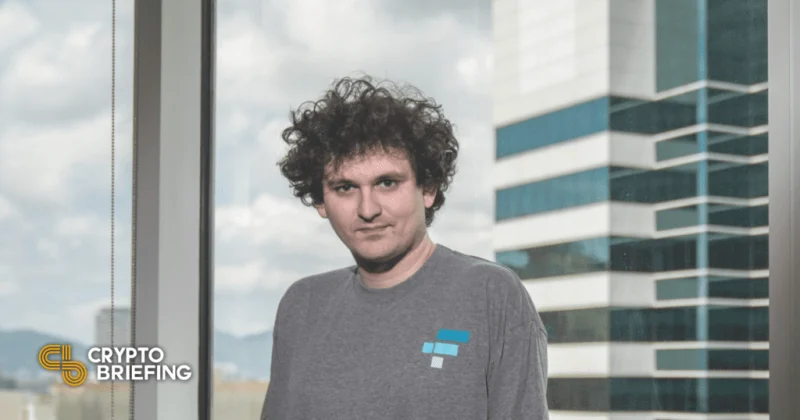
Sam Bankman-Fried, the former billionaire and co-founder of the collapsed cryptocurrency exchange FTX, has formally submitted an application for a presidential pardon to the United States Department of Justice. The request, which appears on the official website of the Justice Department’s Office of the Pardon Attorney, marks a significant escalation in Bankman-Fried’s public and legal campaign to regain his freedom following his conviction for one of the largest financial frauds in American history. According to records first identified by Bloomberg Tax, the 34-year-old petitioner is seeking "pardon after completion of sentence," a designation that usually applies to individuals seeking to restore their civil rights after serving time, though in this context, it is being interpreted as part of a broader push for executive clemency or a commutation of his remaining prison term.
The application comes at a pivotal moment in the American political and legal landscape. Bankman-Fried is currently serving a 25-year federal prison sentence, which was handed down in March 2024 following a high-profile trial in the Southern District of New York. The disgraced mogul’s request arrives during the second term of President Donald Trump, whose administration has demonstrated an expansive and often controversial use of presidential pardon powers. The current administration has already granted relief to several high-profile white-collar defendants, creating a perceived window of opportunity for Bankman-Fried’s legal team and family to argue for his release.
The Context of the FTX Collapse and Criminal Conviction
To understand the weight of Bankman-Fried’s request, one must look back at the catastrophic failure of FTX in November 2022. Once valued at $32 billion, FTX was the world’s second-largest cryptocurrency exchange, marketed as a safe and regulated gateway for retail investors to enter the digital asset space. However, beneath the surface, Bankman-Fried was orchestrating a massive diversion of customer funds to his private hedge fund, Alameda Research.
The collapse was triggered by a "run on the bank" after reports surfaced regarding the precarious balance sheet of Alameda Research, which was heavily padded with FTT, a native token created by FTX. As investors attempted to withdraw their holdings, a multibillion-dollar liquidity gap was revealed. Bankman-Fried was subsequently arrested in the Bahamas and extradited to the United States.
In November 2023, after a month-long trial, a jury found Bankman-Fried guilty on seven counts of fraud, conspiracy, and money laundering. Prosecutors argued that he had stolen approximately $8 billion from customers to fund venture investments, political donations, and a lavish lifestyle in the Caribbean. At his sentencing in March 2024, U.S. District Judge Lewis Kaplan characterized Bankman-Fried’s actions as "brazen" and noted that the defendant showed a "disturbing" lack of remorse, ultimately sentencing him to 300 months in federal custody and ordering an $11 billion forfeiture.
The Argument for Clemency: Repayment and Market Recovery
Central to Bankman-Fried’s push for a pardon is the argument that the financial damage caused by FTX’s collapse has been largely mitigated. In a recent interview with FOX Business conducted from within his federal prison cell, Bankman-Fried reiterated his long-standing claim that the prosecution against him was "unjust" and "misguided."
He pointed toward the ongoing FTX bankruptcy proceedings, led by CEO John J. Ray III, which have benefited significantly from a massive rally in the cryptocurrency markets. As of 2024 and 2025, the bankruptcy estate has recovered billions of dollars in assets, including stakes in AI companies like Anthropic and a portfolio of recovered digital tokens. The estate recently announced a plan to repay nearly all creditors 100% of their allowed claims, plus interest—a rare outcome in large-scale corporate liquidations.
Bankman-Fried’s supporters argue that if the customers are being made whole, the 25-year sentence is disproportionately harsh. However, legal experts and the original prosecution team have countered this narrative, noting that the "repayment" is based on the dollar value of assets at the time of the bankruptcy filing in 2022, when Bitcoin was trading at approximately $16,000. Many customers feel they have still lost significant wealth because they were unable to benefit from the subsequent rise of Bitcoin to over $100,000. Furthermore, Judge Kaplan previously dismissed the "repayment" defense, stating that a bank robber who returns the money after being caught is still a bank robber.
Regrets Over the AI Boom and Technological Evolution
During his recent media appearances, Bankman-Fried has expressed a peculiar blend of remorse and frustration—not necessarily for the crimes committed, but for the technological milestones he is missing while incarcerated. He specifically cited the explosion of Artificial Intelligence (AI) as a missed opportunity for his entrepreneurial career.
"I absolutely want a presidential pardon," Bankman-Fried stated in his FOX Business interview, while acknowledging that the final decision rests solely with the White House. He praised the execution and long-term vision of companies led by Elon Musk, such as SpaceX, and suggested that his own background in effective altruism and technology could have been better utilized in the current AI-driven economy than in a prison cell.
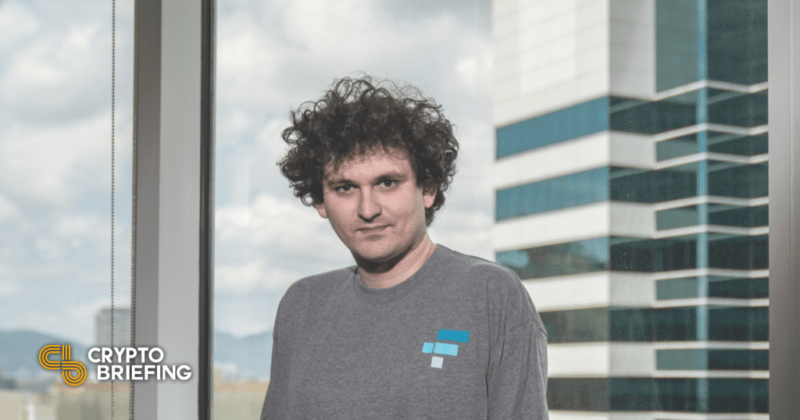
Bankman-Fried’s obsession with AI is not entirely new; before the collapse of FTX, he had invested over $500 million into Anthropic, an AI safety and research company. The appreciation of that specific investment has been a cornerstone of the FTX estate’s ability to repay creditors, a fact that Bankman-Fried frequently highlights to bolster his image as a visionary whose "bad bets" eventually paid off for his victims.
The Political Landscape and Presidential Pardon Power
The formal application for a pardon is a calculated move that aligns with President Donald Trump’s stated philosophy on the justice system. Throughout his political career, Trump has frequently criticized the Department of Justice, often labeling federal prosecutions as "politically motivated" or "weaponized." By framing his own conviction as a product of an overzealous and unfair legal system, Bankman-Fried is appealing to a specific political sentiment that has seen other white-collar criminals receive clemency.
The Trump administration’s second term has seen a flurry of executive actions regarding the federal prison population. While Bankman-Fried’s crime involved billions of dollars, his legal team may be banking on the administration’s desire to "reign in" what they describe as the excesses of the previous administration’s regulatory and prosecutorial reach into the crypto industry.
However, the political optics of pardoning Bankman-Fried remain fraught with risk. The FTX collapse affected millions of retail investors globally, many of whom reside in the United States. A pardon for a figure synonymous with "crypto fraud" could be seen as a betrayal of the administration’s "law and order" messaging, despite the president’s history of granting clemency to individuals convicted of financial crimes.
Chronology of Key Events
The path from crypto-savior to federal prisoner has been remarkably swift for Sam Bankman-Fried. Below is a timeline of the events leading to his current application for a pardon:
- October 2022: FTX is at the height of its power, with Bankman-Fried appearing on magazine covers and testifying before Congress.
- November 2, 2022: CoinDesk publishes a report on Alameda Research’s balance sheet, sparking concerns about insolvency.
- November 11, 2022: FTX and its affiliates file for Chapter 11 bankruptcy; Bankman-Fried resigns as CEO.
- December 12, 2022: Bankman-Fried is arrested in the Bahamas on U.S. criminal charges.
- August 2023: Bankman-Fried’s bail is revoked by Judge Kaplan for alleged witness tampering, and he is sent to the Metropolitan Detention Center (MDC) in Brooklyn.
- October 2023: The criminal trial begins. Former inner-circle members Caroline Ellison, Gary Wang, and Nishad Singh testify against him.
- November 2, 2023: Bankman-Fried is found guilty on all seven counts.
- March 28, 2024: Bankman-Fried is sentenced to 25 years in prison.
- Early 2025: The FTX bankruptcy estate begins the process of returning billions to creditors.
- June 2026: Records reveal a formal application for a presidential pardon has been filed with the DOJ.
Broader Implications for the Crypto Industry
The request for a pardon and the ongoing public discourse surrounding Bankman-Fried have profound implications for the cryptocurrency industry and its relationship with federal regulators. If Bankman-Fried were to receive clemency, it would likely be viewed by critics as a sign that the U.S. is "soft" on financial fraud within the digital asset space. Conversely, his supporters might argue that it represents a necessary correction to an era of "regulation by enforcement."
Furthermore, the case highlights the ongoing debate over the "victimless" nature of financial crimes where assets are eventually recovered. If the precedent is set that full repayment justifies a pardon, it could fundamentally alter how the Department of Justice approaches future white-collar investigations.
The crypto industry itself has largely moved on from Bankman-Fried, focusing instead on the adoption of Spot Bitcoin ETFs and the integration of blockchain technology into mainstream finance. However, the shadow of FTX remains a primary driver for legislative efforts like the Financial Innovation and Technology for the 21st Century Act (FIT21), which aims to provide clearer guardrails for exchanges to prevent the very commingling of funds that led to Bankman-Fried’s downfall.
Current Status of the Application
As of now, the White House has not issued a formal statement regarding Bankman-Fried’s application. The process for a presidential pardon is often lengthy, involving a review by the Pardon Attorney and recommendations from the Deputy Attorney General. However, the President possesses the constitutional authority to bypass these traditional channels and grant a pardon or commutation at any time.
For now, Sam Bankman-Fried remains incarcerated at a federal facility, reportedly spending his time studying emerging technologies and maintaining a rigorous exercise routine. His family, led by his parents Joseph Bankman and Barbara Fried—both of whom are Stanford Law professors—continues to advocate for his release, maintaining that their son never intended to defraud anyone and was simply overwhelmed by a fast-moving market crisis.
Whether the formal application results in a return to society or remains a footnote in the history of the FTX saga will depend on the intersection of legal strategy, political will, and the evolving public perception of one of the most polarizing figures in modern finance. The world of crypto, and the victims of the FTX collapse, wait to see if the ultimate "get out of jail free card" will be played.