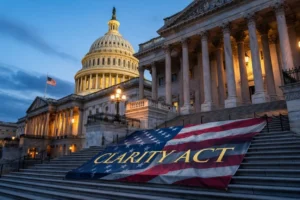
The U.S. Senate has initiated a critical procedural maneuver, taking its first formal step toward a floor vote on the landmark Clarity Act, a legislative proposal poised to reshape the regulatory landscape for cryptocurrencies in the United States. In a move designed to ensure the bill remains a priority, Senate leadership acted early Saturday to schedule a crucial vote for mid-September, specifically targeting Tuesday, September 15, at 2:15 p.m. ET. This development signals a concerted effort by Republican leadership to advance the highly anticipated crypto market-structure bill, despite lingering bipartisan disagreements and a tight legislative calendar.
Senate Majority Leader John Thune formally filed a motion to proceed on H.R. 3633, the House-passed version of the Clarity Act, effectively opening the multi-step cloture process. This complex parliamentary procedure is essential for pushing contentious legislation past potential filibusters, requiring a supermajority of 60 votes to limit debate and bring a bill to a final vote. While the filing occurred too late to secure a vote before senators departed for their extensive August recess, it strategically positions the initial procedural hurdle immediately upon their return. This tactical scheduling underscores the intent to prioritize digital asset legislation as lawmakers reconvene, making it an early agenda item for the fall session. The motion to proceed, while not a vote on the bill’s passage itself, is a powerful signal of Republican leadership’s commitment to seeing the Clarity Act through the Senate.
The Genesis of the Clarity Act: Addressing Regulatory Ambiguity
The Clarity Act represents a significant legislative undertaking aimed at establishing a formal, comprehensive legal framework for the burgeoning cryptocurrency industry within the United States. For years, the digital asset space has operated under a patchwork of existing laws designed for traditional financial instruments, leading to widespread regulatory uncertainty and hindering innovation. The primary objective of the Clarity Act is to delineate clear jurisdictional lines between the U.S. Securities and Exchange Commission (SEC) and the Commodity Futures Trading Commission (CFTC), two federal agencies that have often found themselves at odds over which has primary oversight of various digital assets.
This lack of clarity has been a persistent source of frustration for crypto businesses, investors, and innovators alike. The SEC, under its long-standing interpretation of the Howey Test—a legal precedent used to determine what constitutes an "investment contract" and thus a security—has asserted jurisdiction over a wide array of cryptocurrencies. This approach has led to numerous enforcement actions against crypto firms for allegedly offering unregistered securities. Conversely, the CFTC has generally viewed certain cryptocurrencies, such as Bitcoin and Ethereum, as commodities, focusing its regulatory efforts on derivatives markets involving these assets. The Clarity Act seeks to resolve this ambiguity by largely placing the majority of the cryptocurrency industry under the purview of the CFTC, an agency generally perceived to adopt a more innovation-friendly and principles-based regulatory approach compared to the SEC’s more prescriptive, disclosure-heavy regime.
If enacted, proponents argue that the bill would provide a much-needed boost to the crypto market, instilling greater confidence among traditional financial institutions (TradFi) that have largely remained cautious due to regulatory uncertainty. The ability to operate within clearly defined legal parameters is expected to encourage greater institutional investment, foster product development, and solidify the United States’ position as a leader in the global digital economy. The absence of such clarity has often been cited as a major factor driving crypto innovation and capital offshore, to jurisdictions with more defined regulatory environments.
A Chronology of Legislative Progress and Hurdles
The journey of the Clarity Act (H.R. 3633) through Congress has been marked by a series of significant milestones and persistent challenges.
- Early 2023: The bill, or earlier iterations with similar objectives, began to gain traction in the House of Representatives, reflecting growing bipartisan recognition of the need for dedicated crypto regulation.
- June 2023: H.R. 3633 successfully passed the House of Representatives, a crucial step that sent the legislation to the Senate for consideration. While the exact vote count isn’t detailed in the original brief, its passage indicated a level of cross-party support within the lower chamber.
- May [Year Not Specified, but implied earlier than August]: The Senate Banking Committee reviewed the legislation. Despite its passage out of committee, the vote highlighted the nascent bipartisan divide, with only two Democratic senators supporting the measure at that stage. This early vote foreshadowed the challenges of reaching the 60-vote threshold in the full Senate.
- August [Current Year]: Senate Majority Leader John Thune, recognizing the lack of sufficient bipartisan consensus, made the strategic decision to postpone a potential floor vote on the Clarity Act. This delay was primarily driven by significant Democratic reluctance to advance the bill without further amendments addressing their concerns. Rather than force a vote before the August recess, which would likely have failed, Thune opted to push it to the post-recess calendar, allowing more time for negotiations.
- Saturday, August [Current Year, just before recess]: Thune filed the motion to proceed on H.R. 3633, officially initiating the cloture process. This procedural step, taken on a weekend, underscored the leadership’s determination to keep the bill alive and on track for an early fall vote.
- Tuesday, September 15, 2:15 p.m. ET: This date and time are set for the first critical procedural vote on the motion to proceed. This vote will serve as a significant test of the bill’s viability, requiring 60 senators to agree to move forward with debating the legislation.
Navigating the 60-Vote Threshold: The Cloture Process
The cloture process is a formidable procedural hurdle in the Senate, designed to prevent endless debate—or a filibuster—on controversial legislation. For the Clarity Act, the initial vote on September 15 will determine whether the Senate can even begin formal debate on the bill. Achieving 60 votes (a three-fifths majority of the 100-member Senate) is notoriously difficult, especially for complex and novel legislation like crypto regulation. Republicans, holding a slim majority, will require the support of approximately six Democratic crossovers to reach this critical threshold. As of the latest assessment, this gap has not narrowed since the May committee vote, where only two Democrats lent their support.
The weeks leading up to the September 15th vote are therefore crucial for intensive negotiations. Lawmakers and their staff will be working behind the scenes to iron out the remaining disputes that have stalled the bill’s progress. These sticking points are multifaceted, touching upon core regulatory philosophies, investor protection, national security, and even government ethics.
Key Contentious Issues Hinging on Bipartisan Compromise
The existing divisions over the Clarity Act revolve around several specific and highly sensitive areas:
-
Illicit Finance and Law Enforcement Protections: A primary concern for many Democrats centers on the potential for cryptocurrencies to be exploited for illicit activities, such as money laundering, terrorist financing, and sanctions evasion. Critics argue that placing most digital assets under the CFTC might lead to a less stringent regulatory environment compared to the SEC, potentially creating loopholes that could be exploited by bad actors. Negotiators are seeking to strengthen the bill’s provisions related to Know Your Customer (KYC) and Anti-Money Laundering (AML) requirements, as well as enhancing cooperation with law enforcement agencies like FinCEN. The goal is to strike a balance between fostering innovation and ensuring robust safeguards against financial crime, a delicate compromise often difficult to achieve.
-
The Unresolved Fight Over Stablecoin Yield and Rewards: Stablecoins, cryptocurrencies pegged to a stable asset like the U.S. dollar, have emerged as a significant component of the digital asset ecosystem. The debate around stablecoin yield and rewards concerns whether these offerings should be treated as securities, subject to SEC oversight, or as a different class of financial product. Some argue that offering yield on stablecoin deposits constitutes an investment contract, requiring extensive disclosure and investor protection under securities law. Others contend that treating stablecoins, especially those designed for payments, as securities could stifle their utility and innovation. The implications for systemic financial stability, particularly given the rapid growth of stablecoin markets, also weigh heavily on lawmakers’ minds. Reaching consensus on how to regulate these products, especially regarding consumer protection and market stability, is a major sticking point.
-
Government Ethics Provisions Covering President Donald Trump’s Crypto Holdings: Perhaps the most politically charged aspect of the ongoing negotiations involves the government-ethics provisions related to President Donald Trump’s reported cryptocurrency holdings. The proposed addendum, negotiated with the White House, would reportedly require the President to divest from crypto-related businesses to avoid potential conflicts of interest. The precise nature and extent of these holdings, along with the implications for presidential ethics, have introduced a unique and challenging dimension to the legislative process. The White House has, as of the latest reports, remained silent on the proposed addendum, indicating that an agreement on this sensitive issue is still elusive. The optics of a sitting president holding significant assets in an industry directly impacted by legislation under consideration raise serious questions about transparency and impartiality, making it a critical area for bipartisan resolution.
Statements, Reactions, and Broader Implications
The anticipation surrounding the Clarity Act has generated significant commentary from various stakeholders:
- Industry Advocates: Organizations like the Chamber of Digital Commerce, along with major crypto exchanges and development firms, have largely welcomed the Senate’s procedural step. They consistently emphasize the urgent need for regulatory clarity, arguing that it is essential for the U.S. to maintain its competitive edge in the global digital asset race. Many have expressed optimism that a clear framework will unlock institutional capital and foster responsible innovation.
- Traditional Financial Institutions: While cautious, many traditional banks and financial services firms have indicated that regulatory certainty is a prerequisite for their deeper engagement with digital assets. A clear legal structure would significantly de-risk their entry into the crypto market, potentially leading to new investment products, services, and increased liquidity.
- Democratic Lawmakers (Critical Stance): While some Democrats acknowledge the need for updated regulation, those holding out on the Clarity Act emphasize the paramount importance of robust consumer protection, financial stability, and effective mechanisms to combat illicit finance. They often point to past crypto market volatility and collapses as evidence of insufficient safeguards, advocating for a more stringent approach than what they perceive the current bill offers.
- Republican Lawmakers (Pro-Innovation Stance): Led by figures like Senator Thune, Republicans generally champion the bill as a vital step towards fostering innovation, ensuring U.S. leadership in financial technology, and providing a level playing field for American businesses. They often highlight the economic potential of the digital asset sector and the risks of regulatory inaction driving talent and capital overseas.
- Consumer Advocates: These groups generally underscore the importance of investor education and strong safeguards against fraud, market manipulation, and the potential for systemic risks. They argue that any new framework must prioritize protecting individual investors, especially those new to the complexities of digital assets.
The implications of the Clarity Act extend far beyond the crypto industry itself. For the U.S. regulatory framework, it would represent a landmark redefinition of agency roles, potentially serving as a blueprint for future legislation in rapidly evolving technological sectors. Globally, the passage of a comprehensive U.S. framework could significantly influence international regulatory standards, much like the European Union’s Markets in Crypto-Assets (MiCA) regulation has done. Failure to pass the bill, conversely, risks ceding leadership to other jurisdictions and perpetuating the current state of regulatory confusion, potentially stifling domestic innovation and capital formation.
The Road Ahead: A Race Against the Clock
Should the Clarity Act successfully navigate the formidable 60-vote hurdle in the Senate, it would then face additional procedural steps. If the Senate passes the bill with amendments, it would necessitate a return to the House of Representatives for another vote to concur with the Senate’s changes. Only after identical versions are passed by both chambers can the legislation be sent to the President’s desk for signature into law.
The legislative window is closing rapidly. With the September timeframe quickly preceding the onset of intense midterm election campaigning, the coming weeks are widely considered the last realistic opportunity for the Clarity Act to become law this year. The political calendar, coupled with the inherent complexity and divisiveness of crypto regulation, means that a failure to secure bipartisan agreement on the outstanding issues in the immediate future could effectively consign the bill to legislative limbo, delaying comprehensive U.S. crypto regulation potentially for years to come. The upcoming September 15th vote is not merely a procedural step; it is a decisive moment that will signal whether the U.S. Congress is ready to embrace a clear, federal framework for the digital economy.