


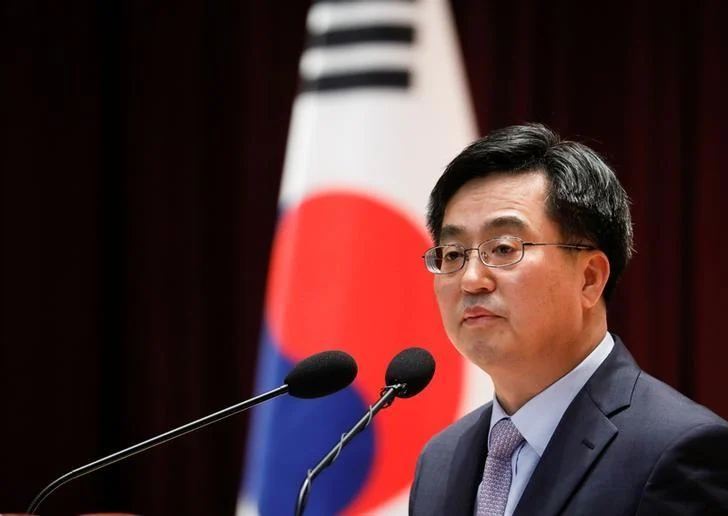
The South Korean government is reportedly preparing to reverse its blanket prohibition on Initial Coin Offerings (ICOs), signaling a significant pivot in the nation’s regulatory approach toward the digital asset industry. According to reports from the Korea Times and various internal sources, financial authorities have entered high-level discussions with the country’s tax agency, the Ministry of Justice, and other relevant government departments to establish a framework that would allow ICOs to proceed under strictly defined conditions. This move marks a departure from the hardline stance adopted in late 2017 and suggests that the administration is seeking a middle ground between investor protection and the promotion of technological innovation.
While the Financial Services Commission (FSC) has not yet released an official roadmap, the shift in rhetoric is palpable. Kang Young-soo, the official overseeing cryptocurrency trading policies at the FSC, recently noted that there is no formal law explicitly prohibiting ICOs in a way that overrides all potential utility. Instead, the current environment has been one of administrative caution. Kang indicated that the government is acknowledging the growing demand for a regulated path to token issuance, though he emphasized that any official change in policy would require a consensus across multiple ministries.
Historical Context: From Crackdown to Consideration
To understand the magnitude of this potential policy shift, one must look back at the volatile landscape of 2017. During that year, South Korea emerged as one of the world’s most active hubs for cryptocurrency trading, often accounting for a disproportionate share of global Bitcoin and Ethereum volume. This frenzy led to the "Kimchi Premium," a phenomenon where digital assets traded at significantly higher prices on South Korean exchanges compared to international markets.
Concerned by the speculative "fever" and the potential for money laundering, the South Korean government launched a series of aggressive interventions. In September 2017, the FSC announced a total ban on all forms of ICOs, regardless of their technical structure or the nature of the project. The government argued at the time that ICOs increased the risk of financial fraud and lacked the transparency required to protect retail investors.
This regulatory hostility was compounded by a series of high-profile security breaches. Exchanges such as Youbit were forced into bankruptcy following major hacks, while larger entities like Bithumb faced repeated scrutiny over security protocols. These events, combined with threatening rhetoric from the Ministry of Justice regarding a potential total ban on exchange-based trading, contributed to significant market corrections globally. However, the beginning of 2018 saw a realization that a total ban might stifle the country’s competitiveness in the "Fourth Industrial Revolution," prompting the current reconsideration of the ICO ban.
The Proposed Framework for Regulated ICOs
The proposed lifting of the ban is not an invitation for an unregulated market. Instead, the government is exploring a "conditional allowance" model. Under this framework, blockchain startups would likely be required to meet stringent transparency and capital requirements before being permitted to raise funds from the public.
A source familiar with the inter-agency talks, speaking on the condition of anonymity, stated that the discussions revolve around ensuring that ICOs are conducted through established financial channels where the identity of participants can be verified. This would align ICOs with the "Real-Name Account System" implemented for cryptocurrency exchanges in January 2018. By integrating ICOs into the existing banking infrastructure, the government aims to mitigate the risks of money laundering and tax evasion.
Furthermore, the FSC is expected to differentiate between "security tokens," which represent an investment in a company, and "utility tokens," which provide access to a specific service or platform. This classification would bring South Korea closer to the regulatory standards seen in jurisdictions like Switzerland and Singapore, which have successfully balanced innovation with oversight.
Strengthening Anti-Money Laundering (AML) and KYC Protocols
Even as the government considers loosening restrictions on ICOs, it remains steadfast in its commitment to robust Anti-Money Laundering (AML) and Know Your Customer (KYC) regulations. The South Korean financial authorities have made it clear that the liberalization of ICOs will not coincide with a relaxation of oversight on capital flows.
Currently, South Korea maintains a strict policy that prevents foreigners and minors from opening cryptocurrency trading accounts at domestic banks. This policy is expected to remain in place for the foreseeable future. The rationale behind this restriction is twofold: first, to prevent the country from becoming a conduit for international money laundering, and second, to maintain control over the domestic supply of the South Korean Won.
The FSC’s Kang Young-soo reiterated during a recent industry forum at the National Assembly that the advancement of blockchain technology and the regulation of crypto-trading are being treated as separate but related issues. While the government wants to foster the former, it will not do so at the expense of financial stability. Domestic exchanges will likely continue to be the primary gatekeepers, tasked with the responsibility of reporting suspicious transactions to the Financial Intelligence Unit (FIU).
Chronology of South Korean Cryptocurrency Regulation
The path to the current policy deliberations has been marked by several key milestones that have shaped the market:
- September 2017: The FSC announces a blanket ban on all Initial Coin Offerings, citing concerns over fraud and speculative bubbles.
- December 2017: The Ministry of Justice proposes a bill to close all domestic cryptocurrency exchanges, leading to a massive public outcry and a petition signed by over 200,000 citizens.
- January 2018: The government implements the "Real-Name Verification System," ending anonymous trading and requiring all traders to link their exchange accounts to verified bank accounts.
- February 2018: Finance Minister Kim Dong-yeon clarifies that the government has no intention of "banning or suppressing" the cryptocurrency market, but rather seeks to regulate it responsibly.
- March 2018: Reports emerge of inter-agency discussions to allow ICOs under specific conditions, signaling a formal shift toward a "crypto-friendly" regulatory environment.
Blockchain Beyond Finance: A National Priority
A major driver behind the government’s softening stance is the recognition that blockchain technology has applications far beyond the financial sector. The South Korean administration, led by President Moon Jae-in, has identified blockchain as a core pillar of the nation’s future economic growth.
Government agencies are already exploring the use of blockchain for public services, including:
- Electronic Voting: Implementing blockchain to ensure the integrity and transparency of local and national elections.
- Logistics and Supply Chain: Utilizing distributed ledgers to track the movement of goods, particularly in the shipping industry, which is a major component of the South Korean economy.
- Real Estate: Streamlining the process of property registration and title transfers to reduce administrative costs and fraud.
By allowing ICOs, the government hopes to provide domestic startups with the capital necessary to develop these non-financial applications. There is a growing concern among policymakers that the 2017 ban forced talented Korean developers to move their operations to "crypto-friendly" hubs like Singapore or Zug, Switzerland. Reversing the ban is seen as a way to "repatriate" the industry and ensure that the economic benefits of blockchain innovation remain within South Korea.
Market Implications and Global Context
The news of South Korea’s potential policy reversal has been met with cautious optimism by the global investment community. As one of the largest markets for digital assets, South Korea’s regulatory direction often serves as a bellwether for the rest of Asia.
If South Korea successfully implements a regulated ICO framework, it could provide a blueprint for other nations struggling with the same issues. For instance, China remains committed to a total ban on ICOs and domestic exchanges, whereas Japan has embraced a licensing system for exchanges but remains conservative regarding new token issuances. South Korea’s middle-ground approach—allowing ICOs but under strict institutional supervision—could prove to be the most sustainable model for developed economies.
For investors, the lifting of the ban could lead to a surge in high-quality projects originating from South Korea’s robust tech sector. The country’s history of rapid technological adoption, combined with its high density of internet connectivity and mobile usage, makes it an ideal incubator for blockchain-based consumer applications.
Conclusion and Future Outlook
The Financial Services Commission and other governing bodies are expected to continue their deliberations throughout the coming months. While the path to a fully legalized ICO market remains fraught with legislative hurdles, the momentum has clearly shifted away from prohibition and toward integration.
The South Korean government’s current trajectory suggests a maturing understanding of the digital asset space. By moving away from reactive bans and toward proactive, condition-based regulation, Seoul is positioning itself to become a regulated leader in the global blockchain ecosystem. However, the success of this transition will depend on the government’s ability to draft clear, enforceable rules that satisfy both the innovative drive of the tech industry and the cautious mandates of financial regulators. For now, the message to the crypto world is clear: South Korea is back in the game, but it will be playing by a new set of rules.














