


On April 23, 2026, the United States government unveiled one of the most extensive and coordinated legal actions against the global shadow economy of cyber-enabled fraud to date. Led by the Department of Justice’s (DOJ) Scam Center Strike Force, in collaboration with the Office of Foreign Assets Control (OFAC) and the Department of State, the multi-agency initiative targeted the entire operational lifecycle of transnational scam syndicates. These operations, primarily based in Southeast Asia, have been linked to industrial-scale cryptocurrency investment fraud, human trafficking, and sophisticated money laundering networks. The crackdown resulted in the restraint of over $700 million in digital assets, the seizure of hundreds of fraudulent domains, and the imposition of sanctions on high-ranking political and business figures in Cambodia.
The surge in these "pig butchering" schemes—a colloquial term for long-term confidence fraud where victims are "fattened" with false promises of friendship or romance before being "slaughtered" for their assets—has become a primary concern for international law enforcement. According to the FBI’s Internet Crime Complaint Center (IC3), reported losses from cryptocurrency investment scams reached a staggering $7.2 billion in 2025, marking a significant increase from previous years and highlighting the urgent need for the aggressive intervention announced this week.
A Chronology of the Global Strike
The operations announced on April 23 are the culmination of years of intelligence gathering and international cooperation. The timeline of these events illustrates a shifting strategy by U.S. authorities to move beyond targeting low-level "mules" and instead focus on the infrastructure and leadership of these criminal organizations.
The investigation into the Shunda compound in Min Let Pan, Burma, began in earnest following reports of mass human trafficking in late 2023. By late 2025, local forces in the region seized the compound, providing U.S. investigators with critical data on the management structure of the site. In November 2025, the DOJ officially launched the Scam Center Strike Force, an interagency body designed to streamline the prosecution of transnational fraud.
In early 2026, a breakthrough occurred when Thai authorities, working in coordination with the FBI and the U.S. Secret Service, arrested two high-level managers, Huang Xingshan and Jiang Wen Jie, as they attempted to move between compounds in Cambodia and Burma. This was followed by "Operation Level Up," a massive digital sweep that took place throughout the first quarter of 2026, resulting in the seizure of over 500 fraudulent web domains. The April 23 announcement serves as the public unveiling of these combined efforts, signaling a new phase of active disruption against the financial elite who profit from these schemes.
Criminal Charges and the Dismantling of Scam Infrastructure
The DOJ’s criminal complaints against Huang Xingshan and Jiang Wen Jie provide a harrowing look into the inner workings of the Shunda compound. According to court documents, the two Chinese nationals managed a workforce composed largely of human trafficking victims who were lured to the region with promises of legitimate tech jobs. Once at the compound, these workers were held captive, subjected to physical violence, and forced to operate fake cryptocurrency investment platforms.
The strike force also executed a landmark seizure of a Telegram channel with over 6,000 followers. This channel served as a primary recruitment tool, targeting English-speaking individuals for "high-paying" positions in Cambodia. Instead of employment, recruits were forced into a sophisticated "law enforcement impersonation" scheme, where they were required to contact U.S. citizens and coerce them into transferring funds to "secure" accounts under the guise of protecting them from identity theft.
Simultaneously, the FBI and U.S. Secret Service’s "Operation Level Up" targeted the technical architecture of these frauds. The 503 seized web domains were meticulously designed to mimic legitimate cryptocurrency exchanges and investment portals. These sites featured real-time price feeds and fake account balances, convincing victims that their investments were growing rapidly. In reality, the funds were immediately routed to wallets controlled by the Shunda management.
Financial Interdiction: Restraining $701.9 Million
One of the most significant achievements of the Scam Center Strike Force is the restraint of over $701.9 million in cryptocurrency. This represents one of the largest seizures of digital assets in a fraud-related case. The recovery was made possible through the inherent transparency of blockchain technology, which allowed investigators to trace the flow of victim funds from initial deposit to laundering hubs.
The DOJ noted that this success was not the result of law enforcement action alone but involved the "voluntary and proactive cooperation" of several major cryptocurrency service providers. By utilizing advanced blockchain analytics, these providers were able to identify and freeze accounts linked to the sanctioned entities before the funds could be off-ramped into traditional fiat currencies. This collaboration marks a turning point in the relationship between the crypto industry and federal regulators, emphasizing that the "wild west" era of anonymous laundering is rapidly closing.
Sanctions Against the Cambodian Political and Business Elite
While the DOJ focused on criminal prosecution and digital seizures, the Department of the Treasury’s OFAC struck at the institutional enablers of these crimes. OFAC designated 29 targets in Cambodia, effectively severing their access to the U.S. financial system. At the center of these sanctions is Kok An, a prominent Cambodian senator and businessman.

According to the Treasury Department, Kok An’s business empire, including Crown Resorts and Anco Brothers Co Ltd, provided the physical and legal cover for scam operations. Properties in Poipet and Sihanoukville, owned by Kok An, were allegedly retrofitted into high-security compounds specifically designed to house scam operations. These facilities were equipped with specialized internet infrastructure and security details to prevent trafficking victims from escaping.
The sanctions also extended to Rithy Raksmei, a close associate of Kok An, and several corporate entities:
- Heng Feng Cambodia Bank plc: Alleged to have provided banking services to scam syndicates, facilitating the conversion of stolen crypto into fiat.
- K99 Group: Identified as an operational hub for malware deployment and social engineering campaigns.
- Bolai: A firm that utilized third-party payment processors to bypass standard anti-money laundering (AML) controls.
OFAC’s action sends a clear message to regional leaders: the U.S. will no longer tolerate the use of legitimate business fronts to shield the proceeds of transnational crime. The inclusion of a sitting senator in the sanctions list highlights the severity of the U.S. stance and the perceived level of state-level complicity in the Cambodian scam industry.
Technical Evolution: From Social Engineering to Malware
The crackdown has also shed light on the evolving tactics of these criminal groups. Research from cybersecurity firm Infoblox, cited by authorities, indicates that groups like K99 have moved beyond simple social engineering. There has been a recorded spike in DNS (Domain Name System) activity associated with the deployment of Trojans and other malware from within these scam compounds.
This shift suggests that scam operators are now attempting to gain direct access to victims’ devices, allowing them to bypass two-factor authentication and steal biometrics or banking credentials. By integrating malware-as-a-service into their traditional "pig butchering" models, these syndicates are becoming more efficient and harder to detect through traditional consumer education efforts.
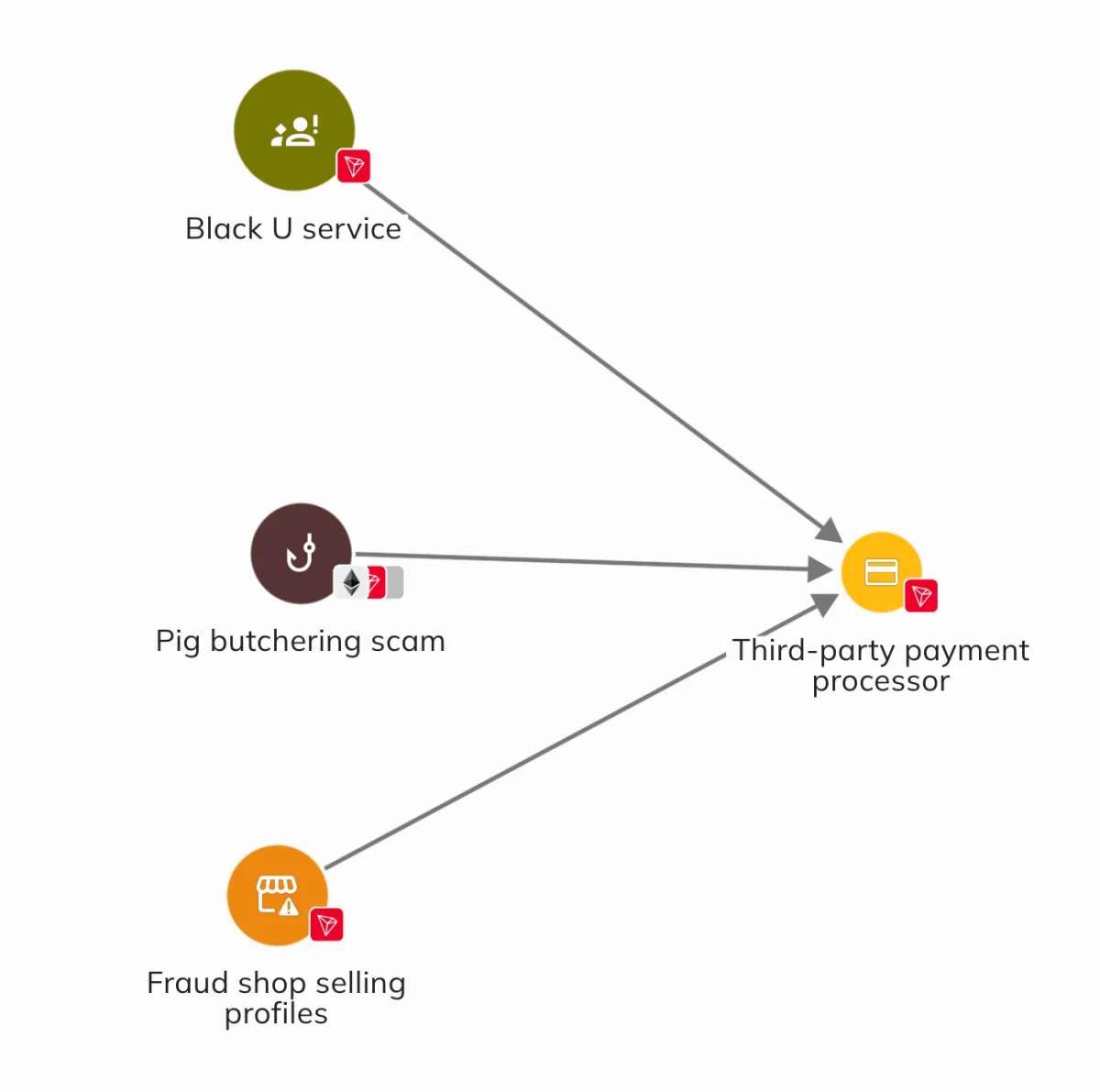
Furthermore, analysis of the "Bolai" network reveals a complex web of interconnected illicit actors. Chainalysis Reactor data shows that the payment processors used by Bolai were also receiving funds from "Black U" services (illicit USDT exchange services) and fraud shops selling stolen social media profiles. This interconnectedness demonstrates that the Southeast Asian scam centers are not isolated incidents but are core components of a global, multi-faceted criminal ecosystem.
Implications for Global Compliance and Law Enforcement
The implications of the April 23 actions are far-reaching for the global financial and cryptocurrency sectors. For financial institutions, the designation of regional banks like Heng Feng Cambodia Bank creates an immediate compliance requirement. Any institution facilitating transactions with these entities now faces the risk of secondary sanctions or severe regulatory penalties.
For the cryptocurrency ecosystem, the $700 million restraint proves that while blockchain can be used to move money quickly, it also leaves a permanent, public trail. The DOJ and OFAC have demonstrated that they have the technical capability and the legal reach to follow stolen funds across borders and through complex mixing services.
Industry experts suggest that this crackdown will lead to:
- Enhanced Due Diligence: Exchanges will likely increase scrutiny on transactions originating from or directed toward Southeast Asian "high-risk" jurisdictions.
- Increased Public-Private Cooperation: The success of the Scam Center Strike Force provides a blueprint for how government agencies and private blockchain analytics firms can work together to protect consumers.
- Diplomatic Pressure: The sanctions against a Cambodian senator suggest that the U.S. may use economic leverage to force regional governments to take more aggressive internal action against scam compounds.
Conclusion and Future Outlook
The U.S. government’s strike against Southeast Asian scam centers represents a significant victory in the fight against cyber-enabled organized crime. By targeting the managers, the digital infrastructure, and the political elite who provide sanctuary to these operations, the Scam Center Strike Force has disrupted one of the most profitable criminal enterprises of the 21st century.
However, officials warn that the threat remains persistent. As long as the potential for multi-billion dollar profits exists, criminal syndicates will continue to adapt their tactics, moving to new jurisdictions or utilizing more advanced technologies. The DOJ has urged the public to remain vigilant and to report any suspicious investment opportunities to the IC3. For the victims of these "pig butchering" schemes—many of whom have lost their life savings—this week’s news offers a glimmer of hope that justice, and perhaps financial recovery, is possible. The U.S. government has signaled that its campaign against these "factories of fraud" is only just beginning.














